My browser is my notebook and task list

Recently, I’ve started using my browser both as the primary workspace (slightly more than VS Code) as well as my TODO list. That’s mainly due to better tab management and better tools. Tab Management The first big shift was turning on Vertical Tabs on Edge. Now, I can see and manage far more tabs. Typically, I have 80-200 tabs open now. The next big shift was using tab groups. With vertical tabs, this makes tabs like a folder. ...

Linkedin List Feeds

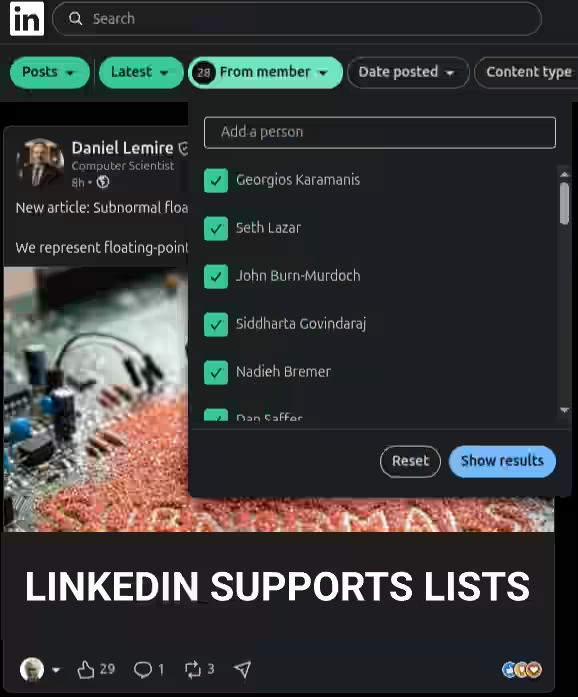
X has lists. You can follow posts by any list of people - and share the list. LinkedIn has this feature too. It’s tougher to use, but easy to share. Visit the posts search page Select the “From member” filter and add members. Bookmark or share the link. Then I asked ChatGPT to recommend people to follow. Here’s my current list: List People AI Rama Ramakrishnan · Arvind Narayanan · Simon Willison · Rohit Krishnan · Sayash Kapoor · Benedict Evans · Seth Lazar FOSS Siddharta Govindaraj · Sai Rahul Poruri · Kailash Nadh · Daniel Stenberg · Daniel Lemire · Phil Eaton Edu Greg Wilson · Bonni Stachowiak · Dan Meyer · Robert Talbert · Marc Watkins · Justin Reich Data Viz Curran Kelleher · Rasagy Sharma · Nadieh Bremer · Dan Saffer · Alberto Cairo · Amanda Makulec · Santiago Ortiz · Georgios Karamanis · John Burn-Murdoch Data Viz Orgs Our World in Data · Data For India · Datawrapper · The Pudding This is the combined list for all 28 people ...

Converting TUS Nesstar Files

The Time Use Survey 2024 data released last year lets you download a ZIP containing a 900 MB .Nesstar file. (This is after you register - but the registration is free, and though it requires a reason, it’s automated.) Nesstar is Norwegian software that’s now end of life. MOSPI provides this guide - with distorted screenshots - explaining how to install the software on Windows. But I use Linux. The software is end-of-life. Gaah! ...

Things I Learned - 08 Nov 2026

This week, I learned: Facemorph.me implements face morphing via StyleGAN2 (among the best face morphing implementations I’ve seen) and exposes it via a free public site #ForNow. My reading from The Sequoia of Tomorrow: Money’s in the Bay Area. People, move there. Money’s in a few big winners. Maybe they can find them easy and don’t need to scout? Money’s in speed and fewer deciders. Partners don’t need to wait for and convince each other every Monday. Risky, but faster. Looks like you can use Codex via an API, since the OpenAI Agents 0.22.0-alpha.1 release is available. “This alpha introduces the embedded Codex harness in the OpenAI Agents SDK for JavaScript and TypeScript.” Via Daniel The amount I’m delegating to agents is small but growing. In Aug-Sep, a median session took Codex 3.3 minutes and only 4% of my prompts took 20+ minutes. In October, the median session took 7.5 minutes and 13% of my prompts ran 20+ minutes. ChatGPT image generation will be a separate quota from Codex #ForNow. Armin used Qwen3-TTS to detect voices. I ran a quick benchmark to see how well it did on my transcripts. Answer: Not very good. 32% precision, 84% recall. “Professors nowadays seem to have become professional fundraisers who do a little research on the side.” Also, “Turning the other cheek turns out to have selfish advantages.” Paul Graham Looks like we’ve learnt how to get a neuron to fire by shining a light on it. It’s called Optogenetics. Voice remixing is now available in Gemini 3.8 Flash and it did a pretty good job of replicating my voice as well as creating new voices based on a prompt. via X. Qwen3-TTS supports custom voices too and can run on your laptop with just 1.7B parameters. This (interestingly summarized) Machines of Loving Grace suggests factors that bottleneck intelligence (like in clinical trials, ) - and hence become the focus: People move slowly or impose constraints. Data isn’t available. Nature (biology, chemistry, engineering) works only so far. Nathan Baschez sees agents factories as the next step beyond “All employees use agents”. These are shared workflows maintained centrally that the organization can get work done with. That packages context (skills, prompts, docs, data) along with environment (tools, permissions). The main advantages are centralization (few experts/owners enable everyone) and execution (acting in the real world). WACZ seems to be the modern way to archive websites. Unlike MHTML, it can handle multiple pages. In the last 10 months (Jan-Oct 2026), I prompted Claude, Claude Code, ChatGPT, and Codex about 12,000 times. On average, I talk to AI ~40 times a day. That’s 80% of my “Talk to AI 50 times a day” recommendation. I still have some way to go. Phone spam marketing has reached an elevated level of obnoxiousness. I get calls from automated recordings often. But today, Airtel Black call me and put me on hold for two minutes. Wow! Then the music stopped and the line just hung. So, they put me on hold and ghosted me. And the reason I picked up the call was because their Internet was down - so a triple whammy! Not only have I started enjoying tea a lot, I quite look forward to it. Even to the point where a high point of my day is when someone serves me tea, unasked. As my daughter commented, I’m getting old. wacli is a CLI interface for WhatsApp. Unofficial, and works well #ForNow. There’s no clear, good, ChatGPT search / export CLI that I am comfortable with #ForNow. ChatGPT Mistakes I made Week ending 08 Nov 2026 ...

Picture stories we understand and like

Students of my course were given an assignment. Submit a picture story (no words) that others will understand and like. Explain others’ picture stories and rank them. Here are the results. Firstly, why this exercise? Because it teaches three skills I believe are important in the AI era: Creating unique content Communicating with clarity Marketing your ideas This is exactly what they were evaluated on. Uniqueness: How similar was their story to others'? Understanding: How well did others understand their story? Preference: How much did others prefer their story over others'? Here are some stories I enjoyed. Click for details. ...

Toenails

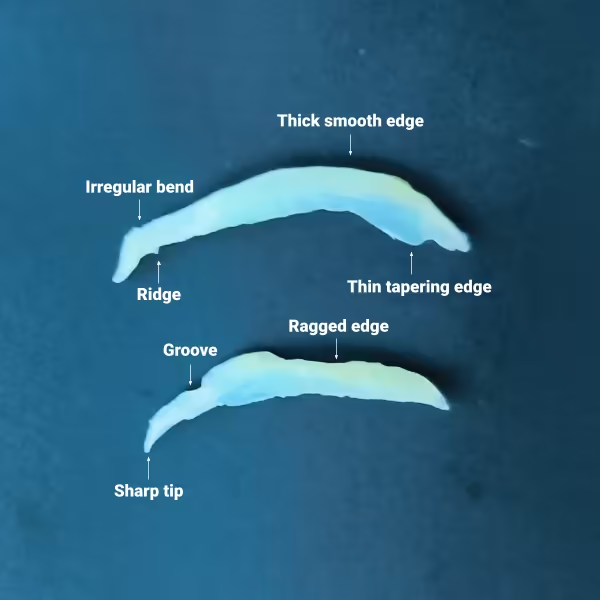
Note: This continues my nasty habits series: licking, scraping, and nibbling - in which I mentioned fiddling with nails. There are three irreplacable possessions in my room: My phone, because it authorizes lots of services. My laptops, because they have un-backed-up data. My toenails, because the good ones are rare. Here are two good ones I’ve had for a few months. The ones best for fiddling are from the toe thumb. They typically have: ...

Using Real Faces in Comic Stories

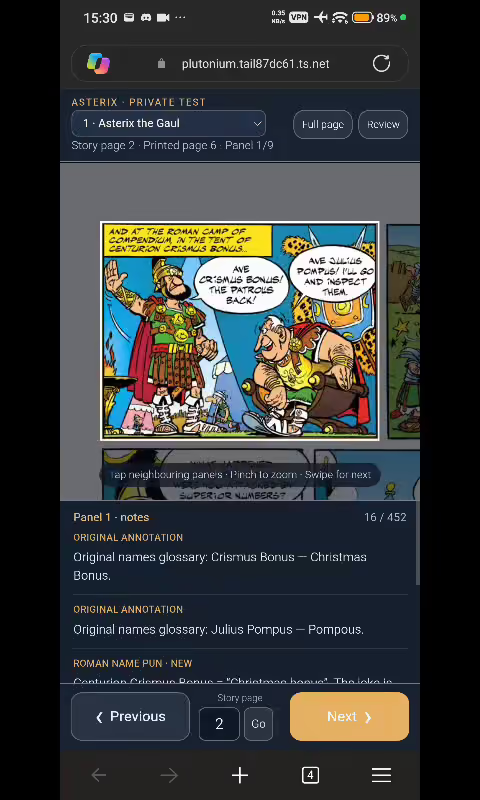
I was reading Asterix on my flight from Brussels to Dubai when I remembered a colleague’s request. I typically convert my workshops into narratives like this and this. They wanted another event converted. Usually, I have the full transcript of my events. In this case, I just had a few paragraphs of notes. Far from enough. On the other hand, I was reading Asterix. And AI’s my magic potion. So I figured: Why not create a comic story? Using real faces? While reading Asterix? ...

28 Ways I Review Agents

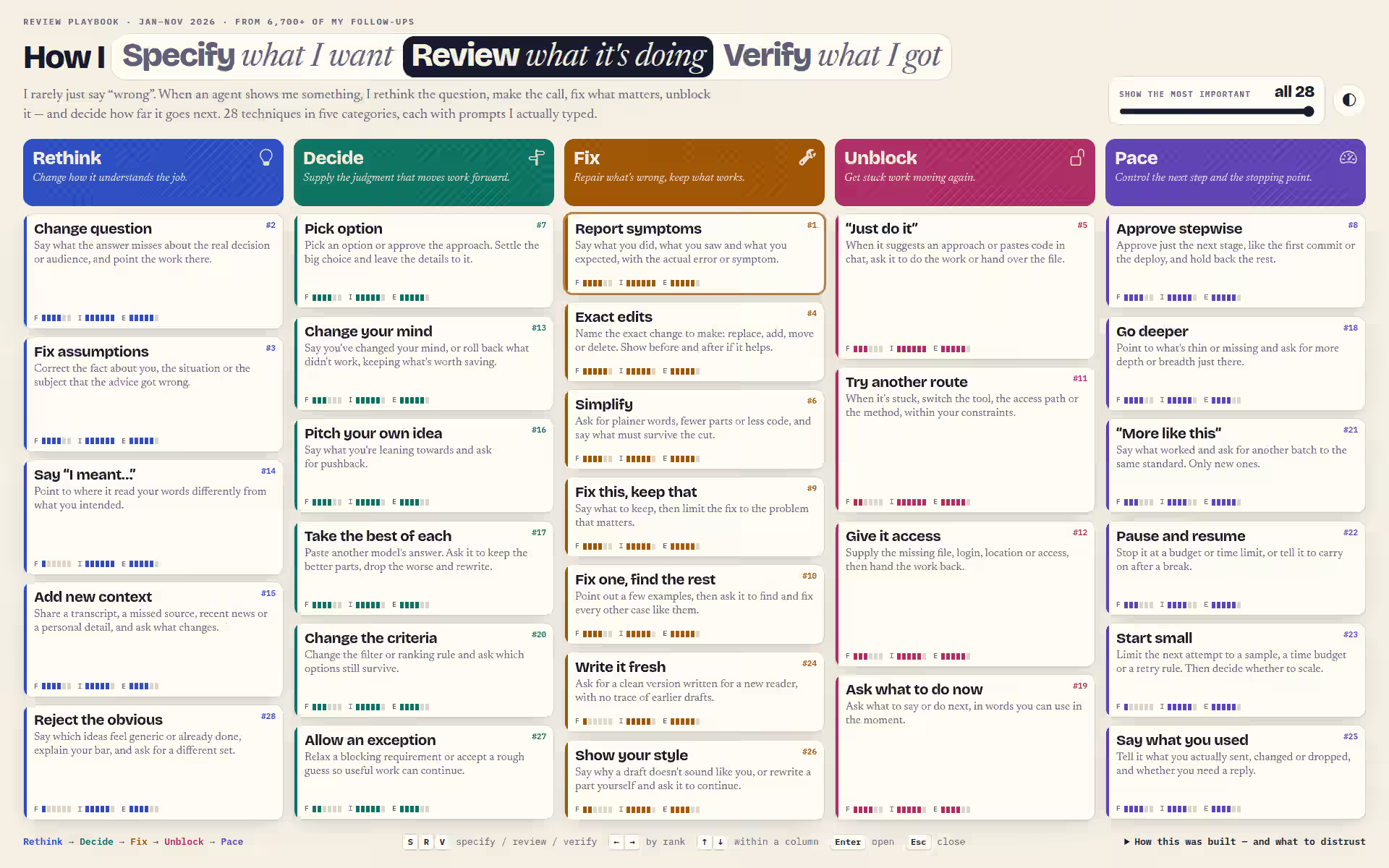
Using the same approach as specification and verification I looked at how I review agents, i.e. what I comment on after they share an output. This page features the 28 review techniques I use. Some interesting ones: Show your style: I tell it why it doesn’t sound like me, and how I would have written it. Real example: “Still not in my style - revise more in line with these principles.” Pause and resume: Tell it not to exceed the usage limits. Real example: “We are at 96% usage of the 5h limit - so pause now and we can resume in a few hours.” More like this: Tell it what you liked and go in that direction. Real example: “Looks good. Give me 10 more.” Take the best of each: Give it other models’ output and pick the best from each. Real example: “Here is ChatGPT’s response. Take what’s better, drop what’s worse, follow up on new ideas this gives you, and revise your response.” Say “I meant…”: Clarify your real intent. “Sorry, I meant round off the 95% activity window in EACH namespace.” These are based on ~6.7K real responses. Skim through them and if you spot something interesting, test it out. If it works for you, share it with others.

Why are flights productive

This Thursday, I flew Indigo from Singapore to Chennai. I had no WiFi and got a lot of (slightly difficult) reading done, such as: Machines of Loving Grace Against the Personal Theory of Agents Paul Graham’s The Top Idea in Your Mind How I Built the Most AI-Pilled Company in the World Catching up on Simon Willison’s blog Actions from a long pending book cluster summary (The Beginning of Infinity, Conjectures and Refutations, The Logic of Scientific Discovery, The Fabric of Reality, and Enlightenment Now). Several tweets, blog posts, and ChatGPT / Claude chats. I also drafted prompts to run later. In a disconnected flight, I’m less distracted because: ...

What Changed Your Mind?

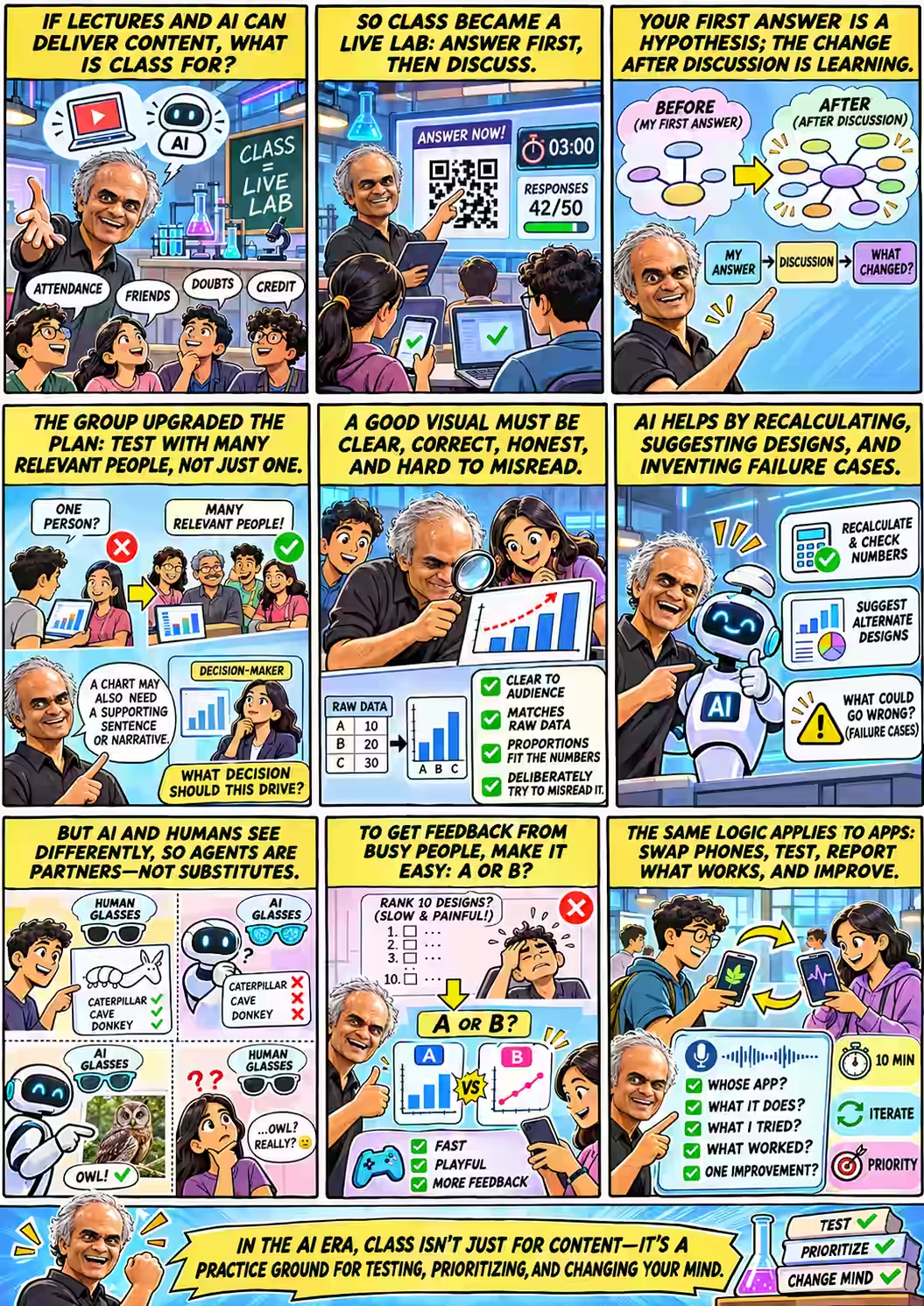
I conducted a session on Wed, 04 Nov 2026 at ED5518: Data Visualization for Engineers - Department of Engineering Design, IIT Madras, Chennai. Speakers: Anand S Summary: A live-lab class on testing visualizations and phone apps: commit to an answer before discussing, check that a chart is true and that it works for its audience, use AI as a different kind of reviewer rather than a stand-in for people, and ask busy people “A or B?” ...

Innovations 2 Nov 2026

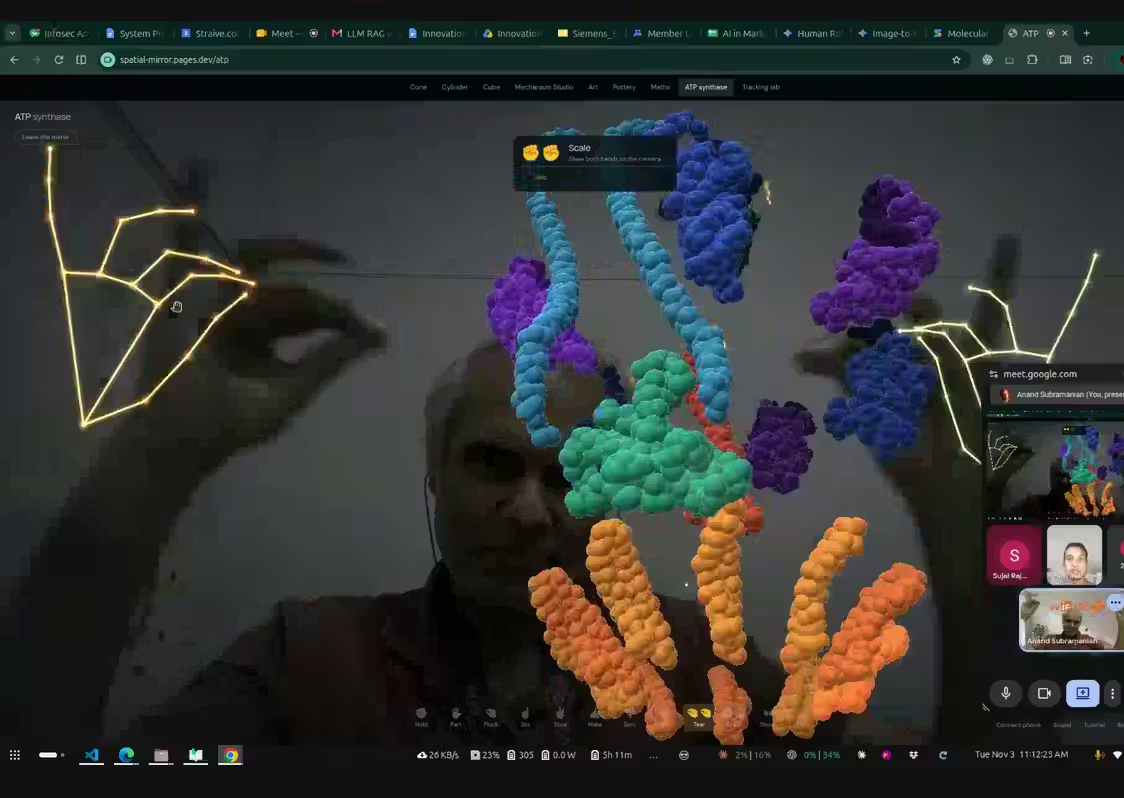
The Innovation team has been experimenting with 3D interaction, audio, video and AI agents. Three things struck me: We can manipulate a 3D molecule with our hands, or try different furniture in a virtual room, using a browser. Sound search can find things a transcript never records. And a small specialist model can diagnose a machine at a tiny fraction of an audio LLM’s cost. AI can help us improve videos and business decisions when its suggestions are checked against evidence, not just written convincingly. New ways to interact and create Hold a 3D molecule in your hands (Sujal). At our Innovation Team meeting, I used hand gestures in front of my camera to manipulate a colourful 3D ATP synthase molecule: pluck, slice, scale, rebuild and explore its parts. The browser recognizes the gestures; a paired phone can also control the scene. It is related to Sujal’s remote 3D pottery experiment. ...

52 Ways I Specify and Verify Agents

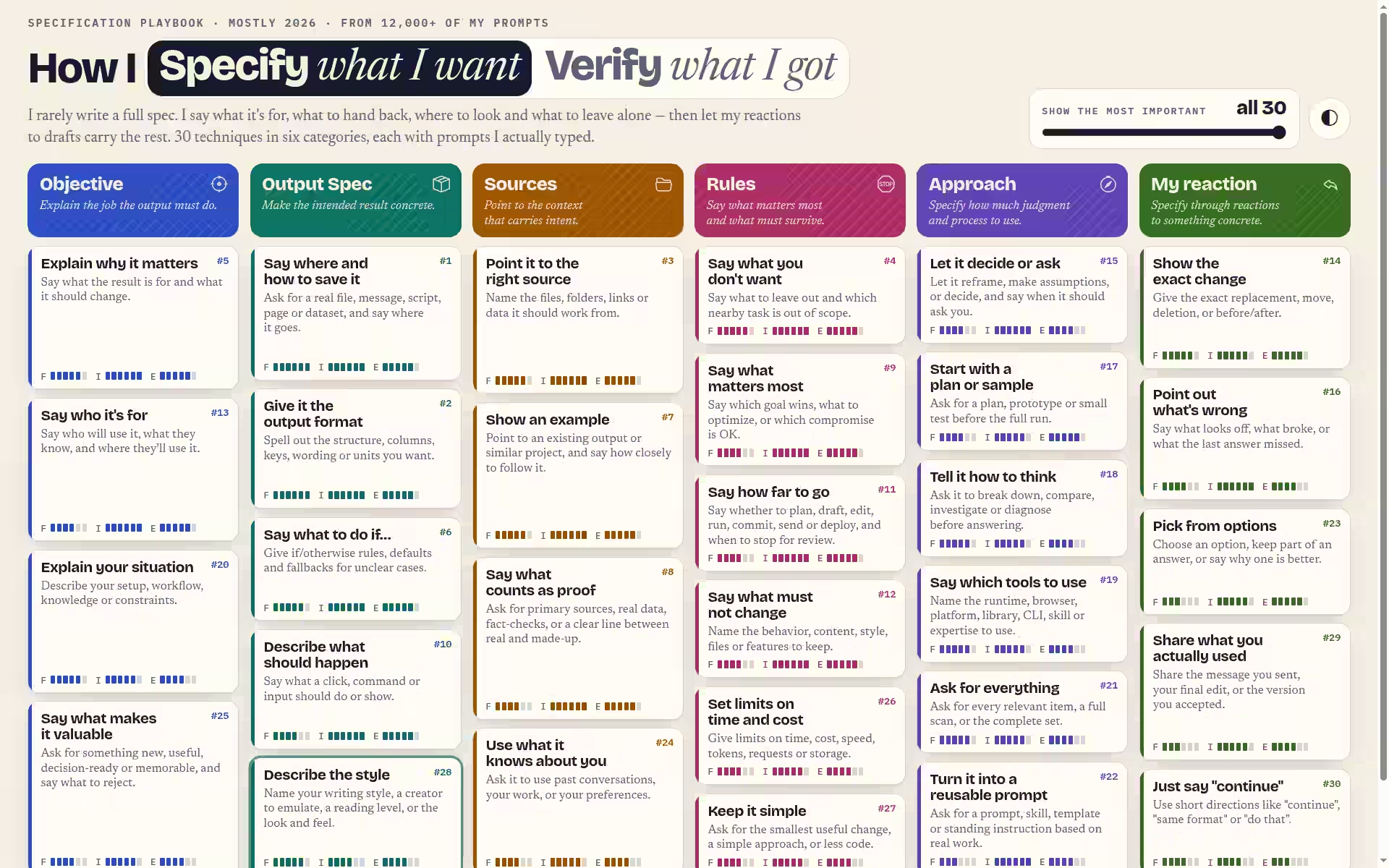
Since agents do most of the work, specification (telling it what to do) and verification (making sure it did it right) is more important than execution. This is what I’m often asked about. Of the ~600 questions people asked me this year, half were deciding what to do / ask for and every sixth question was about checking if it worked. I checked. For example: “What should we ask agents to do when we only have a dataset and no clear use case?” ...

Should a Student Even Read the Exam?

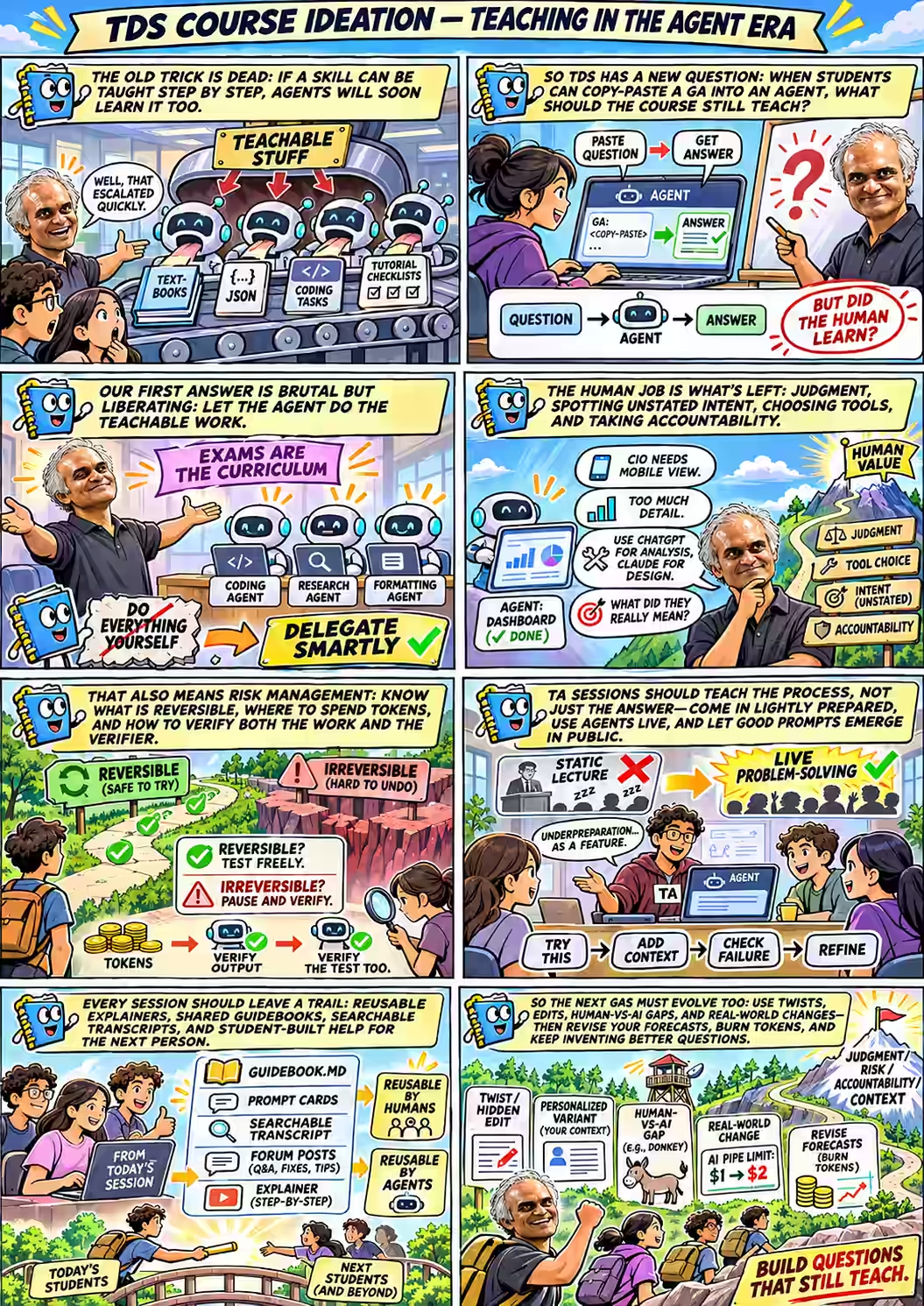
I conducted a session on Mon, 02 Nov 2026 at TDS Course Ideation — Open Design Meeting, Sep 2026 - Remote. Speakers: Anand S Summary: In the fourth open TDS design meeting, the teachers ask what is left to teach once an agent can read and solve the exam — while doubling a spending cap students are forecasting, finding only eight drawings that fool every AI guess, and admitting a marketplace rewarded trading over usefulness. ...

Things I Learned - 01 Nov 2026

This week, I learned: Enterprise software migration seems a massive medium term opportunity - Ethan Mollick. On the other hand, liquid software where anyone can tweak their own softare is emerging. “But I’m not working for my agent, it works for me. It’s a computer. It’s not a person I have to keep busy and keep managing (and checking it’s managing it’s own agents).” - Ben Tossell OpenAI announced that ChatGPT Chat (except Instant) will start getting metered from December 2026. This is a big deal for me because: I prefer ChatGPT Chat / Work to Codex because it can access my past conversations. Chat (in my ChatGPT $20 Plus) isn’t metered visibly and feels unlimited. By giving ChatGPT a plugin to control my computer, I get most of the benefits of Codex. But this free use will last only a month. I need to see how well GPT 6.1 Terra fills that gap - i.e. is it good enough to beat GPT 6 Sol and cheap enough that I can run my chats without worrying about exhausting limits? Clairic is an extraction model from Cloudflare. It’s a Decision model (or System One model) like Jev: fast and lightweight. But this focuses on extraction of text, numbers, dates, even forecasts. It provides the confidence as well as input position of the text for reference. Anthropic recommends using the main agent rather than subagents. Single agents on smart models work well unless you need independence #ForNow. Ruby chocolate is the fourth variety of chocolate - alongside dark, milk, and white. (Might be a marketing claim than verified.) I tasted it. It’s fruity, slightly sour, not bad. My order of preference among the melted chocolates I tasted in a spoon at Chocolate Nation, Antwerp: Gold. Caramel toffee butter cream . Delightful! White W2. White chocolate. Something I usually enjoy. I was surprised I liked Gold more. 823. Milk cocoa caramel chocolate. Slightly darker. Power 41. 41% cocoa Caramel with less sugar. Ruby. Fruity sour taste. Arriba. Strong cocoa flavor. 811. Bitter. The rest were too bitter I had no idea there was so much innovation in chocolates. Most of the ones I like are a century old. Good to see some revival in the last decade. ChatGPT 1880s: Truffles. chocolate that melts immediately in the mouth. 1907: Hershey’s Kisses. 1908: Toblerone. 1912: Pralines. chocolate shell with creamy filling. 1920: Chocolate-coated ice cream (like Magnum). 1923: Filled chocolate bars. 1923: Nougat-caramel chocolate bars (like Five Star, Mars). 1923: White chocolate. 1926: Chocolate syrup (Hershey’s). 1928: Peanut butter cups : Combined sweet chocolate with salty, savory peanut butter for a striking flavor and texture contrast. 1932: Chocolate oranges. 1935: Aerated chocolate with tiny air bubbles. 1935: Chocolate-coated wafers (KitKat). 1936: Malted chocolate balls (Maltesers) 1949: Soft-melting chocolate centers (Lindor) 1951: Chocolate-hazelnut spread (eventually Nutella) 1969: Spherical filled chocolates (Lindor) 1971: Chocolate eggs (Cadbury Creme Egg) 2012: Blond chocolate: white chocolate with biscuit and toffee notes. 2017: Ruby chocolate: pink, fruity, sour. 2021: Dubai chocolate: Pistachio cream, cruncy. Looks like GPT 6.1 Terra is mostly as good as Sol but cheaper. I haven’t tested it yet. On one hand, modern CSS has several new features. On the other hand, I’ve stopped writing code and delegated it to agents, so this is of no use to me. Instead, what I should be thinking about is: what new patterns does this enable, and what should I be asking for in prompts? Ethan Mollick: “Ask yourself: “how do I make what I am doing even more ambitious?” Something to practice actively, given the growing abilities of agents. Anthropic is comfortable that no single person has an architectural view of Claude Code. I guess architecture is also being taken over by agents. Addy Osmani: “No member of the team has a full mental model of Claude Code in their head, nor do we think anyone needs to. Rather, when anyone wants to learn about a piece of the codebase, they ask Claude to generate an explainer about that exact slice. It only takes a few minutes and the explainer is always up to date.” Good advice from Thornton Bell Humans write for humans. Agents for agents. Be more ambitious. Give it more eyes - logs, observability, … Code on remote machines. Ask for 5 variations. (I’m not doing enough of this yet.) Use schedules and triggers. (I’m not doing this at all, so far.) Codex introduced an experimental #ForNow --enable instant_interrupt flag that looks promising. It’s still steering, i.e. not instantly stopping any existing requests or tasks (hence wasting effort), but doesn’t wait for the entire response either. Not sure how it works but I just enabled it and will evaluate it. Code-mode yielding PR, model-response preemption PR. In Codex you can @-mention another Codex session. That’ll give it access to an earlier session’s context. In the past, I copy-pasted session transcripts, saved them in files, or pointed Codex at the session directory. This is more convenient. PixelBoard has pretty impressive cvoice typing. Google has a Gemini-powered “Rambler” voice recognition system (based on Gemini 3.5 Translate, with offline fallback) on Android phones, but not available via GBoard. PixelBoard enables that. ChatGPT Mistakes I made Week ending 01 Nov 2026 ...
Drawing humans only CAPTCHAs

My TDS course asked students to draw objects in one minute. The drawing is sent to their classmates as well as three vision models. They score if: Classmates guess it right AI guesses it wrong In other words, can you, in 1 minute, draw something that fools AI but not humans? Here are some of the best results, when I ran it against GPT 6 Luna, GLM 5.3 Flash, and Deepseek v4.1 Flash, which are really cheap and good vision models. ...

No AI Homework for Kids

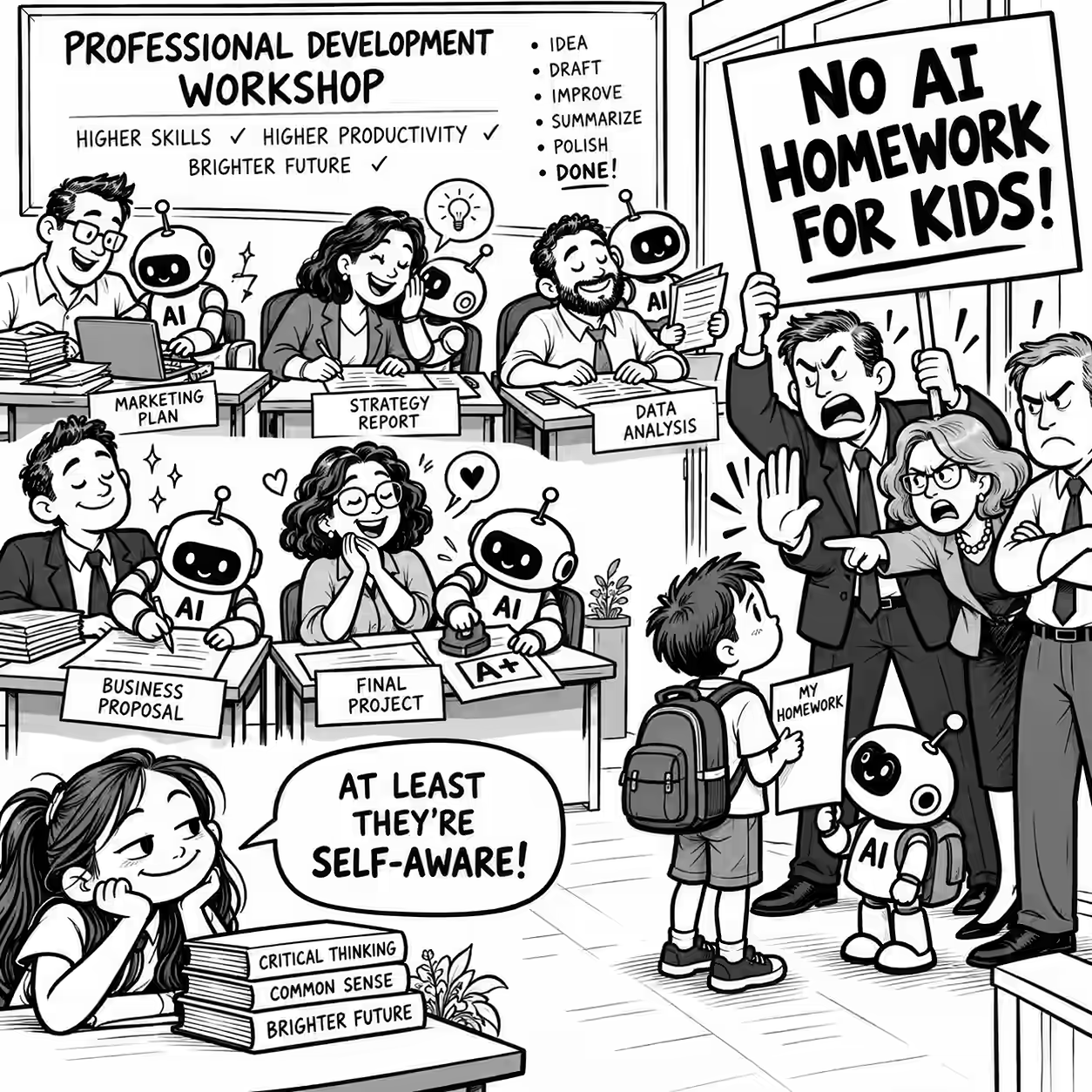
I conducted a workshop last weekend for working professionals and had assigned homework as part of that. We reviewed their homework at the start of the class, and I noticed that the majority of them had clear AI smells. I let the participants know that using AI is perfectly fine, especially in an AI class, and asked how many of them used AI to write the final output, All, except one, said “Yes” - a bit of a surprise to me since it included some output that I thought was manually written. ...

Code on remote machines

Thornston Bell’s How I work with Agents suggests actively using remote machines for coding. I’d struggled with this for many months, and finally managed to set up my Windows laptop for remote coding. How? Tell my wife to tell the maid to never switch it off. (It doesn’t have battery.) Tell ChatGPT to install Remote Desktop Commander - and schedule it to run on boot. Now agents can use it. Tell ChatGPT to install Tailscale so I can SSH into it and copy files. Tell ChatGPT to create a sync-plutonium.sh that pushes files from my Linux system (graphene) to the Windows machine (Plutonium). That last step was the critical enabler. This means that most of the files on my regular laptop is also on the home laptop, and it has the same context. ...

Reading Asterix from Brussels to Dubai via Singapore

I think it’s a miracle to see the sheer number of technologies that can come together with AI agents orchestrating them. I’m right now on a flight from Brussels to Dubai, and the Wi-Fi works. So, I’m dictating this blog post via PixelBoard, an AI-coded port of Gboard that lets me use Gemini for voice typing on Android (which is quite good!). I’m also browsing my Asterix comic book collection. These are on my Windows laptop in Singapore, which I’ve connected via Tailscale. I have no idea how to configure Tailscale, and ChatGPT did that for me. BTW, Tailscale is one of those services that I didn’t see a use for until I used it, and now will never turn it off. It creates a VPN between my phone, traveling laptop and home laptop, so I can browse files, SSH into each other, run HTTP servers, etc. All securely. ...

Innovations 26 Oct 2026

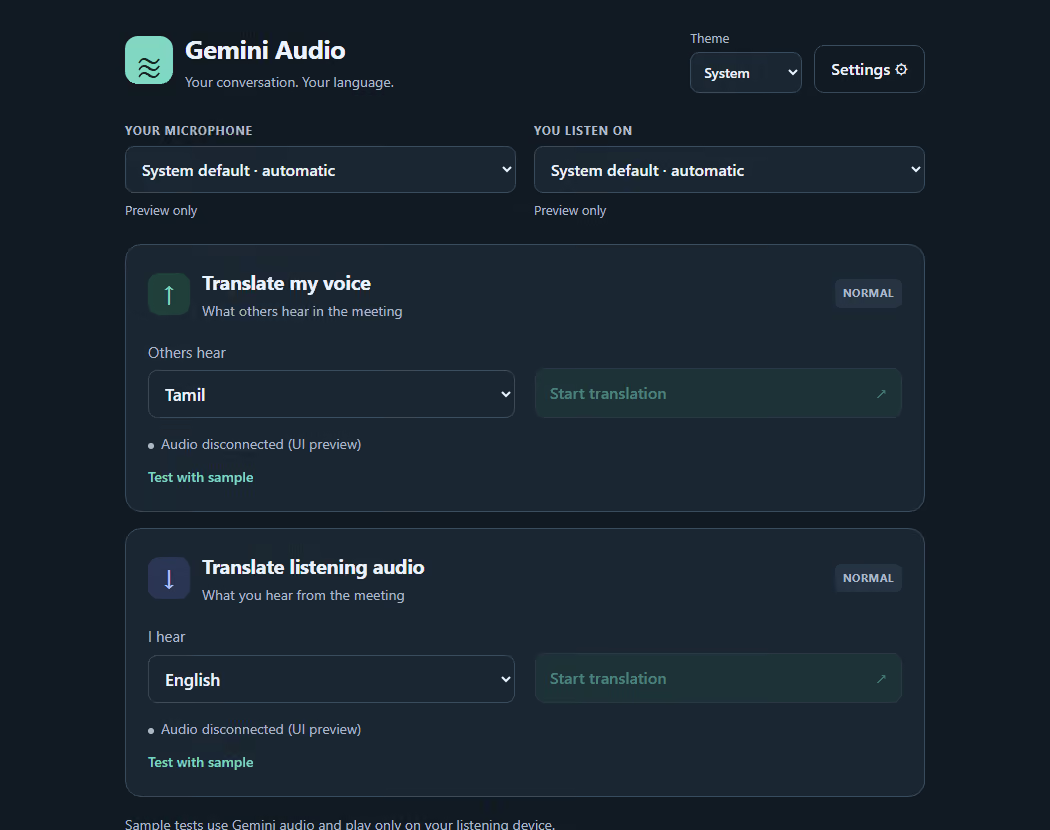
The Innovation team has built a few more demos since the last update. Three interesting learnings: We can speak in one language and be heard in another, live, in a normal Google Meet call. A person in another city can use their hands and a phone to sculpt a 3D object on your laptop. AI can search what was heard, not just said, and can check scientific claims by actually reproducing them. New capabilities Translate a live meeting into almost any language (Hritik). At Friday’s VIA talk, I spoke and the audience heard Filipino, Hindi, Tamil and Telugu with a short delay. Hritik built a desktop app that creates a virtual microphone and speaker for Meet. It translates both ways: what others hear from you, and what you hear from them. It took him a day or two to vibe code, and comes as a Windows, Mac or Linux app. I estimated about 0.6 US cents a minute in my trial. ...

A Mobile Voice Choir

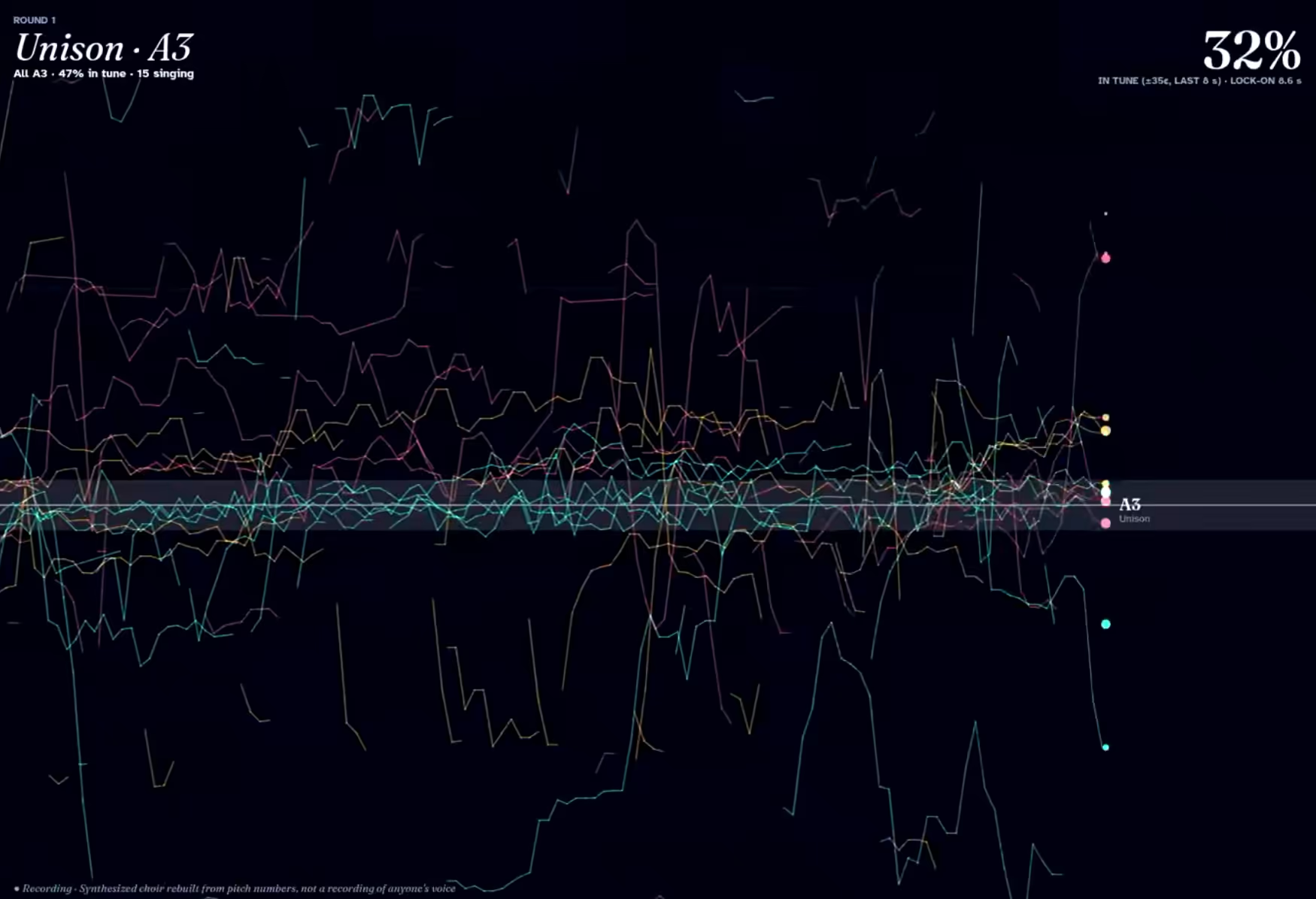
I’ve been playing around with mobile sensors recently and one such experiment is the voice choir. Here’s how it works. I’m the presenter. I visit voice choir, create a room, and show the QR code. People see the QR code (via screen-sharing or projector) and open on their mobile phones to join my room. I press “Start”. They hear a tone and they should hum at the same pitch. They can see if their pitch is above or below and adjust. I get a data stream of their pitch. Over time, we see if we can hum at the same pitch, or how close we converge. I record this as a visualization. We played this in Straive across about 20 people who joined the room. Here’s the video: ...