This week, I learned:
- When a teenager’s face is blank in the face of wonder, it’s not that they’re not surprised or amazed. It’s usually social / emotional armor (common for that age), plus higher thresholds thanks to high-stumulus media.
- Payment systems like UPI (in India), PayNow (in Singapore), etc. are useful ways of finding the names of people who message me on WhatsApp without introducing themselves. (In some cases, I didn’t save their contact. In others, they just didn’t bother.)
- Astra made a discovery in history, of all subjects. It found who authored a sketchbook from 1808.
- S2Vec is a geospatial embedding model from Google. It’s not yet publicly available, so I’m not sure how good it is, but it might be an alternative to OlmoEarth for certain tasks.
- After trying a number of Android file clients like MaterialFiles, RoundSync, S3Drive, etc. I’ve settled on Twig via F-Droid as my file manager. It supports WebDAV (for Taildrive), S3 (for Cloudflare R2), SFTP (for Hetzner) - covering most of the storages I use. It has a good file viewer and lets me edit Markdown files with syntax highlighting.
- In 1963, animal psychologist Glen Jensen discovered that when given a choice between free food in a dish and identical food that requires pressing a lever or pecking a key, rats consistently choose to work for at least part of their meal. Same for pigeons, monkeys, bears, and wolves. Domestic cats are a famous exception—they prefer freeloading.
- Google continues to roll out its AI capabilities poorly in some areas. On my work Google Workspace account, I exhausted my weekly quote within 5 minutes of asking Gemini 4 Hydrogen on Antigravity to review a single project. It started 5 sub-agents, … and just died.
- A few lessons from Omarchy’s design.
- Super + Drag lets you drag apps even from the middle of the app - you don’t need to locate and grab the title bar.
~/.config/autostart/*.desktopis where startup files reside on Linux (XDG).~/.local/share/applications/is where the app menu entries sit. There are a whole host of tools to manage these, likeupdate-desktop-database,desktop-file-edit,desktop-file-install,desktop-file-validate, etc.- Hex is the dication software I’m trying out now. It feels more responsive than the Visual Studio Code dictation engine, and also lets me insert anywhere. (But I think the main problem is that I need to get used to dictation - and it feels like Hex might help.)
- Nobody Knows Anything, paraphrased: “Someone’ll automate what you’re doing, better. Don’t bother. Just build what you need or enjoy, and don’t worry.”
- The
dockerrepos on GitHub provide several OS docker instances. So you can run Windows and MacOS inside a Docker container. - Code Mode in Claude is a promising experimental feature. Claude writes JS code that can call tools - which means bulk / parallel tool calls (e.g. web searches) become possible - even conditional flows. Unfortunately, you can’t use it along with computer use #ForNow so I’ll wait for Anthropic to sort this out.
- CLIProxyAPI converts coding agent subscriptions into API access #ForNow. Since coding agent usage is discounted, this is an interesting way to reduce token costs, and seems to be leveraged by a lot of applications. It even supports creating a cluster! This isn’t a full API, e.g. audio transcription doesn’t work #ForNow. But clearly, the infrastructure for token re-distribution is getting stronger #ForNow, and truly feels like commoditization.
- I usually use my Visualizing LLM Hallucinations demo to show how LLMs work. But this is old. Gemma.ai’s How LLMs Work is a more modern walk-through of how LLMs work. It’s more complex than I’d like, but tokenization, part of embeddings, and sampling seem explainable to a lay audience.
Mistakes I made
-
I said “an obfuscated or complicated unguessable link, which is perfectly fine” when discussing an experimental MCP server controlling a phone through a Cloudflare tunnel.
Correction: An unguessable URL alone is insufficient protection for a service exposing sensitive device-control capabilities, even during experimentation. URLs can leak through logs, browser history and other systems. Use authentication, restricted permissions and network isolation wherever possible. Cloudflare: Protecting self-hosted applications.
HIGH · OVERSTATED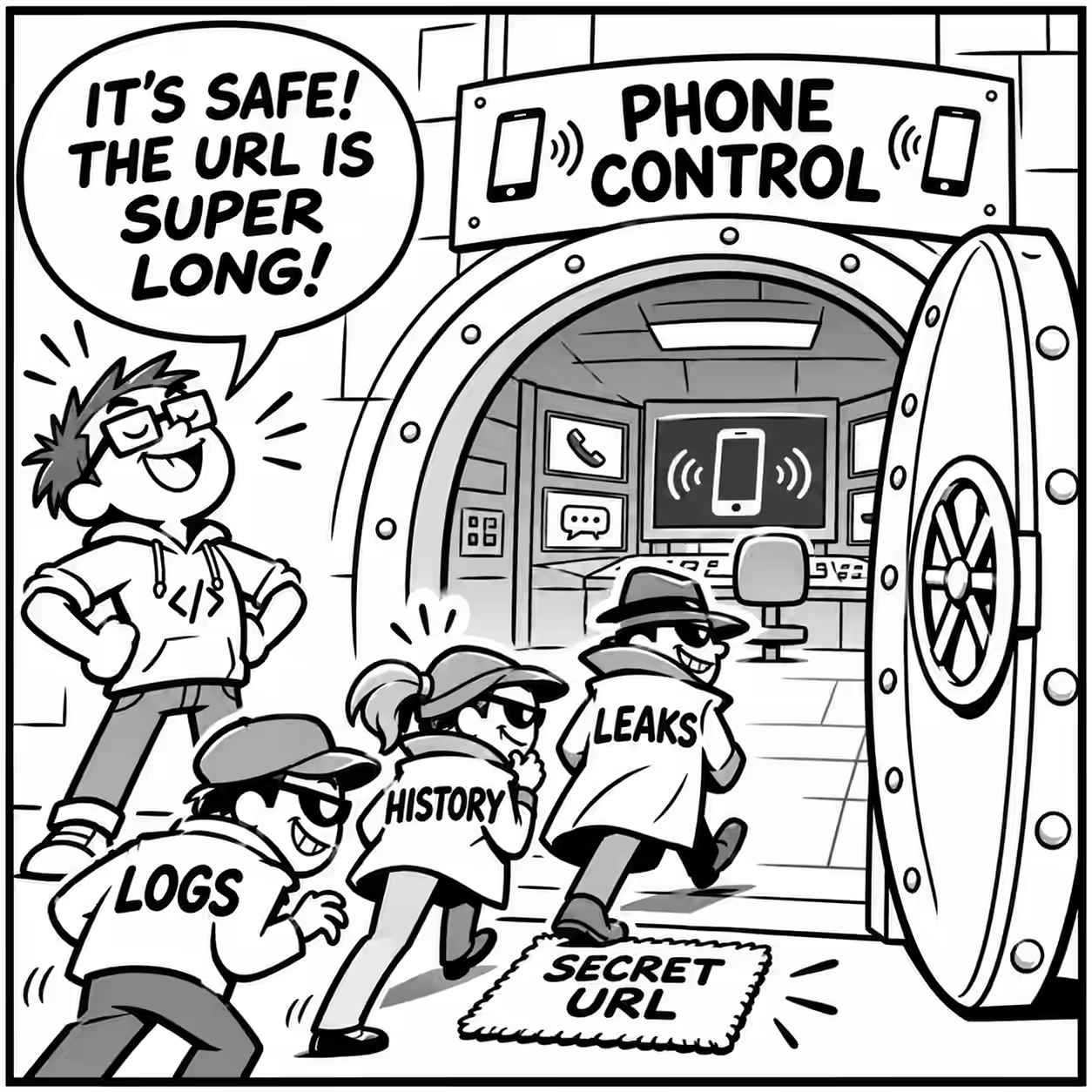
-
I said “everything that we keep adding will go to people when they need it” while proposing skills as an enterprise knowledge-distribution mechanism.
Correction: Shared skills can improve knowledge discovery, but automatic invocation depends on the agent recognizing their relevance, the installed skill version, trigger descriptions, permissions and available context. Measure retrieval recall and verify that updates propagate before relying on skills as a knowledge-distribution mechanism. Google: Create and manage skills.
MEDIUM · OVERSTATED -
I said “we can also extract that confidence level and mark” while explaining how recorded homework responses could be assessed.
Correction: Speech contains acoustic cues associated with perceived and subjective confidence, but these are not automatically reliable measures of a student’s actual confidence or understanding. Before using inferred confidence in grading, validate it against independent measurements and test for biases associated with accent, language and speaking style. Research on confidence and accuracy in speech prosody · Research on accent and perceived credibility.
MEDIUM · UNSUPPORTED -
I said “Telegram Web doesn’t support calls” while demonstrating a conversational AI agent.
Correction: Telegram WebK supports voice calls, video calls and screen sharing, including calls between web and native clients. Compatibility may vary by browser, web-client variant and version. Telegram WebK changelog.
MEDIUM · FALSE -
I said “your laptop audio will not appear on Meet” while advising someone to play a downloaded video through a browser tab.
Correction: Since December 2025, Google Meet has supported sharing system audio when presenting a window or the entire screen on supported operating systems, including Windows 11 and macOS 14.2 or newer. Sharing a browser tab remains a useful alternative, particularly on unsupported systems. Google Workspace announcement · System requirements.
LOW · OVERSTATED -
I said “I can just blindly and insecurely share any kind of HTTP service” when explaining the benefits of Tailscale.
Correction: Tailscale encrypts network traffic and restricts connectivity according to tailnet access policies. It does not eliminate application vulnerabilities, compromised devices, unauthorized access by permitted peers, or accidental exposure through other network interfaces. Sensitive services still need appropriate access controls and, where warranted, application-level authentication. Tailscale security best practices.
HIGH · OVERSTATED -
I said “bookmarklets are a great way of bypassing all kinds of controls” while demonstrating browser customization without extensions.
Correction: Bookmarklets allow user-initiated JavaScript to modify webpages without installing extensions. They are not a general mechanism for bypassing browser security, server-side authorization, cross-origin restrictions or organizational security policies. Technical feasibility does not imply authorization. Chromium security FAQ · MDN: Same-origin policy.
MEDIUM · OVERSTATED -
I said “The only animal that preferred freeloading was the domesticated cat” while explaining contrafreeloading.
Correction: Many tested animal species are willing to work for food even when equivalent food is freely available, but willingness is different from preference. A 2024 study of 38 domestic dogs found that they were willing to work for food but did not prefer doing so. Cats are not unique in this respect, and individual cats also exhibit varying degrees of contrafreeloading. 2024 dog study · 2021 cat study.
MEDIUM · FALSE -
I said “that is the spread of the scores, which means that there’s a certain amount of skill involved near the top” while interpreting an examination game’s score distribution.
Correction: Score dispersion alone cannot establish that an assessment differentiates participants by skill. Random events can produce score dispersion even among equally skilled players. Estimate the contribution of skill through repeated attempts, controlled random seeds, simulations of baseline strategies, and consistency across independent trials. Ofqual: Assessment reliability.
MEDIUM · UNSUPPORTED -
I said “only a single binary, and it can be directly executed across operating systems” while recommending Rust for a cross-platform CLI.
Correction: Rust allows us to maintain one codebase and distribute a standalone executable for each supported operating system and architecture. Conventional native Rust binaries must be compiled separately for the relevant compilation targets; the same executable does not ordinarily run directly on Windows, macOS and Linux. Rust platform support.
LOW · FALSE -
I said “the newer codecs … they’re not supported by most browsers” while advising against exploring video compression.
Correction: Modern codecs such as AV1 already have widespread browser decoding support and substantial desktop encoding support. Encoding availability, hardware acceleration, compression efficiency and computational cost vary by device and browser. Test these using VideoEncoder.isConfigSupported() and representative recordings before dismissing newer codecs. MDN: Codec selection.
MEDIUM · OVERSTATED -
I said “The File Reader API lets you access a folder where you can just save whatever files you want” while discussing browser-based application storage.
Correction: The FileReader API reads the contents of files or blobs. The File System Access API provides directory selection and file-writing capabilities, subject to browser support and user permissions, through methods such as showDirectoryPicker() and createWritable(). MDN: FileReader · MDN: File System API.
LOW · FALSE -
I said “The mountain near Hollywood where they have the statues of the four presidents” while suggesting visual metaphors for presentations.
Correction: Mount Rushmore National Memorial is in the Black Hills of South Dakota, not near Hollywood, California. Its sculptures depict George Washington, Thomas Jefferson, Theodore Roosevelt and Abraham Lincoln. US National Park Service.
LOW · FALSE
Questions I was asked
- Question: Should we spend time designing a modular AI architecture upfront, or just iterate? Asked while considering an engineering design pipeline that could work across different manufactured components.
Answer: Iterate. Measure once, cut twice. Give two people the same rough brief, give them a day instead of a week, and see what comes back. Once we know what somebody wants, it’s worth building a robust architecture. - Question: Why are we building things that the major AI companies will probably build better than us? Asked while developing voice agents that can participate in meetings.
Answer: I’m not trying to differentiate by building these agents. I’m trying to get us to be early USERS of these agents. Software is becoming too easy to create. What can I use it for? THAT is the discovery. - Question: How do we benchmark image generation models when we aren’t experts at assessing image quality? Asked while comparing images generated by cheaper and more expensive models.
Answer: Either evaluate something you’re good at judging, e.g. creativity or emotional impact, or combine deterministic checks with vision models. But ask what you’re evaluating that a machine cannot. Otherwise, somebody else will probably build a better benchmark. - Question: How can teachers evaluate recorded homework without listening to every student’s recording? Asked while reviewing an exercise where children verbally explain fractions.
Answer: When I’m busy, I give all the transcripts to ChatGPT, say “Evaluate against these criteria,” and mail the results. With more time, I read the responses and revise scores. With even more time, I listen to specific recordings. Sometimes I listen to the whole thing as a podcast while traveling and dictate my ratings. - Question: What would an AI-generated assessment report tell me about what children have actually learned? Asked while reviewing alternatives to conventional mathematics homework.
Answer: In one assignment, students created picture stories using AI, and other students narrated and rated them. AI checked how well their narration matched the pictures. We also measured popularity and uniqueness. Almost identical stories about adopting a dog were popular but not unique. You can see different aspects of learning that a single score hides. - Question: How can teachers and AI developers work together when teachers don’t yet know what solutions to ask for? Asked while exploring ways to redesign homework that students can already solve with AI.
Answer: Just send me problems, even if they’re not well-formed. I’ll send you three possible solutions. Ignore two, try one in class, tell me what worked, and I’ll get AI to revise it. I have AI, I have lots of solutions, I don’t have problems. - Question: Is switching models midway through an agent session a good way to save money? Asked while reviewing coding-agent logs showing repeated context loading after model changes.
Answer: Expensive to cheap, fine. Cheap to expensive, much less so. Another thing I do is start a new session and say, “Look at the past session where we discussed X and continue.” Let it selectively pick the context it needs rather than load everything. - Question: How might we divide work among specialized agents without wasting context and expensive tokens? Asked while discussing agents accessing each other’s coding sessions.
Answer: Have a long-running Git maintainer agent that knows the history of commits. Tell it to commit the relevant changes and inform the coding agent. Have another agent testing in parallel. Use a creative Claude for building and a diligent GPT for testing. They don’t even need to be running all the time. [An experiment I proposed, not yet tested.] - Question: Should an AI participant in a video meeting have a realistic human avatar? Asked while considering new capabilities for an AI teammate.
Answer: I’d rather have its camera show dynamically generated HTML. Let it pitch to a client, show relevant examples based on their interests, change its presentation midway, and run a workshop. The camera is its screen. It doesn’t need a face. - Question: Is contributing new features to established open-source software still a valuable direction? Asked after developing browser-based SQLite functionality that could extend Datasette.
Answer: Increasingly, an interesting feature request is as valuable as a pull request. The maintainer can give either to an agent. At the infrastructure level, conceptualization, marketing, user feedback and community management matter more than implementation. - Question: Why record people working with AI instead of just collecting their activity logs? Asked while designing an experiment to understand how students work with coding agents.
Answer: Video helps me discover things I don’t even know I’m looking for. Someone erased an entire command to change its second parameter instead of using the left arrow. Who would have thought to measure THAT? Once I know what to look for, automate the measurement. - Question: Where should an autonomous innovation agent get ideas for what to work on? Asked while exploring how an AI teammate could initiate work without being assigned tasks.
Answer: Our own meeting transcripts are a great source. They contain directions I’ve hinted at but haven’t pursued. My TIL repository is another: things I’ve found notable but may not have dug deeply into. - Question: Is an AI experiment worth pursuing if people have already achieved the same result manually? Asked while considering turning horror films into comedies by changing their soundtracks.
Answer: Yes, but not as the end goal. Establish a workflow that makes it really simple. Then apply it to the exact opposite category. What would it mean to dub traffic CCTV footage, for instance? - Question: How can agents make repetitive agent workflows cheaper and more reliable automatically? Asked while discussing the optimization of agents solving games repeatedly.
Answer: Stage one: a human gives an agent a skill. Stage two: another agent watches it execute a few times and converts as much as possible into deterministic scripts and optimized skills. Let the agent evaluate the next output and improve the workflow again. - Question: How should we choose what an innovation-oriented consultant works on? Asked while exploring possibilities for a returning consultant seeking a focused engagement.
Answer: Give me half a dozen ideas that excite YOU. The wilder the better. I’d rather you spent sleepless nights worrying about things that interest you than me picking something that doesn’t excite you. You pick; I’ll figure out how to make it useful. - Question: Is organizing information still an important human skill when agents can do it? Asked while debating whether structured information improves agent performance over unstructured search.
Answer: The question determines how you organize. Once you know the question, the agent can often figure out the organization. Knowing what interesting or important question can be answered from messy data is the skill that’s growing in value. - Question: What roles are valuable in a community of people using AI to solve problems collaboratively? Asked after observing a few students building solvers and many others consuming them.
Answer: Think open source. Apart from the super coders, somebody needs to organize the community. Maintain a tracker of available solvers, reported success rates, known gaps, feedback, and pooled datasets. That role hasn’t evolved yet. - Question: Should we compare specialized AI models with general-purpose LLMs? Asked after experimenting with SAM Audio and discovering that coding agents could also extract audio segments.
Answer: I’d treat specialized models as tools, not competitors. An agent can use Whisper, digital signal processing, or download a specialized model as required. Maybe teach it a skill for using SAM Audio. Then hunt for use cases. - Question: How do you teach experienced developers better AI workflows without making them defensive? Asked while preparing a corporate workshop for 50 developers.
Answer: I find it safer to have them discover stuff rather than teach. I use live surveys to gather collective understanding. Then discuss, debate, and synthesise. Less work and more learning for me. - Question: Should students reflect on what they’ve learned from working with agents? Asked while proposing qualitative analysis of student-agent conversation logs.
Answer: Yes, preferably non-evaluated, purely for their own benefit. At a computer vision workshop, I just asked, “What did you learn?” Even a strong programmer’s takeaway was the importance of prompting versus coding. Different people discover very different things.