2026 5

Things I Learned - 16 Aug 2026

This week, I learned: psub is a neat fish option to treat command outputs like file inputs. E.g. diff (sort a.txt | psub) (sort b.txt | psub) More anchor points on how much text to ask AI for: … in 200-300 words (about 1 book page) … in ~1 A4 sheet (~500 words) … in ~3 minute of conversational Grade 8 reading (~500 words) I usually log things in a single file rather than split things into yearly, monthly, etc. A single file is more portable, scannable, and, for human logs, gives a feeling of accomplishment. I split when the file gets so unwieldy that it actually hurts - which is a good thing because it means I’m actually using it (maybe?) - and splitting beforehand may be good planning but is also premature optimization, adding friction to a nascent, fragile process. (This idea is pretty generalizable.) Claude models launched after 2 Aug 2026 “weaves an imperceptible watermark directly into the text itself. You won’t see it, and it doesn’t change the meaning, quality, or readability of Claude’s response.” How Claude marks AI-generated content. VS Code has built-in dictation. It uses nemotron-3.5-asr-streaming-0.6b by default #ForNow, and it’s pretty good. I expect I’ll use it a lot more, since most of my typing is in VS Code anyway. Ctrl + Alt + V toggles dictation. Dictation is also supported in the terminal and is trained to recogni I had an interesting moment today when I asked ChatGPT to identify which of my ChatGPT conversations were the most effective. I gave it access to my computer and it started using the browser to scrape itself so aggressively that I stopped it from it banned itself! GeoLibre looks like a full-fledged GIS. It’s open source and runs directly in the browser. When installing tools with mise, if it messes up the platform, you can explicitly specify it. For example: mise use -g 'github:pranshuparmar/witr[asset_pattern=witr-linux-amd64,bin=witr]@latest'. Mise Docs I saw this snippet from Claude Code: await Promise.race([document.fonts.ready, new Promise((r) => setTimeout(r, 3000))]); That waits for up to 3 seconds for the fonts to load. Didn’t know about Promise.race() before. It’s different from Promise.any() in that .race() will return the first result while .any() will return the first success. Measure the verification / follow-up tax in your AI work. AI does things fast. You have to take the next step. It helps to tag items with how long they’d take to verify or action. We do for specification, because we have to do that now, before telling AI. But I typically ignore the deferred tax. A theme is emerging: “Human attention needs reciprocity. If you ask for someone’s attention, first demonstrate your own effort.” Example: “people really don’t like when a coworker’s chatgpt contacts them asking for help with a task, even when they’d be perfectly happy doing that same work if asked by that coworker.” Greg Brockman

Software Naming Has Power

Software naming has power. I first became aware of this when a friend commented how much he enjoyed starting Windows 3. “Win,” he said. “I just love typing that!” I felt this this again recently with just. just lint Can you feel it? just build Actually, I just like to say “Just…” just test

Things I Learned - 22 Feb 2026

This week, I learned: tree-sitter is a fast incremental parser generator. That means you can use it to create a parser for any language that works even if there are errors, e.g. malformed JSON, Python, etc. It’s used by most editors. For example, tree-sitter-python is a fast forgiving Python parser. There are official parsers and community parsers Programming Languages: All popular ones, less popular ones like Ada, Fortran, Lua, Zig, … and even niche / domain-specific languages (Gleam, TLA⁺). Markup & Data Formats: HTML, XML, Markdown, JSON, YAML, TOML, CSV, … Query, Scripting & Config: SQL, GraphQL, Bash, Dockerfile, Regex, Terraform (HCL), … Ligature fonts are nice, but it might not be worth forming a habit out of. Claude Cloudflare introduced Markdown for Agents. This converts websites from HTML to Markdown via Accept: text/markdown for any Cloudflare endpoint which has enabled this feature. This requires a Pro account. Microgrants is a list of microgrants programs - where you can give small amounts of money, e.g. $50 - $1K as well as large fellowships over $100K. This includes student grants, creative & community grants, tech grants, social & policy grants, etc. “Animated web formats are simply video codecs … stripped of their most powerful feature.” A .webm file is likely to compress much better than an animated .webp, etc. Gemini esbuild can compile CSS files to support old browsers, e.g. nested rules, custom properties, etc. Usage: esbuild input.css --target=chrome90 --outfile=output.css. Julia Evans New jargon I learnt: Human-On-The-Loop. Treasure In Treasure Out VS Code’s GitHub Copilot extension supports a github.copilot.chat.commitMessageGeneration.instructions setting that lets you add a [{"text": ...}] or [{"file": "path/to/file.ext"}] prompt to the commit message generation. I’ve pointed this to my git-commit.md custom prompt.

Things I Learned - 15 Feb 2026

This week, I learned: ffmpeg lets you concatenate files without needing a separate input file. ffmpeg -i "concat:input1.ext|input2.ext|input3.ext" -c copy output.ext works as long as the files use the same codecs and parameters. There is a psychological phenomenon where we “overlay” old images of people we haven’t seen in decades onto their current selves, making it hard to distinguish between someone who is 30 and someone who is 70. Gemini Most modern ls tools like eza --icons or lsd support icons if the terminal font supports icons, like Nerd Fonts. For example, this:  shows up as a GitHub icon and 󰌻 as a LinkedIn icon. The Nerd Fonts Cheat Sheet is a good place to search for these. You may need to download a supporting font. I just replaced Fira Code with Maple Mono as my default font on VS Code. Like Fira Code, the ligatures are great, but there are extra ligatures like [TODO] or [ERROR], connected italics, nerd font support, variable font weights, and more. Via lobste.rs. (Update: Maple Mono is much harder to read than Fira Code, so I switched back. But it’s a nice idea.)

Google AI Tools List

Google has released a huge number of AI tools. Not all are useful, but some are quite powerful. Here’s a list of the tools ChatGPT could find. 🟢 = I find it good. 🟡 = Not too impressive. 🔴 = Avoid. Assistants, research, and knowledge work 🟢 Gemini is Google’s main AI assistant app. Use it as a meeting-prep copilot: paste the agenda + last email thread, ask for “3 likely objections + crisp rebuttals + 5 questions that sound like I did my homework.” 🟢 Gemini Deep Research is Gemini’s agentic research mode that browses many sources (optionally your Gmail/Drive/Chat) and produces multi-page reports. Use it to build a client brief with citations (market, competitors, risks), then reuse it for outreach or a deck outline. 🟢 Gemini Canvas turns ideas (and Deep Research reports) into shareable artifacts like web pages, quizzes, and simple apps. Use it to convert a research report into an interactive explainer page your team can share internally. 🟢 Gemini Agent is an experimental “do multi-step tasks for me” feature that can use connected apps (Gmail/Calendar/Drive/Keep/Tasks, plus Maps/YouTube). Use it to plan a week of customer check-ins: “find stalled deals, draft follow-ups, propose times, and create calendar holds-show me before sending.” 🟢 NotebookLM is a source-grounded research notebook: it answers from your uploaded sources and can generate Audio Overviews. Use it to turn a messy folder of PDFs into a decision memo + an “AI podcast” you can listen to while walking. 🟡 Pinpoint (Journalist Studio) helps explore huge collections of docs/audio/images with entity extraction and search. Use it for internal investigations / audit trails: upload contracts + emails, then trace every mention of a vendor and its linked people/locations. 🟢 Google AI Mode exposes experimental Search experiences (including AI Mode where available). Use it for rapid competitive scans: run the same query set weekly and track what changed in the AI-generated summaries vs links. Project Mariner is a Google Labs “agentic” prototype aimed at taking actions on your behalf in a supervised way. Use it to prototype a real workflow (e.g., “collect pricing from 20 vendor pages into a table”) before you invest in automating it properly. Workspace and “AI inside Google apps” 🟢 Google Workspace with Gemini brings Gemini into Gmail/Docs/Sheets/Drive, etc. Use it to turn a weekly leadership email into: (1) action items per owner, (2) a draft reply, and (3) a one-slide summary for your staff meeting. Google Vids is Workspace’s AI-assisted video creation tool. Use it to convert a project update doc into a 2-3 minute narrated update video for stakeholders who don’t read long emails. Gemini for Education packages Gemini for teaching/learning contexts. Use it to generate differentiated practice: same concept, three difficulty levels + a rubric + common misconceptions. Build: developer + agent platforms 🟢 Google AI Studio is the fast path to prototyping with Gemini models and tools. Use it to build a “contract red-flagger”: upload a contract, extract clauses into structured JSON, and generate a risk report you can paste into your workflow. Firebase Studio is a browser-based “full-stack AI workspace” with agents, unifying Project IDX into Firebase. Use it to ship a real internal tool (auth + UI + backend) without local setup, then deploy with Firebase/Cloud Run. 🟢 Jules is an autonomous coding agent that connects to your GitHub repo and works through larger tasks on its own. E.g. give it “upgrade dependencies, fix the failing tests, and open a PR with a clear changelog,” then review it like a teammate’s PR instead of doing the grind yourself. Jules Tools (CLI) is a command-line interface for running and monitoring Jules from your terminal or CI. E.g. pipe a TODO list into “one task per session,” auto-run nightly maintenance (lint/format/test fixes), and have it open PRs you can batch-review in the morning Jules API lets you programmatically trigger Jules from other systems. E.g. when a build fails, your pipeline can call the API with logs + stack trace, have Jules propose a fix + tests, and post a PR link back into Slack/Linear for human approval Project IDX > Firebase Studio is the transition site if you used IDX. Use it to keep your existing workspaces but move to the newer Studio flows (agents + Gemini assistance). Genkit is an open-source framework for building AI-powered apps (workflows, tool use, structured output) across providers. Use it to productionize an agentic workflow (RAG + tools + eval) with a local debugging UI before deployment. Stax is Google’s evaluation platform for LLM apps (prompts, models, and end-to-end behaviors), built to replace “vibe testing” with repeatable scoring. E.g. codify your product’s rubric (tone, factuality, refusal correctness, latency), run it against every prompt/model change, and block releases when key metrics regress SynthID is DeepMind’s watermarking approach for identifying AI-generated/altered content. E.g. in an org that publishes lots of content, watermark what your tools generate and use detection as part of provenance checks before external release SynthID Text is the developer-facing tooling/docs for watermarking and detecting LLM-generated text. E.g. watermark outbound “AI-assisted” customer emails and automatically route them for review if they’re about regulated topics Responsible Generative AI Toolkit is Google’s “safeguards” hub: watermarking, safety classifiers, and guidance to reduce abuse and failure modes. E.g. wrap your app with layered defenses (input filtering + output moderation + policy tests) so one jailbreak prompt doesn’t become a security incident Vertex AI Agent Builder is Google Cloud’s platform to build, deploy, and govern enterprise agents grounded in enterprise data. Use it to build a customer-support agent that can read policy docs, query BigQuery, and write safe responses with guardrails. Gemini Code Assist is Gemini in your IDE (and beyond) with chat, completions, and agentic help. Use it for large refactors: ask it to migrate a module, generate tests, and propose PR-ready diffs with explanations. PAIR Tools is Google’s hub of practical tools for understanding/debugging ML behavior (especially interpretability and fairness). E.g. before launch, run “slice analysis + counterfactual edits + feature sensitivity” to find where the model breaks on real user subgroups LIT (Learning Interpretability Tool) is an interactive UI for probing models on text/image/tabular data. E.g. debug prompt brittleness by comparing outputs across controlled perturbations (tense, style, sensitive attributes) and visualizing salience/attribution to see what the model is actually using What-If Tool is a minimal-coding tool to probe model predictions and fairness. E.g. manually edit a single example into multiple “what-if” counterfactuals and see which feature flips the decision, then turn that into a targeted data collection plan Facets helps you explore and visualize datasets to catch skew, outliers, and leakage early. E.g. audit a training set for missingness and subgroup imbalance, then fix data before you waste time “tuning your way out” of a data problem 🟡 Gemini CLI brings Gemini into the terminal with file ops, shell commands, and search grounding. Use it as a repo-native “ops copilot”: “scan logs, find the regression, propose the patch, run tests, and summarize.” 🟡 Antigravity (DeepMind) is positioned as an agentic development environment. Use it when you want multiple agents running tasks in parallel (debugging, refactoring, writing tests) while you supervise. Gemini for Google Cloud is Gemini embedded across many Google Cloud products. Use it for cloud incident triage: summarize logs, hypothesize root cause, and generate the Terraform/IaC fix. Create: media, design, marketing, and “labs” tools Google Labs is the hub for many experiments (Mixboard, Opal, CC, Learn Your Way, Doppl, etc.). Use it as your “what’s new” page-many tools show up here before they become mainstream. 🟡 Opal builds, edits, and shares AI mini-apps from natural language (with a workflow editor). Use it to create a repeatable analyst tool (e.g., “take a company name > pull recent news > summarize risks > draft outreach”). 🟡 Mixboard is an AI concepting canvas/board for exploring and refining ideas. Use it to run a structured ideation sprint: generate 20 variants, cluster them, then turn the top 3 into crisp one-pagers. Pomelli is a Labs marketing/brand tool that can infer brand identity and generate on-brand campaign assets. Use it to produce a month of consistent social posts from your website + a few product photos. 🟡 Stitch turns prompts/sketches into UI designs and code. Use it to go from a rough wireframe to React/Tailwind starter code you can hand to an engineer the same day. 🟡 Flow is a Labs tool aimed at AI video/story production workflows (built around Google’s gen-media stack). Use it to create a pitch sizzle reel quickly: consistent characters + scenes + a simple timeline. Whisk is a Labs image tool focused on controllable remixing (subject/scene/style style workflows). Use it for fast, art-directable moodboards when text prompting is too loose. ImageFX is Google Labs’ image-generation playground. Use it to iterate brand-safe visual directions quickly (e.g., generate 30 “hero image” variants, pick 3, then refine). VideoFX is the Labs surface for generative video (Veo-powered). Use it to prototype short looping video backgrounds for product pages or events. MusicFX is the Labs music generation tool. Use it to generate royalty-free stems (intro/outro/ambient) for podcasts or product videos. Doppl is a Labs try-on style experiment/app. Use it to sanity-check creative wardrobe ideas before you buy, or to mock up “virtual merch” looks for a campaign. 🟢 Gemini Storybook creates illustrated stories. Use it to generate custom reading material for a specific learner’s interests (and adjust reading level/style). TextFX is a Labs-style writing creativity tool (wordplay, transformations, constraints). Use it to generate 10 distinct “hooks” for the same idea before you write the real piece. GenType is a Labs experiment for AI-generated alphabets/type. Use it to create a distinctive event identity (custom letterforms) without hiring a type designer for a one-off. Science, security, and “serious AI” AlphaFold Server provides AlphaFold structure prediction as a web service. Use it to test protein/ligand interaction hypotheses before spending lab time or compute on deeper simulations. Google Threat Intelligence uses Gemini to help analyze threats and triage signals. Use it to turn a noisy alert stream into a prioritized, explainable threat narrative your SOC can act on. Models 🟡 Gemma is DeepMind’s family of lightweight open models built from the same tech lineage as Gemini. E.g. run a small, controlled model inside your VPC for narrow tasks (classification, extraction, safety filtering) when sending data to hosted LLMs is undesirable 🟡 Model Garden is Vertex AI’s catalog to discover, test, customize, and deploy models from Google and partners. E.g. shortlist 3 candidate models, run the same eval set, then deploy the winner behind one standardized platform with enterprise controls Vertex AI Studio is the Google Cloud console surface for prototyping and testing genAI (prompts, model customization) in a governed environment. E.g. keep “prompt versions + test sets + pass/fail criteria” together so experiments become auditable artifacts, not scattered chats Model Explorer helps you visually inspect model graphs so you can debug conversion/quantization and performance issues. E.g. compare two quantization strategies and pinpoint exactly which ops caused a latency spike or accuracy drop before you deploy Google AI Edge is the umbrella for building on-device AI (mobile/web) with ready-to-use APIs across vision, audio, text, and genAI. E.g. ship an offline, privacy-preserving feature (document classification or on-device summarization) so latency and data exposure don’t depend on the network Google AI Edge Portal benchmarks LiteRT models across many real devices so you don’t guess performance from one phone. E.g. test the same model on a spread of target devices and pick the smallest model/config that consistently hits your FPS/latency target TensorFlow Playground is an interactive sandbox for understanding neural networks. E.g. use it to teach or debug intuitions—show how regularization, feature interactions, or class imbalance changes decision boundaries in minutes Teachable Machine lets anyone train simple image/sound/pose models in the browser and export them. E.g. prototype an accessibility feature (custom gesture or sound trigger) fast, then export the model to a small web demo your stakeholders can try Directories (“where to discover the rest”) Google DeepMind Products & Models (Gemini, Veo, Astra, Genie, etc.)-best “canonical list” of what exists. Google Labs Experiments directory-browse by category (develop/create/learn) to catch smaller experiments you didn’t know to search for. Experiments with Google is a gallery of interactive demos (many AI) that’s great for prompt/data literacy and workshop “aha” moments. E.g. curate 5 experiments as a hands-on “AI intuition lab” for your team so they learn failure modes by playing, not by reading docs

2025 2

Alibaba released an open-source coding model (qwen-coder) and tool (qwen-code). qwen-code + qwen-coder cost 8 cents and made 3 mistakes. https://lnkd.in/gguSGdv6 qwen-code + claude-sonnet-4 cost 104 cents and made no mistakes. https://lnkd.in/gEPnVS-F claude-code cost 29 cents and made no mistakes. https://lnkd.in/gyCVeAr4 There’s no reason to shift yet, but it’s a good step in the development of open code models & tools. LinkedIn

Things I Learned - 16 Feb 2025

This week, I learned: Connected Papers shows papers similar to each other based on co-citation and bibliographic coupling for ~50,000 papers. Notes from a fireside chat with Prashanth Chandrasekar, CEO, StackOverflow, and the StackOverflow team There’s a signal that software demand is growing in 2024. Many more students took the StackOverflow survey in 2024. So more students (or other professionals) are shifting into / starting to learn software development. The AI Index is a good resource for AI trends. Experts are better able to use AI for writing code. Less experienced developers are more likely to use AI for code reviews, project planning, etc. There’s a 5% decline in favorability for AI tools compared to 2023, maybe due to disappointing results. Pilot groups working on AI are 25-30% more productive. They’re the most enthusiastic. For the rest of the company, it drops off to 5-10% #LEARNING Benefit comes from NEW people becoming programmers, not existing ones getting more effective? StackOverflow wants to be where the developer is. The programmer workflow was: Google -> StackOverflow -> GitHub. Now it’s changing to ChatGPT / Cursor -> GitHub. StackOverflow has a partnership with OpenAI and working on a plugin. Same with Google’s Duet AI, GitHub Copilot, many others. They’ll link to StackOverflow. StackOverflow is driving integration actively through an enterprise Overflow API Q: What tech have you seen blaze through the ranks? Prashanth: Abstraction wins. Stuff that abstracts away things well and more wins. This includes Gen AI. Erin Yepis: Rust (from 3% to 12%). AWS has steady growth. Erin Yapis: I have a time series spreadsheet that I’ll publish. Q: What technologies are unusually tightly coupled? Prashanth: AWS & Google Cloud are tightly coupled. Q: We have an engagement problem. Might be India-specific. What are low-effort high-return mechanisms to increase engagement. Eric Woodring: Rather than a static web page, integrate it using the API. #TODO Ben Marconi: Use LLMs to write post mortems and push to StackOverflow. #TODO Eric Woodring: “Hydrating” the community helps. We take repeat questions on Teams / Slack and seed them using LLMs. We integrate with the API to auto-add Q&A. Transform documentation into Q&A. Potentially UPDATE existing Q&A if it’s wrong. Q: What unexpected lessons about developer behavior have you learned while running StackOverflow? Prashanth: We didn’t expect developers moving away from Google. Now it moved to the IDE. Q: What are you learning about developer learning behavior? Ben Marconi: Generating LLM-based onboarding documents. Using StackOverflow for Teams to identify who the experts are to contact for specific topics. Q: Are you thinking about leveraging Stack Overflow’s knowledge base for personalized or interactive learning experiences? How? Prashanth: Traditionally, people use StackOveflow for productivity, learning, and flexibility (i.e. to ask/answer questions asynchronously without breaking their flow). So yeah, learning is important for us. (Duh!) Q: Could Stack Overflow’s interactions help evaluate the accuracy and relevance of LLM-generated code? Or provide potential metrics on quality? Prashanth: LLM accuracy improves by ~30%. Upvotes / downvotes are reinforcement learning (RL) in steroids, so that helps. Q: What are your thoughts on reliance on LLMs potentially deskill-ing developers? Prashanth: A real issue for junior developers, not for senior ones. They’ll come across as knowledgeable. Make internal evaluations and interviews more rigorous. Anand’s requests for action: Could I get a copy of Erin’s spreadsheet? Vivek Narayanan will follow-up. Could you help me learn more about hydration? Nick Madison will set up a meeting with customer success group. I switched to fish shell mainly because: Autocomplete and tab completion works perfectly, out-of-box. Syntax highlighting is beautiful Great multi-line editing To format with VS Code Ruff, you need to point the ruff.interpreter setting to a Python interpreter. You can’t run the ruff server without Python, even though ruff itself doesn’t need Python. cd checks all paths specified in CDPATH for the directory name and changes to the first match. That’s pretty convenient! Flipper Zero is now on my list of “To Buy” tools. It has a variety of hardware devices including NFC, RFID, Bluetooth, Infrared, etc. and is great to reverse engineer or hack devices.

2024 3

Why don't students hack exams when they can?

This year, I created a series of tests for my course at IITM and to recruit for Gramener. The tests had 2 interesting features. One question required them to hack the page Write the body of the request to an OpenAI chat completion call that: Uses model gpt-4o-mini Has a system message: Respond in JSON Has a user message: Generate 10 random addresses in the US Uses structured outputs to respond with an object addresses which is an array of objects with required fields: street (string) city (string) apartment (string) . Sets additionalProperties to false to prevent additional properties. What is the JSON body we should send to https://api.openai.com/v1/chat/completions for this? (No need to run it or to use an API key. Just write the body of the request below.) ...

Things I Learned - 10 Mar 2024

This week, I learned: Mughals just replaced the top of most temples with Mosque domes as part of the conquer or die policy “Math is racist”. Because people who can’t solve it can’t because of their underprivileged background! Winners: commodity businesses, companies that own lots of data like Reddit and Stackoverflow, profitable bootstrapped businesses Making a tool more usable, e.g. a video, can have a 10-100X impact. Yet every developer thinks it’s redundant All in one podcast. Can Google save itself? the success of a developer platform is the number of people using it. But not everyone uses it equally. Some people create winning products which drives attention to the platform. Use llm proxy like that to measure weekly average users and cost saving through caching one week ago, if someone at Google stood up and said we have too many black people in our images, the responsible AI team would have shut them down calling them racist. They had too much power and it was a one-way conversation. With the backlash now, there is a lot more awareness and acceptance of the balance. Security is like that. It’s too easy to empower and shut things down until there is a backlash the lawyer’s job is to tell you what’s not possible. But like Travis, your job is to decide whether it’s worth the risk of running a taxi company without a license or not Americans pronounce Sundar pichai’s name as Sun Daar! data licensing has become a business model. Reddit, Accel springer, stack overflow and many others are licensing their content to Google and open AI for several million dollars.

Things I Learned - 03 Mar 2024

This week, I learned: You can use slots to stream HTML out of order! Shane Parrish. Short-term patience podcast have a frame of reference to relate EVERY experience to. That helps you evaluate (measure) and learn. That’s part of what Charlie Munger’s lattice of frameworks is about when there is a very high or very low interest scenario, low interest scenario then go ultra long term. Issued hundred years when the interest rate regime was very low short term optimal is rally long term optimal. So you need to learn to take a loss and look like an idiot to play the long-term game grit is a behavior that enables long-term thinking. Short term success gives you the luxury to think about long term #IMP power is about optionality. It’s about being in a position where you have the options that can affect the positive change rather than circumstances controlling you. Read Robert greene’s book on the 48 laws of Power low leverage enables that begin with the end in mind. Always how do you think about risk? Well, things do happen. It’s as simple as that autonomy and decentralization helps derisk do more and more of what works. That’s a powerful way of compounding long-term investments are better than frequent trading because you get to reinvest the tax you otherwise would have paid. So unless the alternative is super compelling, stay invested if you need to be the person who DOES the thing, you delegate less, leverage list, compound less, because you have to DO. BE A PERSON WHO SETS THE FIELD INSTEAD. The coach, the chess master, the director, patient strategist who Waits for the good hit Being in Control motivates #Lesson. my cycle tires were flat. I thought it was someone pulling out the air and felt very demotivated. But once I carried my cycle pump, I felt so much more in control and power and felt a whole lot better SourceGraph is the default platform for private code completion & search MetaVoice 1B offers voice cloning on American & British accents with 30s training Qwen 1.5 72B appears to outperform Mistral Medium, making it one of the top non-proprietary models Llava 1.6 is a substantial improvement over Llava 1.5 and slightly better than CogVLM, Qwen-VL AI scams are growing. Deepfakes scammed $34m. But voice fake for kidnapping is scarier. Buildspace’s demo is a great demo of how voice and actions can be used effectively. demucs does an EXCELLENT job of splitting songs into drums, bass, vocals and others

2023 1

Things I Learned - 24 Dec 2023

This week, I learned: DPO is a simpler alternative to RLHF for fine-tuning. Several HuggingFace models use DPO for training Name2Vec is a potential embedding for names. Google Knowledge Graph ID powers the Knowledge Graph. If it begins with /m/ it’s the same as the FreeBase ID. This is now available as WikiData. e.g https://www.wikidata.org/wiki/Property:P2671 I tried running Mixtral-8x7b locally (via Llamafile) and on together.ai. It’s good, but far from GPT 4. Generic computate-intensive algorithms eventually beat domain-specific tuning, because of Moore’s law. Ref The hidden brain podcast. the mystery of beauty Evolution drove us to beauty as an efficient survival mechanism. Understanding the world is one such mechanism. Hence we enjoy maths and chess ⭐ This leaderboard included paid models like GPT4 and Claude and compared them with open models on HUMAN + system benchmarks Lez Friedman Podcast: Jeff Bezos Build stuff that is is ubiquitous that other people take it for granted. The initial idea needs to be that obvious and easy. Like one click purchase or customer reviews Build stuff that other people can build on. Internet makes startups possible. Infrastructure is about enabling others at scale Decision making approaches: single person decides on two way doors. Deliberate as a team on one way doors Conflict resolution: disagree and COMMIT. NO sniping, I told you so, malicious compliance. Avoid compromise. Avoid decision by attrition (most persistent wins). People are inherently biased towards hierarchy. So the senior most person should speak last We have a happiness bias. Contracted by choosing the unhappier options first The map is not the territory. The metric is not the objective. We need metrics. But make sure you know why See the world through the eyes of the customer. Use your own product. It’s living their lives that makes customer obsession real. Jeff Bezos called their own customer care to see how long the actual wait time was. It was much longer than the metric reported How to prioritize. whatever problems customers will still face in 10 years are the big problems. These are worth putting time into because they are stable in time People working on big problems will never get down to the small problems. So have a dedicated team that works only on the paper cuts. It should be a dedicated team We co evolve with our tools. We build tools and then our tools change us. It reprograms our brains Cut out 10 minutes to the beginning of each meeting for people to read the material. They never reread anyway. This makes the meetings more productive Powerpoint is designed for persuasion, not truth seeking. It is also easier for the author than for the reader. Prefer narratives that are focused on finding the truth and are easier for the audience though tougher for the author ⭐ whisper-standalone-win provides a Windows binary for Faster-Whisper. It just needs CUDA and cuDNN installed. Then whisper-faster.exe video.mkv --language=English --model=medium generates the transcript. LLM use cases by Benedict Evans “Every text box on the internet will get an LLM” “Infinite interns” “Every UNIX function has become a company.” “Every ChatGPT suggestion…” llm360 publishes models along with training datasets. In The Age of AI has begun, Mar 2023, Bill Gates says, “In my lifetime, I’ve seen two demonstrations of technology that struck me as revolutionary.” The GUI (1980) and ChatGPT (2022). Rubeus is a HTTP proxy for multiple LLMs with load-balancing, fallbacks and retries. GPTRouter is a Python interface for multiple LLMs with fallbacks and retries. ⭐ Token Tally has an LLM Cost Tool that estimates GPU memory required and token cost across cloud providers.

2012 1

Colour spaces

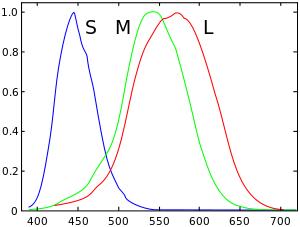
In reality, a colour is a combination of light waves with frequencies between 400-700THz, just like sound is a combination of sound waves with frequencies from 20-20000Hz. Just like mixing various pure notes produces a new sound, mixing various pure colours (like from a rainbow) produces new colours (like white, which isn’t on the rainbow.) Our eyes aren’t like our ears, though. They have 3 sensors that are triggered differently by different frequencies. The sensors roughly peak around red, green and blue. Roughly. ...

2009 1

Short notes

I’m quite busy on a project right now, and don’t get time to write long articles. So for a while, I’m going to stick to short notes on interesting stuff. Peter Bregman has a very interesting piece on Why You Should Encourage Weakness. It boils down to a choice: do you focus on on improving strengths or minimising weaknesses? Conventional performance evaluations focus on the latter. I very strongly support Bregman’s view on this. The weakness isn’t why you hired the person! Unless it’s killing the organisation, just leave them to focus on their strengths. Google Analytics has a fairly interesting API that I hadn’t explored until recently. Picked up [Advanced Web Metrics with Google Analytics](http://www.s-anand.net/amazon-browser.html#advanced web metrics with google analytics) and learnt that you can track outbound clicks, page load times, Javascript events and error logs, almost anything at all using Google Analytics. You can also mirror the logging on your local server using pageTracker._setLocalRemoteServerMode() The whole concept of a Sandbox environment seems to be picking up within Google. There’s a Checkout sandbox, an AJAX API playground, an AdWords sandbox, an AdSense API sandbox, the Mapstraction API sandbox, even an event called Developer Sandbox. (After saying Sandbox 6 times, I feel a bit like Hobbes.)

2008 1

Google Chrome screenshots

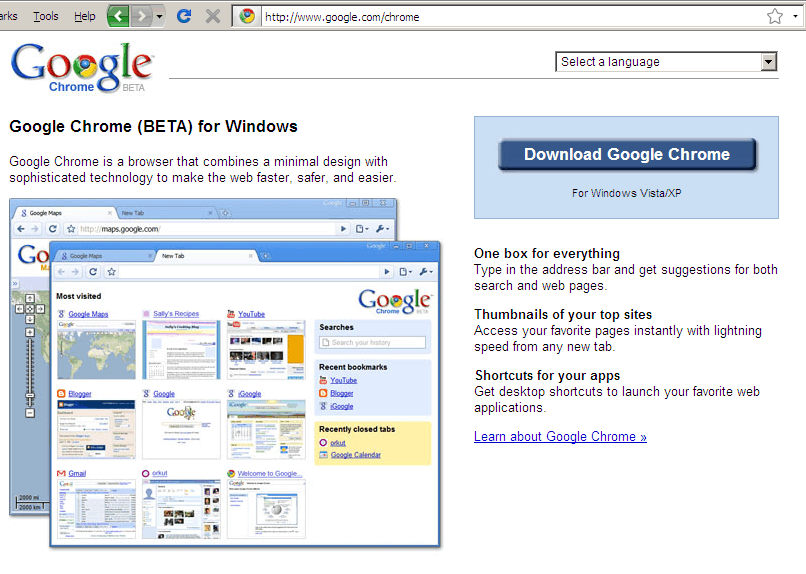
I went to the Google Chrome site. Clicking on the “Accept and Install” button… … automatically launched the downloader in Firefox… … and (after a fairly short while) started installing the application directly. This may be the most painless install I’ve done in a while. I clicked on “Customise the settings” This is what it looks like. And that’s it! It installs, and launches in just a few seconds. First impressions: the startup and rendering are really fast. ...

2006 1

Krugle

Krugle is a code search engine. Comments sheikh 14 Dec 2006 3:08 pm: Thank you anand, It was very useful

2005 2

BBC Backstage

BBC seems to be doing good work for developers at BBC Backstage. Tom Coates and Matt Biddulph are among those involved.

code.google.com

code.google.com Comments ritzkini 24 Mar 2005 5:18 am: google rocks !!

2002 2

BookWatch

A cool combination of the Amazon and Google APIs to BookWatch. (Incidentally, I downloaded the Amazon and Google APIs.)

Google API

Google has released a Beta API. Programmers, please do something with it. I honestly wish I had the time to use it, too!