2012 1

Colour spaces

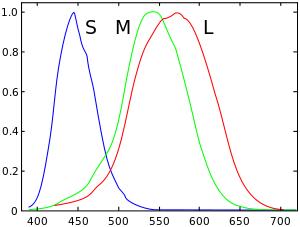
In reality, a colour is a combination of light waves with frequencies between 400-700THz, just like sound is a combination of sound waves with frequencies from 20-20000Hz. Just like mixing various pure notes produces a new sound, mixing various pure colours (like from a rainbow) produces new colours (like white, which isn’t on the rainbow.) Our eyes aren’t like our ears, though. They have 3 sensors that are triggered differently by different frequencies. The sensors roughly peak around red, green and blue. Roughly. ...

2007 1

Change blindness

A cool psychology experiment. A student asks someone for directions. People carrying a door pass between them. Students switch. They check if the person giving directions has noticed that it’s a different person. Many people don’t notice the switch.

2006 2

Now your tongue can see

Now your tongue can see. Clive Thomson suggests that this could be a good interface for video games too. Comments rajkumarc 6 May 2006 12:00 pm: 10/10

How to tie a bandage

How to tie a bandage without it falling off. It’s in Japanese, but the video is pretty clear.

2002 2

Neuroscience for kids

I found this site on neuroscience (for kids). Nice. Has lots of brain games (no – not smart ones – more like testing your reaction time, etc.) Actually I was reading up on neuroscience because of this article on how neuroscience helped figure out the meaning behind a Zen garden. via missing matter

Do not look at the needle

I always knew it. If you’re taking an injection, don’t look at the needle.

2001 2

Pretty faces help you think better

Pretty faces help you think better.

Super vision

It’s possible to have better than 20/20 vision: SuperVision. Apparantly, even 20/2.5 is possible.