Things I Learned - 02 Aug 2026
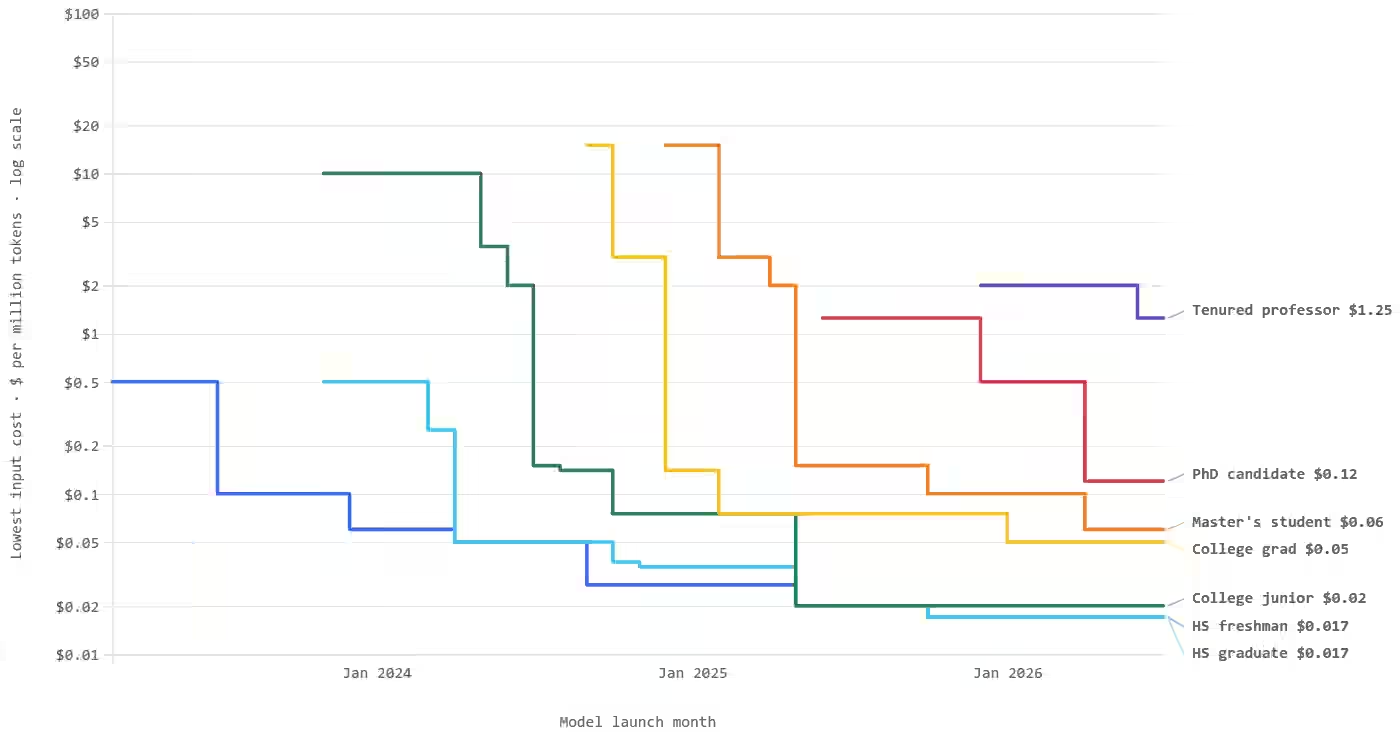
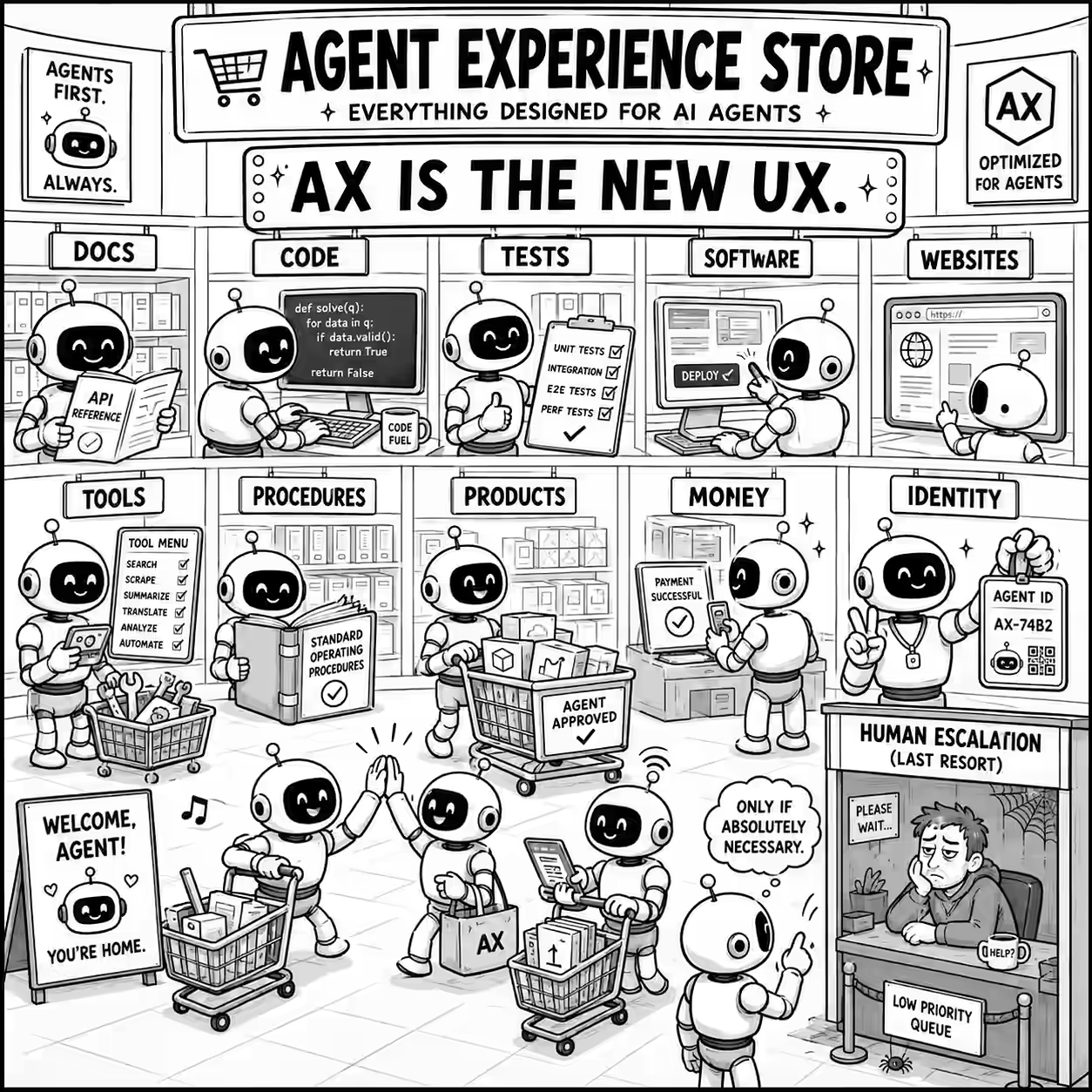
This week, I learned: I continue to be amazed at how efficient video codecs are compared with animated image formats. When compressing 38 PNGs, the final WEBM was smaller than many of the individual PNGs! 2343k: magick -delay 50 -loop 0 file-*.png file.gif 398k: magick -delay 50 -loop 0 file-*.png file.avif (slow) 284k: magick -delay 50 -loop 0 file-*.png file.webp 82k: ffmpeg -framerate 2 -i file-%03d.png -c:v libvpx-vp9 -pix_fmt yuva420p file.webm Please use AI by Shawn Smucker is the best guide I’ve read about where NOT to use AI. I need to be more mindful of this. gpt-transcribe is released at 0.45 cents / minute or 27c / hour. Gemini 3.6 Flash costs about the same ~27c. Gemini 3 Flash costs ~15c and that’s what I use today. Gemini 3.5 Flash Lite costs ~6c / hour but it follows my instructions very poorly. To benchmark this, I just re-run my transcribe_calls.py script on a recent conversation (that I remember well) with a different model to see if it’s clearly better or worse. No fancy benchmarking. Creating / maintaining formal benchmarks isn’t always worth it. ruff 0.16 is out and has a 350+ new default rules. I mean, who would check that functools.cache on instance methods has a memory leak? But its output is so agent-friendly that agents would just fix these on the fly anyway, so it does make sense. It’s another step towards code-writing becoming less accessible to humans. npm install --no-package-lock installs packages ignoring and without creating / updating package-lock.json. Useful for dev environments. Astral has published prebuilt GPU wheels for Flash Attention, vLLM, PyCUDA, and many others. One characteristic of good benchmarks is that they are easy to verify. I see a lot of comparisons of Fable vs Opus by having them generate 3D worlds (e.g. threejs, Blender, melt) - something that’s not trivial for agents, but evaluatable at a glance. Maybe it makes sense to open source the intermediate steps in ALL knowledge work, to make AI as good at it as with code? Arvind Narayanan Open-source software and culture is a historical accident. We take it for granted that not only are the outputs of software engineers’ creative work available publicly, but so are all of the intermediate steps (specifications, plans, mockups), tacit knowledge (StackOverflow, documentation culture), detailed process traces (issues, pull requests, bug fixes, code reviews), collaboration records (version control, project boards), and more broadly a culture of learning in public. This level of explicit description would be completely alien in most professions. ...