2026 5

Innovations 2 Nov 2026

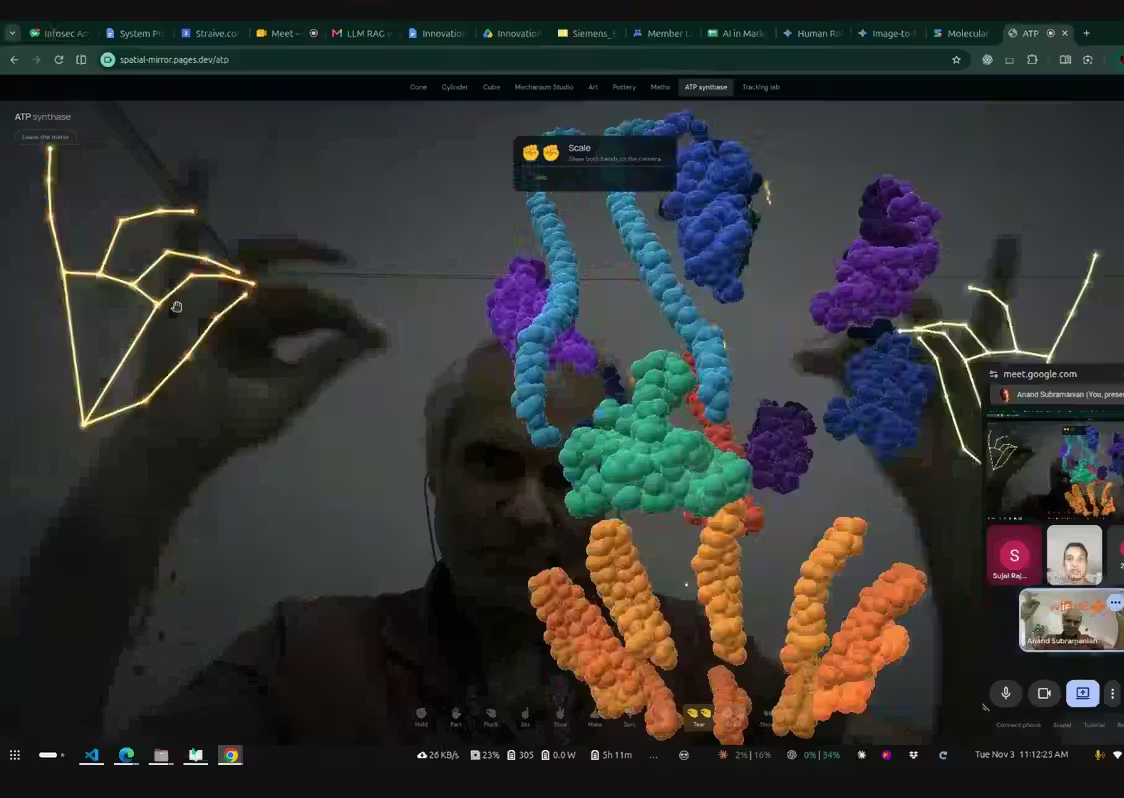
The Innovation team has been experimenting with 3D interaction, audio, video and AI agents. Three things struck me: We can manipulate a 3D molecule with our hands, or try different furniture in a virtual room, using a browser. Sound search can find things a transcript never records. And a small specialist model can diagnose a machine at a tiny fraction of an audio LLM’s cost. AI can help us improve videos and business decisions when its suggestions are checked against evidence, not just written convincingly. New ways to interact and create Hold a 3D molecule in your hands (Sujal). At our Innovation Team meeting, I used hand gestures in front of my camera to manipulate a colourful 3D ATP synthase molecule: pluck, slice, scale, rebuild and explore its parts. The browser recognizes the gestures; a paired phone can also control the scene. It is related to Sujal’s remote 3D pottery experiment. ...

Code on remote machines

Thornston Bell’s How I work with Agents suggests actively using remote machines for coding. I’d struggled with this for many months, and finally managed to set up my Windows laptop for remote coding. How? Tell my wife to tell the maid to never switch it off. (It doesn’t have battery.) Tell ChatGPT to install Remote Desktop Commander - and schedule it to run on boot. Now agents can use it. Tell ChatGPT to install Tailscale so I can SSH into it and copy files. Tell ChatGPT to create a sync-plutonium.sh that pushes files from my Linux system (graphene) to the Windows machine (Plutonium). That last step was the critical enabler. This means that most of the files on my regular laptop is also on the home laptop, and it has the same context. ...

A Mobile Voice Choir

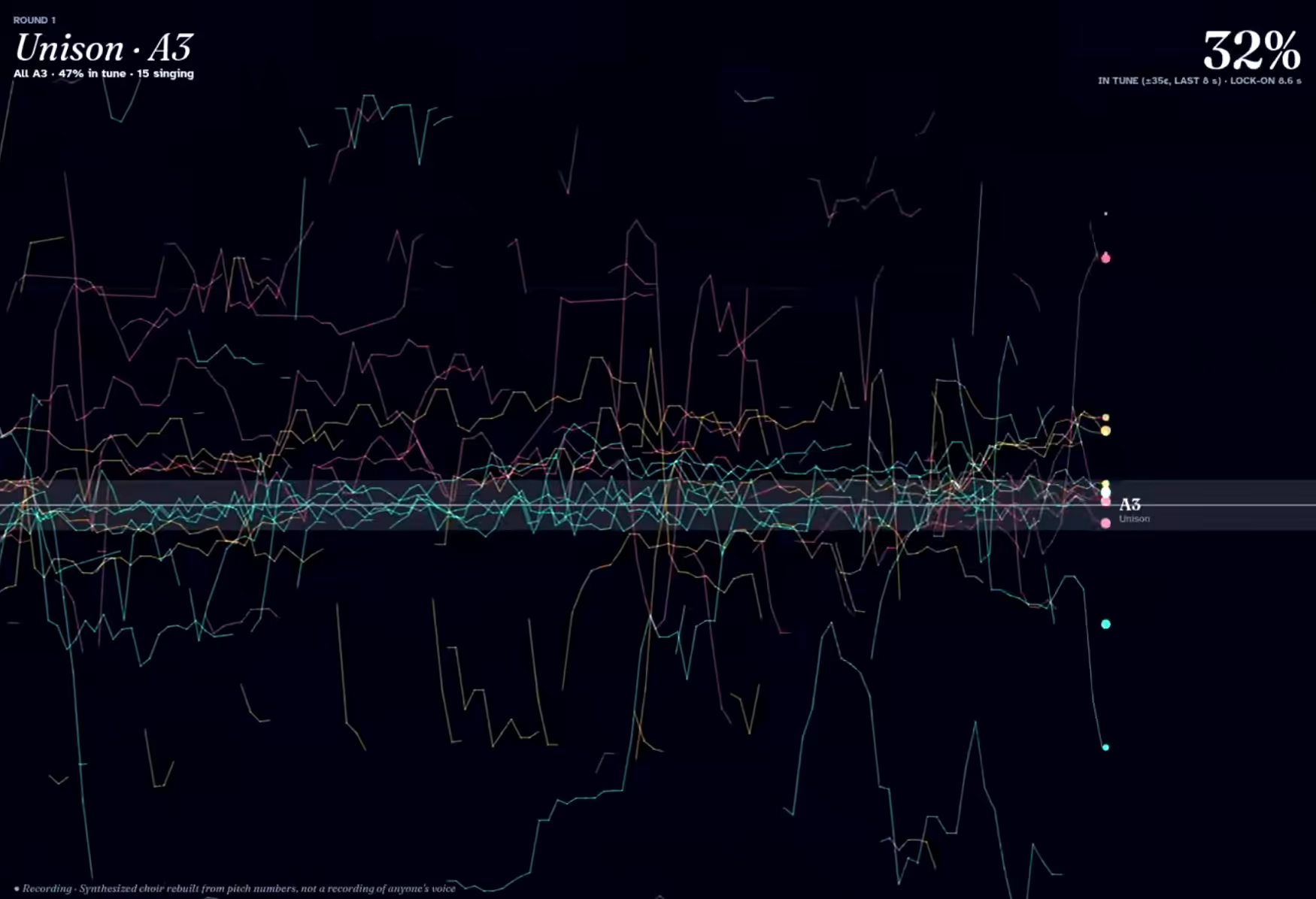
I’ve been playing around with mobile sensors recently and one such experiment is the voice choir. Here’s how it works. I’m the presenter. I visit voice choir, create a room, and show the QR code. People see the QR code (via screen-sharing or projector) and open on their mobile phones to join my room. I press “Start”. They hear a tone and they should hum at the same pitch. They can see if their pitch is above or below and adjust. I get a data stream of their pitch. Over time, we see if we can hum at the same pitch, or how close we converge. I record this as a visualization. We played this in Straive across about 20 people who joined the room. Here’s the video: ...

Innovations 12 Oct 2026

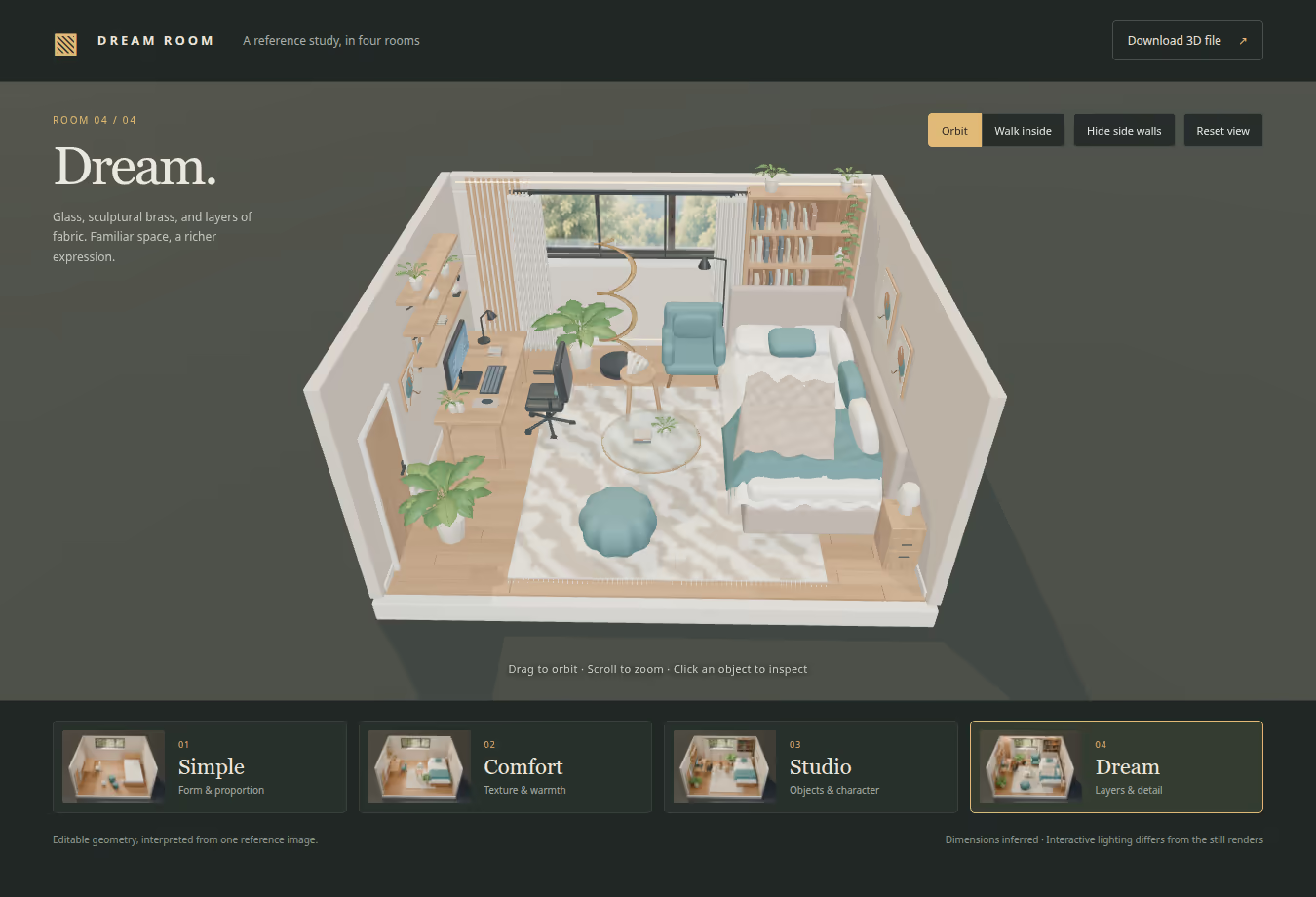
Our Innovation team built a few demos over the last couple of weeks. Three interesting things: Agents can build navigable 3D spaces Specialized vision models can outperform frontier LLMs on narrow tasks Simple search tools can beat elaborate document-retrieval systems. New capabilities Build an interactive 3D room from an image. A coding agent used Blender to create four increasingly detailed, navigable rooms. Click the image below and explore the final room: orbit, walk inside, inspect objects, or download the model. ...

Workshops help AI adoption

To teach a mindshift change like AI adoption, I’ve tried to: Workshop: get them to do it. “Let’s try something. Can you share your screen?” Live-code: show them how. “I’ll share screens and tyep this.” Demo: show what’s possible. “Here’s what I built.” Talk: explain it. “Here’s something we can build.” Interview: ask them about it. “What do you think?” Listen: let them yap. The most effective are on top. ...

2023 3

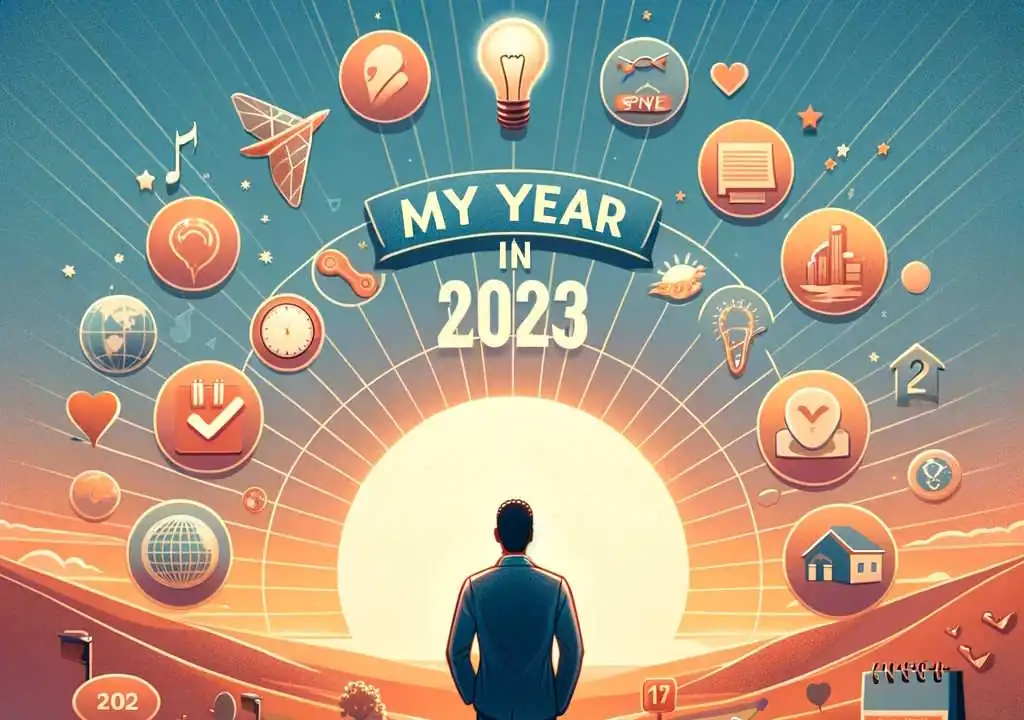
My Year in 2023

In 2023, I made 3 resolutions: Run 50 experiments. I managed 44 / 50. (Here are some). Learnings: I need to improve planning (9), scepticism (6), and lateral thinking (4). Make 1 change a month in my environment. I managed 8 / 12. The largest impact was from meeting new people, working out of new places, and using new gadgets. Calendar integrity, i.e. stick to my calendar. I succeeded over 95% of the time. My most memorable events in 2023 were: ...

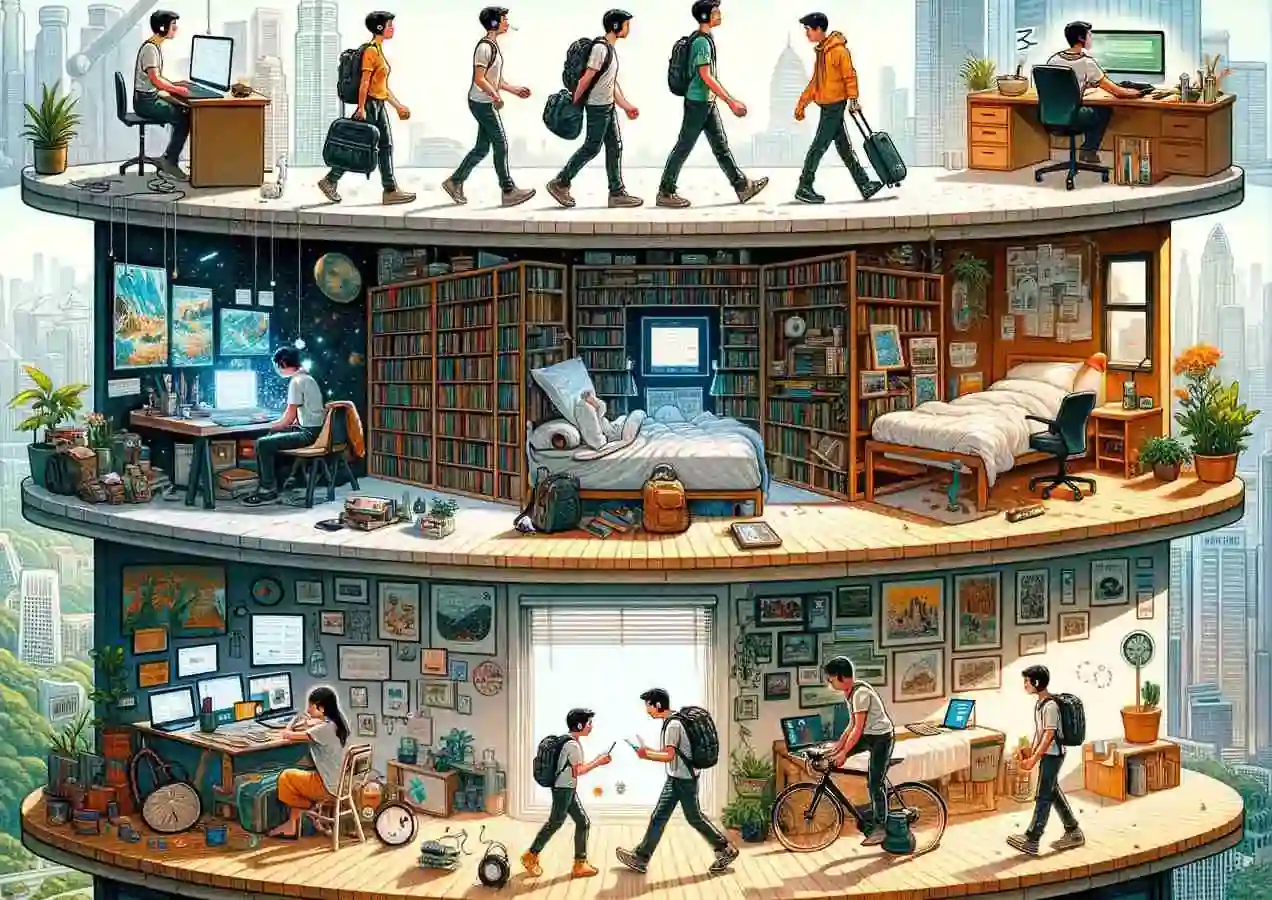
One Year of Transforming Thoughts by Changing Environments

From The Extended Mind I learnt that our environment shapes our thinking more than I’d expected. That we can arrange our environment to extend our thoughts. In 2023, each month I changed something in my environment to see: What does “changing my environment involve”? What can I change? Will I succeed? Does it affect my thoughts? Can I track this? Here are the results. ...

Zeigarnik effect vs my procrastination

I make commitments but don’t always deliver on time. In 2022, I ran an experiment to find out why I procrastinate. In Jan-Feb 2022, I listed the top 2 things I wanted to get done each day and measured how often I completed them. 14 Jan. ❌ Summarise from three research reports 12 Jan. ❌ UIFactory experiment ✅ Decide if I am a (…) 11 Jan. ❌ UIFactory experiment ✅ Agree on publishing in (…) 10 Jan. ❌ Client video. ❌ UIFactory experiment 09 Jan. ❌ UIFactory experiment. ❌ Attrition email as a story 07 Jan. ❌ ZS visual 06 Jan. ❌ Release Gramex Guide. ✅ UWC application 05 Jan. ❌ Publish network cluster post. ❌ Release Gramex guide 04 Jan. ❌ Publish network cluster post. ✅ Release Gramex. 03 Jan. ✅ Publish election TDS video. ❌ Publish Network cluster post. 02 Jan. ❌ Publish election TDS video. ❌ Publish Network cluster post. 01 Jan. ❌ Publish Network cluster post. ✅ Finalize SG school. I completed 23 / 57 things (40%). That’s one of my TOP priorities. ...

2022 2

My Year in 2022

In 2022, I made 3 resolutions: Run 50 experiments. I ran ~20 until April (here are some), but stopped (for no reason). I’ll continue. Speak at 10 global forums. I delivered 10+ PyCon talks. They were pre-recorded, allowing me to scale. But recording videos and no feedback are boring. I’ll explore how to scale enjoyably. Be 10X more effective. I improved my calendar effectiveness 2X in Jan. But I realized this is actually efficiency. Not effectiveness. Maybe effectiveness shouldn’t be optimized, but discovered. I’ll continue to ponder. Milestones in 2022: ...

Increasing calendar effectiveness by 2X

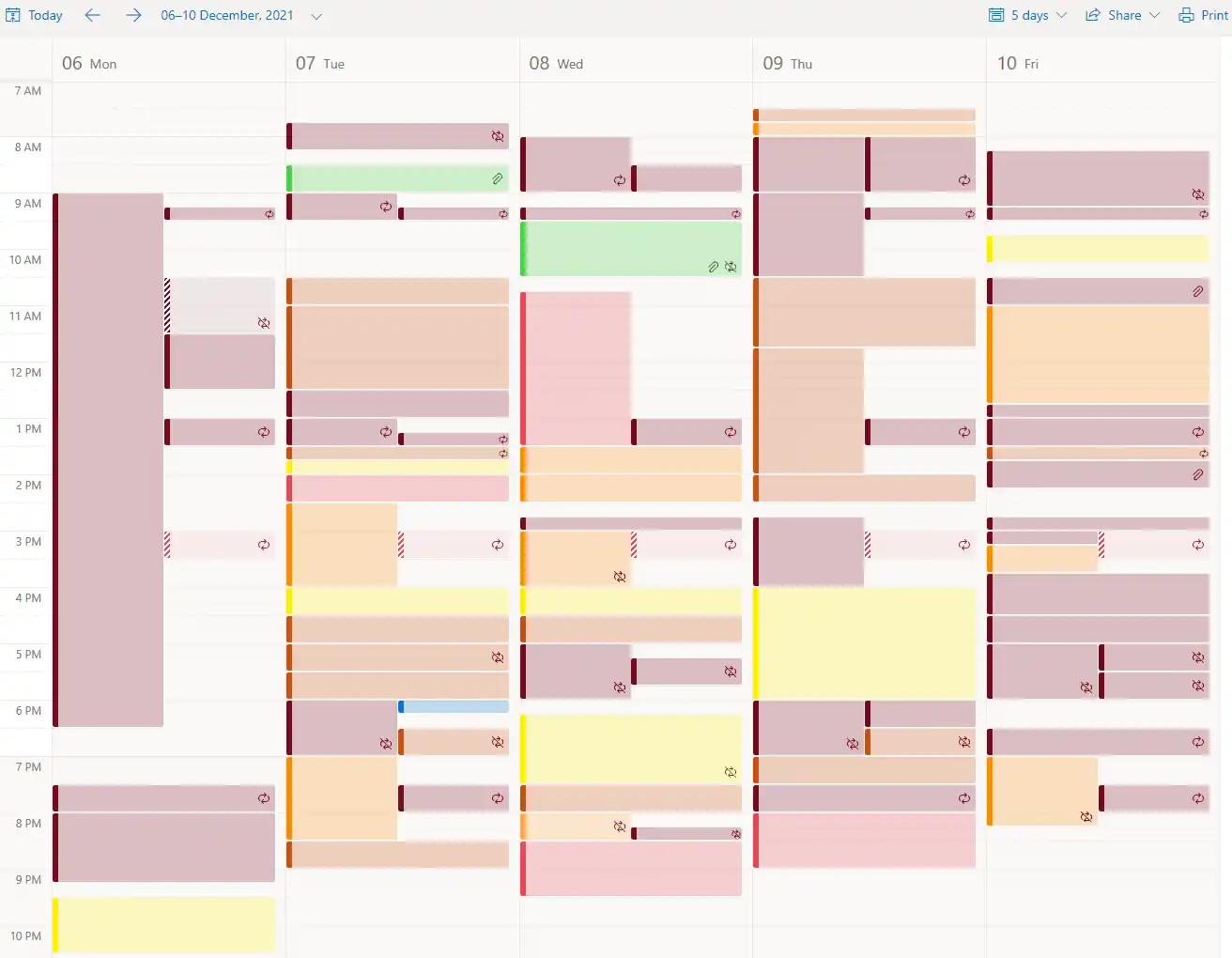
I took a 2022 goal to be 10X more effective. In Jan, I managed 2X. Here’s how. What is effectiveness? I don’t know. I’m figuring it out. But to start off, I measured the number of people my actions directly impact. For example: Discussing my Tools in Data Science Course or writing a blog post impacts ~500 people. Mailing all Gramener employees impacts ~200 people. Shopping with my wife impacts 2 people – her and me (in very different ways). Clearly, the impact is not equal. But it’s a start. ...

2010 1

Laptop power usage

I just got a digital wattmeter. Had no idea about these until Google PowerMeter, but now, they’re all the rage. Mine’s a pretty simple model and all  I plan to do with it is play around with a few household gadgets. My first target, obviously, was my Dell Latitude E5400. The statistics are interesting: Power … when… 0.3W Laptop is switched off. The adapter must be consuming the power 1.3W Laptop is on standby. 12W The lid is closed, and no applications are running. 18.5W The laptop is on, the lid is open, and no applications are running 25W The laptop is writing to the hard disk 34W One CPU is fully utilised 41W Both CPUs are fully utilised Looks like the display and hard disk each consume about 6.5 watts each, while the CPU consumes a whopping 15 + 7 = 22 watts. ...

2007 1

Amazing physics experiments

Videos of amazing physics experiments.

2005 1

Google Adwords algorithm

Interesting experiment to test the impact of changing the rate for Google Adwords. Two identical sites have Adwords account. One has an established account paying $0.10 per word. Another is a new account, and begins by paying $1.00, then lowers it to $0.40. The former got 15,000 click-throughs regularly. The latter started just above 15,000 and fell to 1,200 after the rate drop. Does the Adwords algorithm favours rate increases disproportionately (and hence is evil?) Or is the fact that the former site an established one create the difference?

2004 1

Self writing blogs and blog automation

iamlearn and rrobot are self-writing blogs. Written by programs, that is. They’re quite readable, though somewhat meaningless. (Why not write a useful self-writing blog… like Google News?)

2002 1

Pasta

Incidentally, this kitchen hosted my latest attempt at making pasta. I found a simple pesto sauce recipe, and ended up spending about Rs. 500 for the ingredients. We managed to eat it. Barely.

2001 1

Annals of improbable research

The Annals of Improbable Research have sent all kinds of things by post. Almost two-thirds were delivered. I doubt if it would happen in India.

2000 1

The Fat Project

The Fat Project tried to get two people to gain 30 pounds in 30 days. One made it. One didn’t. For the first time, you can actually see flesh grow.