2007 1

Default camera ISO setting

In those early days, when all I had was an analog SLR, I had to make choices up-front. Do I buy an ISO 100 film for daytime shooting? (It’s cheaper, besides.) Do I go in for the expensive ISO 1600 film for my fancy night shots? Do I lug around the tripod? Do I use the flash? Do I even bother taking indoor shots? etc. With my new digital camera, at least the ISO choice vanishes. The ISO range varies from 64 to 1600. And so, I don’t need flash or a tripod most of the time. ...

2006 3

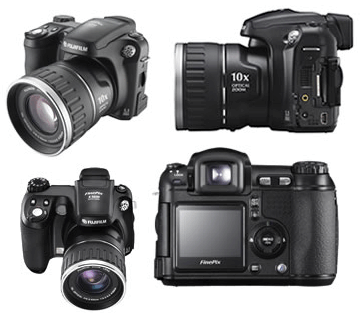
My Fuji Finepix S5600

My digital camera conked off. The cover that holds the battery fell off, and I can’t use it any more. I went back to my buying principles, and prepared an Excel sheet to choose my next camera. Here’s what I was looking for: Low-light photography. Flashes are lousy. This effectively means I need ISO control. Shutter speed control. I sometimes take really long exposure (3-10s) snaps, and sometimes can’t afford the blur (1/250s). Long battery life. My current camera consumed batteries like crazy. Fast start-up. By the time I got my earlier camera out and it started, it was too late. RAW mode. Gives me more control in Photoshop. I didn’t care about: ...

Photography Howto

Digital photography how-to. Comments Dhar 8 Sep 2006 6:09 am: In addition to the link you have given, do check out Photonhead for tips, tricks and tutorials on Digital Photography. Incidentally, I have recently started shooting again and a few of the shots I have taken are available here.

10 ways to add variety to your digital photographs

10 ways to add variety to your digital photographs. Exposure bracketing sounds especially interesting. Comments Dhar 10 May 2006 7:29 pm: Err, this seems a sure shot way of never learning to photograph properly. The problem with this approach is that people just take shots and pray that things will turn out correct (spray and pray). It would be better to make LOTS of mistakes early on and get a correct idea of things like exposure and composition and then use Exposure bracketing. “when it comes to shooting lots of images - take note of what you%u2019re doing.” From personal experience, this is crazy. With film SLRs (at least the model I had), note taking was often required because info about shutter speed, aperture, focal length was not available otherwise. But come on, with digital cameras this is easily available in the EXIF data. And how many times would you interrupt your photography session to note down these details. I personally feel, the better idea is to MAKE mistakes. Dont bother with exposure bracketing, multiple shots with different focal lengths and the like. If your snaps dont come out right, analysis and comments from people who know photographic techniques will tell you what is to be done the next time and then your snaps will be correct. Sorry for the long comment, but felt it worthwhile to point out a different opinion. Cheers, D.
2004 2

Picasa

Picasa is good. I incorporated all my photos in it, and I can now search for photos of people by name. (I have catalogued my photos’ file names with peoples’ names.) Now, with Google taking over Picasa, we will soon be able to store/share photos on Google, and search across others’ shared photos, using Google’s image search!

Software to caption digital images

Smart way of captioning digital pictures.

2002 2

16 megapixel camera

Digital photography comes of age. Kodak’s 16 mega-pixel digital camera is a dream. Upto 16 bits per colour (we at best have 8), ISO 100-400 (ISO 400 is very sensitive film, suited to night photography), 1.6 seconds reload time, … via Nilesh

Scantips

Scantips. Ways to improve your scanning.

2001 2

Courses on digital photography

Several useful courses on digital photography.

4 megapixel cameras

The 4.1 mega pixel cameras have come in: Olympus’ C4040, Toshiba’s PDR M81, Casio’s QV4000, Sony’s DSC S85 and Canon’s G2. All priced at around $700. (Of course, 5.2 megapixel cameras exist too…)