2010 2

Bayes’ Theorem

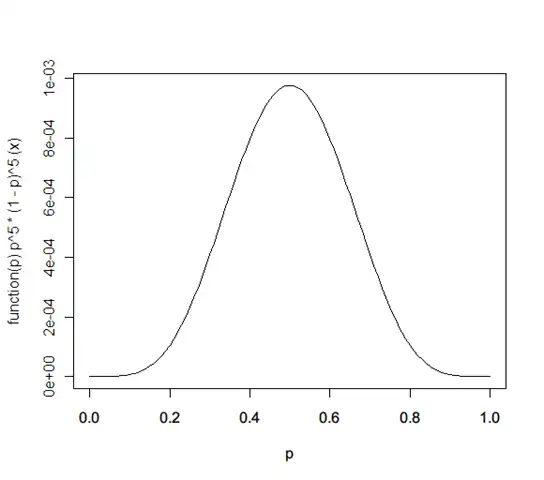
I’ve tried understanding Bayes’ Theorem several times. I’ve always managed to get confused. Specifically, I’ve always wondered why it’s better than simply using the average estimate from the past. So here’s a little attempt to jog my memory the next time I forget. Q: A coin shows 5 heads when tossed 10 times. What’s the probability of a heads? A: It’s not 0.5. That’s the most likely estimate. The probability distribution is actually: ...

A sense of proportion

A quote from David Heinemeier Hansson: So the problem is, a lot of business managers and especially business owners, they have no sense of probability. They can’t fathom that concept. So They treat the probability of 1 to 10 trillion as the same as a 1 to a 100. And like, “We’ve got to deal with this 1 to a trillion probability, because, what if it happens?” No! Doesn’t matter! I mean, don’t care. ...

2007 1

Tamil spelling corrector

The Internet has a lot of tamil song lyrics in English. Finding them is not easy, though. Two problems. The lyrics are fragmented: there’s no one site to search them. And Google doesn’t help. It doesn’t know that alaipaayudhe, alaipaayuthe and alaipayuthey are the same word. This is similar to the problem I faced with tamil audio. The solution, as before, is to make an index, and provide a search interface that is tolerant of English spellings of Tamil words. But I want to go a step further. Is it possible to display these lyrics in Tamil? ...

2006 2

Not all distributions are normal

14 years ago, I was introduced to the process of normalising grades. Professors “fit” students’ marks into a normal distribution and assign grades based on that. (I still don’t know how they do it). Since then, I’ve encountered normalising a lot. My performance at work is normalised. I normalise my song ratings and movie ratings. I’ve normalised all kinds of things at work: lead-time of delivery of fans, movements in savings account balances, calls to a call centre, demand for a resource… you name it. ...

Knowing when to stop

Mathematics, marriage and finding somewhere to eat has a simple solution to all these problems. Whether you’re hiring someone, or picking a partner, or finding a house – or any problem that requires you to pick the best among N choices – here’s the rule. Scan the first 37% of choices. Then pick the first one that’s better than anything you’ve seen so far.

2004 1

Card trick

Interesting card trick using the Kruskal Count.

2002 1

More on expectations higher than expected

After reading my post on the ET article mentioning “expected to see a higher than expected rise”, a certain CA gold-medallist friend of mine wrote back this obscure note that I refuse to understand: … if you take it literally it is not possible. To put it more technically, something called a law of iterated expectation comes to play. Today’s expectation of tomorrow’s expectation about what will happen day after is just today’s expectation of what will happen day after. ...

2001 1

Coincidences are common

Coincidences are common.