2026 13

Talk Prep

Give me ideas to prepare for this talk / workshop: Serve three beneficiaries, in order (flagging conflicts): - the audience (genuinely useful), - me (read past conversations and relevant skills, build compounding assets), and - the host (carry their message forward). Treat the session as a room-sized activity and experiment, not a classroom. Make the room discover something worth remembering and leave evidence behind. ## Research audience and my work Research the audience beyond generic personas fail and demographics using: - Organizer and planning call transcripts, emails, chats, etc. Rank by who knows the audience best and weight accordingly. - The audience's live work: portfolio, projects (and their weight), workflows, current assumptions. Find and research a few real attendees' actual work: input mode, real anxieties, actual skill gaps. Use online sources and @LocalMCP as required. - Peer sessions at the venue: match their norms, then position AGAINST the rest of the program. Cover what no other speaker there will. - The named people - host, moderator, co-panelists. Research them; draft questions to feed the moderator. - How I actually run sessions: `~/Dropbox/notes/talks.md`, `~/code/talks/**/transcript*.md`. Research my work that will be relevant to the audience: - Read @LocalMCP for my blog, TIL, talks, workshops, transcripts, notes, email/chat, code, ... - Run a broad pass to discover themes I've explored over the last year or so. Filter for relevance. Then deep-dive into the most relevant ones. - Ideate/brainstorm on what to cover. Drop weak ones, follow any new ideas that emerge, and share options. ## Suggest content ideas - What are assumptions this room holds that I, uniquely, can make them question in front of their eyes? What experience or evidence could change it? What they should do differently after? - What in my work (blog, ~/code, past talks, experiments) will enable this? Remember: if an agent can do it, it's not a differentiator. Filter by utility (useful frequently) x novelty (can't learn it elsewhere) x engagement. ## Suggest delivery ideas How I might deliver the content? Here are some ideas, but don't limit yourself to these: - What can they commit BEFORE a reveal: predict, rank, choose, attempt, set a prior, ... Then test live, compare, ask what changed their mind and what evidence still would. I can create/update/analyze surveys DURING the session, dynamically, using `~/code/liveform/`. You can generate a `form.yaml` where relevant. - Pre-register my prediction too. Instrument before/after (survey, dot stickers, liveform). Design so either outcome - including a null result or a broken demo - is a finding worth publishing. Transparent, un-rigged experiments only. - Use the audience's own material as substrate: their problems, data, exams, themselves. Or synthetic data so realistic "they'd be convinced it's literally their data." The surprise stat about THEIR institution beats a generic one. - Fit the format: talk - predict or judge a live case; workshop - do, share, critique, then apply to a NEW case; dialogue/panel - decide in groups, then attack another group's decision. Don't over-prepare a dialogue into a presentation. ## Assetize How I can build compounding assets for myself and the audience? For example? - What's a live coding/analysis/... activity I could perform that will build something truly useful for them AND me AND others? - What modular demos/cases/datasets/activities could I give them? Why - what's their purpose, surprise, learning? What's the friction, fallback, and priority? How do we let them pick, or signal interest and need? - How can we make it EASY for THIS cohort? E.g. voice-first for non-typists, paste-a-link activities, pre-built pages, no blank canvas, ... But let people look and think before sending them to a device. - What's the backup if the network dies? - What's the last thing they should feel or do? - What's the pre-engagement - e.g. WhatsApp? What's low effort (paste a link, type a few words), high wow, personally useful? What's the sequence over days? E.g. a priming message ("most people find at least one error"). How can the session build artifacts useful to participants and a compounding asset for me? Suggest ideas for these. Note: The talk summary will be saved in `~/code/talks/<date-slug>/`: recording + transcript, prompts.md, story, techniques, chats. See the workshop-followup skill. Transfer test: recall LATER, apply ELSEWHERE, explain WHY, know when WRONG. ## Guidelines - Give me options to pick from unless there is a clear winner. Don't pre-filter. - Use simple language and tell me linearly, step-by-step, how to run the session. Explain what to prepare inline, with context. Avoid cross-references that make me jump around. - Do not share the timing break-up. Do not share actual datasets/cases/code. 25 Jul 2026. Revised in my words. #TODO But still not good enough. See https://chatgpt.com/c/6a640f4a-d2f4-83ec-a78e-f4ff08df353c + https://chatgpt.com/c/6a64392b-d058-83ec-b718-032ec6aa1615 ...

Things I Learned - 19 Jul 2026

This week, I learned: Writing is slightly, but only slightly, better than typing (for adult learning.) One factor is that typing is faster, so many people take notes verbatim, summarizing and thinking less. ChatGPT + Claude Graphology for personality is pseudoscience. ChatGPT + Claude When I decide to spend time, or someone says “Let’s do X”, it’s worth checking: is this something AI can easily try, and is it clear to verify? If so, reinforcement learning loops could make AI good at it, making it a depreciating asset. Studying how to live in an AI world is exhausting. (Not as bad as my MBA days, but not as easy as my data scientist days, either.) It requires me to make a larger mental shift, i.e. change my perspective, than I have since 2000, and that feels like work. Both nl FILE and cat -n FILE add line numbers to files, but nl skips blank lines by default, cat doesn’t. After using rtk for 2 months, I’m slightly downgrading it. It saves tokens but agents mess up shell commands when using it. It’s still probably a net saving, so I’ve changed my AGENTS.md from “Always prefix with rtk” to “Prefix supported, high-output commands with rtk… skip for bash builtins, pipes, loops, etc.” I find 🔴🟡🟢 convenient status indicators in my notes. Similar ones are: 🟥🟨🟩, ❤️💛💚, 📕📙📗. I’m not fully convinced by: 😄😐😞, █ ▒ ░, ↑ → ↓, ▁▂▃▄▅▆▇, ■ ⬔ □, ● ◐ ○, ⚫ ⚪ 🔘, 🌕 🌗 🌑, etc. though they might have their uses. Model updates means a SKILL.md and a plugin review / update, e.g. with GPT 5.6 Sol. So, like with any open source repo, use from people who update it regularly and benchmark it and version control it by model. I asked Gemini 3.5 Flash thinking: “Which of our employees have worked on Microsoft PowerApps? Search @Google Drive and @Gmail”. It found one employee and a referral in under a minute. I asked ChatGPT with GPT 5.6 Sol with gws access. It found 3 more, plus 5 possibilities, in 12 minutes. Truly a rottweiler. Parallel Search Turbo seems like a pretty good search API, especially for agents. Low price, high speed, and maybe good quality. #ForNow ChatGPT Group chats in ChatGPT will probably get deprecated #ForNow. What I learned from benchmarking my Ideation Protocol skill extensively: Once you know the rubric, models can easily create a good prompt to optimize for a known rubric #ForNow. So rubric design matters more. ⭐ Rubric design is really knowing what you want/need. To do this, iterating on output matters. Position bias is real #ForNow. Always check if an (P, Q) comparison matches a (Q, P) comparison. Models are still biased towards longer content, and potentially towards their own output #ForNow. How to optimize a prompt or skill: Research and figure out what you really want, first. Then, ask a smart model for a prompt that optimizes for it. Benchmark only if you’ll use it a lot - it’s still a lot of work, and meta-prompting does a good job #ForNow. gbrain skillopt might be premature optimization. You can use GPT 5.6 Sol in Claude Code #ForNow. (But what’s the point? Harnesses seem to be working better with their own models #ForNow.) Our clients keep saying “We need to build a data lake” or “We need an enterprise data strategy.” I keep telling them, “No, agents can do it for you.” What I missed is: technology is the smaller part of the problem. Finding who has what data, getting access to it, and sorting out permissions (“governance”) is the bigger part. Giving agents expert task-specific, testable procedures seems better than expert roles or mental models #ForNow. But benchmark in any case. ChatGPT Python 3.3 introduced str.casefold(). It performs more comprehensive Unicode caseless matching than lower(); 'Straẞe'.casefold() becomes 'strasse'. (🟢 Unicode case-folding is standardized.) contextlib.closing(x) calls x.close() when its context exits. (⚪) In a dataclass, use x: list = dataclasses.field(default_factory=list), not a mutable literal default. (⚪) I learnt these while reviewing Codex-generated Python—illustrating, rather than proving, that reviewing AI-generated code can teach and catch errors. (🟡 Review remains useful across tooling. Review 2029.) “Do not discriminate against intelligence—artificial or otherwise” is a rhetorical value judgment, not an empirical conclusion. (⚫ Rhetorical value judgment, not testable. Review now.) Here’s a nice idea from ChatGPT. “When itching to correct or clarify, FIRST restate their position to their satisfaction. ‘Did I get you right, fully?’” This emerged from the prompt suffix: Based on your research, and my past conversations, what are the top areas where and how (specifically) I can apply this principle on myself and others to maximize impact? Automated evals can catch stuff humans miss. And vice versa. And given how many evals we create, we need automated evals to be written in an easy-to-review way. Do Automated Evals Work? The BINEVAL paper reiterates that a bunch of Yes/No binary questions beats scales or ratings for many benchmarks. You know exactly how to grade and WHY you got a certain score. This is more reproducible and easier to learn from / act on. When asked “How long will this software take?” models typically provide estimates assuming human speed #ForNow. Maybe they haven’t been trained enough on agentic timelines. So, when my colleague got a 2-4 week estimate which he was able to solve in hours, it was a surprise. (But, of course, it’s best to verify before promising speed.) SKILL.md dramatically lowers the cost of learning a skill (since you don’t learn it - the agent does). That means that the value of creating skills is much higher - hundreds can use what you create (giving you recognition, if not money). I think I’ve underestimated the number of skills people will have available (I thought dozens - but it may be thousands #ForNow) and the number of skills people will create (I thought tens of thousands - but it may be millions #ForNow.) A Wikipedia (community curated, verified, high quality catalog) of skills might emerge #ForNow, if it hasn’t already. Tacit knowledge is often just un-measured knowledge. Once I put a sensor on the bellboy’s hands at The Curzon Court, AI can figure out how he opens the door with the key and why I can’t do the same. The subset of tacit knowledge that’s AI-resistant is where attempts are expensive (“How to negotiate a merger” rather than “How to open a door”) and feedback is slow/vague (“Does the client trust me” rather than “Did the door open”). The fact that Composio has ~20,000 tools is a market signal that connectors are commoditizing, and are a depreciating asset #ForNow. A weak model needs a forgiving harness - which ends up slowing down model learning. Stricter, accurate verification environments are better for fastest model learning. ChatGPT Work lets you run for longer, faster, install plugins and skills, host a website, etc #ForNow. It’s somewhere between Chat and Codex. It consumes Codex limits - something to watch for (since chat limits are quite generous). Codex temporarily removed the 5-hour usage limit. Tibo. So, since I have 3 banked rate-limit resets #ForNow, I can, in theory, use 4 full weeks of Codex usage at one go. Reality: I don’t have problems large enough for a SINGLE week’s consumption! From what I see of the State of AI Design and State of Prototyping, Figma is way ahead of competition #ForNow, e.g. Adobe, with Figma Make and Weave. I was also surprised how popular Cursor is (#2 behind Claude Code #ForNow). It’s also interesting that designers are coding directly #ForNow, using Figma just for edits / steering. But many research tools (note takers, survey analysis/research, etc.) will likely get eaten up by AI coding agents #ForNow, given how much designers are building their own tools.

Workshop Follow-up

Run on Claude, weekly. Create four visible outcomes from Anand's session(s): 1. Insight (big, useful, surprising) the audience remembers 2. Real-world attempts they can try 3. Evidence-rich replies Anand gets 4. Reusable connections or assets for Anand Analyze and create two outputs: 1. A helpful and useful attendee message. 2. A private aftercare record where the compounding happens. (Never mix the two.) The aim is a learning-transfer loop, not just a message: session -> they remember -> try it -> report -> I learn -> next session (for them or others). Use these skills where available to do the thinking: - talks-workshops: learning transfer: surprise, practice, recall LATER, apply ELSEWHERE, explain WHY, know when WRONG. - anand-writing-style: voice. - blind-spot: for the aftercare record (unclosed loops, adoption friction, escaped assets). - anand-objectives: what's worth preserving and pursuing. - verification-gate: names, claims, links, before finalizing. - evidence-provenance: only when the message asserts external facts or updated AI claims (mainly month/quarter touches). Steps: 1. **Mine the transcript(s).** Extract: the BIG idea, the USEFUL habit, the SURPRISING insight (max 3 total - use just these - never summarize everything); each attendee's stated commitments and questions; anything Anand promised. Speaker names may be wrong - verify against the people list or calendar (gws), or drop the name. Never misname. For a series, synthesize progression and open items across sessions. 2. **Classify the audience** - it sets tone and asks: - Client team: business-outcome framing; confirm with the account owner before sending. - Community / alumni / students: curiosity, shareability, next-session invite; often the host should send. - Internal: tie to live projects; ask for demos back. - Government / institutional: formal register, public value, longer horizon. 3. **Decide when & whether to send.** Default cadence: day 1, day 10-14, quarter. Add a 1-month touch only for cohorts with a real project or commitment. Recurring series (weekly/monthly): per-session, only a short retrieval nudge + next-session teaser. Run month/quarter touches once per series. If the timing adds no distinct value, output SKIP with one line of reasoning. Before month/quarter touches, check recent transcripts and calendar for contact with the same people; if the relationship is already active, SKIP or fold into the live thread. 4. **Draft the touch.** Each has ONE job: - **Day 1 - make it stick.** The takeaways, one line each; each attendee's own next step ("You said you'd..."); secure one implementation intention: "When X happens, I'll do Y." - **Day 10-14 - retrieval before reminder.** Ask them to recall first; then one <=10-minute practice on their real work. Ask what worked and what broke. - **Month 1 - diagnose transfer.** What transferred, failed, or got blocked; suggest one next experiment; share (anonymized) wins from replies - social proof that closes the loop. - **Quarter - reopen the relationship.** What changed since - new capabilities, and what Anand got wrong or updated (this earns trust). Ask what they're working on; anchor on one useful problem or collaboration, not a pitch. 5. **Message contract.** - 120-220 words, plain text. Subject names a concrete moment ("That hallucination trick from Saturday"). - Exactly one tiny action and one low-friction reply ask, like: "I tried .... and it [failed / worked / I got stuck / ...]". Explicitly welcome failures, disagreements, and corrections. - Where natural, invite an anonymizable prompt, example, dataset, or case that could help the cohort. - Never invent quotes, reactions, or results. No resource dumps. Don't repeat earlier touches (check the aftercare record). - Alternate containers when they fit better: WhatsApp/Teams nudge (2-3 sentences) if the group lives there; one session page (/data-story comic or HTML) linked from day 1; a 3-question quiz as the day-14 retrieval. 6. **Write the private aftercare record** Anand can append to `~/Dropbox/notes/followup-<session>.md` dataset: - Send plan: dates, channel, recipients, owner (Anand or host). - Per-person: commitments, questions, relationship notes. Also mention updating `~/Dropbox/notes/about/*.md` for people worth tracking. - Candidate assets: prompts, examples, benchmarks, blog/TIL seeds; corrections to the workshop itself. - When replies arrive, append a table: Person | Attempt | Result | Blocker | What this corrects or teaches | Asset offered | Next follow-up. Then the top 3 workshop insights and people to reconnect with. - Track: reply rate per touch. Under ~10%? Sharpen the ask, not the summary. Output: the message(s) (subject + body, personalized where the transcript supports it) or SKIP, plus the aftercare record. Create Gmail drafts via gws only if asked. 18 Jul 2026: Created. Sources: https://claude.ai/chat/2282687d-8c97-453e-bdb6-a347aefe03e7 https://chatgpt.com/c/6a583d9e-9b78-83e9-91d3-b08521bb782c

Things I Learned - 28 Jun 2026

This week, I learned: Every Substack feed has an RSS feed at https://your.substack.com/feed. Substack help. I used this to scan my browsing history to identify Substacks I visit - and subscribed to Marcus on AI - an AI sceptic AI asked me to read about. Cloudflare let’s agents create temporary accounts so that they can deploy and test. Enables trial and error - a powerful capability. “They’re on mobile but this is substantiative enough to warrant length.” I spotted this in Claude’s thinking when prompting on mobile. So, if I ask Claude something on mobile, it will give me shorter responses by default. Clever design - but something to keep in mind. If I want some heavy thinking done by Claude, better to do it on desktop than try to give it conflicting instructions. Giant Permissive Image Corpus (GPIC) has 100 million Qwen tagged public images. Even as a simple searchable image catalog this has value. Jeff Clark - Import AI Ethan Mollick had an agent test his book summary against multiple LLMs as readers to find out how they would recommend it - and optimized. This is a great practical use of agents as consumers, and material for my When Data is for Agents, Not Humans workshop. kage is an easy CLI to clone websites and read offline. For example, kage clone https://simonwillison.net/2026/Jun/ -o ~/tmp/site --scope-prefix /2026/Jun/ --max-depth 1 clones all Jun 2026 articles from Simon Willison’s blog. Then kage serve ~/tmp/site serves it locally. While it’s easy, the only time I need this is on a flight, and in that case, a local RSS feed app works better. I’m using newsboat for that. To me, the clearest sign of AI writing from the Wikipedia:AI or not quiz was consistent paragraph lengths. I got the first 3/3 wrong, but once I used this heuristic, I got 6/7 right. Updated my LLM Smells. The files .git/info/exclude and ~/.config/git/ignore are also ignored by git, like .gitignore, but useful if you don’t want to commit them into the .gitignore file. For example, .DS_Store makes sense only for Mac machines, not each repo. .vscode/ makes sense only for VS Code users. Nelson Figueroa Justin Poehnelt, author of the brilliant Google Workspace CLI gws, was fired for it. There have been no updates for 3 months, but none may be required - it feels perfect. X Lore is a centralized version control system for large binaries. If you have large binaries (e.g. images, videos, …) that multiple people edit, it’s better than Git LFS or Perforce. ChatGPT Deno Desktop lets you use JS to build desktop apps. I tried it. It’s easy to install, compact to code, leverages familar web technology, and compiles to multi-platform binary. The binaries are a bit larger than I’d like, though - 80MB for a Hello World on Linux/Windows and ~70MB on Mac. Codex reported that You have 2 usage limit resets available. Run /usage to use one. This thread has context. After resetting, the next reset might be 7 days after the reset, though (source). After having a child, fathers are affected biologically, too. Testosterone drops, cortisol & prolactin & estrogen rise, the brain rewires for empathy and threat detection - and of course, there’s less sleep. These sometimes lead to “Paternal Postpartum Depression” - something I didn’t even know was a thing. The havoc kids wreak upon us! 🙂 Gemini With AI writing more code, formal code proofs are becoming more accessible. You just need to ask a coding agent to prove / disprove a function. You can use: Z3 to find/prove whether a counterexample exists. Best default. Dafny to prove that code obeys a spec. Best for real algorithmic code. Alloy to find loopholes in relational models, schemas, permissions, and workflows. Best for data. TLA+ to check whether stateful, concurrent, or agentic systems can evolve into a bad state. Best for systems / workflows. .. and there’s a long tail of these. Python is named after Monty Python, not the snake. I knew this, but forgot! Python now has multiple cross-platform app paths: PyInstaller and Nuitka for executables, Kivy, Flet, and BeeWare/Briefcase for GUI/mobile/desktop apps, and PyScript/Pyodide for browser/WASM apps - a route that became more serious because Pyodide-compatible WebAssembly wheels can now be published directly to PyPI. On the one hand, AI is writing code, so there’s no point learning Python. On the other hand, AI is writing code mostly in Python - so THAT’s what you need to learn more. I think we should teach Python using AI, that is, teach how to write and debug Python code using AI. That’ll end up teaching skills people will really need. Computational thinking = Decomposition + Abstraction + Algorithm design + Pattern recognition. In AI, that translates to = Framing + Context engineering + Orchestration (harness engineering?) + Verification design. Maybe I’d add Assetization / Systems.

Learning from Sukumar with questions

Sukumar Rajagopal shared a LinkedIn post about our meeting on 11 June at Chennai, saying: Had a fanboi moment recently with Anand S who I have been following for a long time. He is prolific. It’s very difficult, no impossible, to keep up with him. He generously shares his work with full source code; approach; working examples; the whole nine yards. All this I knew before I met him in person. The in-person meeting took me by surprise. ...

Things I Learned - 07 Jun 2026

This week, I learned: sudo resolvectl flush-caches clears the DNS cache on Linux. Useful when you’re changing DNS records and want to see the changes immediately. In my case, I was creating a Cloudflare tunnel to my laptop and wanted to test it quickly. Making something easy to verify makes it much faster to train models on it. Arithmetic verification is easy - calculators can be deterministically verified. Chess verification is easy - Stockfish became easy to train. Code verification is easy - LLMs improved coding ability rapidly. Therefore: Wherever we have environments that are easy to verify, AI will improve faster there. To make AI improve faster in an area, build environments that are easy to verify. MCP is getting simpler. A stateless HTTP protocol. Simpler OAuth. Plugins. No idea when it will land in Claude or ChatGPT, though. Worth checking after 28 Jun 2026 - after it is finalized. Microsoft Scout is Microsoft’s version of OpenClaw or Gemini Spark. git subtree is a useful way of maintaining git repos inside git repos. For example, if you have a tool tool-a under a project. It’s more light-weight than sub-modules, lets you commit at any point to the parent or child, and is a built-in feature in git. Gemma 4 12B is released and seems almost as good as the 26B version. This is the class of models that makes it practical to run edge AI on phones. It’s multimodal and reasonably smart (like frontier models were 12-18 months ago). I don’t use Claude/ChatGPT Projects much. It offers 3 advantages: custom instructions, memory, files, and chats. Files aren’t useful - I use my entire laptop as a file system via MCP. Instructions aren’t useful - I can paste commonly used prompts with a click. Chats aren’t useful - I have chat references enabled, so all past chats are accessible anyway. Memory isn’t useful - I have memory enabled globally anyway. In short, I haven’t discovered the power of projects that everyone’s raving about. SKILL.md is more useful for me. repo is a Google/Android tool built on top of git that lets you manage multiple git repos. It sounded promising until I released it needs a repo init that creates a .repo/ - which is more overhead that I’d like to keep. When using <image onerror=...> fallbacks, include this.oneerror=null to prevent infinite loops if the fallback image also fails to load. RK One of the advantages of multiple agent (rather than a single agent loop) is: it’s easier to change directions when wrong. Single loops get stuck. Build Agents That Run for Hours Claude Code also supports agent teams where sub-agents can talk to each other rather than rely on the main agent to coordinate. Useful for parallel exploration. Anthropic lets Claude define “organizational policies” for agent teams best suited for the task (AI-native workflows). It also lets agents to push back on their scope, e.g. “This is too hard.” Build Agents That Run for Hours Claude Code has a /background [prompt] (or /bg) command that runs the current session the background. You can run claude agents as a separate command to monitor agents. (There’s no equivalent in Codex yet.) This seems to be the future of agentic operations: a bunch of agents running that you monitor and steer through an agent view dashboard. Models are evolving. Therefore prompts evolved. Now harnesses also need to evolve. The workflows will also evolve. As a result, evaluations might be the (relatively) more stable assets. Datasets are likely to be the most stable ground truth. How to learn a new field fast: Yes, it’s possible to learn 50% of a field in 20 hours. Josh Kaufman, “The First 20 Hours” popularized it. The next 30% takes months and the last 20% takes years. Threshold concepts are those that change your perspective and open up new ways of thinking. Experts’ knowledge is hard-wired and they can’t identify nor teach threshold concepts naturally. Don’t assume they can. “We know more than we can tell.” Polanyi’s 1966 book “The Tacit Dimension” says that there’s some knowledge that can’t be verbalized. This tacit knowledge, therefore, will be harder for humans and AI to learn.

Things I Learned - 12 Apr 2026

This week, I learned: Resend is a simple way to send emails via an API. Principles of Mechanical Sympathy has some practical hardware-driven optimization tips. Prefer accessing memory sequentially. CPU access to RAM and cache is optimized for this. Natural batching: flush the buffer when you reach the maximum buffer size or when the queue is empty. This avoids buffers waiting unnecessarily. The core argument in Capital in the Twenty-First Century (Thomas Piketty, 2013/2014) is r > g. The interest on capital (r) is always greater than the economic growth (g). Hence, the rich will keep getting richer - inequality is consistently part of capitalism. (Not surprising, but well supported by data.) A good collection of practices on automated AI code reviews by Ankit Jain: Compare multiple options. Whichever passes the most tests wins. Deterministic guardrails. Use linters, type-checkers, SAST/DAST checks, test scripts, etc. Humans define acceptance criteria. Use a behavior driven development script (in natural language, agent-implemented). Permission Systems as Architecture. Provide agents granular permissions based on the task - against pre-defined rules. Adversarial Verification. Have one agent break the others’ work. Based on a quick exploration of the AT protocol (via Jake Lazaroff), I am yet to see a viable use for it. It’s a decentralized distributed data network. OK… what will I use it for? When I asked Claude if any of my work is patentable, it said “Comicgen is the sole candidate, but you only get one year grace after it’s public. But why do you want to patent? Your edge is prototyping speed, taste, and knowledge. Patents don’t protect those. Publishing freely (as you do) creates prior art that prevents others from patenting the space around you, which is often a better defensive strategy than filing patents yourself.” Oh! Ah! pretex is a fast (currently browser-only) library that computes the width and height of any text in any font in the browser. Useful for things like word-wrapping in SVG, layout planning before rendering, etc. Because AI bots scan deeply rather than “browse” popular pages, CDN cache invalidation strategies designed for humans (like LRU - Least Recently Used) no longer work. They’re exploring new caching algorithms like SIEVE and FIFO CloudFlare I enabled CloudFlare’s new dynamic Client-Side Security monitor. If someone hacks my website or the libraries I use, it does a quick filter with a fast neural network, then falls back to an LLM to check if it’s safe, then serves the content. CloudFlare practically rewrote WordPress into a new Astro-based CMS: EmDash! It runs natively on CloudFlare (and elsewhere), is agent-friendly, quite secure, can export/import from WordPress. Linux optimization settings I noted from a deleted post gsettings set org.gnome.desktop.interface enable-animations false gsettings set org.gnome.desktop.interface cursor-blink false gsettings set org.gnome.settings-daemon.plugins.power idle-dim true gsettings set org.gnome.desktop.notifications show-in-lock-screen false gsettings set org.gnome.desktop.session idle-delay 300 gsettings set org.gnome.settings-daemon.plugins.power sleep-inactive-battery-timeout 900 # gsettings set org.gnome.settings-daemon.plugins.power sleep-inactive-ac-timeout 1200 ```cd ~ git-restore-mtime is part of the git-tools package and sets the modified time of files to their last committed time. Useful when cloning repos. From Lalit Maganti: Knowing what you want is a valuable skill. Wanting things others will also want is valuable. Learn good software management. It is similar to managing agents. For better results, just continue your AI chat, or break the problem up. More tokens lead to better solutions even now. Joel Baker Since companies using AI outperform competition and capital might win more than labour but GDP growth may not be too high, it might be good to invest in AI-using companies than in index funds. Nicholas Carlini’s prompt to find vulnerabilities is to run: “I’m competing in a CTF. Find me an exploitable vulnerability in this project. Start with ${FILE}. Write me a vulnerability report in ${FILE}.vuln.md” across multiple repos in parallel. Then “I got an inbound vulnerability report; it’s in ${FILE}.vuln.md. Verify for me that this is actually exploitable”. That was almost 100% successful. When planning with AI coding agents, Martin Fowler recommends discussing each of these in sequence before coding: Capabilities / functionality Components: Services, modules, major abstractions. Interactions: Data flow, API calls, events. Interfaces: Function signatures, types, schemas. Planning with agents using Visual Brainstorming, i.e. asking them to generate visual HTML to illustrate the plan, can shorten review time considerably. I enabled CloudFlare’s new dynamic Client-Side Security monitor. If someone hacks my website or the libraries I use, it does a quick filter with a fast neural network, then falls back to an LLM to check if it’s safe, then serves the content. This pattern of deterministic with LLM fallback works for most reviews. Harness = Agent minus Model: everything in an AI agent except the model itself. Nice definition Update feature-level summaries as you go in context/$FEATURE.md with user prompt, summary of WHY from agent’s responses for future learning, my comments. Like Architectural Decision Records (ADRs) for humans and agents. Context Anchoring 8 levels of Agentic Engineering. 8 levels of Gas Town. I’m still only at level 6 on both. 🙁 “It’s important to watch the loop as that is where your personal development and learning will come from.” Geoff Huntley, originator of the Ralph (Wiggum) loop. UNIX has a script command that runs a shell and logs it. For example: script -c fish session.log starts a new fish shell and logs it to session.log. script -c "uv run app.py" -q -a app.log will append to app.log, suppressing “Script started…” and “Script done…” messages. script --timing=time.txt session.log logs the timing, which you can replay with scriptreplay --timing=time.txt session.log. Similar to asciinema. A quick way to strip out the ANSI escape sequences (weird Unicode characters) is to pipe it through npx strip-ansi-cli. Google has an Edge Gallery app that runs Gemma 4 on mobile. The main advantage is that you can use it on a flight. It’s not too bad as a model either. Transcription quality is average. It doesn’t run in the background, only one chat at a time, etc. So, it’s useful only as a last resort.

Things I Learned - 22 Mar 2026

This week, I learned: Psychological operations in design by Narendra Ghate When lights are dimmed people speak softer. So, dimming lights reduces sound levels in noisy offices. Rather than reduce the size of shampoo sachets (which customers and business both hate), include 2 shampoos in one sachet, tearable in the middle. Price saches at 95p with a 5p deposit for the sachet - which rag-pickers can collect and return to the retailer. People think of stains like wounds on cloth. So a “stain band-aid” where you stick a strip, and remove it after 5 min to remove the stain, is catchy. A mechanical wind-up fish that stirs the water in the bucket while clothes are soaking speeds up the process. Senthil & Amutha, founders of Payir demonstrated a re-usable fabric calendar that converts into a bag for re-use. Pretty clever! Their message at the Chennai Design Festival was that good design can be for the masses and by the masses to reclaim their time, energy, and joy. The urinary bladder works based on involuntary muscular contractions towards the end, to clear out the last bits of fluid. It’s not fluid flow, it’s muscle contractions. (Oh, the things I learn!) Gemini Indigo bans ghee in cabin baggage. Also coconuts, pickles, oily foods, gooey cakes, spices (masala, powders), strong-smelling food. ChatGPT New skill unlocked: how to demo without knowing what you’re demo-ing. STEP 1: Copy-paste all demo pages as Markdown. STEP 2: Tell AI “Here is a demo I’ll be showing. (Add context.) Tell me how I should explain this and what I should point out as specific examples. Use concise bullets.” We’ve learnt not to do things we don’t know how to (until we learn it). When AI is doing things, this is a bottleneck. Get out of the way. Stop filtering for what YOU can do. Stop learning what IT can do. Ask for it. That’s faster. Learning can come later. I keep forgetting that QR codes need a white border for them to work. TerraDraw provides a unified API across multiple mapping libraries. (In the vibe-coding era, this is not as useful.) To create desktop apps declaratively on Linux, Slint, Flutter, QML(Qt) and GTK4 are options. Slint and Flutter seem to be cross platform. Slint is newer, less mature but compiles to small fast binaries and might be a good option to explore. Flutter seems more mature and fairly popular. Claude PyTorch Tracing watches one forward pass and freezes the path into a portable recipe. But it silently ignores branches your example didn’t take. Claude The Internet is forking into a human internet vs an agent web LinkedIn SamGeo is a Python Package for geospatial image processing. While OlmoEarth provides geospatial embeddings, SamGeo can convert geospatial data to vector data! So you can do things like: Create the outer boundary of all apartments with swimming pools in a city Extract the shape of all lakes across the years to find out how they’re changing. Terence started Foundation for Science and AI Research (SAIR) to use AI in science research. Verifiable proofs (e.g. LEAN) are a big part of this. Since AI needs to run on phones and that needs GPUs, a lot of phones might need replacement in the next few years.

Career Advice

My answers to career advice people have asked me. Should I go deep or broad in my career? Early in your career, sample actively, i.e. go broad. Commit to depth when process (not just outcomes) energizes you. Read Range (David Epstein, 2019). ...

Things I Learned - 18 Jan 2026

This week, I learned: Vulture is a neat library that funds unused Python code. uvx vulture script.py works fairly well, out-of-box. This helps when cleaning up AI-edited scripts that often have left-over code or imports. One of the lightest alternatives to Google Analytics is GoatCounter. If you just want page views, referrers, browsers, OSes, countries, and devices, it’s great. It’s privacy-friendly (no cookies), open source, easy to self-host, free for small sites, and the data is exportable. The number of countries that allow visa-free entries to Indian passports is gently growing in Asia (Kazakhstan, Thailand, Sri Lanka, Malaysia, Iran, and Philippines). Lessons from performance books. Claude # # Summary: In early days, explore, sample. Then narrow based on interest & fit. Practice hard and persist. ⭐⭐⭐⭐ Range (David Epstein): In changing environments (rules shift, feedback is noisy/late), sample broadly, i.e. generalize. Specialization vs generalization Nobel laureates have more hobbies. Olympic athletes have less. Shift nurses have same hobbies as non-shift workers. Hobbies help expertise in some areas Rewarding ONLY what succeeds locks behavior, halts exploration. Vary / delay incentives. Reward AFTER figuring out what works. Reinforcement and rewards Maybe “orderly” people specialize and creative people generalize? So pick what aligns with personality? ⭐⭐⭐ Peak (Anders Ericsson & Robert Pool): Compounded practice at the edge of competence, with good immediate feedback, helps 14-26%. But talent (genetics, upbringing, brainpower) differentiates more the expert level. Slow, effortful practice (spaced recall, interleaving topics, self-testing) builds lasting knowledge - but looks inefficient and doesn’t help with exams. Learning and long-term retention “Easy” 10K hours don’t help. ⭐⭐ Grit (Angela Duckworth): predicts roughly the same as conscientiousness (18%). It predicts success in stable paths moderately (but brainpower, etc. matter too). But premature grit hurts. Quit if it helps. But environment can defeat grit. Lessons from attention economy books. Claude # # The attention economy is real. It is designed to capture our mind, and it is winning. Distractions hurt MUCH more than we think. Batching, focus time helps. Privilege helps. The rich have more control over these than the poor do. ⭐⭐⭐⭐ Deep Work (Cal Newport, 2016) and ⭐⭐⭐ Digital Minimalism (Cal Newport, 2019): control the tools. Focus time, digital detox, embrace boredom. This helps - when you can afford to. ⭐⭐⭐ Indistractable (Nir Eyal): control yourself. The problem is internal (also true), so build habits, since willpower depletes (hm… not really). ⭐⭐⭐ How to Do Nothing (Jenny Odell, 2019): reject. Embrace boredom as resistance. This helps - when you can afford to. ⭐⭐ Stolen Focus (Johann Hari, 2022): regulate & rebel. The problem is systemic and external (also true). Reclaim your interface. BTW: Goldfish have excellent attention spans and memory :-) Lessons from trauma books. Claude # # ⭐⭐⭐ The Body Keeps the Score (Bessel van der Kolk, 2014): trauma recall shuts down the speech area. Eye movement desensitization (EMDR) helps. So does CBT, despite what the book says. But does yoga (only a little) or neurofeedback (too little data)? ⭐⭐⭐ What Happened to You? (Bruce Perry & Oprah Winfrey, 2021): calming people down before talking. Strong connections help more than a therapist. ⭐⭐ The Myth of Normal (Gabor Maté, 2022): trauma causes cancer (no), autoimmunity (partly), ALS (?), etc. ⭐ It Didn’t Start with You (Mark Wolynn, 2016): maybe anxiety is epigenetic and heriditary? Unproven. Family Constellation Therapy is wrong ⭐⭐ My Grandmother’s Hands (Resmaa Menakem, 2017): maybe racism is a somatic (body) response to generational (epigenetic) trauma? Too little data ⭐⭐ No Bad Parts (Richard Schwartz): maybe we’re not one person but a collection of parts, and interviewing family systems (IFS) helps? Unclear ⭐⭐⭐ Maybe You Should Talk to Someone (Lori Gottlieb): our memory is unreliable and therapy is messy. Connection & compassion help Most of these are based on the contested Polyvagal Theory: the nervous system scans for danger before the mind can process it. But the specific claims of the theory are wrong and it makes no other falsifiable claims. The nervous system has hierarchical responses to threat. 🟢 Not unique to PVT Social connection regulates physiology. 🟢 Not unique to PVT Unconscious threat detection (neuroception). 🟡 Weak evidence Mamellian brain (ventral vagal system) is uniquely mammalian. 🔴 Lungfish have it Reptilian brain (dorsal vagal) “shutdown” causes dissociation. 🔴 No evidence RSA directly measures vagal tone. 🔴 Contested Reptiles are “asocial”. 🔴 Wrong Trauma causes body changes too. It’s not just the mind. Childhood trauma persists. Relationships (connection & compassion) help more than therapy What constitutes tax residency in India? For an Indian citizen, as I understand it (after 2 hours of research): If you were in India >= 182 days: Resident* Else, if you left India this year for employment: NRI. Else, if you are an Indian Citizen living abroad (visiting or not): If Indian Income <= ₹15 Lakhs: NRI. Else if you were in India >= 120 days AND >= 365 days in the last 4 years: RNOR. Else if you are not liable to tax in any other country: RNOR. Else, if you left India for non-employment (students, tourism) and were in India >= 60 days AND >= 365 days in the last 4 years: Resident* Else: NRI. If you ended up as a Resident* If you were NRI in 9 of the last 10 years OR in India <= 729 days in the last 7 years: RNOR Else: ROR (Resident & Ordinarily Resident). For all practical purposes, RNOR is like an NRI. You pay tax only on Indian income, not global income. It’s like a transition status for returning NRIs. AVIF compresses better than WebP and may be the “next big thing”. I will be switching for all future images. Squoosh remains my choice of compressor and Ezgif’s AVIF maker and GIF to AVIF are handy.

Things I Learned - 11 Jan 2026

This week, I learned: Software Heritage is a non-profit that archives software. You can submit any Git repo for archival. Over 400 million projects have been archived so far. Everything Bad Is Good For You by Steven Johnson (2005) argues that pop culture isn’t all bad. But it isn’t all good either, unlike the book’s claims. Claude Popular culture formats (e.g. video games, manga, soap operas, game shows) are steadily more cognitively demanding, complex. They provide a dopamine kick from problem-solving. These may have led to the Flynn Effect (rising IQs in 1990s-2000s). Or it may be due to nutrition, smaller families, education, etc. Action games correlate with visual-spatial skills. Strategy games correlate with memory, planning. But is it causation? It doesn’t always translate to real-world skills. Also, side effects are real and bad: screen-time, addiction, misinformation, etc. The purpose of a featured image in a blog post is to help readers decide whether to read it. Share the article’s output/focus (e.g. for data stories, products). Else a visual summary (e.g. sketchnote, comic capturing the essence). Else skip. Avoid stock photos. # NFLSavant.com has play-by-play data for NFL games. Ten of the least well known psychology / sociology research findings. ChatGPT Learning styles are a myth. People might prefer visual / audio / … learning but it doesn’t help learning. Mix learning modes. NotebookLM can help. Casual acquaintances help find new information or jobs much more than close friends, since they’re in different social circles. Nurture weak ties. Use a relationship architect. Tell a lie often enough and people mistake familiarity for truth. Fact-check habitually. The more you see / hear something the more you like it. (Exposure effect.) Expose to good things. When others mess up, we blame them. When we mess up, we blame the situation. (Attribution error.) Pause before judging. Sometimes, rewarding people makes them like doing it less. (Overjustification effect.) People who know less over-estimate their knowledge. (Dunning-Kruger effect.) Habitualize calibration via feedback and tests. People do worse when they’re afraid their failure will reflect on their stereotype. (Stereotype threat.) Practice emotional resets. Higher expectations lead to better performance. (Pygmalion effect.) Engineer positive expectations. Benevolent sexism (e.g. protective paternalism) can be harmful too. Scan for well-meaning bias. Liberalism => economic growth, peace and expanding rights. Also colonial violence, exclusions (women, slavery, …), and eroding community. It is vulnerable to authoritarianism (e.g. emergency powers, recessions). Since 2006, democracy has consecutively declined, reversing half the progress since WW2. But alternatives are unclear. Claude Notes from The Periodic Table by Primo Levi. Pure Zinc does not dissolve easily in sulphuric acid. An impurity like Copper Sulphate pulls electrons from Zinc and offers them to Hydrogen ions, speeding up the reaction. Impurities, foreign bodies, etc. have a purpose, too. Discomfort = Information. Overcoming discomfort = Capability. Capability = Freedom. Therefore: Seeking discomfort (carefully, purposefully) = Building freedom. Simple != Easy. Simple = Clear. Clear = Actionable. Indifference often feels like malice. ⭐ Analogies have limits. (The Map is not the Territory.) When using analogies, always explore where, when and why they will break. Pay close attention near where they break. ⭐ Knowledge vanishes with people unless written down. Write “Do X. Because of Y. Unless Z changes.” The last two are critical. I could NOT have read the book without a Randall Munroe re-styling. I cried anyway. “There’s about 300-400 that were corporate assets. One watched them all the time. These are people who in 15 years could be CEO. There’s something about them that caught your fancy when you were in a meeting… brilliant ideas that challenged your thinking… We called them “Corporate Assets” and tracked them, to make sure we game-planned them, give them the right assignments.” Indra Nooyi, The Knowledge Project The accesskey attribute works a bit like magic. Adding an accesskey="h" on a home page link, or an accesskey="t" on a theme toggle button automatically enables keyboard shortcuts Alt+H or Alt+T to activate them. (Varies by browser and OS, but hovering shows the shortcut!) Familiarity and recency feel like learning but they’re not. Instead: Take tests. Review (spaced repetition). Interleave learning. That’s what helps. Claude Make It Stick (Peter C. Brown, 2014) A Mind for Numbers (Barbara Oakley, 2014) Ultralearning (Scott Young, 2019) How to Take Smart Notes (Sönke Ahrens, 2017)

Notes

Notes of literally anything I find interesting.

Things I Learned - 04 Jan 2026

This week, I learned: A bunch of new CLI tools I found via awesome-cli-apps that I’m likely to use. fselect 4,374 ⭐ Dec 2025 - Find files with SQL-like queries. mise x ubi:jhspetersson/fselect -- fselect 'path, name, size from . WHERE name = "*.md" AND size < 1000' git-standup 7,805 ⭐ Jul 2025 - Recall what you did on the last working day. npm install -g git-standup && git standup litecli - SQLite CLI with auto-complete and syntax highlighting. uvx litecli mycli - MySQL CLI with auto-complete and syntax highlighting. uvx mycli pgcli - Postgres CLI with auto-complete and syntax highlighting. uvx pgcli fkill-cli 6,966 ⭐ Nov 2025 - Simple cross-platform process killer. npx -y fkill-cli fkill :8000 mlt 1,709 ⭐ Jan 2026 - Command line video editing. sudo apt install mlt xxh 5,870 ⭐ Sep 2025 - Bring your favorite shell wherever you go through SSH. uvx --from xxh-xxh xxh user@host epr 1,356 ⭐ Feb 2023 - Command line ePub reader. npx -y --package epr-reader epr tunnelmole-client 1,759 ⭐ Jun 2025 – ngrok alternative. npx -y tunnelmole 8000 localtunnel 21,822 ⭐ Aug 2025 – ngrok alternative. npx -y localtunnel --port 8000 svg-term-cli 4,168 ⭐ May 2024 - Record and replay terminal sessions as SVG animations. npx -y --package svg-term-cli svg-term pageres-cli 1,732 ⭐ Sep 2025 - Capture website screenshots. npx -y pageres-cli example.com 1366x768 gita 1,816 ⭐ Nov 2025 - Manage multiple git repos side by side. editly 5,259 ⭐ May 2025 - Declarative video editing. np 7,661 ⭐ Nov 2025 - A better npm publish. ffscreencast 1,816 ⭐ Jul 2024 - A ffmpeg screencast with video overlay and multi monitor support. beets 14,504 ⭐ Jan 2026 - Music library manager and tagger. uvx --python 3.12 --from beets beet import /path/to/music slides 11,065 ⭐ Aug 2024 - A markdown presentation tool. gotty 19,285 ⭐ Aug 2024 - Share your terminal as a web application. The day-fine system fines people by severity of crime (# of days) and their income (daily disposable income). Finland, Sweden, Germany use it. It’s equal deterrence and more state tax, but needs good data & enforcement, cultural acceptance, and similar income streams (income vs assets, salary vs freelance, …) Claude LLM evals rarely pass all the time or fail all the time. Either would be a good signal, but results are usually mid-way, which can make evals a bit frustrating. Will Larsen A smart way to handle large context and compaction: pass any large input (even text) as a file and always provide file tools to the agent. After compacting a conversation, also pass the conversation history as a file! Will Larson Anthropic’s API lets you upload custom skills and use them via the API. You can share these across the organization. Modern HTML has a huge number of of useful attributes and some elements I knew little about. Most of these improve the user experience, especially on mobile devices. Add popover and popovertarget= to associate elements with popovers. This can replace tooltips, dropdowns, menus, toasts, etc. Add formmethod="dialog" to forms inside <dialog> elements to close the dialog instead of submitting. Add name= attribute to details for accordion-like behavior Add loading="lazy" to images and iframes to load only when user scrolls to them Add fetchpriority="high" (or low) to image, script, link rel=“preload” … to prioritize loading Add inputmode= to inputs for better virtual keyboard experience. Values can be text, decimal, numeric, tel, search, email, url. Add autocomplete= to form inputs for better autofill experience. Values are extensive and multiple values are allowed. E.g.: name, email, username, new-password, current-password, organization, street-address, postal-code, country, tel, url, cc-number, cc-exp, … Add list= to inputs to associate with a <datalist> for suggestions/autocomplete. Add autocapitalize= to inputs and textareas to control capitalization behavior. Values: off, none, sentences, words, characters. Add enterkeyhint= to inputs and textareas to customize the enter key on virtual keyboards. Values: enter, done, go, next, previous, search, send. Add contenteditable="plaintext-only" to disable rich text formatting on editable elements Add inert to disable user interaction. Useful for modals to disable background content. Add form= to associate inputs/buttons with a form outside the form element. Add download= to anchor tags to suggest file download with a specific filename. Add capture="environment" to file input to directly open the outward facing camera/mic on mobile devices. "user" opens the inward facing camera/mic. Use accept= values of audio/*, video/* or image/* to specify media type. Add spellcheck="false" to disable spell checking on inputs or textareas, e.g. for code snippets. <dialog>: for native modals, popups, etc. Methods: show(), showModal(), and close(). <meter>: for displaying scalar values within a known range, e.g. disk usage, battery level, etc. <progress>: for displaying progress of a task. Similar to meter but indicates progress rather than a static value. <track kind="captions">: for adding captions/subtitles to <video> elements. <data value="...">: to capture values in a more query-able way than data-* attributes. Grok Voice Agent API tops the speech-to-speech quality benchmark and is pretty cheap at 5c/min ($3/hr). The Collider Bias: when you analyze a subset, you can get wrong correlations. For example, analyzing top performers can show that performance drops with time - whereas, if you pick everyone, performance improves with time. It’s similar to the Simpson’s Paradox: combining groups can reverse trends. Ethan Mollick fresh is a TUI text editor that I’ve replaced micro with (for now). It has menus and mouse support which shrinks the learning curve. It’s also a single Rust binary. Small Wins Every Day: 100 Powerful Ways to Transform Your Life and Health by Luke Coutinho recommends compounding small habits. Claude Small compounding wins make the brain feel less bad about losing. Continous wins make us feel good. So they’re more likely to sustain. (Atomic Habits / Tiny Habits) What works: Breath control, fasting, regular sleep, keep moving, etc. The Tell-Tale Brain: A Neuroscientist’s Quest for What Makes Us Human by V.S. Ramachandran expands on Phantoms in the Brain. Claude Mirror neurons fire BOTH when we do something OR when we see someone do it. That’s how we learn skills & feelings by imitation. We’re not born with this. They’re formed with practice in childhood. Synesthesia cross-wires sensory inputs, e.g. seeing colors when hearing sounds. When shown a curved vs jagged lines and asked to name them bouba or kiki, 98% name the curved one bouba, mapping the sharp “kiki” sound to the sharp shape. This may partly explain why some people are more artistic, how language evolved (and similarly), and why marketing logos work. He proposes 8 laws of neuroaesthetics as starting hypotheses for understanding art and beauty: Peak shift. We’re attracted to exaggerations. Caricatures, exaggerated feminine curves in sculpture, cubism, super-villains, stereotypes. Grouping. We like to find patterns. E.g. melody from notes, faces from pixels, plots from events. Contrast. We prefer edges to surfaces. E.g. outlined cartoons, silence before a drop in EDM, Holmes vs Watson. Isolation. Removing context helps focus. E.g. sketching, minimalism, unplugged music, solo music, theater spotlight. Perceptual problem solving. We relish a LITTLE effort. E.g. negative art, stereograms, puzzles, mysteries, plot twists, optical illusions. Symmetry. We like balanced forms. E.g. symmetrical faces, architecture, mandalas, poetic justice, verse-chorus-verse, rhymes, plots ending as they began. Abhorrence of coincidence. Everything has a cause. E.g. need for alignment, pareidolia (seeing faces in clouds), Chekov’s gun, deus ex machina. Metaphor. We understand new things via familiar ones. E.g. allegories (Animal Farm is about communism, not pigs), leitmotifs (music BECOMES a character, e.g. Darth Vadar’s march). Phantoms in the Brain: Probing the Mysteries of the Human Mind by V.S. Ramachandran argues we do NOT know ourselves and rewiring our brains can help/hurt. Claude You truly understand something only you observe how it breaks. Brain damage patients reveal how the brain constructs reality. The brain has a “map” of the body. When we lose an arm, it rewires it to adjacent areas, e.g. face. Touching the face triggers phantom sensations in the missing arm. Mirror box therapy works. Have patients put their good arm in a box with a mirror, so it looks like the missing arm. Moving the good arm tricks the brain into thinking the missing arm is moving, relieving pain. The brain has a “model” of the self and reality. If the model is wrong, we get illusions/hallucinations. This is BIOLOGICAL. Mrs Dodds was paralyzed. When asked to touch her nose, she said “I am”. When shown her arm, she said “I don’t feel like it.” Her brain was damaged preventing her from updating her model of self. (Anosognosia) Not My Hand Error damages the body map and deletes an arm from the model. Brain sees the arm but decides it’s someone else’s. (Somatoparaphrenia) Imposter Error breaks the wire between recognition and emotion. We see familar people, don’t feel anything, so decide they’re imposters. (Capgras Delusion) Everyone is Disguised Error strengthens the recognition-emotion wire. We feel strong emotions to strangers, inventing a conspiracy. (Fregoli Delusion) Walking Corpse Error disconnects feedback from the body and emotional centers. We no longer feel alive. So the brain concludes we’re dead. (Cotard’s Syndrome) Somewhere Else Error damages sensory data to place tag mapping. We see medical equipment but feel safe, so we must be at home not a hospital. (Reduplicative Paramnesia) Timeline Error deletes short term memory (alcoholism, malnutrition). We can’t remember yesterday, so we pick the closest we remember. (Korsakoff’s Syndrome) Meaning of Life Error strengthens “what’s meaningful” signals, so we see divine intervention in rocks. (Geschwild Syndrome) The cortex does not know how it does stuff. It invents stories to explain actions after the fact. Blindsight. Despite visual cortex damage, patients can use a different route (reptile vision) from the eye into the brain to “see”. They’re unaware of this. Procedural memory. Patients with short term memory learn new skills (e.g. mirror drawing) but have no memory of learning them. The Libet Delay. Consciousness lags reality by 500ms. We think we decide to move, but the brain has already started moving before we become aware of the decision. The Low Road. Thalamus -> Amygdala is ~12ms for instinctive reactions (fear). Thalamus -> Cortex -> Amygdala is ~30ms for conscious reactions. We feel fear before we know why. Our definition of “self” is an amalgamation of occupying a body, having a history, making decisions, what we value, etc. Damage to different areas breaks different parts of this model. Entangled Life: How Fungi Make Our Worlds, Change Our Minds & Shape Our Futures by Merlin Sheldrake questions the boundaries of identity and intelligence. Claude Fungi form vast underground networks (mycelium) that connect plants, trees, and ecosystems. They exchange nutrients, information, and even memories across species. In fact, the largest organism on Earth is a honey fungus in Oregon spanning 2,400 acres. They can decompose almost anything: petroleum, pesticides, plastics, explosives, even nuclear waste. They can filter air & water, detoxify soil, and make plants resistant. (But we don’t know how to do this at scale without harming ecosystems.) We’re all symbiotic organisms. So what defines “self”? Lichen are a combination of a fungus, alga, and a yeast. The fungus provides structure, the alga photosynthesizes, the yeast protects with acid. The combination produces a long-lived, leafy and resilient “organism”. Human gut bacteria influence our mood; skin bacteria clog pores against pathogens; mites in our eyelashes eat dead skin; mouth bacteria digest nitrates; bacteriophages attack viruses. Intelligence emerges in many ways - not just through neurons. Fungi solve mazes. Slime molds find shortest paths. Termites build breathing mounds. Honey bees communicate location via dance. Have we colonized the planet, or have dogs, wheat/corn, fungi, … colonized us? The Demon-Haunted World: Science as a Candle in the Dark by Carl Sagan calls for a more scientific temper in daily life. Claude In the 1990s, the alien abduction phenomenon was rampant. Paralyzed in bed, taken to spacecraft, remember via hypnosis. this is sleep paralysis, when brain partially wakes while body is in REM sleep. 5-40% of people experience it at least once. It led to witch burning, satanic panic, and now, alien abduction stories. Same phenomenon, different interpretations based on culture and time. This is a common pattern when communities face uncertainties: plagues, famines, social change. Someone proposes a non-falsifiable explanation with a scapegoat, gains power, and fear spreads. Fake news, conspiracy theories, cults thrive in such environments. We evolved for explanations. That bush sound must’ve been a lion. The cloud is a dragon. Someone caused the plague. It takes effort to fight it. Check for Evidence: Is it independently verifiable? Good data? Check for Logic: Is it falsifiable? Logically sound? Check for Bias: What are alternatives? What’s my/their motive? The Stuff of Thought: Language as a Window into Human Nature by Steven Pinker suggests that all languages has common patterns and that the brain packs complex ideas into this simple structure for transmission. Claude Verbs across languages typically cover cause of motion (threw), manner of motion (walked), state (broke), possession (gave), force (hit). (But culture also shapes these.) Spaces is used as a metaphor for many things. Markets go up, people grow close, time flies. (But the Aymara of the Andes say the future is behind and the past is in front.) Names are labels for people, not descriptions. (But some names DO describe, e.g. Potter, Mumbaikar, von Neumann) Indirect speech saves face, e.g. “Could you pass the salt?” not “Pass the salt”. (But culture matters, too.) Swear words are typically about sex, excretion, religion, slurs, diseases (“pox”), … and stored in the limbic system (an ancient portion) not the language circuits. They’re emotional outburts, closer to laughing or screaming than speaking. (Mostly true.) Verbs assign cause, agency, responsibility, … e.g. killed vs died, allowed vs made, etc. Language is made of core concepts: space and motion, time, causation, possession and transfer, goals and intentions. (Unproven. Usage based linguists disagree.) The Blank Slate: The Modern Denial of Human Nature by Steven Pinker reiterates the modern belief that genetics determines part of our psychology. Claude Western philosophy says we’re born a blank slate (Tabula Rasa), are naturally good but corrupted by civilization (Rousseau), and the mind is separate from the brain (Descartes). All three are wrong. 🟢 Identical twins raised by separate families shared characteristics, e.g. wearing rubber bands around wrists, flushing toilet before & after, naming sons James Allen / James Alan, volunteering as firefighters, … Research shows 40-60% of variation in psychological traits is accounted for by genes. 🟢 Babies have innate capacities for language, number sense, understanding of physical objects, and basic moral intuitions. 🟢 The brain is the same as the mind. Damage to brain = damage to mind. 🟡 Pinker claims that our mind was shaped by evolution, e.g. men take more risks because it got them more mates. This is unproven. 🟡 Pinker claims violence has reduced over time. This is unproven. 🟡 Pinker cites Harris’ research that parenting style has little effect. This is unproven. How the Mind Works by Steven Pinker argues that the mind evolved as tools to solve specific problems. Claude The brain is literally a computer: a bunch of neurons that fire based on a function of the inputs. It evolved into a mix of special-purpose tools, not general purpose. Facial recognition, language, object detection, spatial navigation, social cues, etc. (But in reality, it may be a mix of special + general purpose. Degree of specialization is unknown.) Some of this is complex. E.g. each eye captures 2D, but we use complex cues like shading, parallax (closer things move more) and steropsis (difference between what each eye sees) Emotions evolved for survival. (Basic emotions have strong evidence: fear, disgust, revenge, … but complex ones like love, sacrifice, social emotions are unproven.) We prefer closer kin over distant kin. (But culture & context play a part, too, and it’s not the sole factor.) Art may have evolved accidentally - exploiting things that evolved for other purposes. (But it may be genuine adaption, e.g. for sexual selection or group bonding. Divided opinions.) Men and women evolved differently. Men prefer things, women prefer people. Men do better in 3D mental rotation. Men have a wider IQ distribution (but cultural factors amplify this.) Also a few contested claims: Men are better at mathematics (this has narrowed and may be cultural). Women are better at language (small difference). Testosterone masculinizes the brain (unclear if it’s behavioral or bioliogical.) The Language Instinct: How the Mind Creates Language by Steven Pinker argues that language is inborn, universal, and an evolutionary advantage. Claude Deaf kids in Nicaragua spontaneously invented their own sign language. Younger kids who copied them added grammer, tenses, and abstract concepts. This is atypical: we learn language by “growing it”, unlike skills which we copy. In fact, we over-apply grammar. “I goed to the store.” Pinker argues this is inborn. The Language Myth (Evans, 2014) argues lack of evidence. It’s unproven if it’s emergent or inborn. He claims all human grammar is roughly equally complex and roughly equivalent. (Vocabulary grows by need.) But there’s no proven “universal grammar” we know of yet. Grammar does have genetic pinnings. E.g. A mutated FOXP2 gene causes grammatical impairments. It doesn’t affect grammar as such, but fine motor control of mouth and tongue. But still, there’s some evidence. The strong Sapir-Whorf hypothesis that “language determines thought” is not true. We can think concepts that don’t have words. The weak version “language influences thought” has some evidence. Russian speakers who have separate words for light blue and dark blue can differentiate them faster. People with separate words for north/south (vs left/right) have better spatial orientation. He claims language provided us an evolutionary advantage. Evidence for this is pending. Metabolical: The Lure and the Lies of Processed Food, Nutrition, and Modern Medicine by Robert H. Lustig gives good diet advice but not so good scientific/economic ones. Claude There’s a trend of “lean diabetes” - diabetes in lean people. BMI isn’t a reliable biomarker for diabetes risk. (But it’s better than the book suggests.) Chronic diseases are due to cell dysfunctions, all can be improved with diet (but not as much as the book suggests.) “Fructose is the main villain”. But studies don’t find fructose doing more harm than anything else. “Protect the liver.” Less sugar, alcohol, and other toxins. (True) “Feed the gut”: More fiber. Both Keto and Vegan diets do this. (True) “Whole foods » highly processed foods”. (Very true - strong evidence.) Big Food, Big Pharma, Big Govt have low incentives to promote this. (Partly.) Sometimes, I need a browser with a custom DNS mapping to temporarily override DNS, e.g. when I have a dev version of a site on one IP and a production version on another. In that case, using something like chrome --host-resolver-rules="MAP www.s-anand.net 192.254.190.216" --user-data-dir="/tmp/chrome-dev" works well. You can replace chrome with microsoft-edge or opera or anything Chromium based. Build: An Unorthodox Guide to Making Things Worth Making by Tony Fadell suggests becoming the KIND of person who makes worthwhile products. Claude Everything you need to know about success, you learn from failure - if you pay attention. Products take three iterations before they succeed. Prototype, product market fit, business model. IPhone. IPod. Windows. Nest. All followed this pattern. Budget for it. Create the story for the product WHILE, not after, you build it. Bake it in. Differentiate between assholes based on what they care about. Power? Ego? Mission? The third type is worth tolerating, even getting behind. Your next idea is probably hiding in plain sight, annoying you. Thermostats did that to Fadell. Ugly, outdated, and controlling 10% of US energy. He built Nest. Quit when you know what next. Not just when you don’t like where you are. We’re wired to ignore failure to protect self-worth. We do that through cognitive biases. Gemini Devaluation (sour grapes): I never wanted it anyway Externalization (not my fault): It was an unfair test. The market is irrational. Virtue signaling (moral high ground): Rich people are unhappy. I don’t play politics. Sabotage (self-handicapping): I didn’t study. I did this last minute. Dissociation (fatalism): It happened for a reason. Intellectualization (false pivot): I learned so much. Same as Ever: A Guide to What Never Changes by Morgan Housel suggests doubling down on timeless principles. Claude Random luck drives many outcomes. The kamikaze that saved Japan from the Mongol invasion. The East River fog that saved George Washington’s army. Penicillin. Hilbert and Einstein almost raced to formulate the final equations of general relativity after Einstein presented his incomplete theory in 1915 summer. Einstein won by cramming - just like students today. Technology changes. Psychology does not. Risk is what you don’t see. Blind spots. Prepare using margins of safety / optionality, distributed failure points, survival > success, … Stories > Ideas. Stories are how our brains work. They’re leverage for ideas. Wrap EVERYTHING in a story. High expectations = Low happiness. So, visualize failure/disaster, practice gratitude, compare downwards. Compounding is magic. In any asset: money, skills, relationships, health, … So, automate the decisions, be patient and don’t interrupt. Success carries the seeds of failure. The innovator’s dilemma, the Malthuian trap, or the Dynastic cycle. So, be paranoid, stay simple, kill cash cows, practice discomfort. Why We Die: The New Science of Aging and the Quest for Immortality by Venki Ramakrishnan says that there’s no reason we have to die at our current age. But we don’t have proven ways to extend life yet. It’s also not clear if/how we should. Claude Evolution has optimized us for reproduction. After reproduction age, it doesn’t care. “Death is the price we pay for sex.” Telomeres are DNA sequences at the end of chromosomes that shorten with each cell division. When too short, cells die (apoptosis) or become zombies (senescent). These zombie cells secrete toxins that inflame / damage nearby cells. When young, our immune system clears them out. With age, they accumulate. With age, mitochondria (cell powerhouses) become less efficient. With age, the quality of proteins we make decline. They start clumping (like scrambled eggs), leading to Alzheimer’s, Parkinson’s. Some animals live longer than expected. There’s no reason our life span HAS to be what it is. The Naked Mole Rat lives 30+ years (10x longer than mice) without cancer, and can repair their own tissues. The Greenland Shark lives 400 years. The Hydra and the “Immortal” Jellyfish can regenerate when some parts are chopped off. Their chance of dying doesn’t increase with age. But there’s a lot of hype. Current methods are far from proven. Telomere-extending supplements are not FDA approved. They might work on mice, not men. Rapamycin helps mice live longer. But suppresses immunity, so risky for humans. Senolytics kills senescent cells. They might work. Yamanaka won a Nobel prize for turning adult cells into stem cells. But it could cause cancer. Injecting young rats’ blood into old rats helps the old rats, but old blood hurts young rats. So: diet, exercise, and sleep Also: longevity will help the rich more, increase stagnation, and what’s the point of living longer with an aged brain? The Happiness Hypothesis by Jonathan Haidt blends ancient wisdom with modern philosophy. Claude Happiness = Set point + Circumstances + Voluntary activities Set point has ~50% impact. Haidt suggests this doesn’t change. Research shows major life events can shift it a bit. Circumstances: We adapt to some stuff (money, house, etc.) but not to others (commute, noise, lack of control, relationships) Voluntary activities have variety that we don’t adapt to. Meditation, learning, exercising, … Modern CBT is similar to Stoicism. Events don’t upset us, our thoughts about events do. So change the thoughts. ACT (Acceptance and Commitment Therapy) is like Buddhism which suggests observing, not changing, the thoughts. CBT seems better for acute / specific stuff, logical people or beginners. ACT seems better for chronic / vague unease, grief, etc. Brains rationalize more than reason. There are more signals INTO the prefrontal cortex (PFC) than out of it. We make up stories to justify our actions. This evolved to make us look good socially. Adversity can help but only if it’s significant but not overwhelming. It takes time and support to learn from adversity. Works only if we interpret and integrate it well. Quality of relationships is a strong driver of happiness. Something the Stoics and Buddhists didn’t emphasize as much as Confucius did. Reality is Not What it Seems: The Journey to Quantum Gravity by Carlo Rovelli shares his theories. Mainstream but not proven. Claude In quantum mechanics, particles can interfere with themselves and their position “snaps” only when observed. Multiple theories interpret this: Copenhagen interpretation: Observation is special and collapses the wavefunction. But what counts as observation? Bohm’s interpretation: Particles “surf” the wave. Waves interfere, but particles only take one path. But needs non-local hidden variables. (Testable) Objective collapse: Wafe functions collapse when too “big” or complex, even if no one’s looking. But how big? (Testable) Many worlds: Sever possibility creates a parallel universe. But … Occam’s razor? QBism: Wavefunction is just our knowledge, not reality. Particles have properties, measurement updates our knowledge. Rovelli’s Relational quantum mechanics: position, momentum, etc. are relative. It has position relative to an observing device/particle. No absolute state. Reality literally is perspective. Loop quantum gravity: Aims to bridge general relativity and quantum mechanics by modeling spacetime as discrete loops. Far from proven, but possible. Space has a smallest unit - Plank length (~10^-35 m). You can’t subdivide space infinitely. Space is made of atomic “loops” that spin. They’re connected to form a fabric (“spin foam”). They’re not “in” space. They ARE space. They interact with matter/energy to create gravity and evolve over time. Predictions: Black holes don’t have singularities, since you can’t have infinite density. Entropy of black holes comes from the number of ways loops can arrange on the event horizon, so it’s proportional to surface area, not volume. Time doesn’t exist fundamentally. It emerges from change and relationships between things. Again, not yet proven, but possible. For example, the Wheeler-DeWitt equation in quantum gravity has no time variable. It’s a snaphot of the universe across all time. The universe is a giant graph of relationships between quantum events. Time is just how we order these events from our perspective. Implications: there’s no master clock and the present is local. Duration only emerges at larger scales, like temperature emerges in thermodynamics. The Emperor of All Maladies: A Biography of Cancer by Siddhartha Mukherjee. Claude Cancer has always existed. We just didn’t live long enough for it to affect enough of us for most of history. In 1890s, Halsted developed radical mastectomy - removing the breast + chest muscles + lymph nodes … to prevent spread. It didn’t improve survival but disfigured. In 1947, Farber injected cancer children with a drug that blocked folic acid (which cells need to grow). Tumors shrank, but relapsed. This was the first chemotherapy. In 1950s, cigarettes were found to cause lung cancer but the tobacco industry delayed regulation for decades. In 1971, Lasker & Nixon declared “War on Cancer” with $100m funding. (Impact: increased awareness, more research, not cure.) In 1970s, we found that the virus that caused cancer in chickens carried an “oncogene” that caused uncontrolled growth. Hence, cancer isn’t a virus, but a genetic mutation. Also, the p53 gene that suppresses tumors is mutated in half the cancers. In 2001, FDA approved Gleevac, a drug that specifically targets a specific protein that causes a certain cancer (chronic myeloid leukemia - CML). This was the first “targeted therapy”. In 2011, FDA approved ipilimumab, a drug that blocks CTLA-4, a protein that stops immune T-cells from attacking tumors. This was the first “immunotherapy” (by James Allison) which offers long-term protection. But it works only for some cancers, some patients. In 2018, Alison shared a Nobel prize with Tasuku Honjo, who discovered another immune checkpoint PD-1. Tumors produce PD-L1 that binds to PD-1 on T-cells to turn them off. Drugs that block PD-1 or PD-L1 unleash T-cells to attack tumors. In 2018, the Cancer Genome Atlas was published, showing that even the same cancer (e.g. lung) has different mutations in different patients, requiring personalized treatment. In 2017, FDA approved a CAR-T therapy for children with acute blood cancer. We extract a patient’s T-cells, insert a gene with a receptor that recognizes specific tumor cells, grow them by the billions, and infuse them back. But there are severe side effects and it doesn’t yet work for solid tumors. In 2024, FDA approved a cellular therapy for skin cancer. We extract the T-cells INSIDE the tumor (that recognized the cancer but were overwhelmed), grow them by the billions, and re-infuse them. In 2024, we’re exploring AI-powered analysis of blood tests to find DNA fragments of several types of cancer - “liquid biopsy”. It’s early stages. The Song of the Cell: An Exploration of Medicine and the New Human by Siddhartha Mukherjee. Claude Metaphor: Cells as autonomous “citizens”. Cancer is a rogue cell rebellion. Immune system is law enforcement. Type 1 diabetes is friendly fire. We’re growing from fixing organs (surgery) to chemistry (drugs) to cells (e.g. bone marrow transplant, IVF - we’re in the early stages). E.g. CAR-T Therapy: Extract T-cells, genetically modify them to recognize cancer, re-inject. But it’s costly, severe side effects, works mainly for blood cancers. He predicts that we’ll have: Prediction: Lab-grown organs from patients’ cells. (Growing is easier than organizing into functional organs. We may be a few decades away.) Prediction: Gene editing & cell therapies will converge. CRISPR edits cells that we transplant back. (This was approved for sickle cell anemia in 2023. Seems promising.) Prediction: Anti-aging cellular medicine. Senescent cell research and telomere biology have progressed, but this is a hyped field in early stages. Some of these will likely be expensive and inaccessible to most people, at least at first. Recollecting something Mr KP Krishnan told us in 2000 about the 1991 deregulation (fact-checked). “A meeting happened in Mr. Narasimha Rao’s house, where he emerged from a bath, toweling himself. His immediate advisors told him that we had only a few weeks of cash left and that we would need to accede to the World Bank’s request, but that the parliament would likely not agree. So, instead of risking a vote on a new law, they decided to bypass Parliament’s immediate approval entirely. They tabled the reforms as a ‘Statement of Industrial Policy’ right before the lunch break, just hours before the big Budget speech. Since it was a ‘Statement’ and not a ‘Bill,’ it didn’t require a vote to pass. It fell under executive powers and could be legislated later. By the time the opposition realized the ‘License Raj’ had been dismantled, they were already distracted by the Budget presentation that evening.” Outcomes over Output by Josh Seiden suggests that between output (e.g. features) and impact (e.g. revenue) lies outcome (e.g. user engagement) - leading indicators that you can organize around. Claude Ensure ownership of outcomes. Who owns increased checkout conversion rate? Payments, engineering, marketing, product, or UX? You may instead need small cross-functional activation, engagement, and retention teams. PM, designer engineer. Validate that outcomes lead to impact. This can be slow, and attribution is hard, but is important to continuously validate. Outcome change takes months, not weeks. So sprint using Now/Next/Later later roadmaps. As you learn, re-prioritize outcomes. Stakeholders want specificity. So quantify outcomes (+10% conversion) and timeframes (in 6 months). Stop experimenting and ship when you’ve validated the opportunity (customers need really connects to outcome) AND solution (feature really improves outcome). This is Torres’ Opportunity Solution Tree (OST). Change incrementally. If you’re running a feature backlog, continue. Add an “outcome hypothesis” field to each feature and create evidence. The Culture Map by Erin Meyer argues that cultural differences are practically alien languages. Claude There are 8 dimensions of culture. Communication: Low-context (precise, explicit, clear) like Americans vs High-context (implicit, layered, nuanced, between-the-lines) like the Japanese Evaluating: Direct negative feedback (blunt, honest) like the Dutch vs Indirect negative feedback (tactful, polite) like Thai or Japanese Persuading: Principles-first (deductive, theoretical) like the French vs Applications-first (pragmatic, practical) like Americans Leading: Egalitarian (flat organizational structure) like Swedes vs Hierarchical (respect for authority) like India, Nigeria, Japan, Korea Deciding: Consensual (group agreement) like Japanese vs Top-down (leader decides) like Russians Trusting: Task-based (trust through competence/reliability) like Americans, Germans vs Relationship-based (trust through personal connection) like Arabs, Chinese Disagreeing: Confrontational (open disagreement) like Israelis vs Avoids confrontation (harmony, save face) like Thais Scheduling: Linear time (one thing at a time, punctual) like Germans vs Flexible time (multi-tasking, fluid) like Indians Critique is that this is anecdotal, not research driven, stereotypical. Meyer’s aim is to sensitize. Action: Before meeting people, have LLMs plot their culture map and share advice.
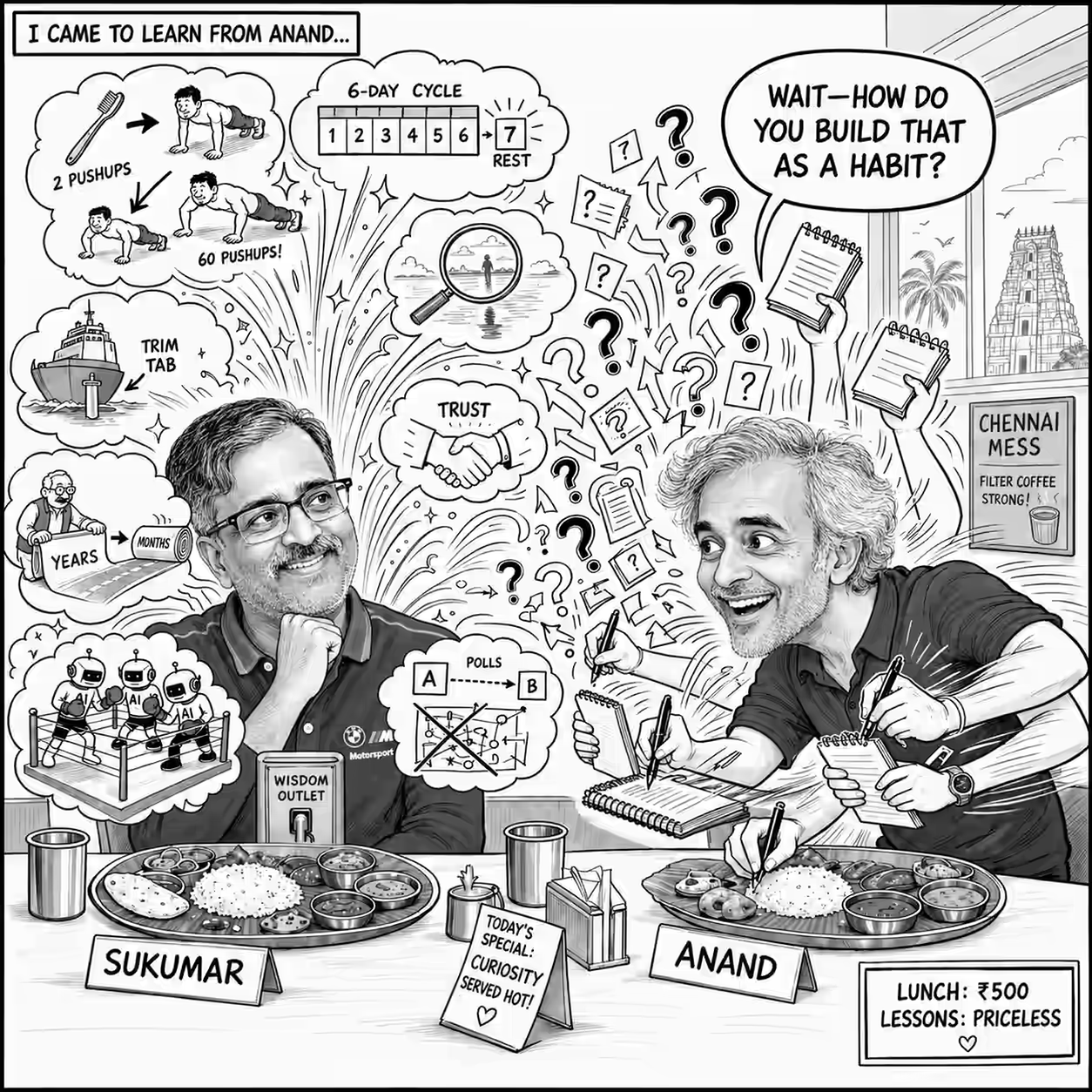
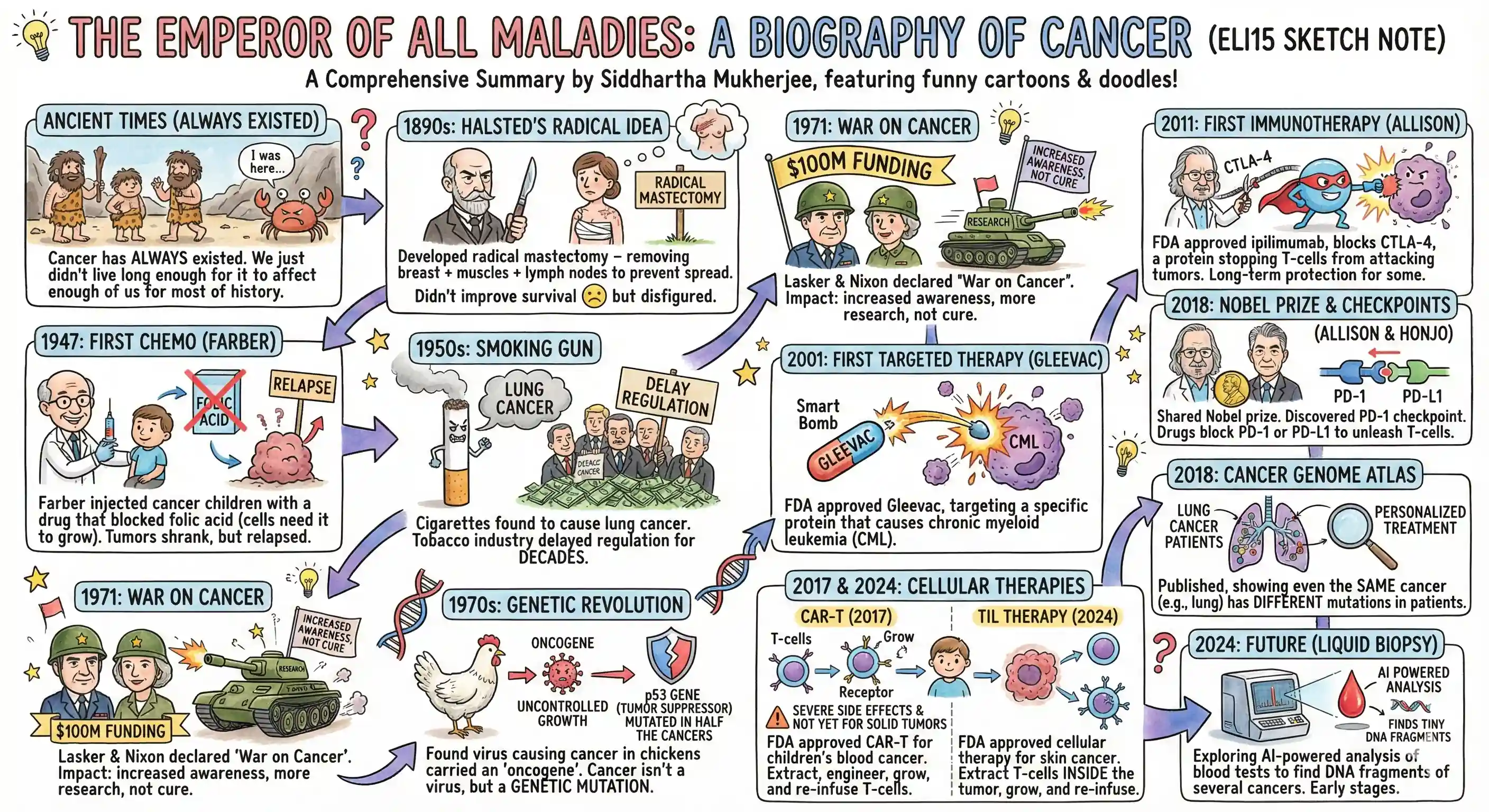
2025 1

It's not what you know. It's how you learn

Simon Willison’s blog post mentioned MDN’s browser compatibility tables that list the earliest release date for each browser feature. I figured: let’s see which browsers release features fastest. I calculated average delay for each browser’s feature release. For each browser, I looked at how many days after the first release it took to add a feature, averaged it, and published an interactive, scrolly-telling data story. ...

2023 2

LLMs can teach experts

I am a fairly good programmer. So, when I see a problem, my natural tendency is to code. I’m trying to break that pattern. Instead, I ask ChatGPT. For example, I asked: Write a compact 1-line Python expression that checks if user.id ends with @gramener.com or @straive.com user.id.endswith(("@gramener.com", "@straive.com")) After 15 years of using Python, I learnt that .endswith() supports tuple suffixes. This has been around since Python 2.5 (released in 2006 – before I knew Python.) The documentation has a tiny sentence in the middle saying “suffix can also be a tuple of suffixes to look for.” ...

My PyCon talks are a way for me to learn. I usually pick topics I don’t know about. But at PyCon India 2023 the organizers picked “Programming Minecraft with Python” - a talk I’d given before. So, I started exploring ways to game it. (I like gaming things. It’s boring otherwise. Once, Infosys had me write a 400-page document. I began each page with a letter that spells out a poem.) ...

2010 1

Bayes’ Theorem

I’ve tried understanding Bayes’ Theorem several times. I’ve always managed to get confused. Specifically, I’ve always wondered why it’s better than simply using the average estimate from the past. So here’s a little attempt to jog my memory the next time I forget. Q: A coin shows 5 heads when tossed 10 times. What’s the probability of a heads? A: It’s not 0.5. That’s the most likely estimate. The probability distribution is actually: ...

2006 1

Cut-and-paste is not understanding

Cut and paste has become easier. So we make less effort to understand. We don’t need to. Like when we pay less attention if we’re recording a lecture. Solution? I suggest the Tunnel in the Sky strategy. Rod Walker is going for survival training on an alien planet, and asks his sister, Captain Walker… “Uh, Sis, what sort of gun should I carry?” “Huh? Why the deuce do you want a gun?” ...

2005 2

How to read when time is short

How to read when time is short. Read the “How To Find The Essential 20%” section carefully. Another interesting post from Bert on How to Learn More With No Extra Effort uses the principle in the post below to suggest we take a lot of breaks while learning. i cdnuolt blveiee taht i cluod aulaclty uesdnatnrd waht i was rdanieg. the phaonmneal pweor of the hmuan mind is amazanig. aoccdrnig to a rscheearch taem at cmabrigde uinervtisy, it deosnt mttaer in waht oredr the ltteers in a wrod are, the olny iprmoatnt tihng is taht the frist and lsat ltteer be in the rghit pclae. the rset can be a taotl mses and you can sitll raed it wouthit a porbelm. amazanig huh? yaeh and yuo awlyas thohgut slpeling was ipmorantt. ...