Decisions are usually based on multiple criteria. You have to trade off between criteria. I’ve been involved many such decisions over the last 5 years.
Example 1: A conglomerate wanted to identify industries for growth. We shortlisted 19 industries, identified 12 criteria for the attractiveness of an industry, researched each one and plotted them on spidergraphs like below.
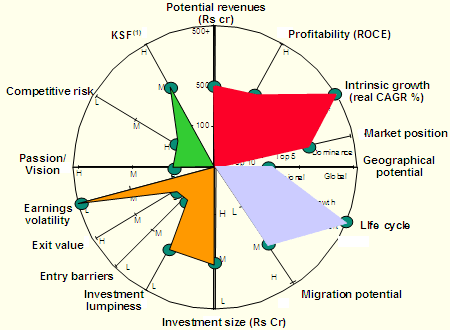
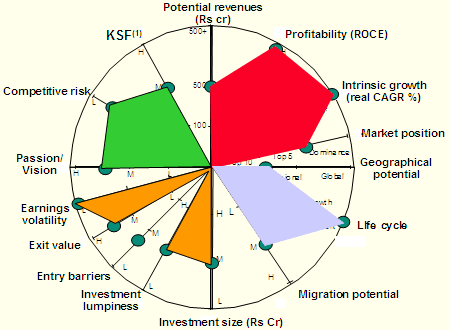
The intention was that, to identify the most favourable industries, you’d just pick the ones with the largest filled area.
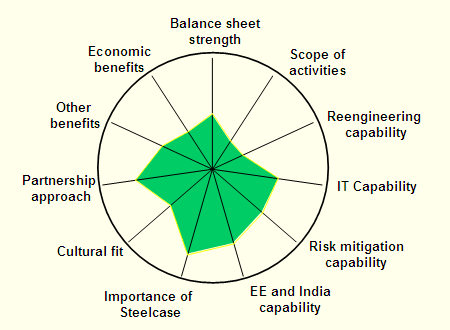
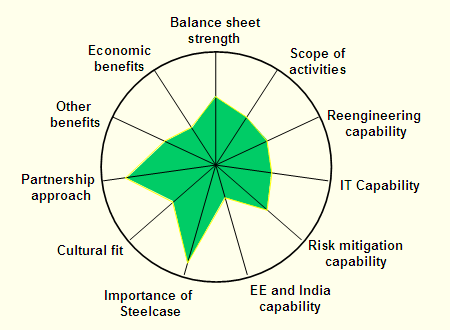
Example 2: Another time, we had to decide among BPO vendors. Again, we picked a bunch of criteria and compared vendors against these criteria.
Example 3: Once, we had to identify stakeholders’ position on a project.
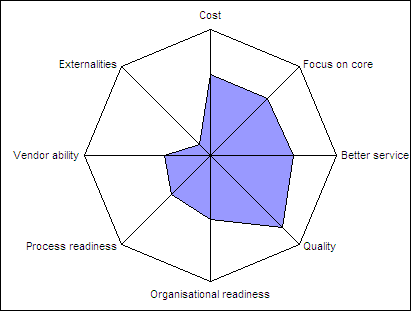
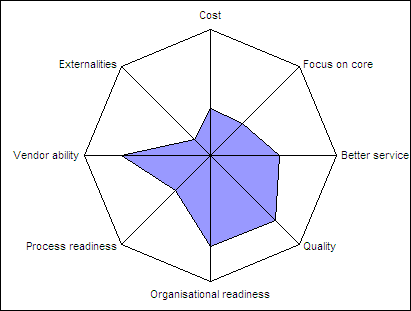
Those who were big on the right of the graph were for, and those who were big on the left were against.
In all the above cases, the same process was used for decision making.
- List criteria exhaustively
- Evaluate options against each criteria
- Assign weights to criteria (equal weights implicitly assigned above)
- Compare options
Having applied this methodology it several times, I am convinced this process is fundamentally flawed. See how in this post: Errors in multicriteria decision making.
Comments