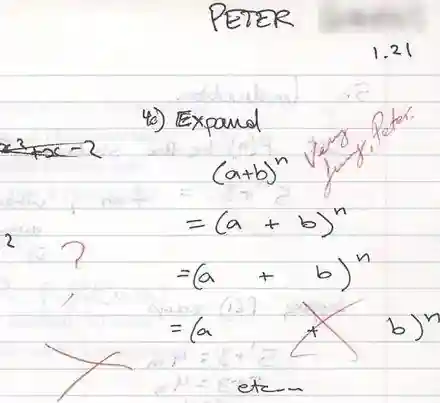
I found a humorous take on mathematical expansion where a student interprets the instruction to 'expand' an algebraic expression by literally writing the terms further apart on the page instead of performing the binomial expansion.
I explored a collection of false mathematical proofs and found that I misidentified almost all of them. These examples highlight common logical traps in algebra and calculus, such as hidden divisions by zero.
Researchers found that the frequency distribution of terrorist attacks and group sizes follows the same mathematical pattern across various global conflicts, suggesting a universal structure to insurgent activity regardless of geography or ideology.
I attempted to purchase the special Mathematical American issue from Scientific American, but technical difficulties with their server prevented me from completing the transaction. This issue compiles classic math columns and puzzles from the magazine's history.
I found a helpful summary from the Economist detailing Microsoft's strategic moves in 2002, focusing on their market position and business challenges during a pivotal period of software expansion and regulatory scrutiny.
I shared a link to a classic joke about Jeff Bezos and Amazon's early growth. Hosted on NetFunny, the piece offers a lighthearted perspective on the company's rapid expansion and business model during the 2000s.