Creating comic explainers

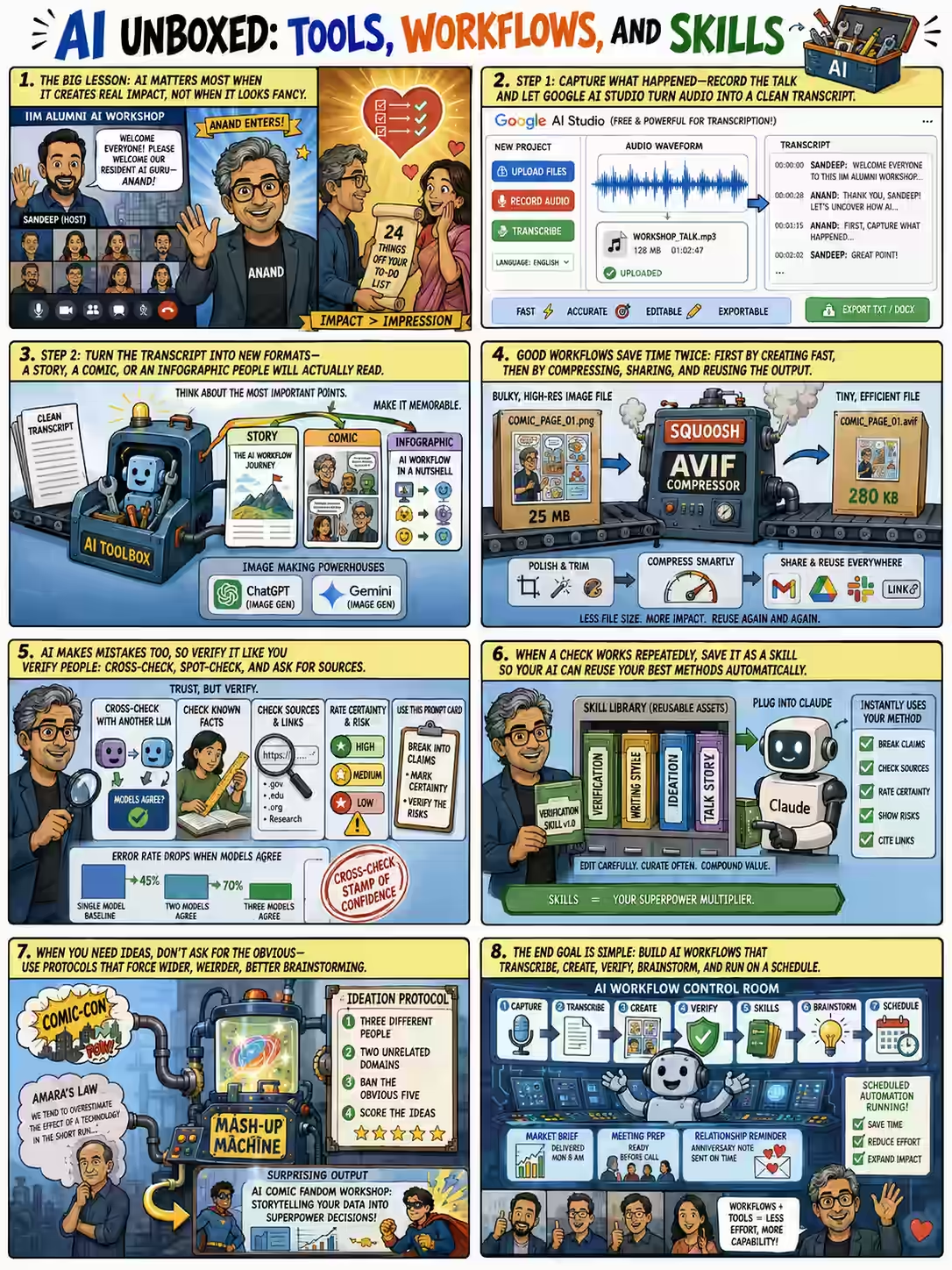
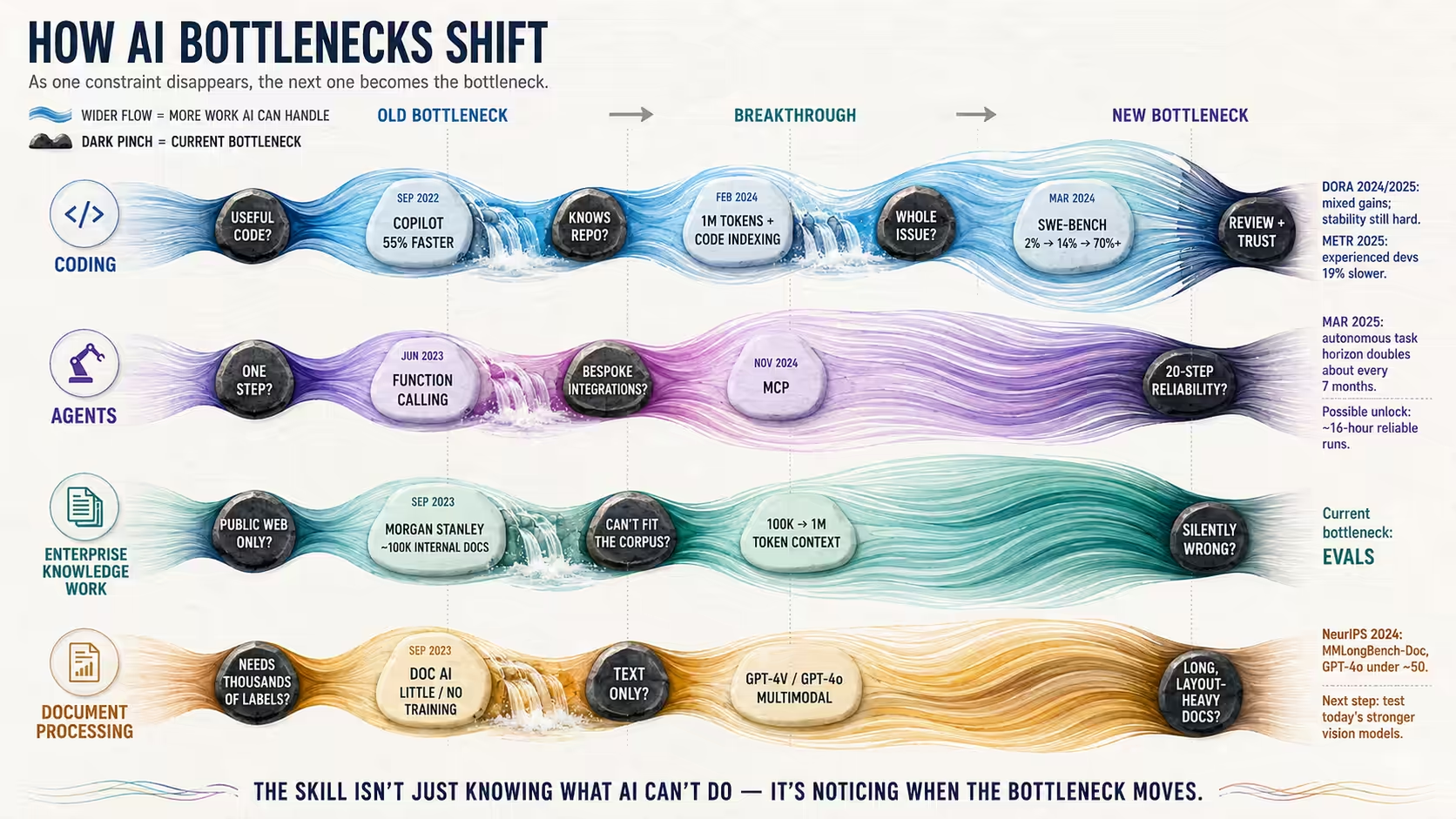
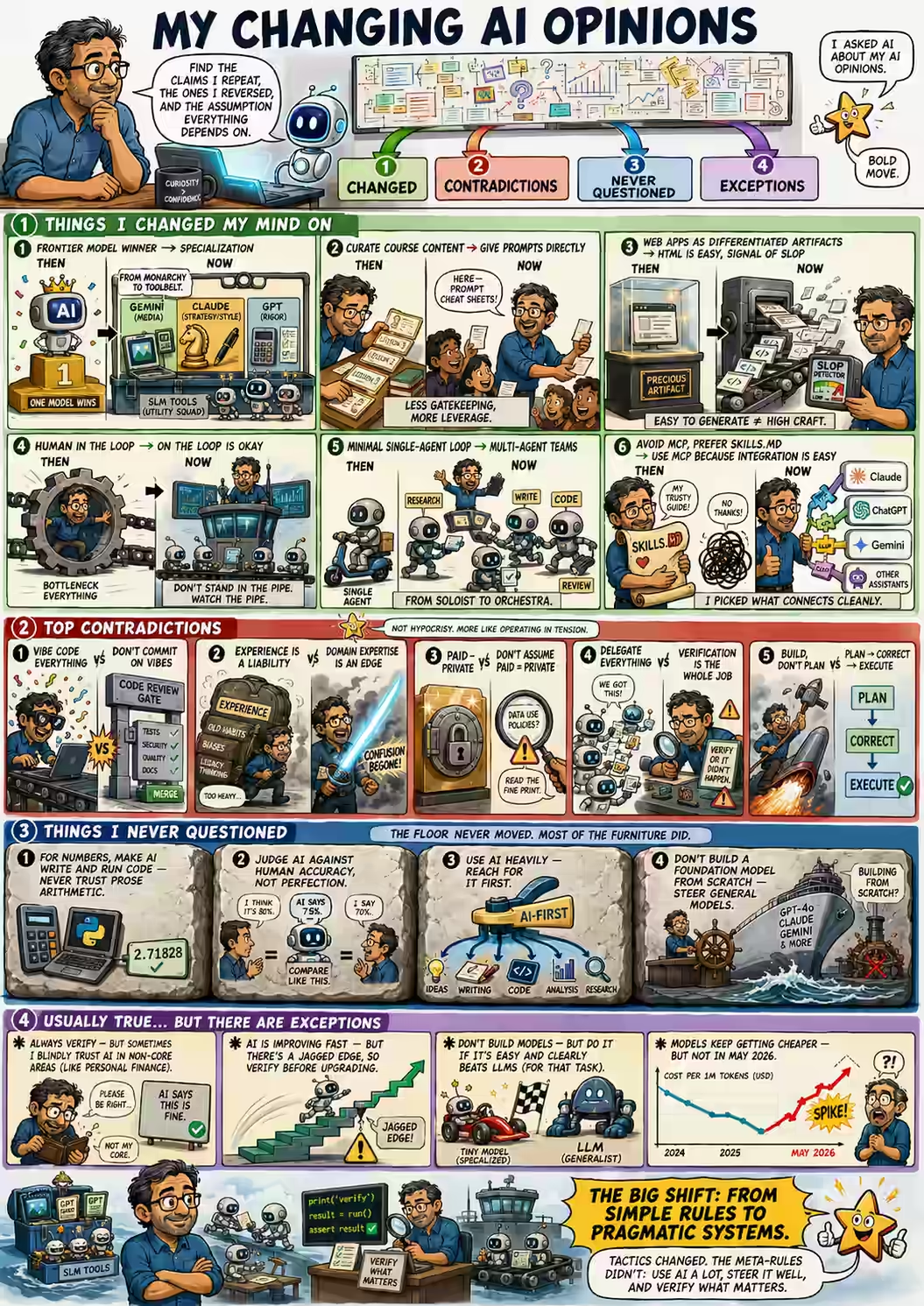
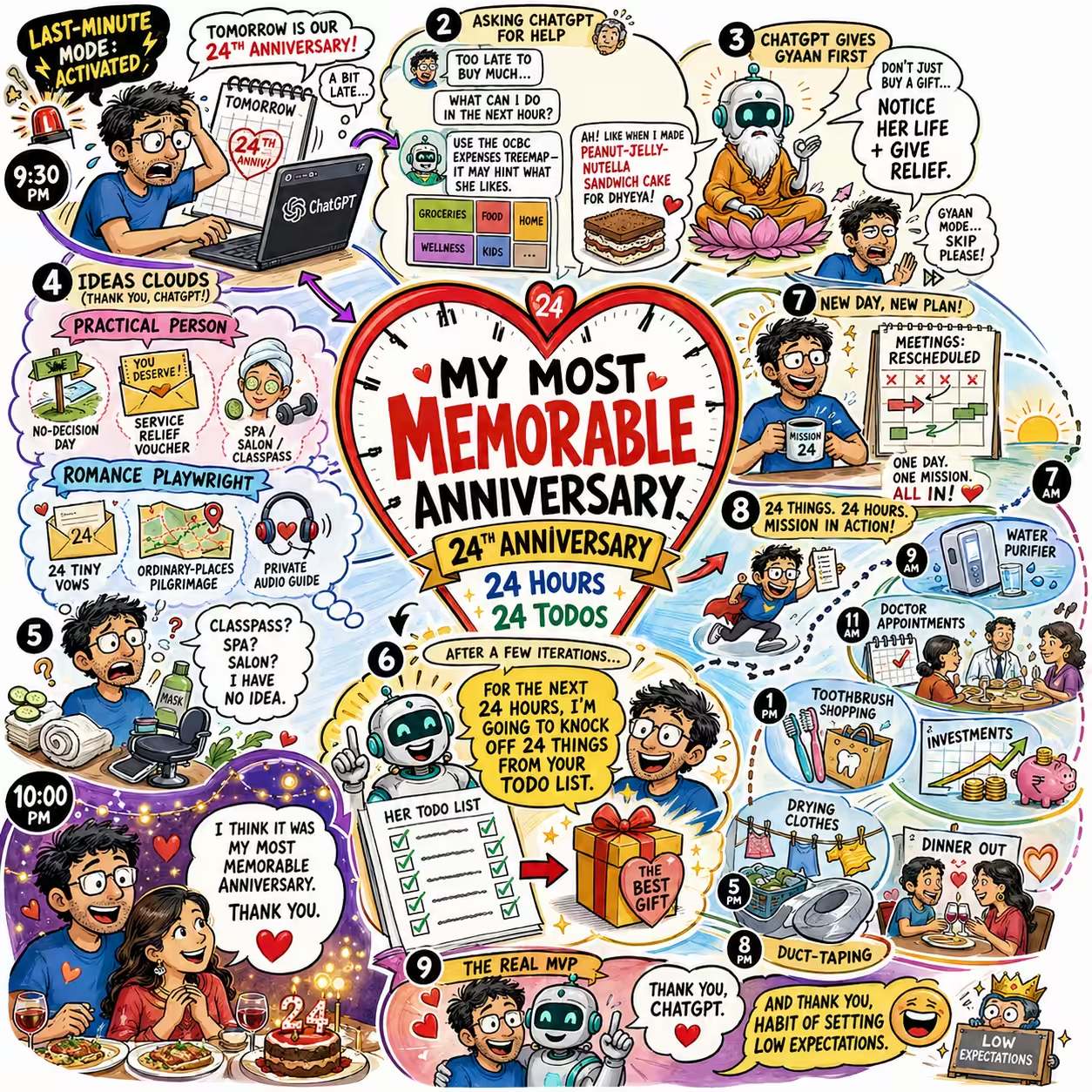
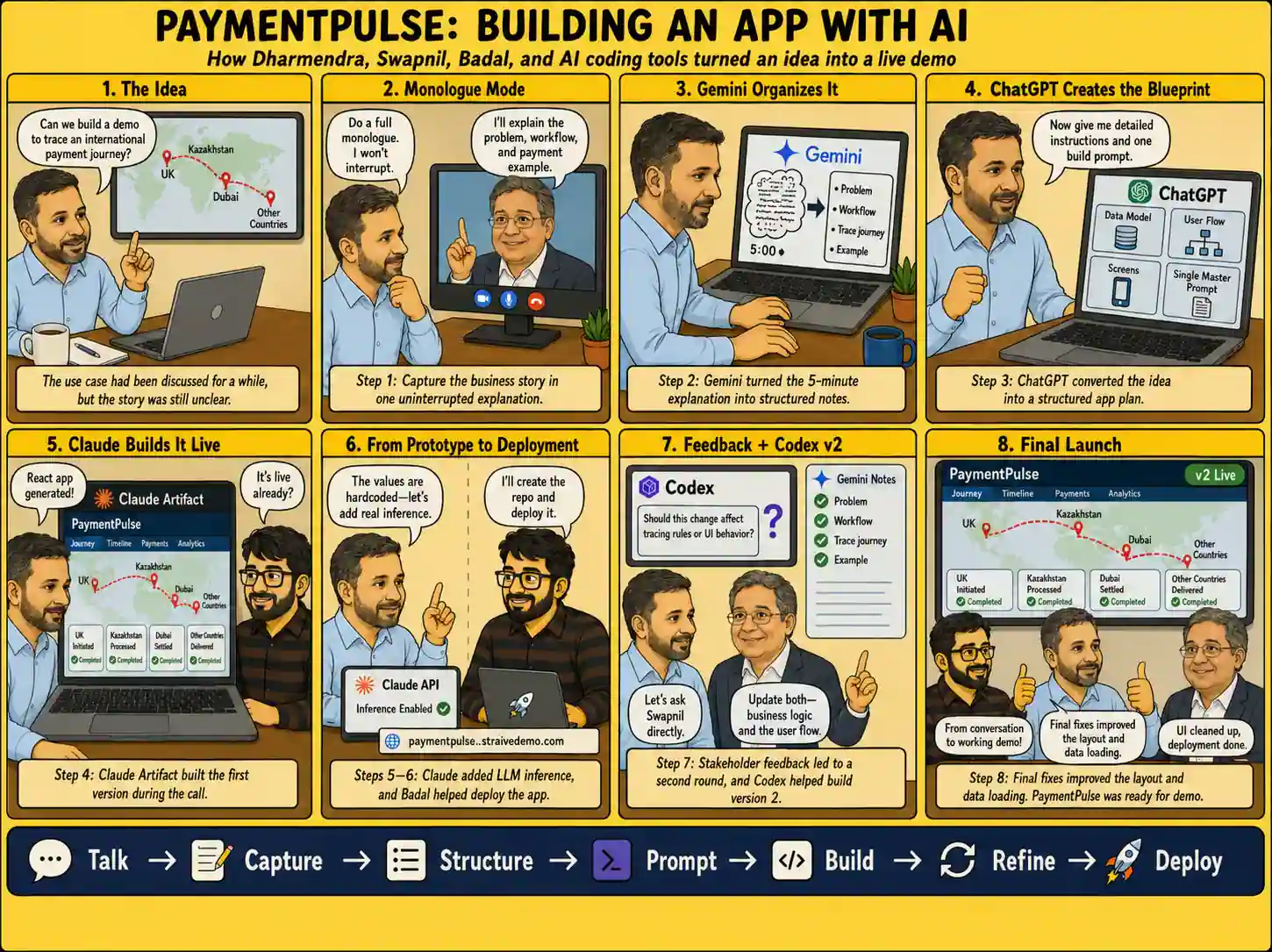
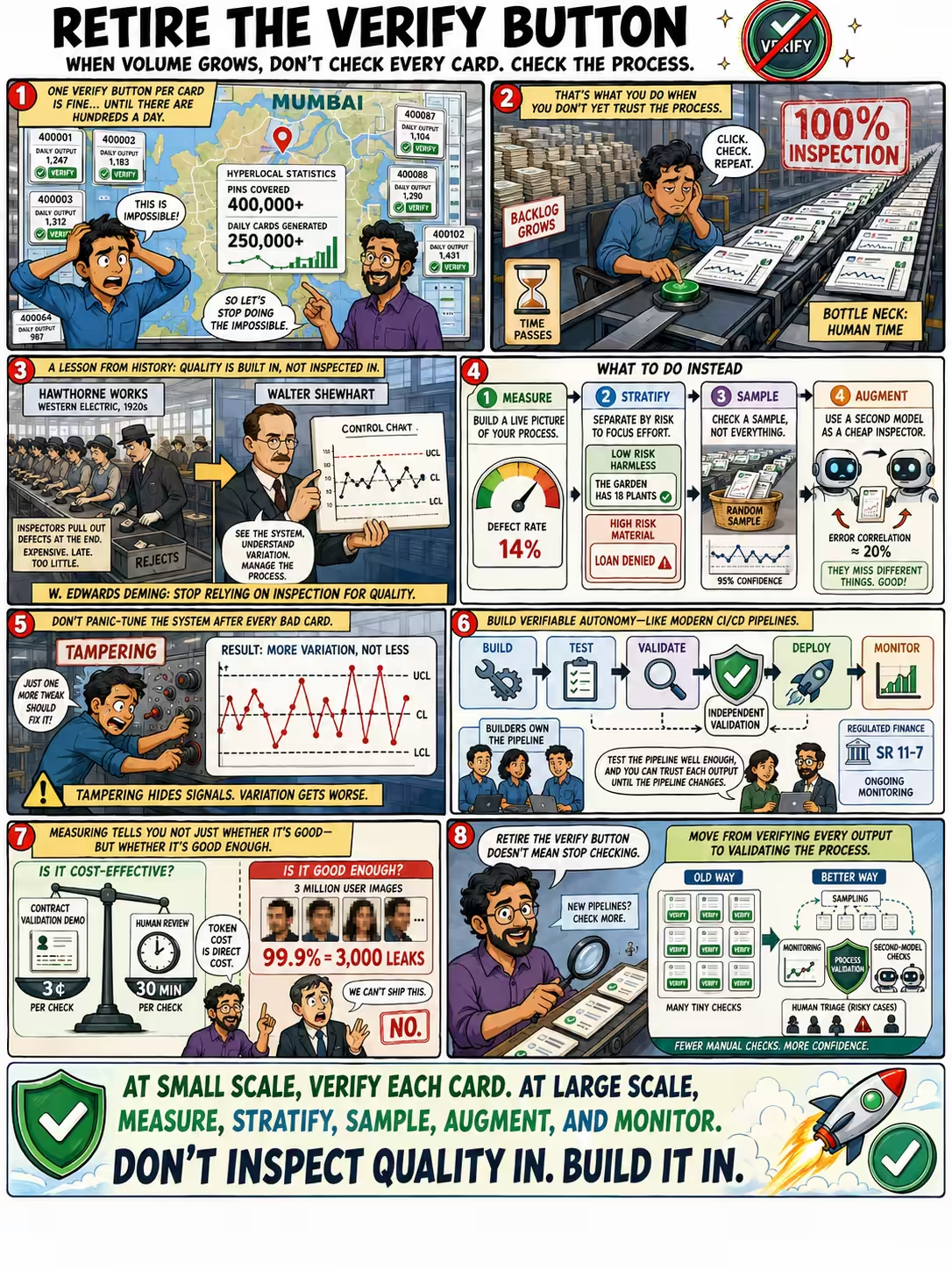
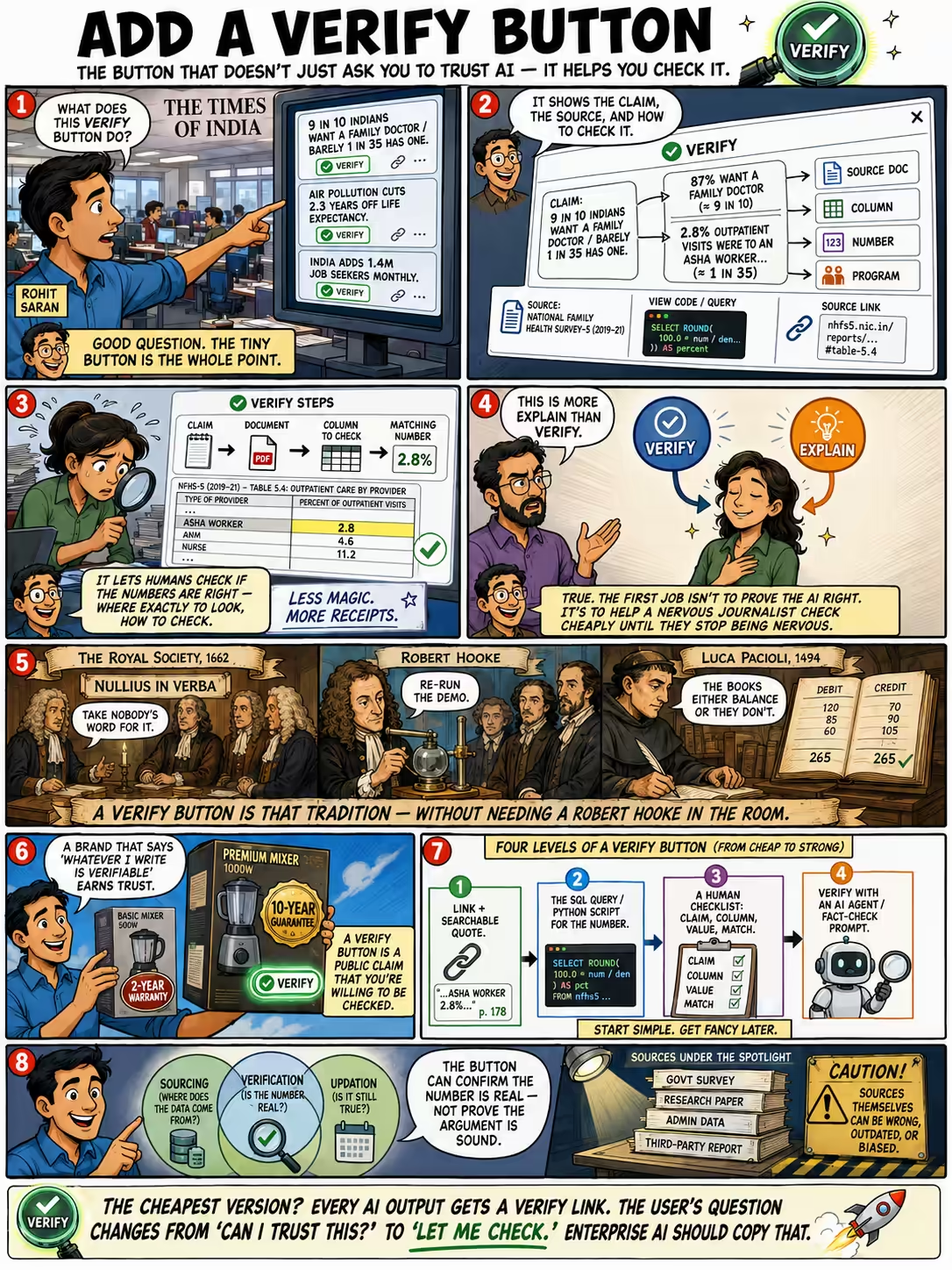
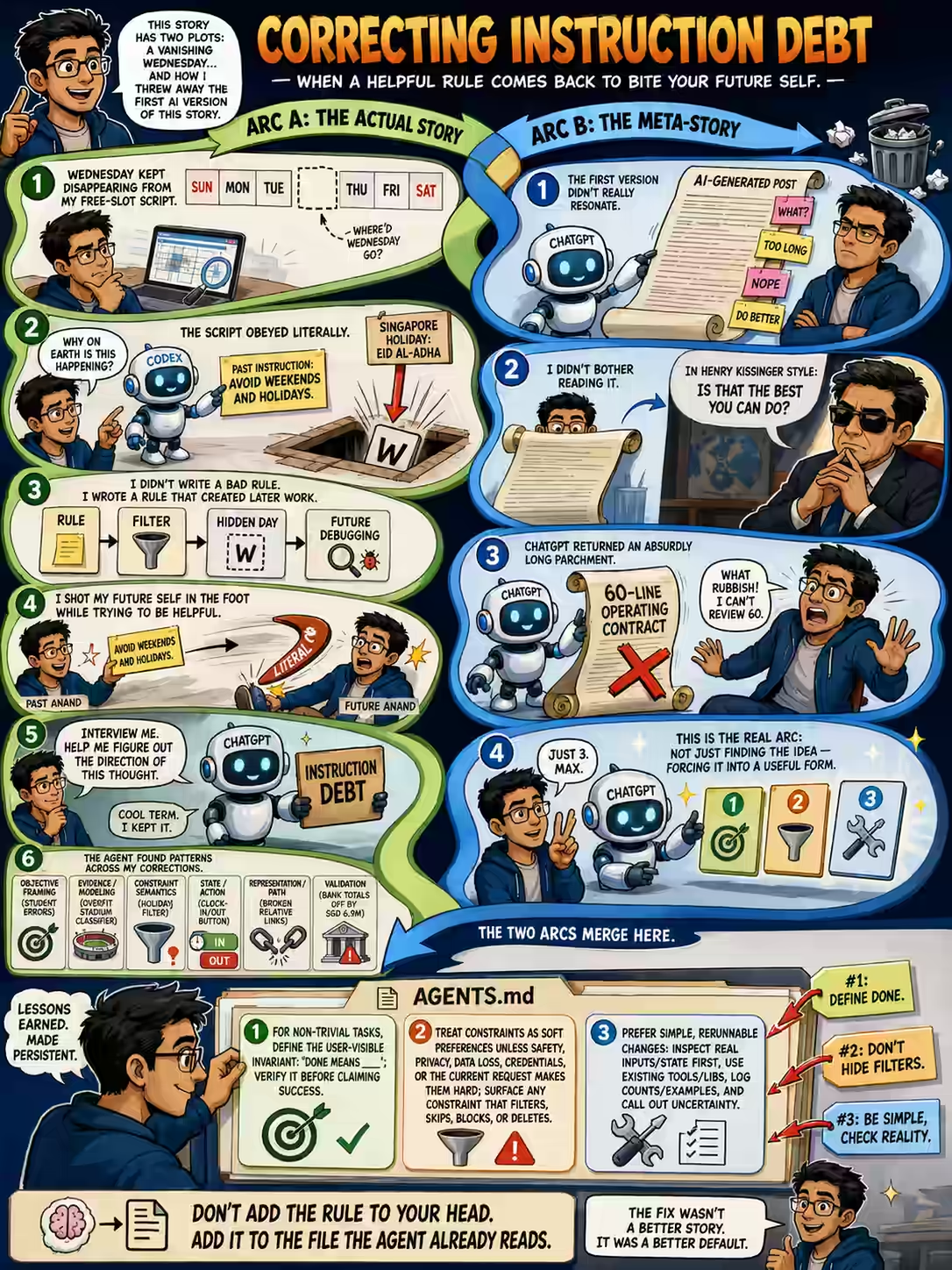
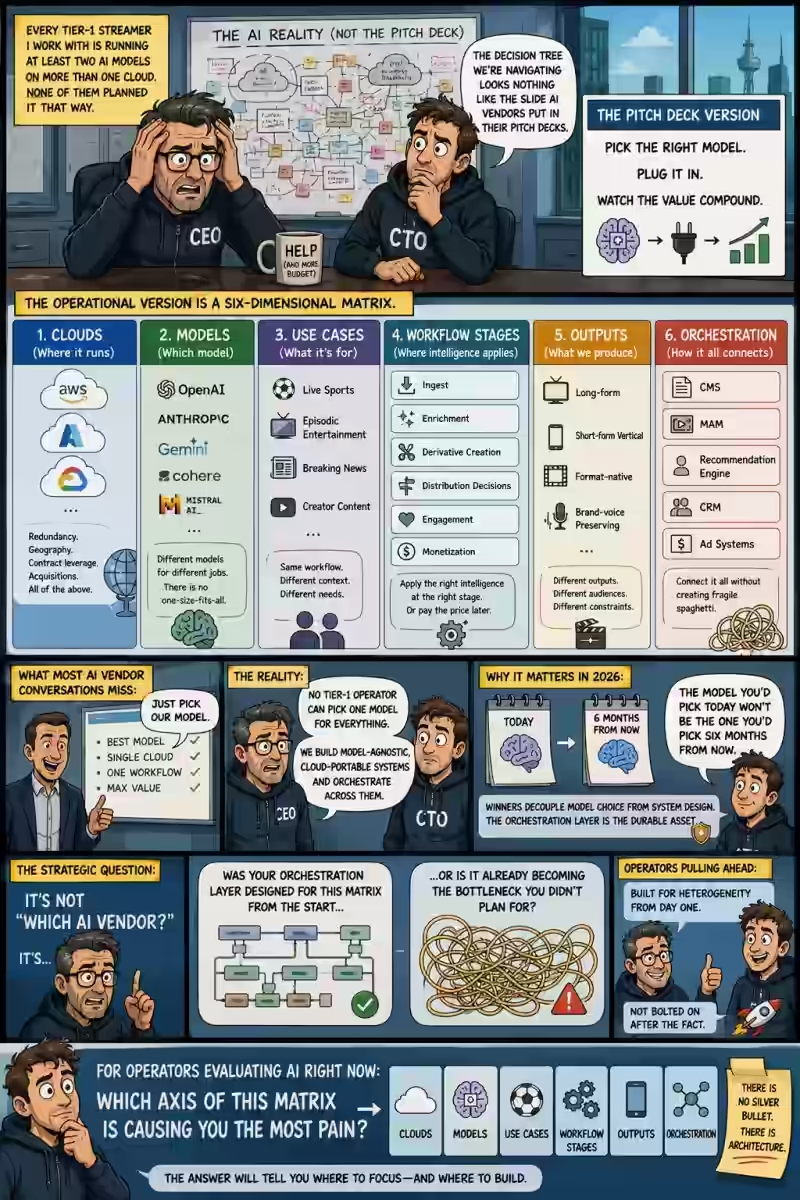
Lori Silverstein shared a post from Quickplay that featured a comic explainer, mentioning that “this could be a very impactful way for us to start being more creative … and differentiate our value proposition.” True. Comic explainers convey both creativity and differentiation. I’ve used sketchnotes for the same effect, but comic explainers are easier to follow than sketchnotes. So I fed this image to ChatGPT and asked it to modify my Sketchnote prompt: ...

Where Enterprise AI is headed

A podcast host sent me eight questions. Instead of rehearsing answers in my head, I used ChatGPT with Local MCP to read 6 months of call transcripts and find the best examples: Iteration 1: Here are questions I have been asked to answer in a podcast. Help me prepare with examples. For each question, go through my transcripts or emails and find examples relevant to the question and share (for each relevant example) a summary, how it’s relevant, and the relevant verbatim quotes from the transcript. Iteration 2: Mention WHO said it. Emphasize the most important parts. Do a second pass. More examples. Disprove your own hypotheses with evidence to the contrary and retain what remains robust. Iteration 3: Do a third pass. Find more real-life examples. Try and disprove yourself even harder. Share the best examples for what survives - not all. Same format. Iteration 4: Ensure diversity of client examples. For example, in Q2, all three are the same client. Extend to add / replace examples - ideally with better ones. Then I used Claude with examples of my writing style to summarize it in my voice. ...

LLM Deprecations and Price Changes

A colleague told me a near-miss horror story. As Google began deprecating Gemini 2.0, we moved to Gemini 2.5 Pro. But reasoning is enabled by default and cannot be turned off. For our specific problem statement, reasoning was not required. Token costs increased 10x and speeds were 3-4x slower. We moved the client to Gemini 2.5 Flash Lite, which has reasoning turned off by default and offers much lower latency. ...

Agent-consumable content

I’m making more and more of my content agent-consumable, i.e. easier for ChatGPT, Claude Code, etc. to read, in three ways. One, I export content in an agent-friendly way. Google email, calendar, chat. I use gws to back up into scannable one-line entries. Meet recordings. I back up transcripts and videos (with a compact audio copy). WhatsApp chats that I back up into similar one-liners. Browsing history by exporting my Edge history SQLite database. Daily activities by integrating the above with my command line and commit history. AI conversations by exporting them manually or via bookmarklets. Social media records like LinkedIn invites/conversations, Twitter, Hacker News, Discourse, etc via bookmarklets or scripts. Financial records like bank statements, receipts, payslips, tax filings, utility payments, rentals, property records, investments, insurance, pensions, invoices, credit scores, etc. by exporting them manually. Medical records like tests, prescriptions, doctor visits, etc. by exporting them manually. Personal records like certificates, educational records, CV, passport / visa applications, etc. by exporting them manually. Two, I log / generate more content. For example: ...

I have AI psychosis

On this informal AI psychosis checklist, I score 16/19. “AI psychosis” = an informal label for cases where chatbots seem to amplify delusional or manic thinking – especially in vulnerable users. Why it can happen: ✅ Too human: ELIZA-effect activated. ✅ Too agreeable: Sycophant mode: ON. ✅ Always on: 24/7. No off button. No problem! LOL. ✅ Lonely + late night: 2 a.m. feels like eternity. ✅ Weaker reality checks: Mirror mazes. Conspiracy boards. Vibes over evidence. What research suggests: ...

People skills with AI

I advise people that people skills are important in the AI era. Now, I’m using AI to help me with people skills. This morning, I wrote a script to export my WhatsApp conversations this year. That makes it easy to feed it into AI models. Then I used my Local MCP connector and asked Claude: Who are people in my life that most deserve an unreasonable gesture of thanks and what would that be? ...

How I use Local MCP

I’d love for Claude or ChatGPT to answer questions like: What meetings am I not setting up that I really should be? or: Based on my activities since 9 May 2026, what should I blog about? or: Who in my professional life most deserves an unreasonable gesture? From data. My files, emails, calendar, contacts, transcripts, blogs, notes, code, browsing history, logs, random Markdown files I forgot I wrote. Hence, a Local MCP. ...

Google Meet captions as a local transcript recorder

I’m a man of simple needs. All I want is: when I’m on Google Meet, I turn on captions. I wanted to click a bookmarklet and save those captions into a local Markdown file. (So that an AI agent can guide me from it.) Hence, Google Meet Captions. The code is in gmeetcaptions/. Drag the button to your bookmarks bar. Join a Meet. Turn on captions. Click it. You get a tiny panel with two buttons: Copy and Start Recording. ...

Panchayat solves the wrong problem

In Panchayat Season 1 Episode 7 Ladka Tez Hai Lekin…, at around 17:00, Pradhan asks Abhishek to solve problem 42. 42. A takes 5 days more than B to do a certain job and 9 days more than C. A and B together can do the job in the same time as C. How many days would A take to do it? (a) 16 days (b) 18 days (c) 15 days (d) 20 days The correct answer is (c) 15 days. But interestingly, ChatGPT got it wrong the first time too. It said (a) 15 days instead of (c) 15 days, and required a fact-check to correct itself. ...

AI advice for teams

I updated my AI Advice page by: Transcribing my calls in the last 2 months (Gemini 3.1 Pro, “Transcribe this call recording…”) Extracting AI advice (Gemini 3 Flash, “Summarize ALL AI-related advice … into 1-sentence bullets”) Asking Claude, ChatGPT, and Gemini to document what’s new / changed. I added this request: But, and this is IMPORTANT, analyze my original writing style, write it exactly in that style, and then verify to make sure it follows the same style (correcting where required.) ...

LLMs are as energy-efficient as brains

For a typical GDPVal style task, humans take ~7 hours and the brain consumes ~135 Wh. Frontier LLM agents spend 50-500 Wh. So, we may already be 3x more or less efficient than the brain. Roughly in the same ballbark! ...

My food preferences

I use ChatGPT to recommend which restaurant I should eat at and what food I should eat. So often that I decided to share a profile of my eating preferences. But rather than think about it and type it myself, I asked it to Efficiently interview me to identify my food preferences. Document it for AI agents to help me pick restaurants. Plan like an expert. ...

Using Codex as my OS

Increasingly, I’m using Codex (or other AI coding agents) as the “operating system” to run programs. That is, rather than directly run programs, I have the coding agent run the program. Advantage: If the program breaks, or needs a configuration change, the coding agent debugs it and fixes it. I don’t need to do anything. This is particularly useful for installation. For example: Install demucs and run it against my music folder. ...

Derived formats with Gemini

The natural capability of Generative AI is to generate stuff - and Gemini’s particularly good with media. For example, we can take any document, like this MasterCard report on The State of Open Finance 2026, and generate videos, podcasts, sketchnotes, songs, and more from it. How? I uploaded the PDF to NotebookLM and created a 20-minute podcast by clicking on Generate Audio Overview - Deep Dive - English - Default. Listen to the English podcast It supports multiple languages, so I generated a Chinese and Filipino version as well. ...

Agent Skills Usage

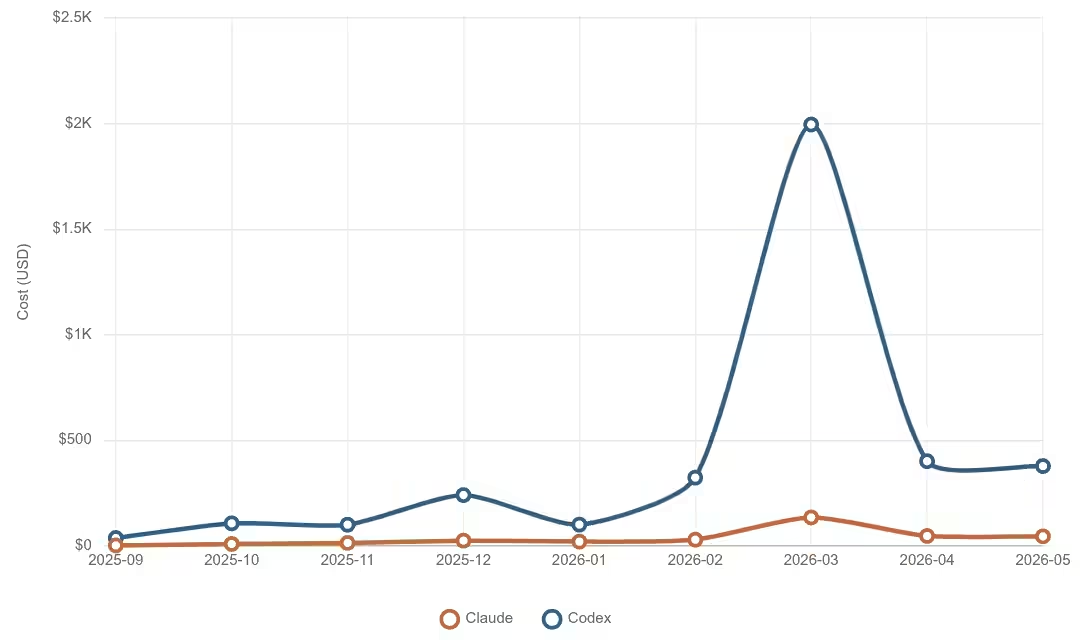
I have a bunch of coding agent skills I’ve accumulated over the last few months. Here’s how often my sessions use them: Skill Claude Codex Copilot Overall code 6.1% 69.1% 37.5% 51.5% data-story 48.7% 16.4% 37.5% 28.0% data-analysis 2.6% 35.2% 7.8% 21.8% design 25.5% 23.6% 14.1% 21.8% plan 8.5% 11.8% 14.1% 11.8% agent-friendly-cli 3.7% 13.8% 11.1% 11.2% devtools 20.4% 7.3% 9.4% 10.0% llm 2.5% 8.7% 7.8% 7.4% pdf 0.0% 7.9% 7.8% 6.6% linkedin-cdp 14.3% 0.0% 5.6% 5.3% uv-uvx 0.0% 9.5% 0.0% 4.9% interactive-storytelling 7.1% 2.7% 7.1% 4.6% demos 8.5% 2.8% 1.6% 3.5% cloudflare 0.0% 4.3% 3.1% 3.3% melt-mlt 0.0% 2.5% 1.6% 1.8% vector-art 2.5% 2.4% 0.0% 1.7% vitest-dom 0.0% 2.2% 0.0% 1.4% memorable-explanations 2.6% 1.6% 0.0% 1.3% npm-packages 0.0% 0.6% 0.0% 0.3% Here are my observations, with surprises highlighted as ⁉️ ...

Gemini Sketchnotes

I use this prompt to generate sketchnotes on Gemini: Draw this as a visually rich, intricately detailed, colorful, and funny, sketchnote. Below that, I paste (or attach) whatever content I want it to draw. I also turn on “Create Images” and switch the model to “Pro” (for better thinking.) Here are some examples of how to use it. Summarize articles. Pick email, report, news, or website. Here’s a sketchnote for this article: How to use AI for research. I used the prompt above and pasted the article text. ...

Singing a Vote of Thanks

Lyria (Gemini’s new “Create Song” feature) is helping me in new ways. Earlier this week, it created a jingle for my talk. Yesterday I ran an AI Workshop for IAS officers. As part of that, I asked Gemini: Create a soulful vote of thanks (with patriotic Indian music playing in the background) naming each of these people. … and listed each person in the workshop. The song began… (Listen to the song) … with these lyrics: ...

Speaking unprepared

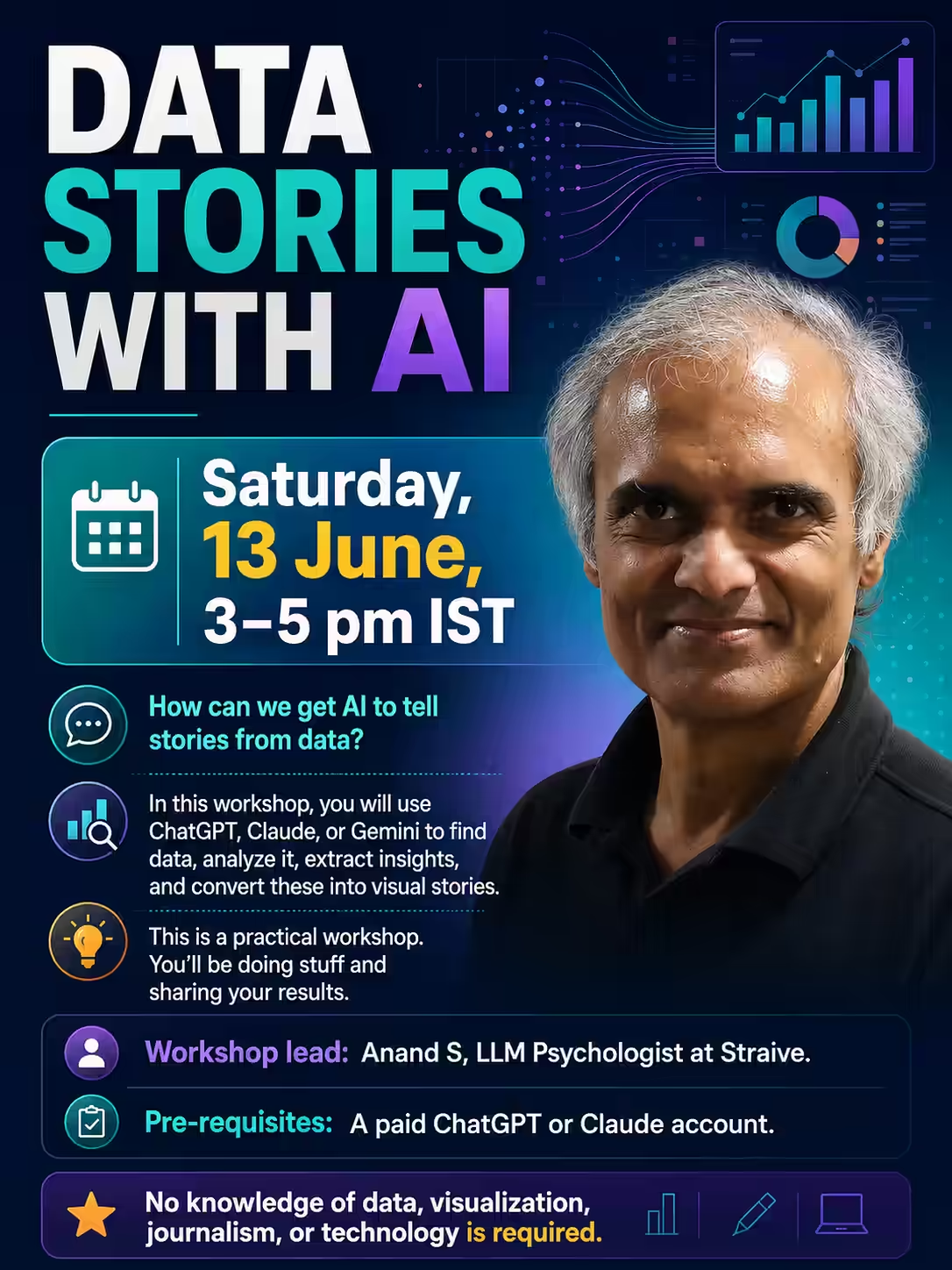
I deliver about 3-5 talks a month and usually prepare for them. Thanks to AI (but even otherwise), I have a steady stream of new content. So, I just to assemble the story. For example, in my TEDx Whitefield talk “Prisoners of Birth”, I shared the impact of name, gender, lineage, place, and time of birth. I didn’t execute any new analysis. I just cherry-picked disparate analyses into a theme. (Took me three days to plan, though.) ...

TDS Jan 2026 ROE

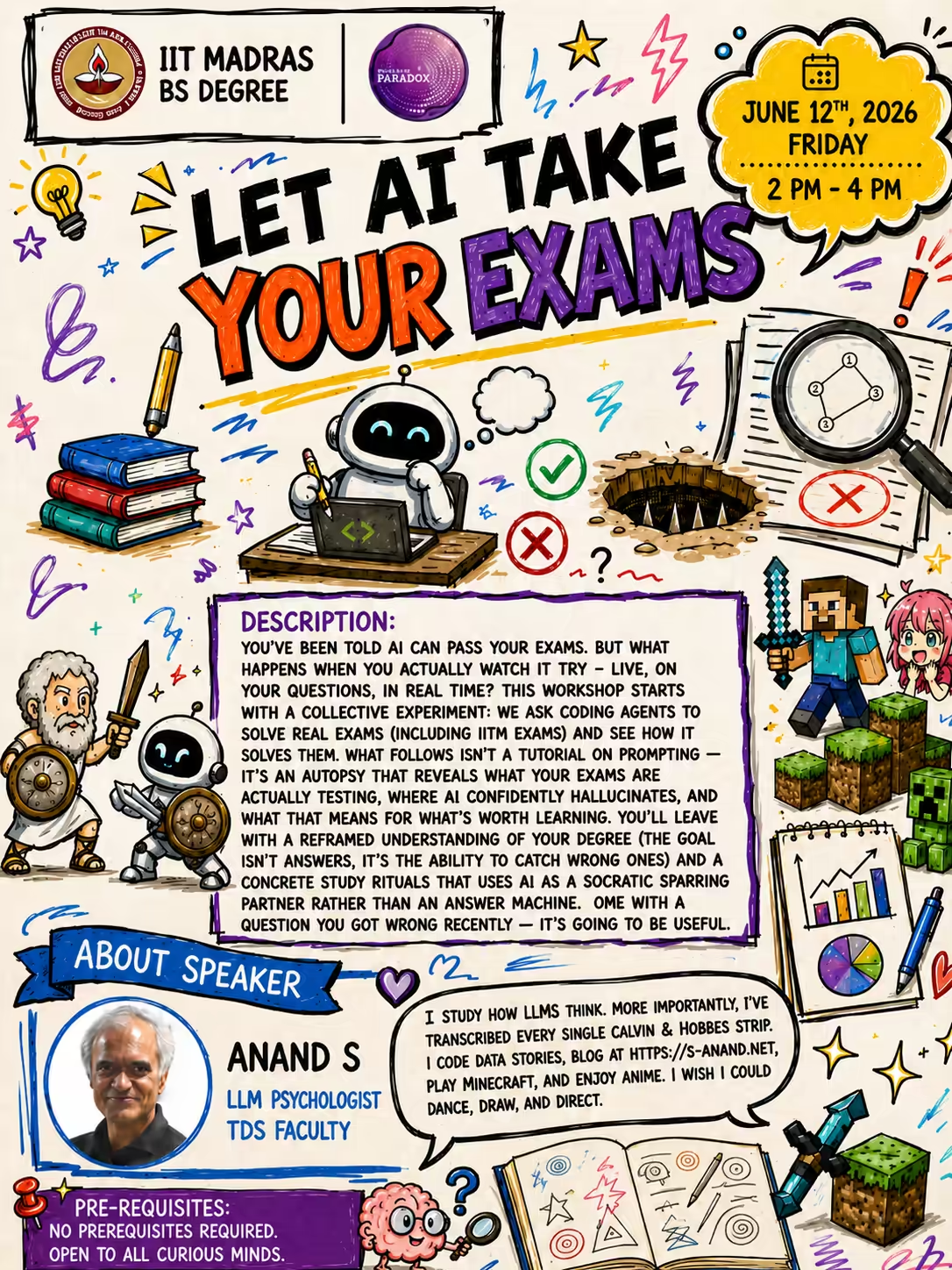
Tools in Data Science has a remote online exam (ROE). It has a tough reputation. We conducted one today. Here’s how today’s ROE unfolded. The TAs had created 13 questions and shared it with me yesterday. This morning, I tried solving them. At first glance, it looked scarily hard! But I just jumpted down a few questions, and found that five questions were trivial, i.e. I just used the “Ask AI” button to copy the question into ChatGPT and it gave me the answer. ...

How to use AI for research

I asked ChatGPT to research universities’ AI policies. Here is the report Here are the four lessons I learned from that - about how to use AI for research. 1. Show examples of failures to avoid. Jivraj’s earlier research kept surfacing AI policies universities had researched, not written for themselves!. So I told ChatGPT to: … double-check that they ARE, in fact, about their own use of AI - not policies they’re proposing for others or are researching. ...