I count AI summarized books as "Read"

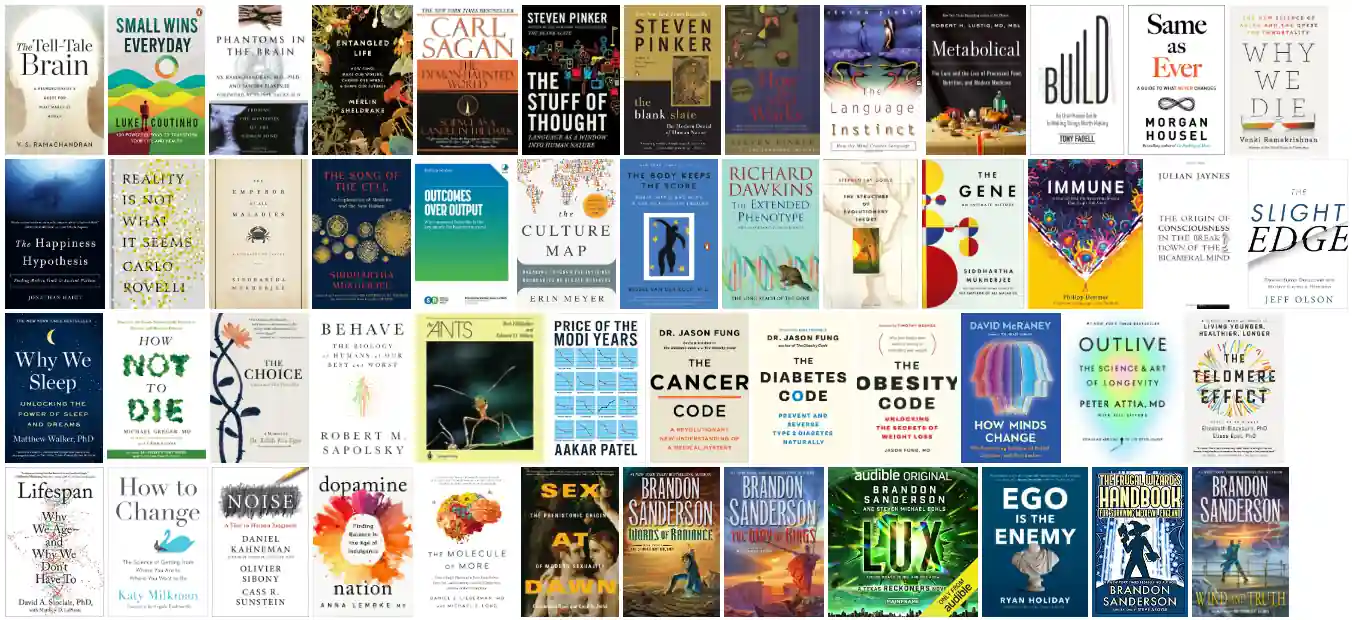
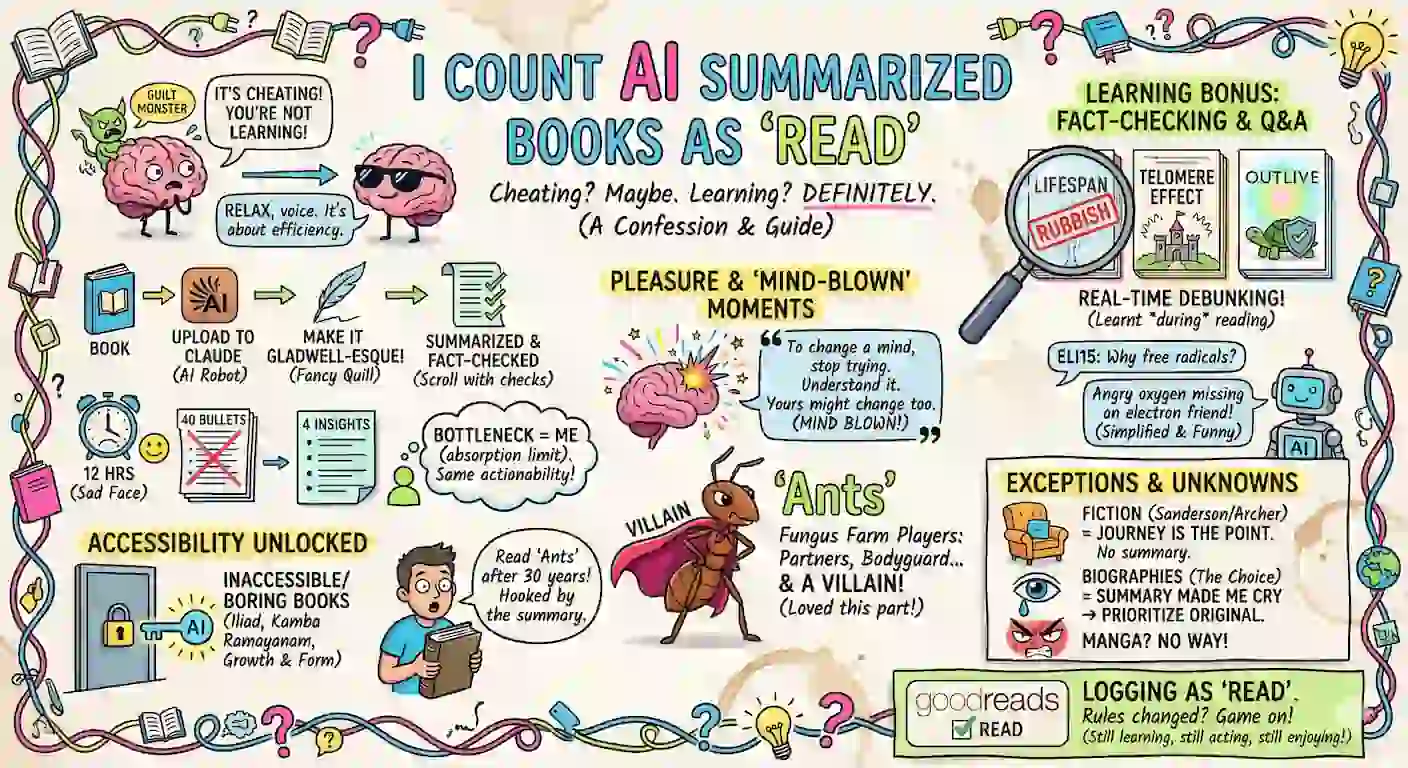
I have this nagging feeling (maybe you do too?) that it’s cheating and I’m not really learning if it’s so easy. The same voice makes me feel guilty when using coding agents to code or ChatGPT in meetings. I’m telling that voice to relax. I upload books to Claude and ask it to “Comprehensively and engagingly summarize and fact-check, writing in Malcolm Gladwell’s style, the book …”. I can read it in an hour instead of twelve. Four bullet points instead of forty. With (this surprised me) roughly the same number of insights I actually do something with. ...

Workshops That Teach Me More Than You

I don’t charge for workshops. Altruism? No: it’s self-interest. “If you’re not paying for it, you’re not the customer; you’re the product being sold.” Andrew Lewis, via Tim O’Reilly, 2010. My workshop process is designed to benefit me first. I pick topics I want to learn, not stuff useful to the audience. Example: I picked DuckDB for my PyCon India 2025 talk to learn it. ...

How to review trending GitHub repos on VS Code

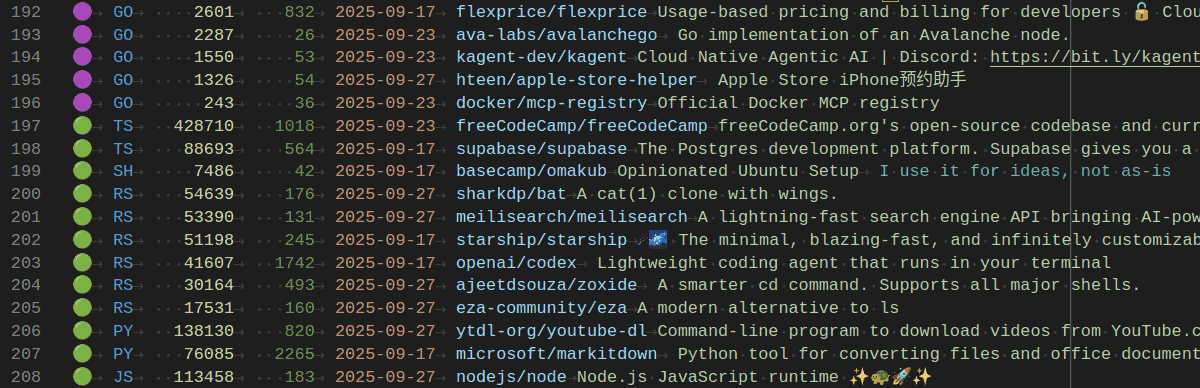
Here’s how I track trending GitHub repos each week. I run a scheduled script that saves a clean TSV I can scan fast. It uses uvx gtrending to fetch weekly trending repos for: Rust: High-quality system tools. (Anything in Rust seems cool.) Go: Reliable CLI/infra tools. (Like Rust, most Go code seems good.) Python: Most AI/ML stuff TypeScript: Most modern JS codebases JavaScript: Most front-end utilities Shell: Productivity scripts I pipe results through jq to extract: ...

Vibe Shopping

I’ve started vibe shopping, i.e. using ChatGPT to shop for small, daily items and buying without verifying. For example: “A metal rack for the floor: at least 2 ft * 1 ft * 2 ft, small gaps, popular options on Amazon.in.” https://chatgpt.com/share/68d61d68-7040-800c-936b-354749539308 “An optical wired mouse that’s smaller than usual, 4*+, popular, Prime-eligible for Chennai by the weekend on Amazon.in.” https://chatgpt.com/share/68d61e0d-420c-800c-bc71-821b9f9296a9 The best use is when I don’t know the right terms. In this case, the terms were wire rack and mini mouse. ...

The 10 sites I visit most often

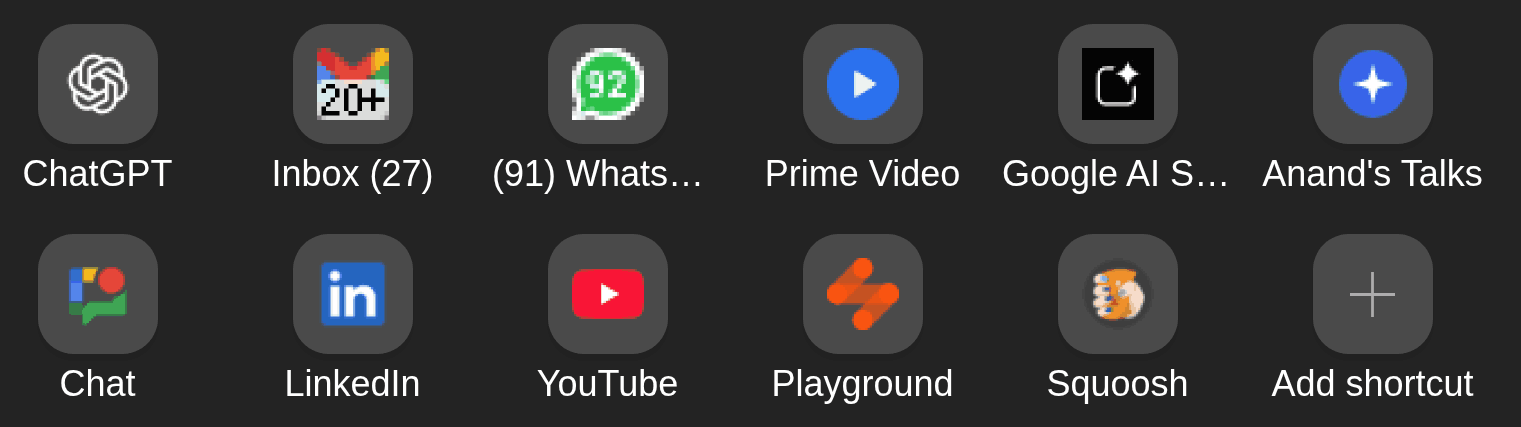
Here are the 10 most frequent sites I use (based on Microsoft Edge’s home bar): ChatGPT. It replaced Google as my default knowledge source. I prefer it over Gemini, Claude, etc. because the app has good features (memory from past conversations, code interpreter, strong voice mode, remote MCP on web app, etc.) The OpenAI models have pros and cons, but the app features are ahead of competition. Gmail. It’s my work inbox. Interestingly, I check it more (and respond faster) than social channels (e.g. WhatsApp, Google Chat, LinkedIn). It also doubles up as my task queue. Prime Video. I mainly watch The Mentalist. Totally love Patrick Jane! Google AI Studio. Mostly for transcription. It’s better than Gemini on UI, ability to handle uploads, file-formats, etc. It’s also free (though the data is used for training.) My Talks page. I give 1-1.5 talks a week, mostly on AI/ML topics. I use Marp to render Markdown slides and publish it here. Google Chat. It’s Straive’s social channel. I can’t use it from my phone, so I log in only if I need to check if I missed something. LinkedIn. It’s where I post by default. I don’t use it for networking and only connect with people I’ve met and know well. YouTube. Mostly for movie clips over dinner. I occasionally watch educational content. Playground. LLM Foundry is Straive’s internal gateway to multiple model APIs (I built it). I use it to experiment with models, grab API keys, and demo LLMs to clients. Squoosh. I compress every image, every time. Mostly into WebP (hands-down the best format today), typically lossless with an 8-color palette, or lossy at ~0-10% quality for photos. That’s my current home row. It will change. But the reasons probably won’t: fast, simple, automatable, and practical (for me).
AfterSlides: Write Slides After Talks

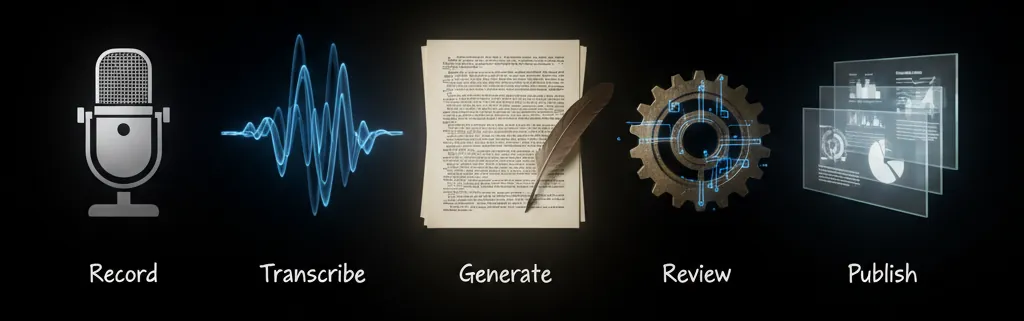
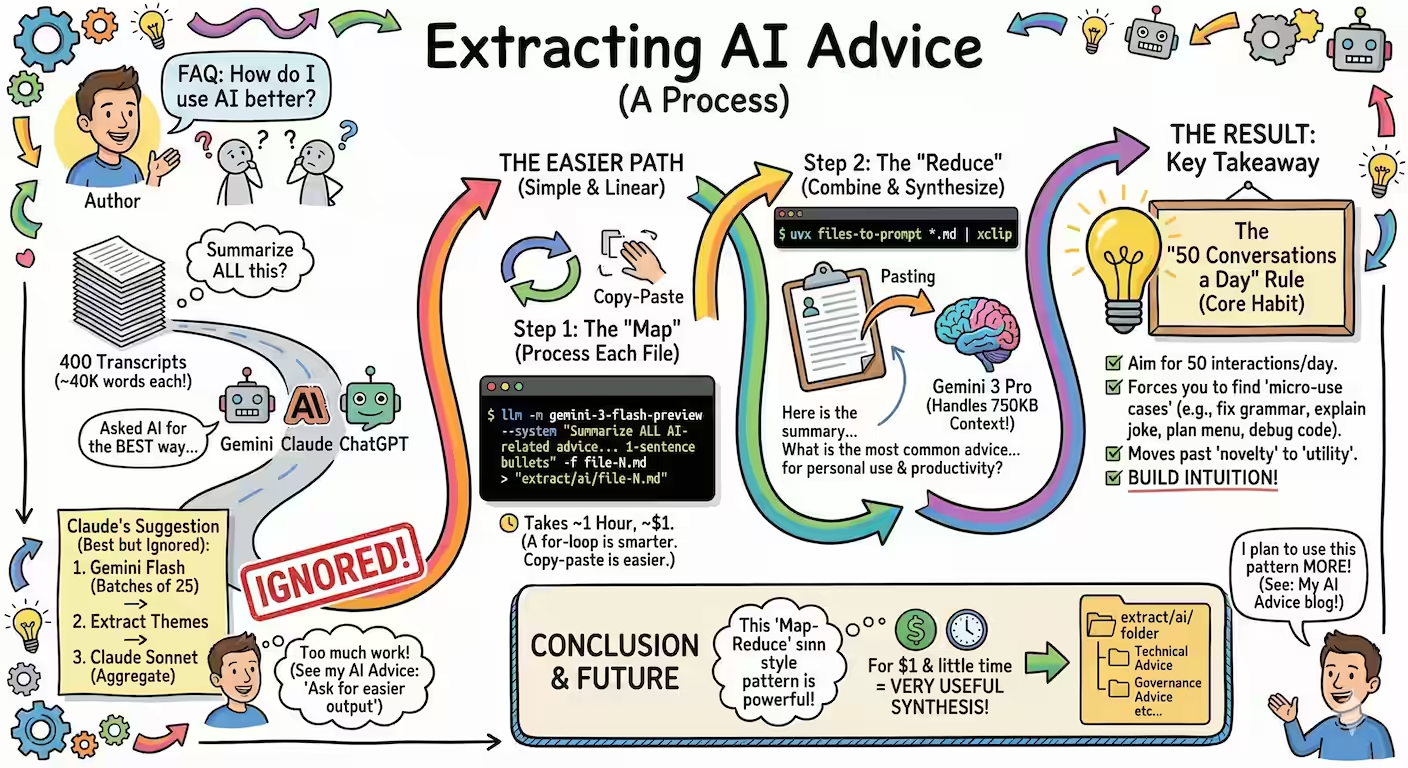
25 years ago, Mr. Krishnan (IAS) amused us with anecdotes of bureaucrats writing meeting minutes before the meeting. This week, I flipped that. I wrote slides after the talk. I call them AfterSlides. Why. I ran a couple of Ask-Me-Anything (AMA) sessions where the audience set the agenda. I learned their interests. They got answers. No slides prepared. How. I okayed recording with the organizers, recorded on my phone, transcribed with Gemini, and asked ChatGPT to generate the AfterSlides. ...

Giving Back Money

At the end of my 2021 graduation interview, All India Radio asked: Interviewer: What would, if you are asked to give back something to the country, what would be that? Anand: I really don’t know. At this stage, I don’t know what I’m capable of and what I can contribute, but whatever it will be, I suspect the bulk of it will come later towards my career. ...

My Goals Bingo as of Q2 2025

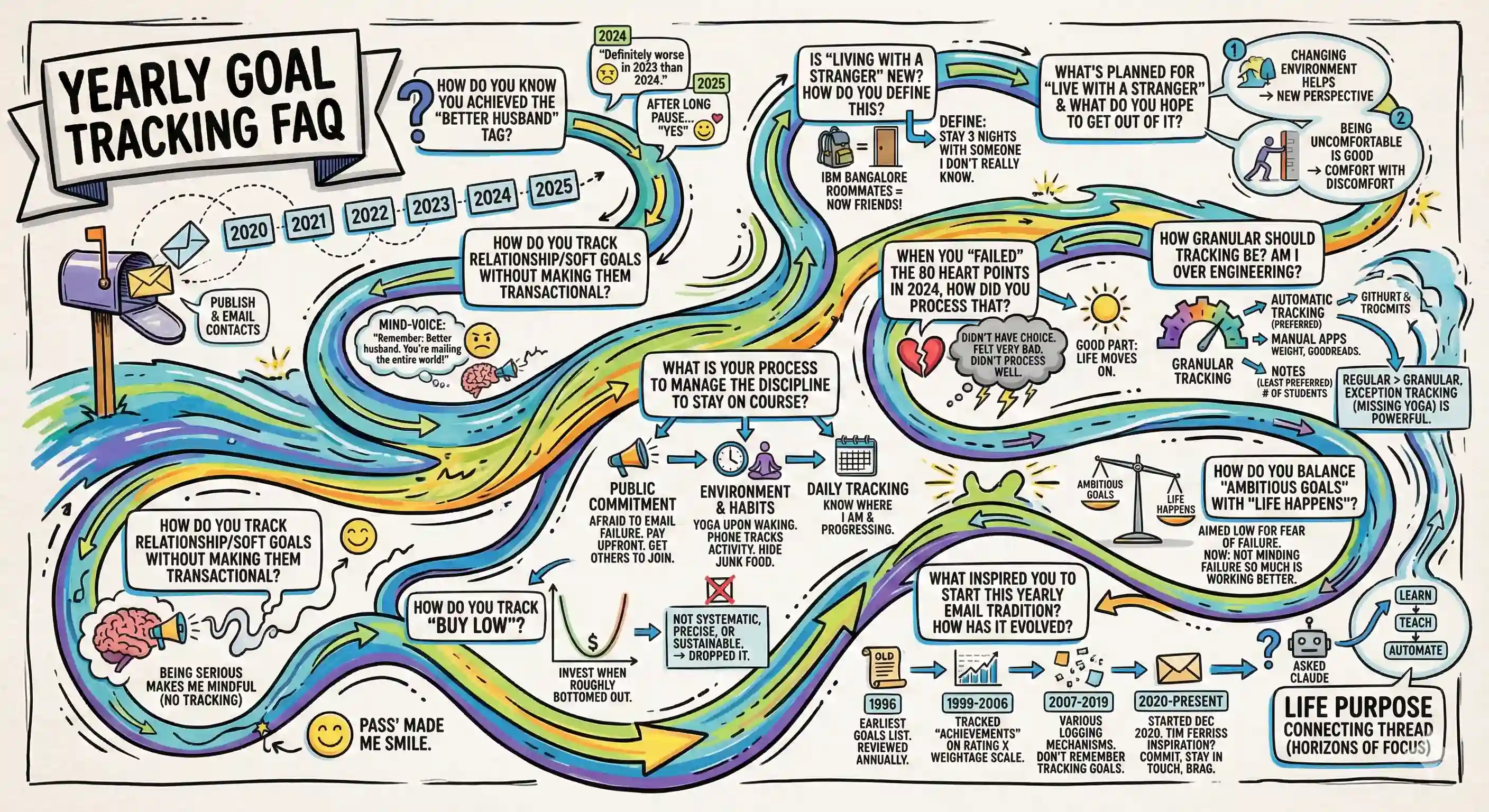
In 2025, I’m playing Goals Bingo. I want to complete one row or column of these goals. Here’s my status from Jan – Jun 2025. 🟢 indicates I’m on track and likely to complete.🟡 indicates I’m behind but I may be able to hit it.🔴 indicates I’m behind and it’s looking hard. DomainRepeatStretchNewPeople🟢 Better husband. Going OK🟡 Meet all first cousins. 8/14🟢 Interview 10 experts. 11/10🟡 Live with a stranger. Tried homestay - doesn't countEducation🔴 50 books. 6/50🟡 Teach 5,000 students. ~1,500🟡 Run a course only with AI. Ran a workshop with AITechnology🟢 20 data stories. 10/20🔴 LLM Foundry: 5K MaU. 2.2K MaU.🟡 Build a robot. No progress.🟢 Co-present with an AI. DoneHealth🟢 300 days of yoga. 183/183 days🟡 80 heart points/day. Far from it🔴 Bike 1,000 km 300 hrs. Far from it🟢 Vipassana. 2 Jul 2025Wealth🔴 Buy low. No progress.🔴 Beat inflation 5%. Not started.🟡 Donate $10K. Ideating.🔴 Fund a startup. Not started. At the moment, there's no row or column that looks like a definite win. ...

Top 8 ways I use ChatGPT in 2025

I extracted the titles of the ~1,600 conversations I had with ChatGPT in 2025 so far and classified it against the list of How People Are Really Using Gen AI in 2025. Here are the top 8 things I use it for, along with representative chat titles. (The % match in brackets tells you how similar the chat title is to the use case.) Improving code (clearly, I code a lot) Troubleshooting (usually code) Corporate LLM/Copilot (this is mostly LLM research I do) Generating code (more code) Generating ideas (yeah, I’ve stopped thinking) Simple explainers (slightly surprising how often I ask for simple explanations) Generating relevant images. (Surprising, but I think I generated a lot of images for blog/LinkedIn posts) Specific search (actually, this is mis-classified. This is where I’m searching for search engines!) My classification has errors. For example, “Reduce Code Size” was classified against “Generating code” but should have been “Improving code”. But it’s not too far off. ...

How To Double-Check Personality Flaws With AI

After ChatGPT's discussion of my personality flaws, I asked it to listing specific conversations as evidence for flaws. Then I asked 3 LLMs to rate the evidence. Personality FlawChatGPTDeepSeekGrokAverageSelf-deprecation as a shield. Sarcastic humor4755.3Hypocrisy: Seeks limelight but preaches humility5655.3Overconfidence in technical opinions5665.7Ghosts vague messages4686.0Over-analyzes / over-engineers5586.0Fact-checks trivialities, derailing discussion7777.0Shiny object syndrome. Distracted by new technologies8777.3Intolerant of fools6897.7Dominates discussions6897.7Verbosity. Long-winded communication8877.7Hyperfocus on efficiency7988.0Intense. “Always on”8998.7 🟢 LOW: Self-deprecation / sarcastic humour as shield ChatGPT: 4/10. Bio and a few quips reveal dry self-mockery, yet direct chat evidence of humour as defence is sparse; it surfaces only occasionally. | DeepSeek: 7/10. Explicit self-awareness goals and dry humor noted, but little evidence of defensive/sarcastic use. Grok: 5/10. Some self-deprecating humor exists, but its use as a shield is not strongly supported. 🟢 LOW: Hypocrisy: seeks limelight yet preaches humility ChatGPT: 6/10. You aspire to humility but routinely headline conferences and TEDx talks; the coexistence of public speaking and stated modesty gives the charge a middling footing. | DeepSeek: 6/10. TEDx/PyCon prominence contrasts with stated humility goals, though self-improvement efforts are genuine. Grok: 5/10. Public speaking contrasts with humility goals, though this may indicate self-awareness, not hypocrisy. 🟢 LOW: Over-confidence in technical opinions ChatGPT: 7/10. You assert strong views (e.g., Node vs FastAPI) but also invite verification and accept corrections, yielding only moderate evidence of over-confidence. | DeepSeek: 6/10. States strong preferences upfront but routinely invites validation and course-corrects. Grok: 6/10. Strong opinions are expressed, but openness to correction moderates the perception of overconfidence. 🟢 LOW: Ghosts vague messages ChatGPT: 5/10. You’ve stated you ignore low-context e-mails, but chat logs show you usually follow-up or clarify rather than disappear. | DeepSeek: 6/10. Documented tendency to ignore low-context questions, though chat logs show active clarification habits. Grok: 8/10. Multiple instances show the user ignoring or not responding to unclear or low-context messages. 🟢 LOW: Over-analyzes / over-engineers ChatGPT: 5/10. Designing auto-re-flow SVG chevrons and exhaustive RAG specs hint at depth beyond the simple solution, yet you also champion “smallest libraries” and lightweight rate-limiters. | DeepSeek: 5/10. Some prototype/structuring tendencies, but strong preference for minimal solutions counterbalances this. Grok: 8/10. The user often dives deeply into tasks, sometimes creating complex solutions for simple problems. 🟡 MEDIUM: Fact-checks trivialities, derailing discussion ChatGPT: 8/10. Many requests revolve around “double-check,” “fact-check,” or recalculating tiny details, which lengthens threads even when stakes are small. | DeepSeek: 7/10. Frequent accuracy demands and citation hunts elongate discussions, but stays focused when content is solid. Grok: 7/10. Evidence of prioritizing precision, like fact-checking minor details, can disrupt conversation flow. 🟡 MEDIUM: Shiny-object syndrome ChatGPT: 6/10. Parallel explorations of Godot, Matrix, Cloudflare Workers, SVG SmartArt, esp32-eye, etc. reveal a persistent pull toward new tech before finishing earlier threads. | DeepSeek: 7/10. Broad simultaneous explorations (Godot/WASM/DuckDB), though sustains core projects long-term. Grok: 7/10. Exploration of new technologies is frequent, but focus on core projects suggests a balanced curiosity. 🟡 MEDIUM: Intolerant of fools / low clarity ChatGPT: 7/10. Frequent demands for precise formats, citations, and “be specific” instructions show a low tolerance for ambiguity, though you still help patiently on non-technical questions. | DeepSeek: 8/10. Strong pattern of rejecting ambiguity/fluff, though softened by humor and non-technical engagements. Grok: 9/10. The user consistently demands clarity and efficiency, showing little patience for ambiguity or fluff. 🟡 MEDIUM: Dominates discussions ChatGPT: 4/10. Long, multi-part prompts and the need for TL;DRs suggest you can overshadow lighter voices, but you periodically insist on brevity and delegate tasks, tempering the effect. | DeepSeek: 8/10. Long technical messages (avg ~3k chars) and intense Q&A patterns create conversational dominance. Grok: 9/10. Detailed, technical responses consistently steer and dominate conversations. 🟡 MEDIUM: Verbosity / long-winded communication ChatGPT: 5/10. Average messages run several thousand characters, and you often request exhaustive, multi-section outputs—though you sometimes tell the assistant “Shorter please,” verbosity remains a clear pattern. | DeepSeek: 8/10. Multi-step technical requests dominate interactions, though periodic "shorter please" self-corrections exist. Grok: 7/10. Messages are often lengthy and detailed, though the user also requests concise responses from others. 🔴 HIGH: Hyper-focus on efficiency ChatGPT: 8/10. Recurrent themes—cost monitoring, smallest-lib preference, GPU-utilization alerts—show you relentlessly optimise workflows and expect others to keep pace. | DeepSeek: 9/10. Unambiguous prioritization of concise formats, minimal libraries, and metric-driven optimization. Grok: 8/10. Repeated emphasis on concise, efficient communication and minimal tools is evident. 🔴 HIGH: Intense – “always on” ChatGPT: 8/10. Around-the-clock, multi-topic requests (weekend cron jobs, 2 a.m. prototypes) portray sustained high energy, with only a few calmer “travel nerves” moments as counter-weight. | DeepSeek: 9/10. High-volume technical queries across domains, 6am research routines, and rapid prototyping habits. Grok: 9/10. High energy and engagement are consistently shown through task initiation and scheduling. My actions: Learn from fools and focus on the big-picture. Specifically: ...

My Goals Bingo as of Q1 2025

In 2025, I'm playing Goals Bingo. I want to complete one row or column of these goals. Here's my status from Jan - Mar 2025. 🟢 indicates I'm on track and likely to complete.🟡 indicates I'm behind but I may be able to hit it.🔴 indicates I'm behind and it's looking hard. DomainRepeatStretchNewPeople🟢 Better husband. Going OK🟢 Meet all first cousins. 8/14🟢 Interview 10 experts. 9/10🔴 Live with a stranger. Not plannedEducation🟡 50 books. 6/50🟡 Teach 5,000 students. ~1,500🔴 Run a course only with AI. Not startedTechnology🟡 20 data stories. 1/20🔴 LLM Foundry: 5K MaU. 2.2K MaU.🟡 Build a robot. No progress.🟢 Co-present with an AI. DoneHealth🟢 300 days of yoga. 91/91 days🟡 80 heart points/day. 70/80🔴 Bike 1,000 km 300 hrs. 22/300🟡 Vipassana. Not plannedWealth🟡 Buy low. No progress.🔴 Beat inflation 5%. Exploring.🟡 Donate $10K. Ideating.🔴 Fund a startup. Thinking. Repeat goals seem likely. It's easier to do something again than something bigger or new. ...

How to publish an eBook in 60 minutes

I published an eBook on Amazon. It takes an hour if you have the content ready. STEP 1 (10 min): Set up a Kindle Direct Publishing account with your address, bank details, and tax info. STEP 2 (15 min): Export my London 2000 blog archive and convert to Markdown. STEP 3 (10 min): Reformat the Markdown by writing a script in Cursor. Here’s the prompt: Write a Python script that reads *.md including the YAML frontmatter, adds the YAML title as H1, date (yyyy-mm-dd) like Sun, 01 Jan 2000 in a new para after the frontmatter and before the content. ...

Voice Chat to Slides: My New AI-Powered Workflow

Here’s my new workflow for creating slide decks: ChatGPT interviews me and creates Markdown slides. I use Marp to convert Markdown to slides. LLMs create supporting images. I deploy on GitHub Pages. … and here are 2 decks created this way. Visualizing LLM Hallucinations LLMs in Education Let’s look at how I built the second example, step by step. ChatGPT interviews me and creates Markdown slides While walking 75 minutes from home to IIT Madras to deliver this talk, I had ChatGPT interview me in standard voice mode. ...

A challenge of blog questions

Thejesh tagged me with these questions. Why did you start blogging in the first place? I started my website in 1997 on Geocities at https://www.geocities.com/root_node/, mostly talking about me. (A cousin once told me, “Anand’s site is like TN Seshan - talking only about himself.” 🙂) (As an aside, I didn’t know that searching for Geocities on Google renders the results in Comic Sans!) I wanted a place to share the interesting links I found. Robot Wisdom by John Barger and Scripting News by Dave Winer were great examples: collection of interesting links updated daily. ...

Nibbling

This is the third post in my “Nasty habits” series following Licking and Scraping. Nibbling is biting, but only with the incisors. Not the canines or molars. And it’s a delight. Nibbling is not uncommon. People tend to nibble on all kinds of stuff. Pens, erasers, straws, gums, clothes, buttons, spoons, rubber bands, paper, toothbrush, cups, bottles, cables, gadgets, books, chalk, coins. It’s a long list. But I don’t do those. I nibble only food and body parts. ...

Features actually used in an LLM playground

At Straive, only a few people have direct access to ChatGPT and similar large language models. We use a portal, LLM Foundry to access LLMs. That makes it easier to prevent and track data leaks. The main page is a playground to explore models and prompts. Last month, I tracked which features were used the most. A. Attaching files was the top task. (The numbers show how many times each feature was clicked.) People usually use local files as context when working with LLMs. ...

Books in 2024

I read 51 new books in 2024 (about the same as in 2023, 2022, 2021, and 2020.) But slightly differently. I only read Manga this year. Fullmetal Alchemist (Vol 12 - 27). What started off as a childishly illustrated children’s book evolved into a complex, gripping plot. Attack on Titan (Vol 1 - 34). I read it while I watched the TV Series (reading first, then watching). It started explosively and the pace never let up. I had to take breaks just to breathe and calm my nerves. The sheer imagination and subtlety is brilliant. It’s hard to decide which is better—the manga (book) or the anime (TV). The TV series translates the book faithfully in plot and in spirit. It helped that I read each chapter first, allowing me to imagine it, and then watch it, which told me what all I missed in the book. I absolutely would not have understood the manga without watching the anime. ...

My Year in 2024

Here's the report card for my 2024 resolutions: Compound long-term goals, daily. PASS. I managed to work continuously build on 6 areas in 2024: Blogging about 50 posts on my blog and on LinkedIn Weekly notes of things I learned Teaching Tools in Data Science (repo) Reading only Manga Experimenting with LLM applications LLM Evangelization through LLM Foundry, Straive's LLM portal. Hit 80 heart points, daily. FAIL. I stopped exercise in the second half and gained 7 kgs. Be a better husband. PASS. My wife confirmed that I was "definitely worse in 2023 than 2024." My most memorable events in 2024 were: ...

My learnings as week notes

One of my goals for 2024 is to “Compound long-term goals, daily.” Learning is one of those. Some people publish their learnings as weekly notes, like Simon Willison, Thejesh GN, Anil Radhakrishna, and Julia Evans. I follow their notes. I started doing the same, quietly, to see if I could sustain it. It’s been a year and it has sustained. I’m finally publishing them. My week notes are at til.s-anand.net. Here’s the source code. ...

Tools to publish annotated talks from videos

Arun Tangirala and I webinared on “AI in Education” yesterday. This post isn’t about the webinar, which went on for an hour and was good fun. This post isn’t for my preparation for the webinar, which happened frantically 15 minutes before it started. This post is about how I created the annotated talk at https://github.com/sanand0/ai-in-education-webinar (inspired by Simon Willison’s annotated presentations process) – a post-processing step that took ~3 hours – and the tools I used for this. ...