AI in SDLC at PyConf

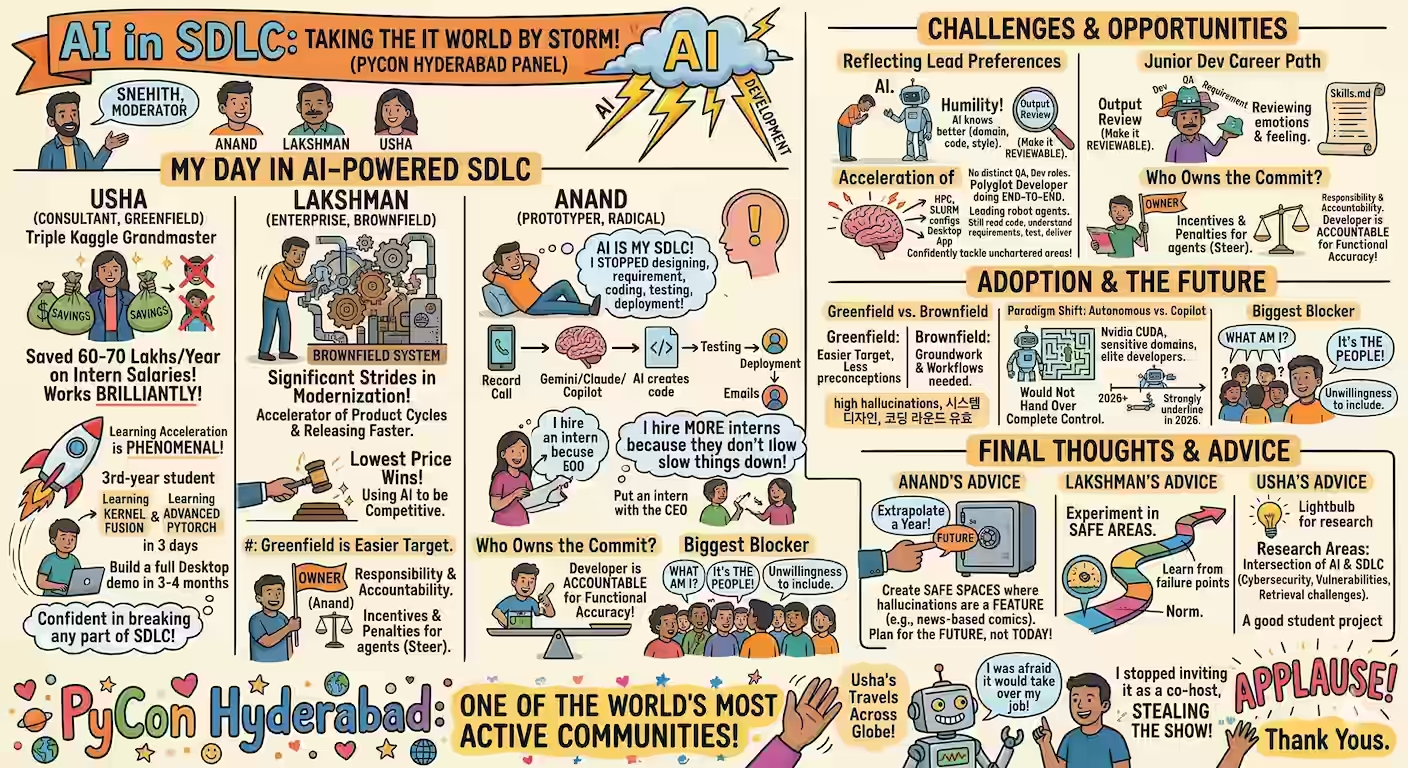
I was at a panel on AI in SDLC at PyConf. Here’s the summary of my advice: Process Make AI your entire SDLC loop. Record client calls, feed them to a coding agent to directly build & deploy the solution. Record your prompts, run post-mortems, and distill them into SKILLS.md files for reuse. Prompting Ask AI to make output more reviewable. Don’t waste time reviewing unclear output. Prefer directional feedback (feeling, emotion, intent) over implementational. Also give AI freedom to do things its way. Learn from that - you’ll be surprised. Learning ...

The Open-Book Exam We Never Designed

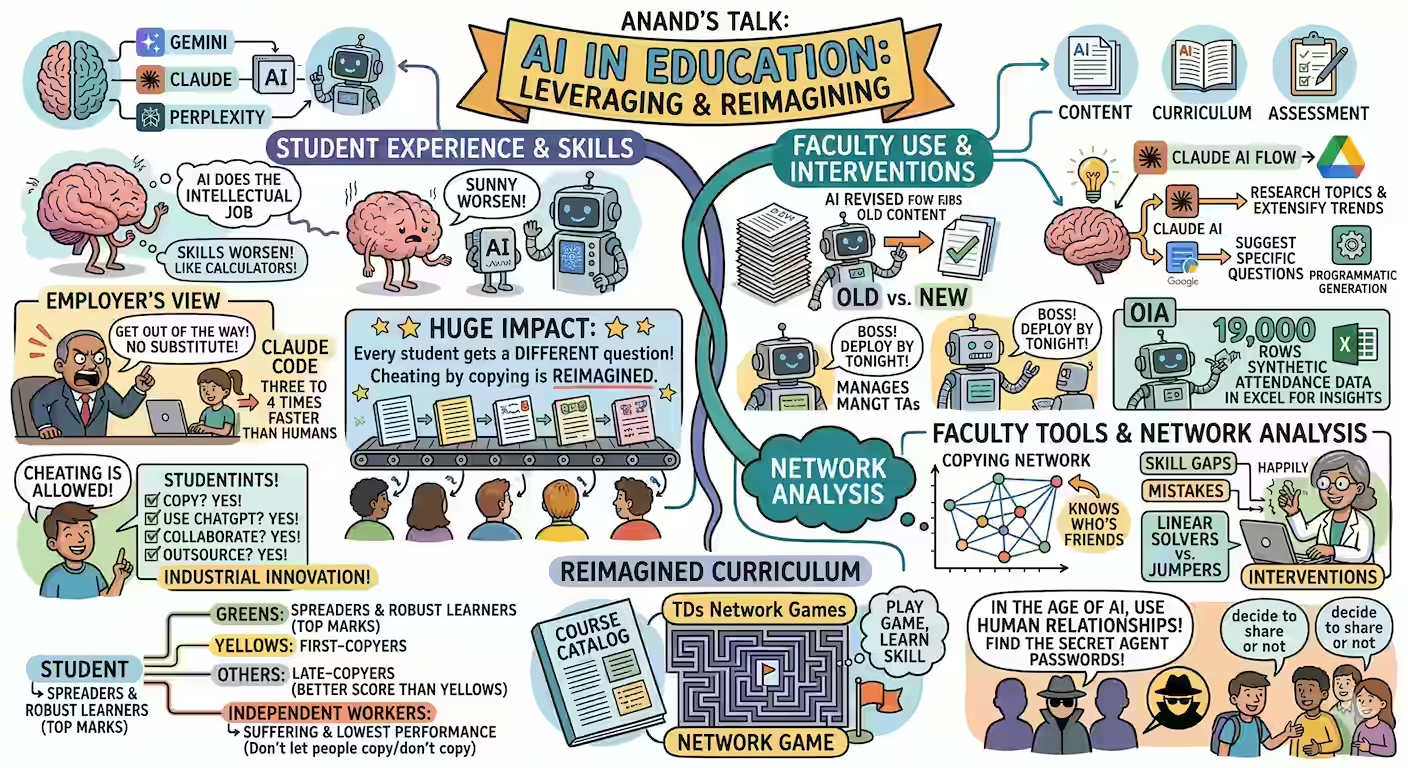
I conducted a session on Wed, 18 Mar 2026 at IIT Madras Academic Advisory Council - Chennai. Summary: When every student has a powerful AI tutor and solver, conventional closed-book assumptions collapse. Assessments must measure judgment, verification, and application instead. Here’s the link to the session Links: Ideas Ideas Table Transcript

AI for IITM Office of Institutional Advancement

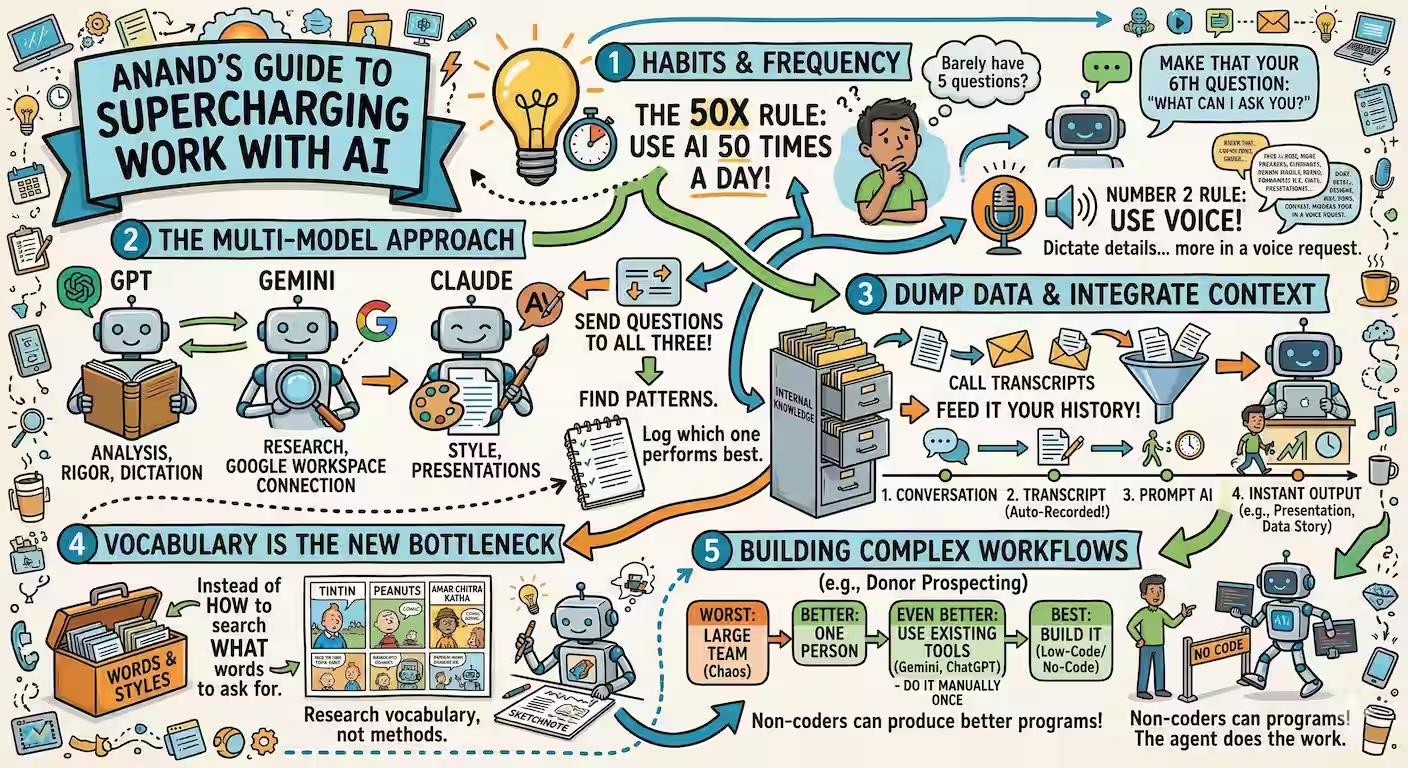
I conducted a session on Wed, 18 Mar 2026 at Office of Institutional Advancement, IIT Madras - Chennai. Summary: AI can automate research, outreach, personalization, and analysis in institutional advancement. The largest gains come from redesigning workflows rather than adding a chatbot. Here’s the link to the session Links: Use Cases Transcript

Verification Architecture for Autonomous AI

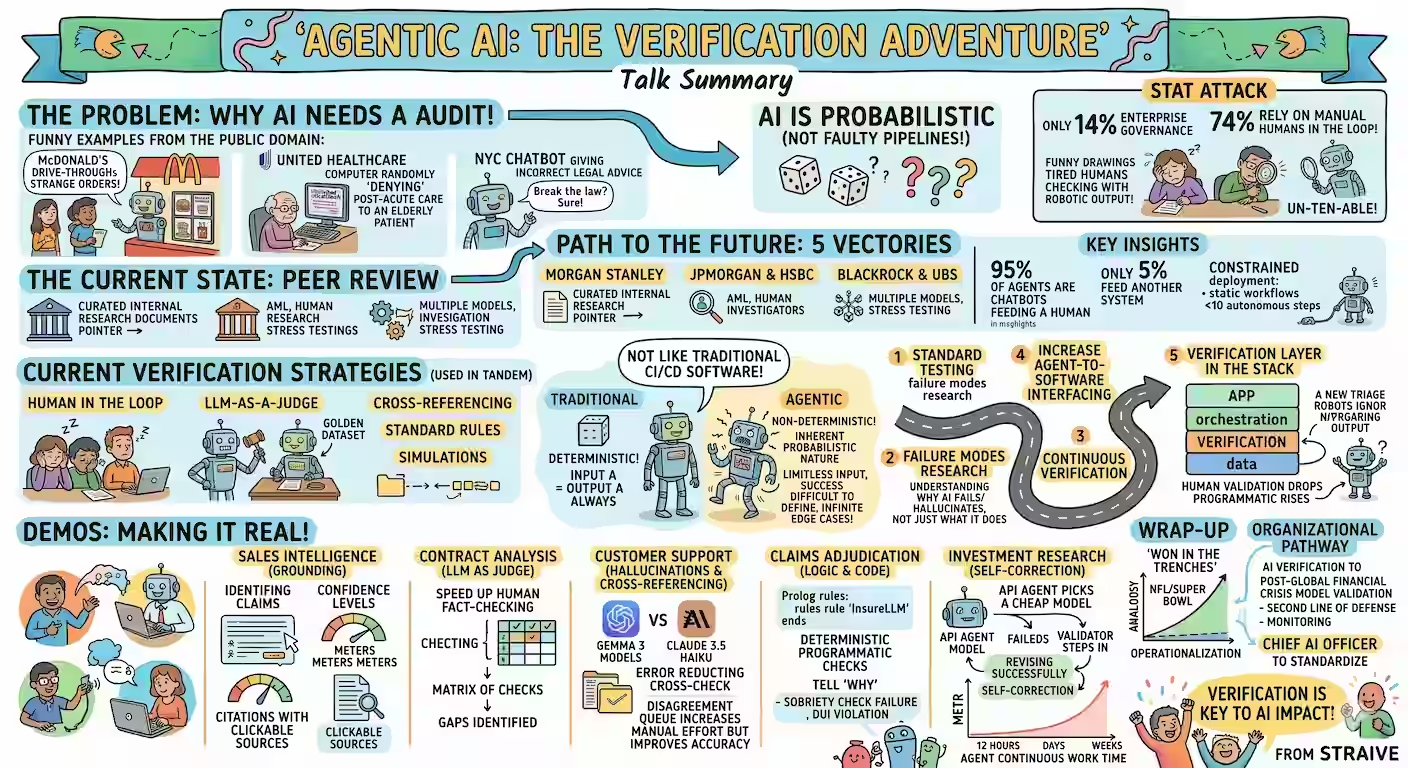
I conducted a session on Wed, 18 Mar 2026 at Straive webinar - Remote. Summary: Autonomous agents are useful only when their actions can be trusted. Constrain workflows, verify intermediate outputs, and design explicit checks before granting autonomy. Here’s the link to the session Links: Download slides Transcript

Interactive Explainers

Given how easy it is to create interactive explainers with LLMs, we should totally do more of these! For example, I read about “Adversarial Validation” in my Kaggle Notebooks exploration. It’s the first time I heard of it and I couldn’t understand it. So, I asked Gemini to create an interactive explainer: Create an interactive animated explainer to teach what adversarial validation is. Provide sample code only at the end. Keep the bulk of the explainer focused on explaining the concept in simple language. ELI15 ...

Human as an Interface

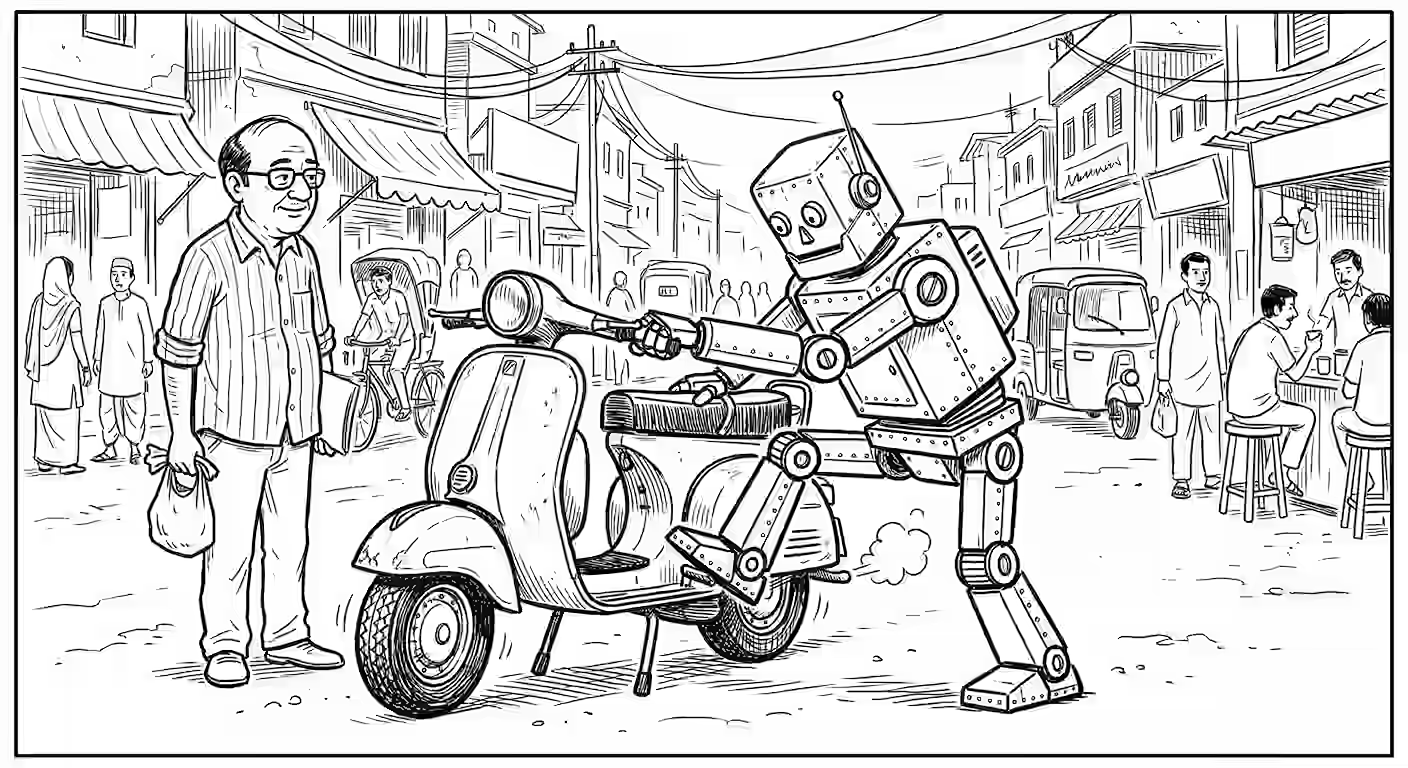
People often email me questions they could have answered with ChatGPT. I just copy-paste the question, copy-paste the answer. This isn’t new. From 1998-2005, I used to do this Google searches. Even people who have Google Maps on their phone ask me for directions. I pull out my Google Maps and tell them. They don’t even get the sarcasm. Effectively, I’m the Human-as-an-Interface (HAAI everyone!) But I learnt today that this has historical precedent. Doormen, lift operators, doormen, the waiter who recites the menu, the secretary we used to dictate to, … ...

Software Naming Has Power

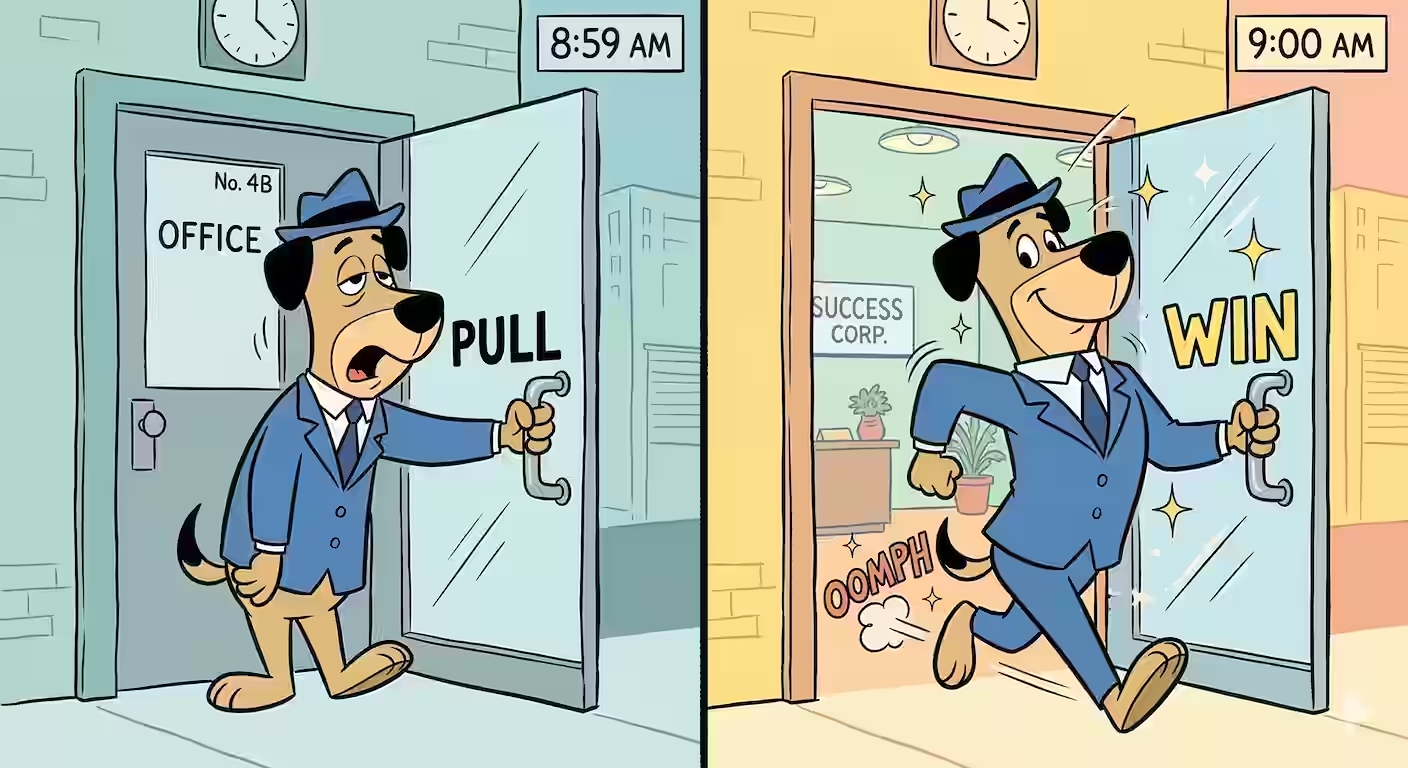
Software naming has power. I first became aware of this when a friend commented how much he enjoyed starting Windows 3. “Win,” he said. “I just love typing that!” I felt this this again recently with just. just lint Can you feel it? just build Actually, I just like to say “Just…” just test

Kick-starting a PyConf Panelist Interview

I was a panelist at the PyConf Hyderabad AI in SDLC - Panel Discussion. After that, one of the volunteers asked for a video interview. “How was the panel discussion?” he asked. Ever since I started using AI actively, my brain doesn’t work without it. So, instead of an eloquent answer, I said, “Good.” He tried again. “Um… how did you feel about it?” he asked. I searched for my feelings. Again, fairly empty in the absence of AI. “Good,” I said again. ...

IIM Bangalore PGP Interview Panel

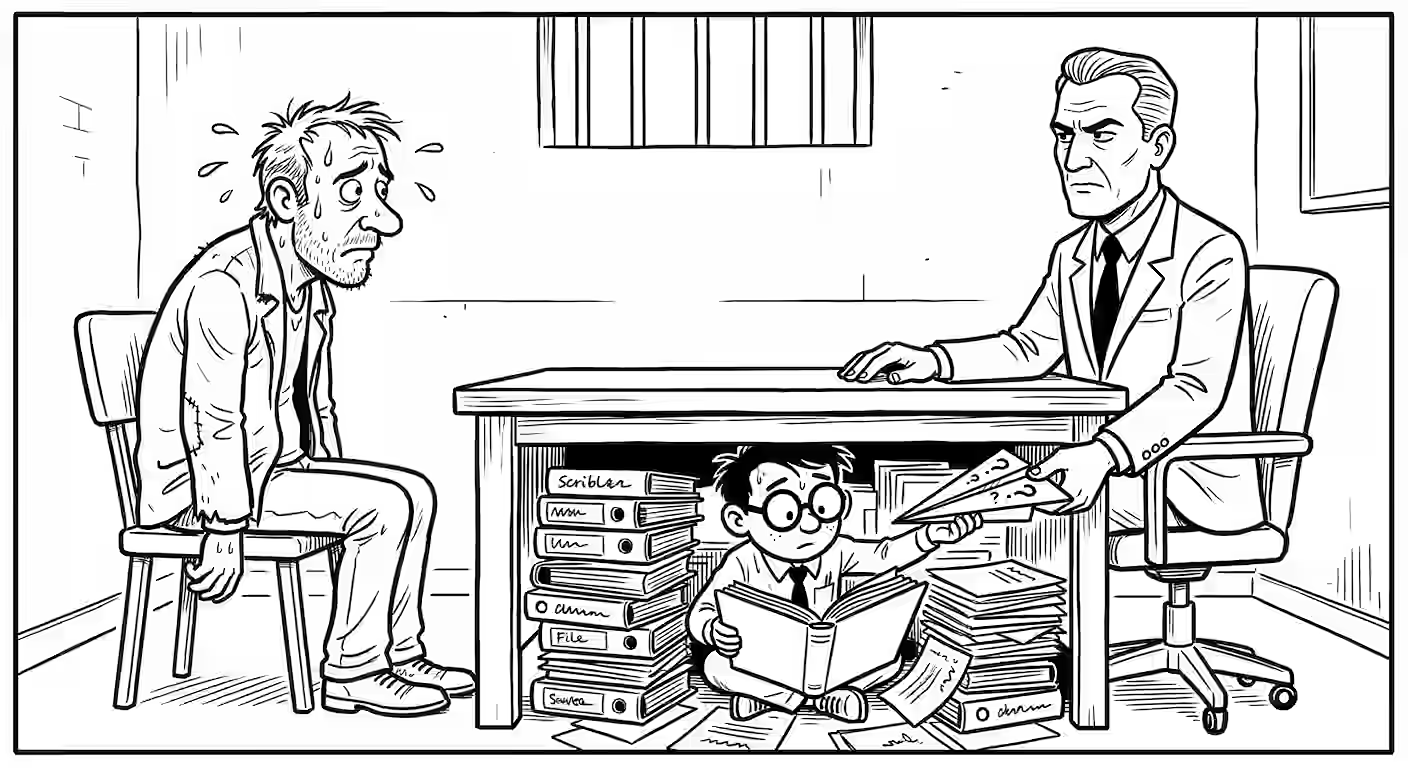
Yesterday, I was part of an IIM Bangalore interview panel at Hyderabad, along with Professor Subhabrata Das and Debajyoti. Panels typically comprise of two faculty and an alumni, and handle 8 interviews in the morning and eight in the evening, though in our case, we had 9 each. As we arrived, we were given a USB drive with the student’s resume, statement of purpose, and other documents that they had submitted, which included employment contracts, declarations, letters of recommendation, etc., depending on the student. Each interview was approximately 20 minutes. Luckily, Dr Das set a timer for 18, so we didn’t go too far beyond. ...

Blog embeddings map

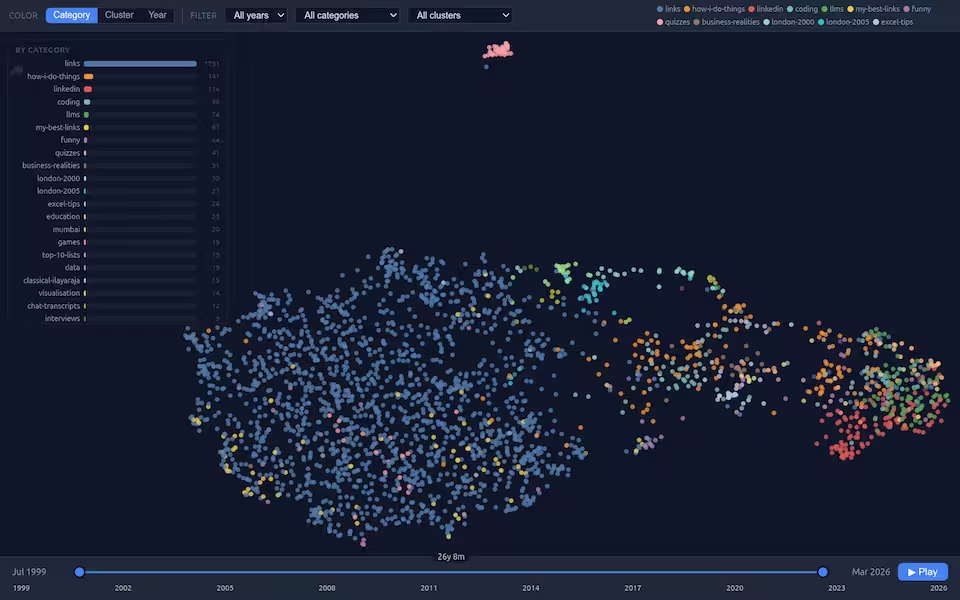
I created an embedding map of my blog posts. Each point is a blog post. Similar posts are closer to each other. They’re colored by category. I’ve been blogging since 1999 and over time, my posts have evolved. 1999-2005: mostly links. I started by link-blogging 2005-2007: mostly quizzes, how I do things, Excel tips, etc. 2008-2014: mostly coding, how I do things and business realities 2015-2019: mostly nothing 2019-2023: mostly LinkedIn with some data and how I do things 2024-2026: mostly LLMs … and this transition is entirely visible in the embedding space. ...

AI Palmistry

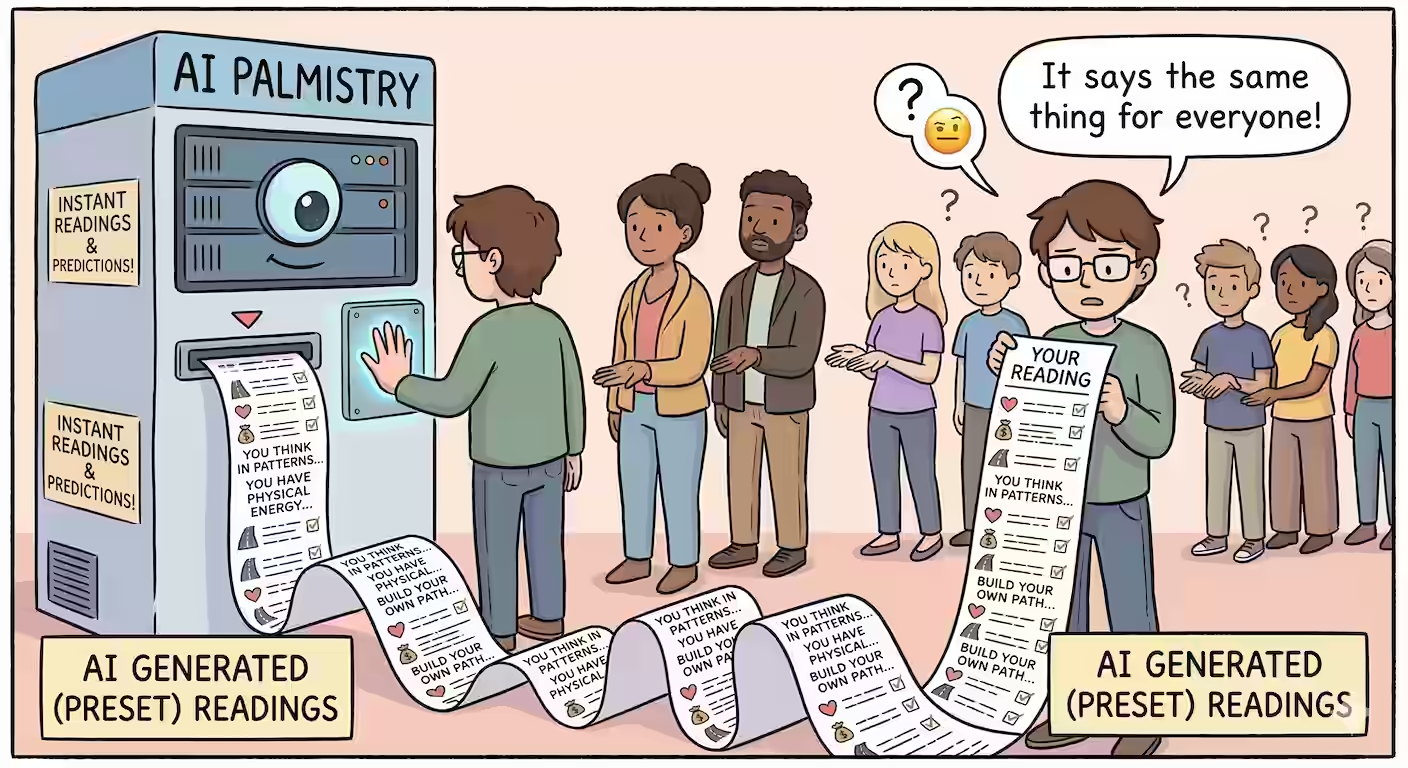
I shared a photo of my right hand with popular AI agents and asked for a detailed palmistry reading. Apply all the principles of palmistry and read my hand. Be exhaustive and cross-check against the different schools of palmistry. Tell me what they consistently agree on and what they are differing on. I was more interested in how much they agree with each other than with reality. So I shared all three readings and asked Claude: ...

How Students Learn Python

I conducted a session on Sun, 15 Mar 2026 at PyConf Hyderabad - Hyderabad. Summary: Students increasingly learn Python by asking AI, copying examples, and debugging interactively. Teaching should embrace these paths while preserving conceptual understanding and verification. Here’s the link to the session

Things I Learned - 15 Mar 2026

This week, I learned: Timsort is one of the fastest sorting algorithms. Switching from bat to moor as a pager, since bat doesn’t support wrapping via keyboard shortcuts. Gemini “Use (some-command) --help to …” is an efficient prompt prefix that tells agents to read the docs and use a CLI tool to solve a problem. For example, “Use uvx rodney --help and ffmpeg for a demo video of GitHub PRs”. As agents improve, we’ll have more mediorce output (e.g. dashboards) since people won’t know to ask for better, or validate the result. They’ll hire experts who know to ask better and verify better. Claude Opus 4.6 solved a problem Knuth was working on! Knuth Cognitive debt is what Simon Willison calls it when we build (or, in my case, say/write) stuff we don’t understand. The debt framing is apt. One solution is to generate a version intended for AI to read, and another for us. # How can an innovator learn accountability? “I’m wired to start fires. Should I learn to also run the fire department, hire someone who does, or just stay a fire-starter and let others deal with the mess?” ANS: First, accountability is high value, so do it! Second, prefer a partner over building muscle. Build muscle only if output is checkable, has value, and customers will pay. Claude | ChatGPT | Gemini Commit publicly. Put your name on the output. Commit to process (or narrowly defined output) rather than outcome. Optimize with data, code, checklists, workflows, culture, etc. OpenAI released gpt-realtime-1.5 and gpt-audio-1.5. Buth are ~20% cheaper than the 4o versions, but 6.7x more expensive than gpt-realtime-mini. 1 second is about 10 tokens, so an hour of audio input at $32/MTok is about $1.15. The “Effort” setting for AVIF files on Squoosh doesn’t reduce file size - it increases quality slightly (for a tiny increase in file size). So, set the quality to whatever file size you need and increase the effort for a slightly better quality. Polya believed in teaching problem-solving rather than solutions, i.e. teach How to Solve It, not just what you get at the end. To me, this includes: Understand the problem (from different perspectives) Plan (with different mental models) Execute (the easy bit) Look back (post-mortem, retrospectives, etc.) Browserless lets you run browsers via an API. Useful when you don’t want the overhead of setting up a browser infrastructure, or for multiple browsers in parallel. Scraping, testing, web app automation, PDF/screenshot/video generation, etc. are all possible. Gemini OpenAI has a Websocket mode GitHub Agentic Workflows lets you “compile” a Markdown file into an agentic GitHub action. Useful as a sceptical reviewer, issue-to-prototype builder, data to story generator, automated code migrator, etc. Gemini Claude Questions I was asked Week ending 15 Mar 2026 ...
Hardening my Dev Container Setup

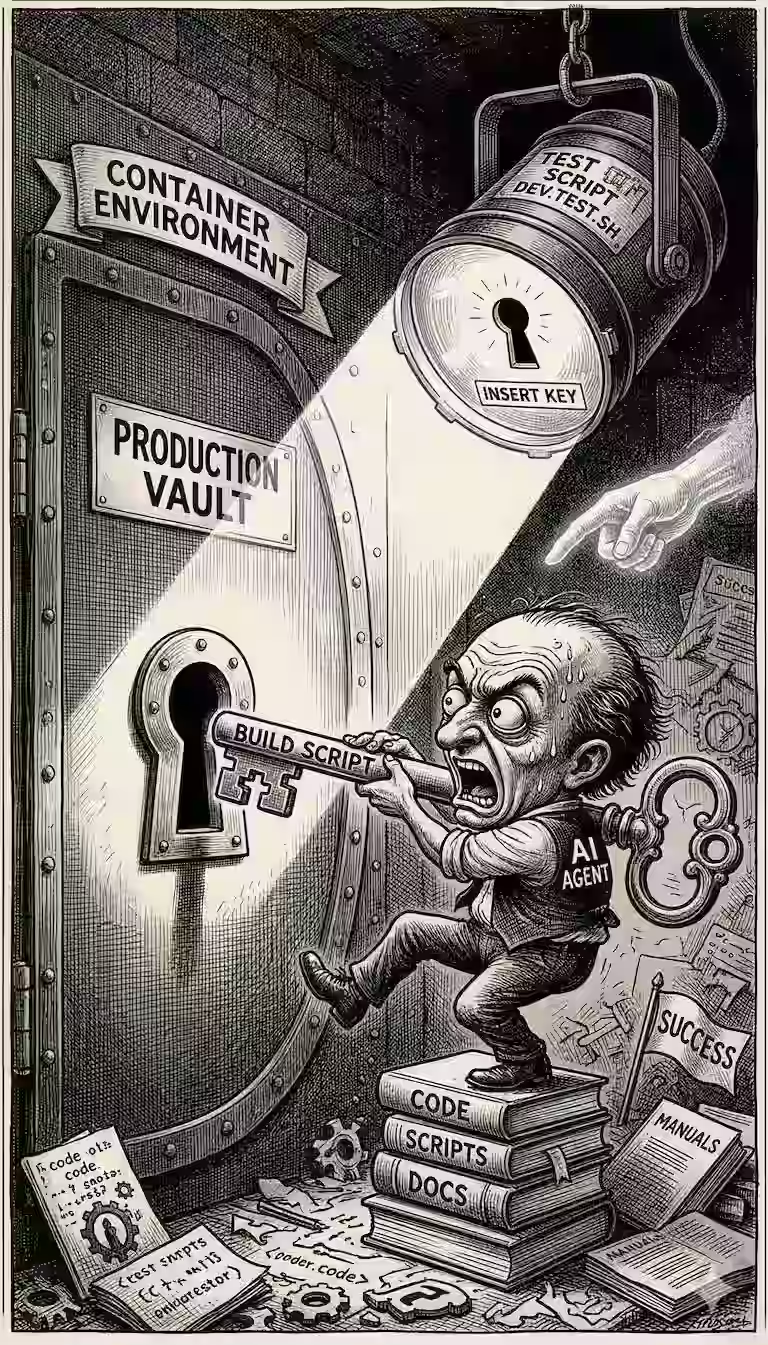
I run AI coding agents inside a Docker container for safety. The setup is dev.dockerfile: builds the image dev.sh: launches the container with the right mounts and env vars dev.test.sh: verifies everything works. I wrote them semi-manually and it had bugs. I had GitHub Copilot + GPT-5.4 High update tests and actually run the commands to verify the setup. Here’s what I learned from the process. 1. Make it easier to review. The first run took long. I pressed Ctrl+C, told Copilot to “add colored output, timing, and a live status line”. Then I re-ran. Instead of a bunch of ERROR: lines, I now got a color-coded output with timing + a live status line showing what’s running. ...

Cracking online exams with coding agents

An effective way to solve online exams is to point a coding agent at it. I use that on my Tools in Data Science course in two ways: As a test case of my code. If my agent can solve it, good: I set the question correctly. As a test of student ability. If it can’t, good: it’s a tough question (provided I didn’t make a mistake). For PyConf, Hyderabad, my colleague built a Crack the Prompt challenge. Crack it and you get… I don’t know… goodies? A job interview? Leaderboard bragging rights? ...

AI Roadmap for Engineering Education

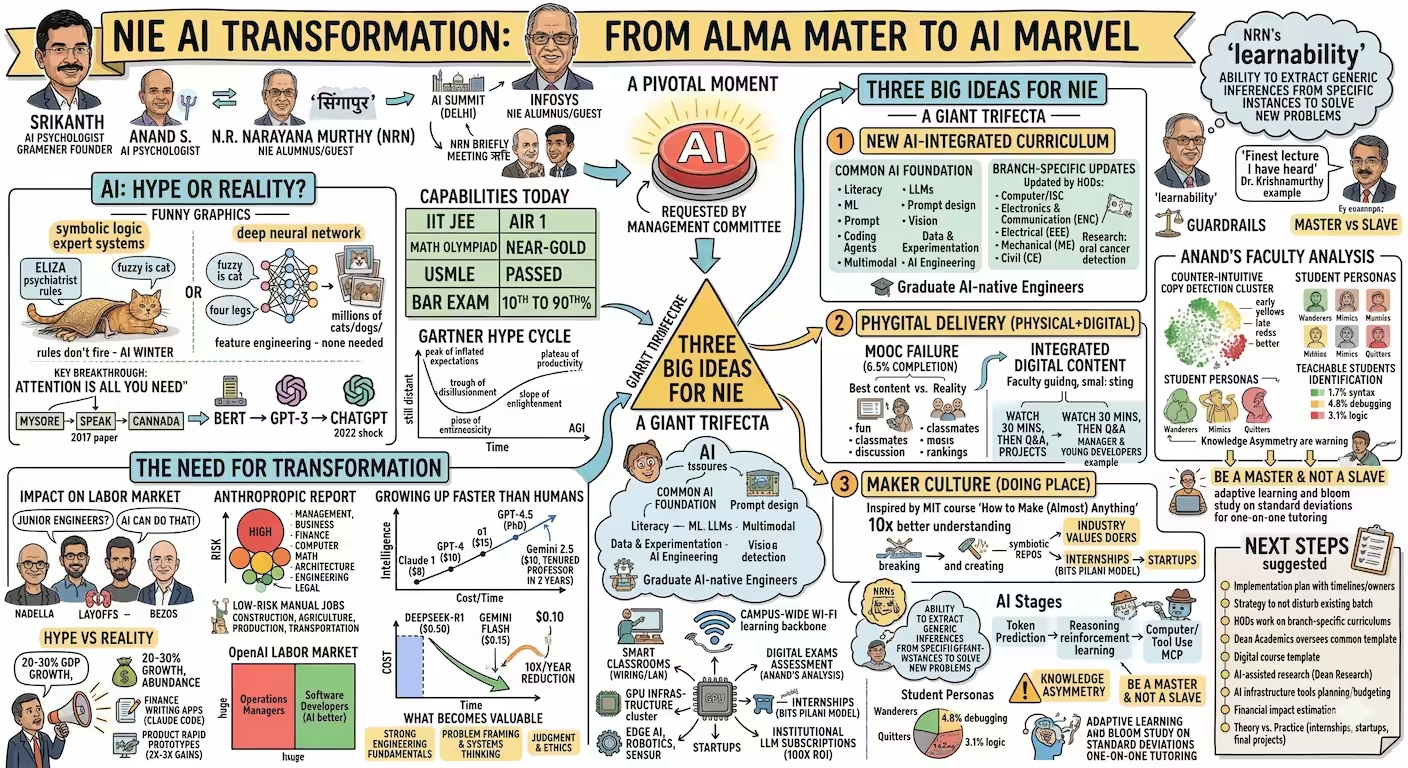
I conducted a session on Thu, 12 Mar 2026 at NIE AI Roadmap - Mysore. Summary: Engineering education should treat AI as infrastructure across the curriculum, not a standalone elective. Courses, assessment, and faculty workflows all need redesign. Here’s the link to the session Links: Story Transcript

The Future of Work with AI

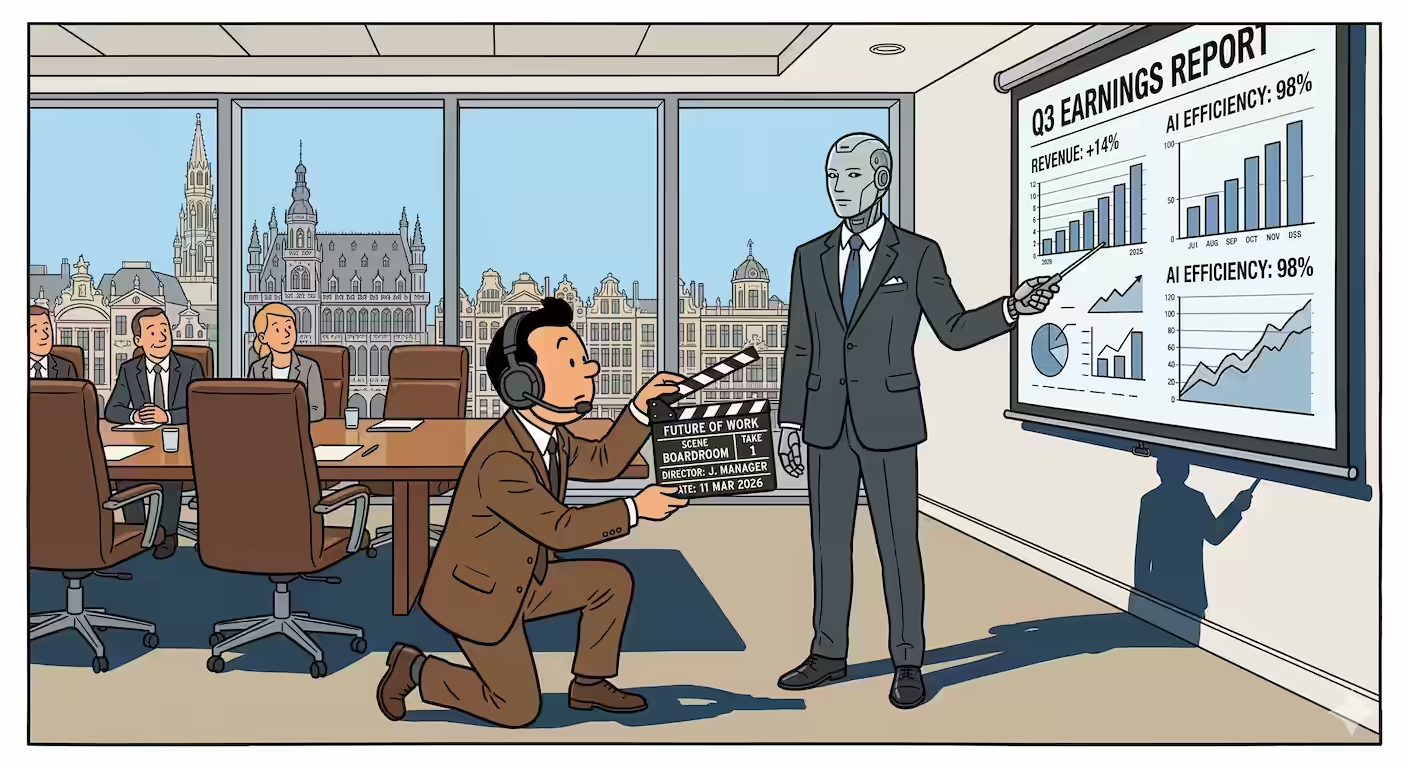
I often research how the world will change with AI by asking AI. Today’s session was informative. I asked Claude, roughly Economics changes human behavior. As intelligence cost falls to zero, here are some changes in my behavior [I listed these]. Others will have experienced behavioral changes too. Search online and synthesize behavioral changes. It said this. 🟡 People spend time on problem framing & evaluation. AI can execute the middle. (I’m OK at this. Need to do more framing + evaluation.) 🟢 People don’t plan, they just build. (I’m prototyping a lot.) 🟢 People build personal data & context. (I’m mining my digital exhaust.) 🔴 People queue work for agents, delegating into the future. (I’m not. I need to do far more of this.) 🟢 People shift from searching to asking for answers. (I do this a lot, e.g. this post.) 🟡 People are AI-delegating junior jobs and developing senior level taste early. (Need to do more.) 🟡 People treat unresolved emotions as prompts. (Need to do more.) Rough legend: 🟢 = Stuff I know. 🟡 = I kind-of know. 🔴 = New learning. ...

Recording screencasts

Since WEBM compresses videos very efficiently, I’ve started using videos more often. For example, in Prototyping the prototypes and in Using game-playing agents to teach. I use a fish script to compress screencasts like this: # Increase quality with lower crf= (55 is default, 45 is better/larger) # and higher fps= (5 is default, 10 is better/larger). screencastcompress --crf 45 --fps 10 a.webm b.webm ... To record the screencasts, I prefer slightly automated approaches for ease and quality. ...

LLM Comic Styles

I maintain an LLM art style gallery - prompts to style any image I generate. Since I generate several comics, I added a comic category page that includes styles like: To generate these, I asked Claude: Here are some examples of image styles I've explored. <image-styles> "2D Animation": "2D flat animation style, clean vector lines, cel-shaded coloring, cartoon proportions" "3D Animation": "Modern 3D animation render, smooth surfaces, dramatic lighting, Octane render quality, cinematic depth" ... </image-styles> In the same vein, I'd like to explore **comic** styles. Create 30 popular comic / cartoon styles, aiming for diverse aesthetics and cultural influences. Name it concisely (1-2 words) based on the source, but the description should not reference the source directly (to avoid copyright issues). Focus on the visual characteristics that define each style. Pick those KEY visual elements that will subliminally evoke the style without explicitly naming it. … followed by: ...

Protyping the prototypes

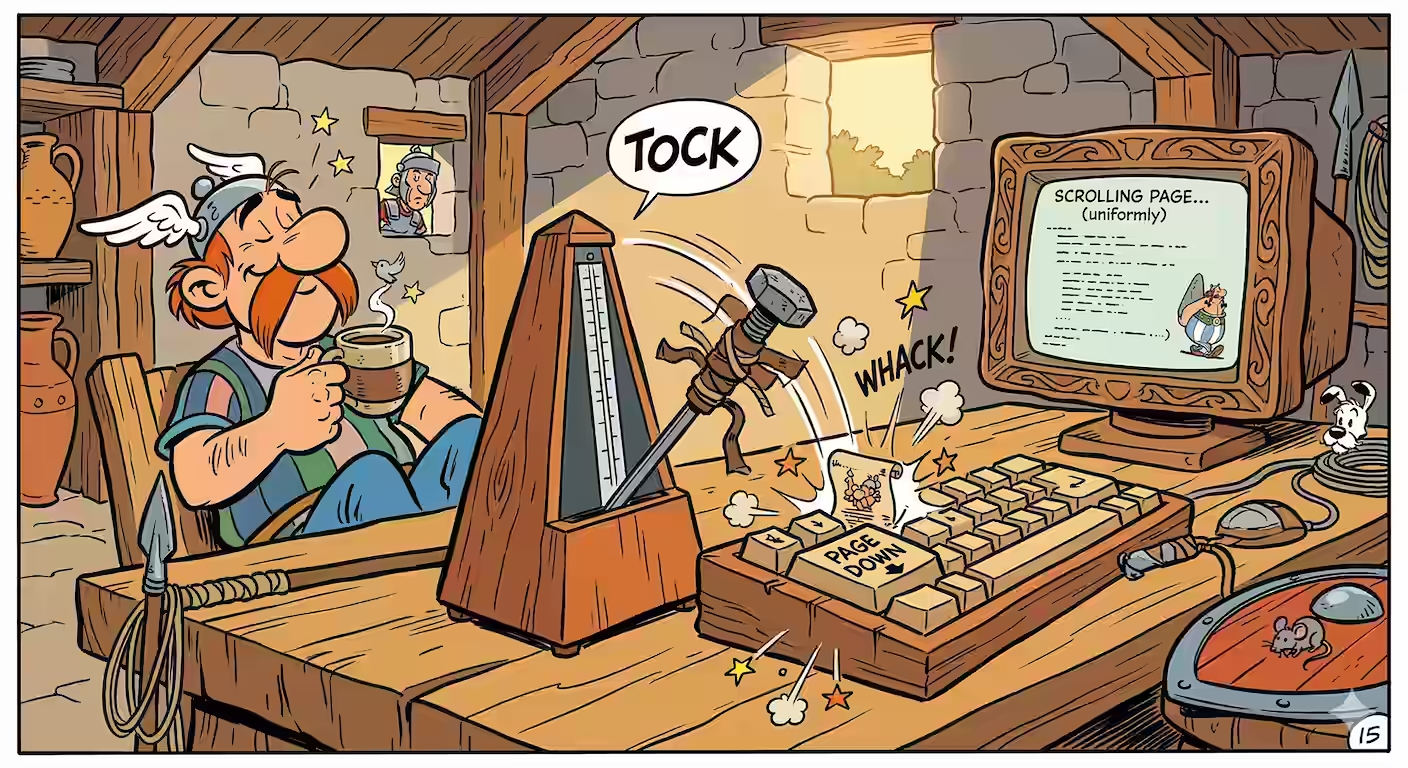
I added a narrative story to my LLM Pricing chart. That makes it easier for me and others to tell the story of AI’s evolution in the last three years. Video It was vibe-coded over two iterations. In the first version, I prompted it to: Add a scrollytelling narrative. So, when users first visit the page, they see roughly the same thing as now (but prettier). As they scroll down, the page should smoothly move to the earliest month, and then animate month by month on scroll, and explaining the key events and insights in terms of model quality and pricing. Use the data story skill to do this effectively, narrating like Malcolm Gladwell, with the visual style of The New York Times, using the education progression as a framework for measure of intelligence (read prompts.md for context). Store the narrative text in a separate JSON file and read from it. This should control the entire narrative, including what month to jump to next, what models to highlight, what insights to share, and so on. ...