How to Fake Data That Tells a Story

Fake data is usually boring if you analyze it. It’s usually uniform, with no outliers or interesting patterns. If I ask ChatGPT: Generate realistic fake tourism data using these columns: - Age - Nationality - Gender - Income - Booking_Channel - Month - Occupancy_Rate - Travel_Frequency - Spending Run the code and let me download the output as a CSV file. … the output is remarkably boring. Men & women from all countries and ages in every month visit equally. Income and spending are uniformly distributed - and the same pattern holds for all countries and ages. ...

Read from LLMs but don't tell people

In meetings, I pass on questions to ChatGPT and I read out the response. But I’ve stopped saying “I’m reading that from ChatGPT.” (By “ChatGPT”, I mean ChatGPT, Claude, Grok, Gemini, Meta, etc. I happen to use ChatGPT with O3 Mini + Search.) Use ChatGPT in meetings It’s good to bring ChatGPT into conversations. (Or any activity where intelligence helps, actually.) In meetings (online or in person), I keep a ChatGPT window open. When asked: ...

A challenge of blog questions

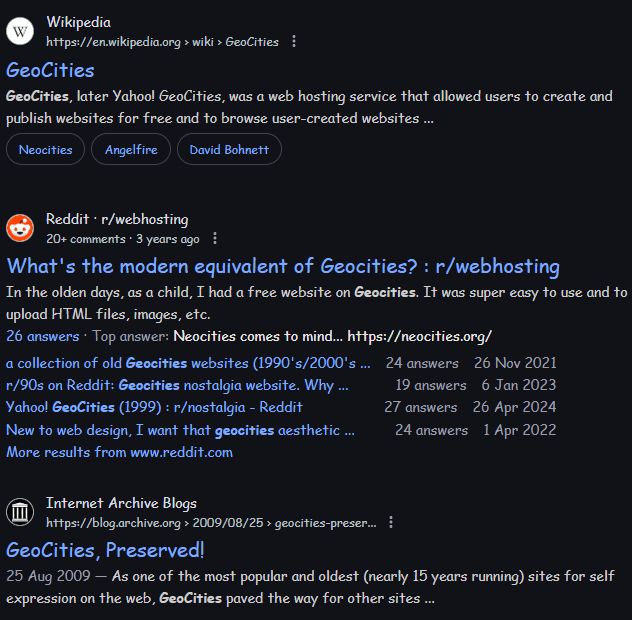
Thejesh tagged me with these questions. Why did you start blogging in the first place? I started my website in 1997 on Geocities at https://www.geocities.com/root_node/, mostly talking about me. (A cousin once told me, “Anand’s site is like TN Seshan - talking only about himself.” 🙂) (As an aside, I didn’t know that searching for Geocities on Google renders the results in Comic Sans!) I wanted a place to share the interesting links I found. Robot Wisdom by John Barger and Scripting News by Dave Winer were great examples: collection of interesting links updated daily. ...

For a second, I thought I’d been hacked. If you search for “Geocities” on Google, it shows the results in a Comic Sans font. https://www.google.com/search?q=geocities Turns out it’s an easter egg by Google that’s about 8 months old. Are there any Geocities homesteaders here? Or is LinkedIn too new for the old-timers? LinkedIn

Nibbling

This is the third post in my “Nasty habits” series following Licking and Scraping. Nibbling is biting, but only with the incisors. Not the canines or molars. And it’s a delight. Nibbling is not uncommon. People tend to nibble on all kinds of stuff. Pens, erasers, straws, gums, clothes, buttons, spoons, rubber bands, paper, toothbrush, cups, bottles, cables, gadgets, books, chalk, coins. It’s a long list. But I don’t do those. I nibble only food and body parts. ...

Command Line Slideshows in Bash

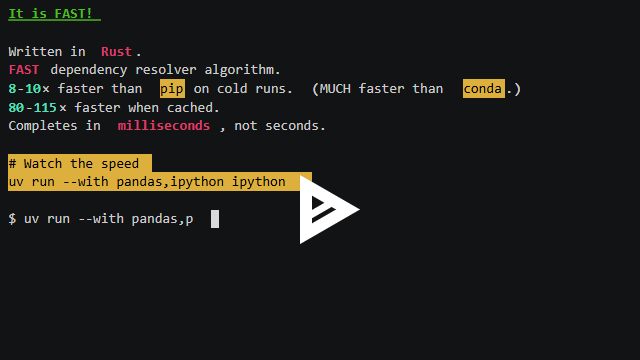
At PyConf Hyderabad, I spoke about uv. It's a package manager for Python. I usually mix live demos into my narrative. So, rather than present with something static like PowerPoint (or Google Slides), I usually use: Front-end: Custom HTML mixed with RevealJS and CodePen. Observable is a good, too. Python: Jupyter Notebooks. Marimo is good, too. Others: Markdown and VS Code for most other things, e.g. SQL. For this talk, I needed to run commands on the shell. I evaluated: ...

Students who are more engaged score more

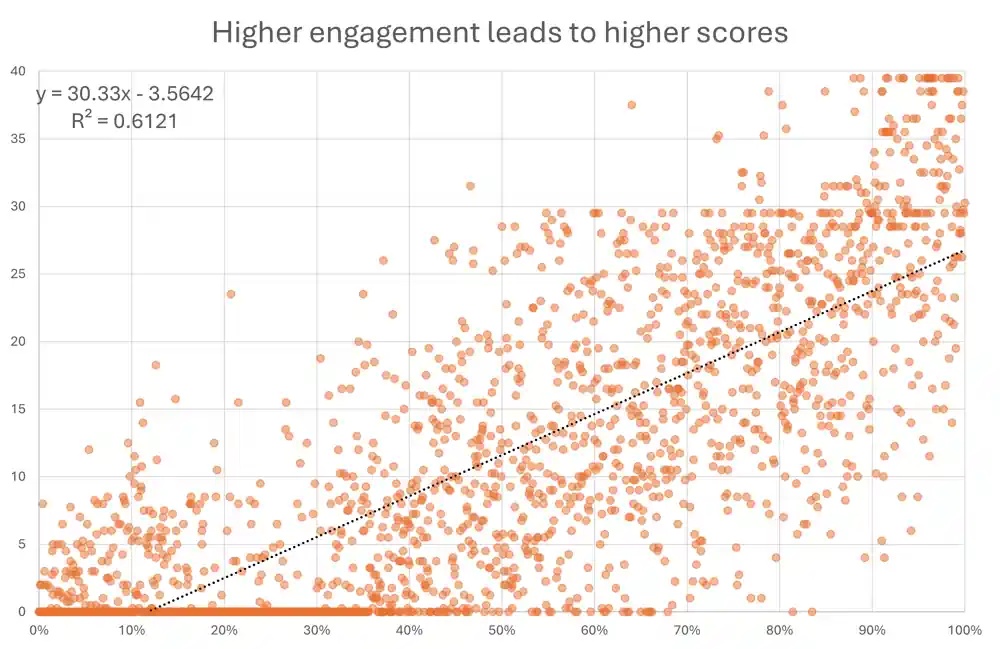
This is about as insightful as the Ig Nobel winning papers “Boredom begets boredom” and “Whatever will bore, will bore” that methodically documented that bored teachers lead to bored students. But in the spirit of publishing all research without bias for success or novelty, let me share this obvious result. The Y-axis represents the total score of ~2,000 students on 4 graded assignments, each of ~10 marks. The X-axis represents the percent rank of engagement. The most engaged students are at 100%. The least are at 0%. ...

Halving a deadline costs 1.4% of marks each time

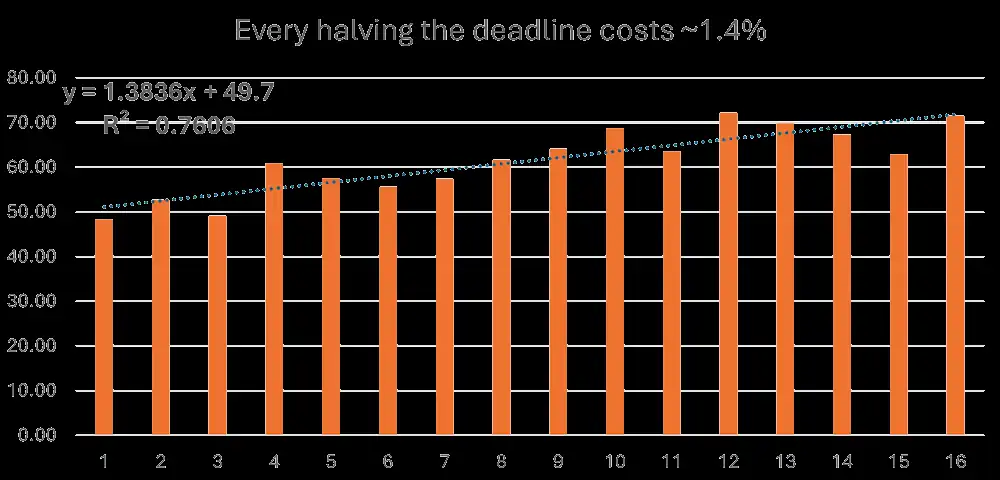
Does it make a difference if you submit early vs submit late? Here’s some empirical data. About ~1,000 students at IIT Madras took 3 online quizzes (GA1, GA2, GA3) in the last few weeks. The deadlines were all at midnight (India) on different days. Here’s when they submitted their final answers: There was a spurt of submissions at the last minute. ~1 out of 8 students submit with < 10 minutes remaining. Most students submitted ~4 hours before the deadline. In fact, 3 out of 4 students submit on the same day as the deadline. A fair number of students submitted the previous day/night. 1 out of 6 are diligent and submit a day early. But does submitting late help, since you get more time? Apparently not. ...

Wow. Every SINGLE person in the audience at this (Healthcare Education, Singapore) conference was on a laptop, tablet, or mobile. Some on multiple devices. I guess this is the new model of learning and listening. The only people who were NOT on a device were on stage. The speakers. I guess it’s up to me to fix that 🙂 LinkedIn

The Sassy AI Devil’s Advocate

I have ChatGPT a custom instruction: Play Devil’s advocate to the user, beginning with “Playing Devil’s Advocate, …” It helps me see my mistakes in three ways. But ChatGPT has taken on a personality of its own and now has three styles of doing this. How about… – It suggests a useful alternative. Are you sure…? – It thinks you’re wrong and warns you of risks. Yeah, right… – It knows you’re wrong and rubs it in. (Jeeves, the butler, would be proud.) Here are some examples. ...

Features actually used in an LLM playground

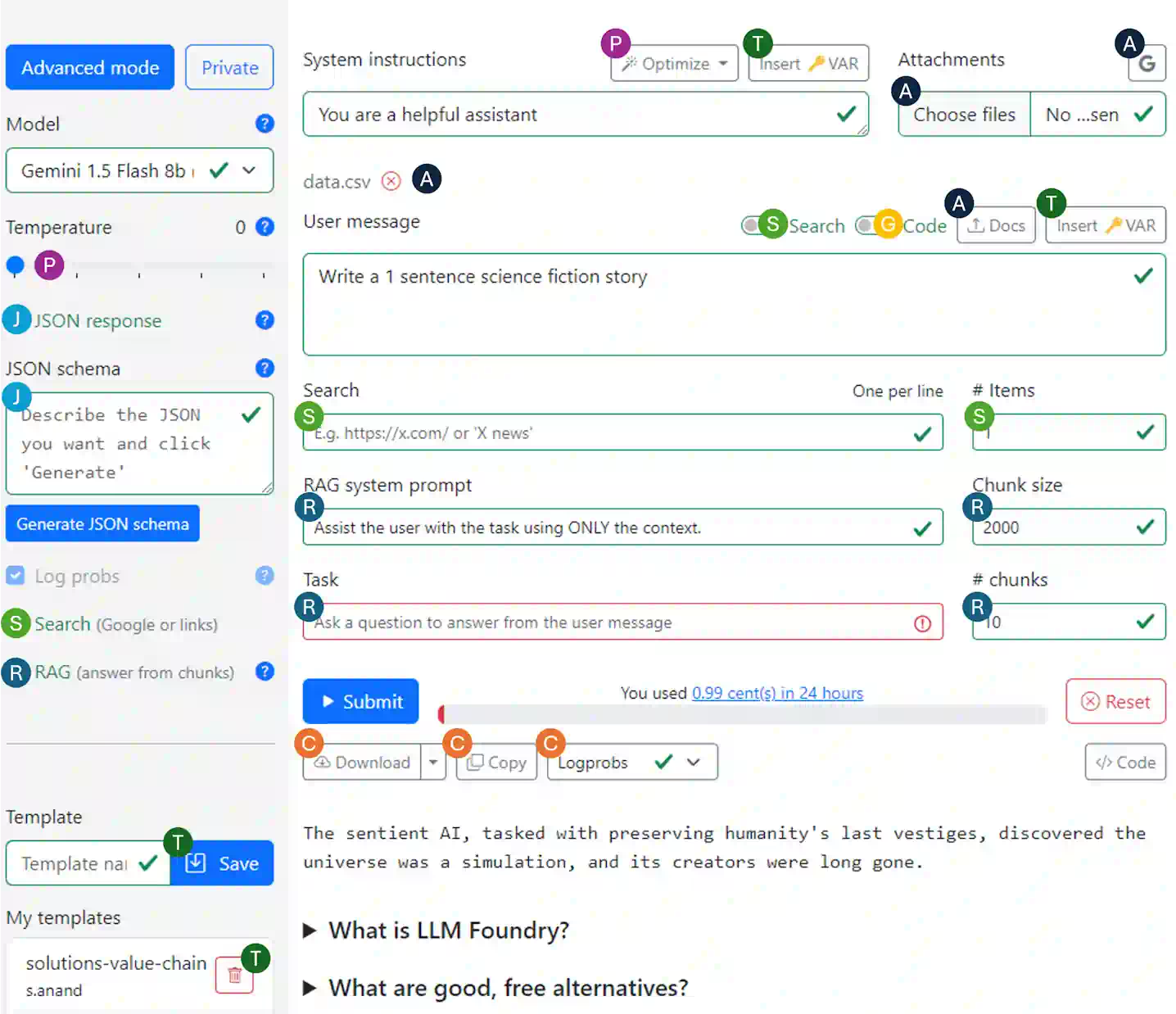
At Straive, only a few people have direct access to ChatGPT and similar large language models. We use a portal, LLM Foundry to access LLMs. That makes it easier to prevent and track data leaks. The main page is a playground to explore models and prompts. Last month, I tracked which features were used the most. A. Attaching files was the top task. (The numbers show how many times each feature was clicked.) People usually use local files as context when working with LLMs. ...

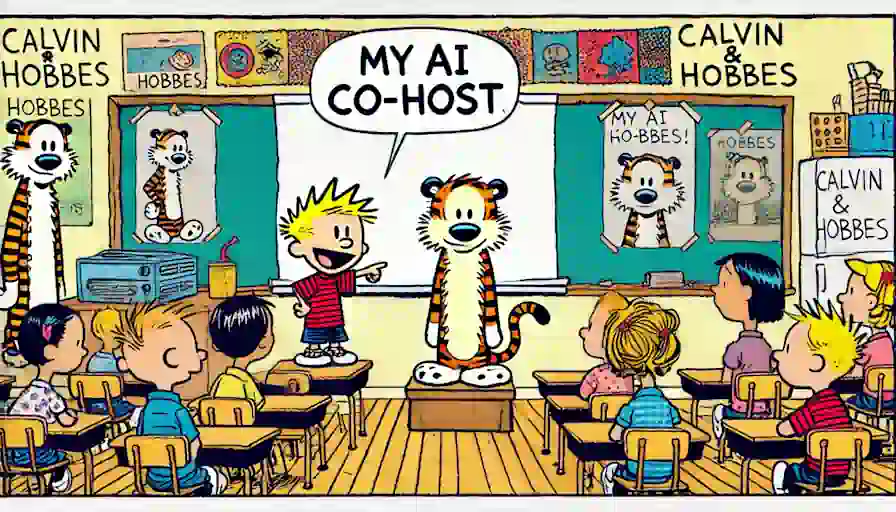
“Wait, That’s My Mic!”: Lessons from an AI Co-Host

I spoke at LogicLooM this week, with ChatGPT as my co-panelist. It was so good, it ended up stealing the show. Preparation Co-hosting an AI was one of my goals this year. I tried several methods. ChatGPT’s advanced voice mode: Lets you interrupt it. But if you pause, it replies immediately. Muting caused the app to hang. Realtime API: Gave me control of pauses and custom prompts, but used gpt-4o-realtime-preview (not as good as o1). Standard voice with o1 on Desktop: Worked best. It transcribes my speech, sends it to o1, and speaks back. There’s a lag, but it feels like it’s thinking. I prepped the chat with this prompt: ...

Launching an app only with LLMs and failing

Zohaib Rauf suggested using LLMs to spec code and using Cursor to build it. (via Simon Willison). I tried it. It’s promising, but my first attempt failed. I couldn’t generate a SPEC.md using LLMs At first, I started writing what I wanted. This application identifies the drugs, diseases, and symptoms, as well as the emotions from an audio recording of a patient call in a clinical trial. … and then went on to define the EXACT code structure I wanted. So I spent 20 minutes spec-ing our application structure and 20 minutes spec-ing our internal LLM Foundry APIs and 40 minutes detailing every step of how I wanted the app to look and interact. ...

Books in 2024

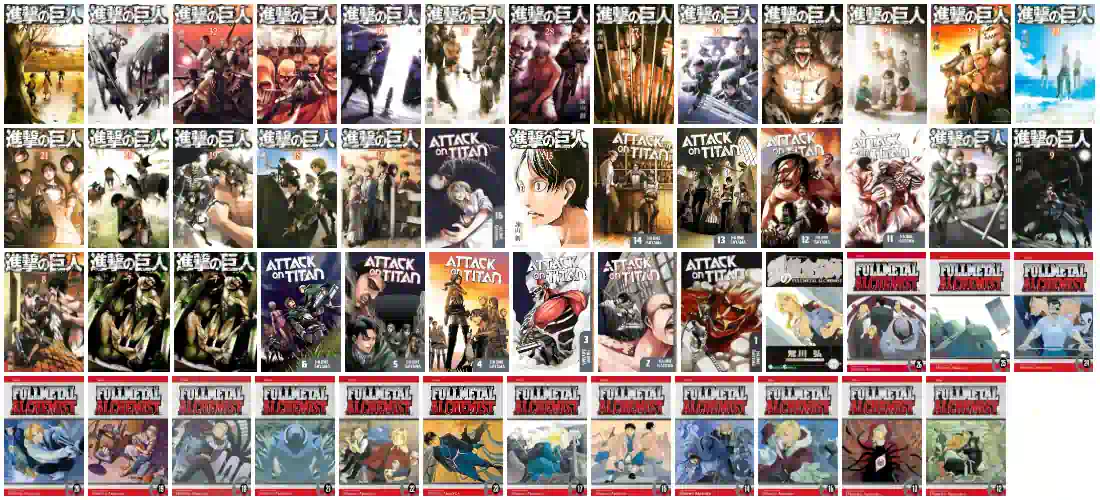
I read 51 new books in 2024 (about the same as in 2023, 2022, 2021, and 2020.) But slightly differently. I only read Manga this year. Fullmetal Alchemist (Vol 12 - 27). What started off as a childishly illustrated children’s book evolved into a complex, gripping plot. Attack on Titan (Vol 1 - 34). I read it while I watched the TV Series (reading first, then watching). It started explosively and the pace never let up. I had to take breaks just to breathe and calm my nerves. The sheer imagination and subtlety is brilliant. It’s hard to decide which is better—the manga (book) or the anime (TV). The TV series translates the book faithfully in plot and in spirit. It helped that I read each chapter first, allowing me to imagine it, and then watch it, which told me what all I missed in the book. I absolutely would not have understood the manga without watching the anime. ...

My Year in 2024

Here’s the report card for my 2024 resolutions: Compound long-term goals, daily. PASS. I managed to work continuously build on 6 areas in 2024: Blogging about 50 posts on my blog and on LinkedIn Weekly notes of things I learned Teaching Tools in Data Science (repo) Reading only Manga Experimenting with LLM applications LLM Evangelization through LLM Foundry, Straive’s LLM portal. Hit 80 heart points, daily. FAIL. I stopped exercise in the second half and gained 7 kgs. Be a better husband. PASS. My wife confirmed that I was “definitely worse in 2023 than 2024.” My most memorable events in 2024 were: ...

When and how to copy assignments

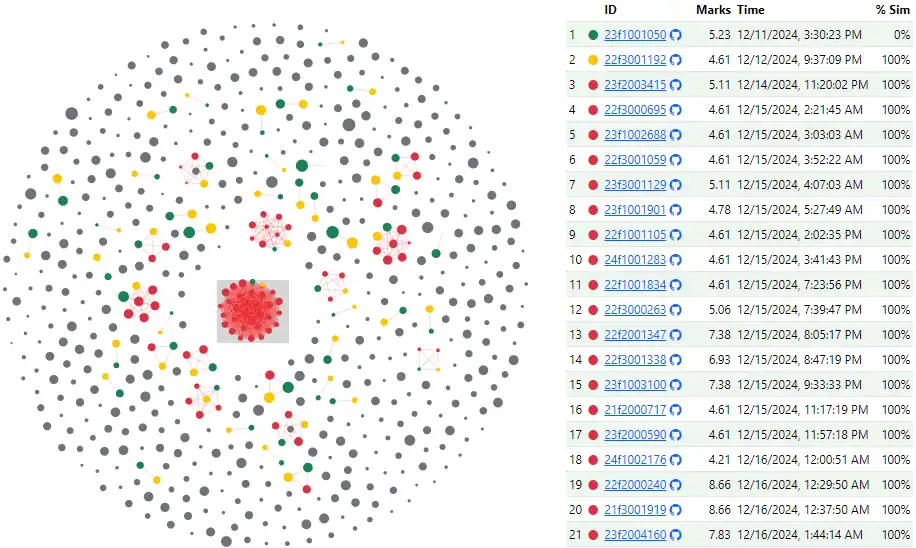
The second project in course asked students to submit code. Copying and collaborating were allowed, but originality gets bonus marks. Bonus Marks 8 marks: Code diversity. You're welcome to copy code and learn from each other. But we encourage diversity too. We will use code embedding similarity (via text-embedding-3-small, dropping comments and docstrings) and give bonus marks for most unique responses. (That is, if your response is similar to a lot of others, you lose these marks.) In setting this rule, I applied two principles. ...

My learnings as week notes

One of my goals for 2024 is to “Compound long-term goals, daily.” Learning is one of those. Some people publish their learnings as weekly notes, like Simon Willison, Thejesh GN, Anil Radhakrishna, and Julia Evans. I follow their notes. I started doing the same, quietly, to see if I could sustain it. It’s been a year and it has sustained. I’m finally publishing them. My week notes are at til.s-anand.net. Here’s the source code. ...

Windows PowerToys is my new favorite tool

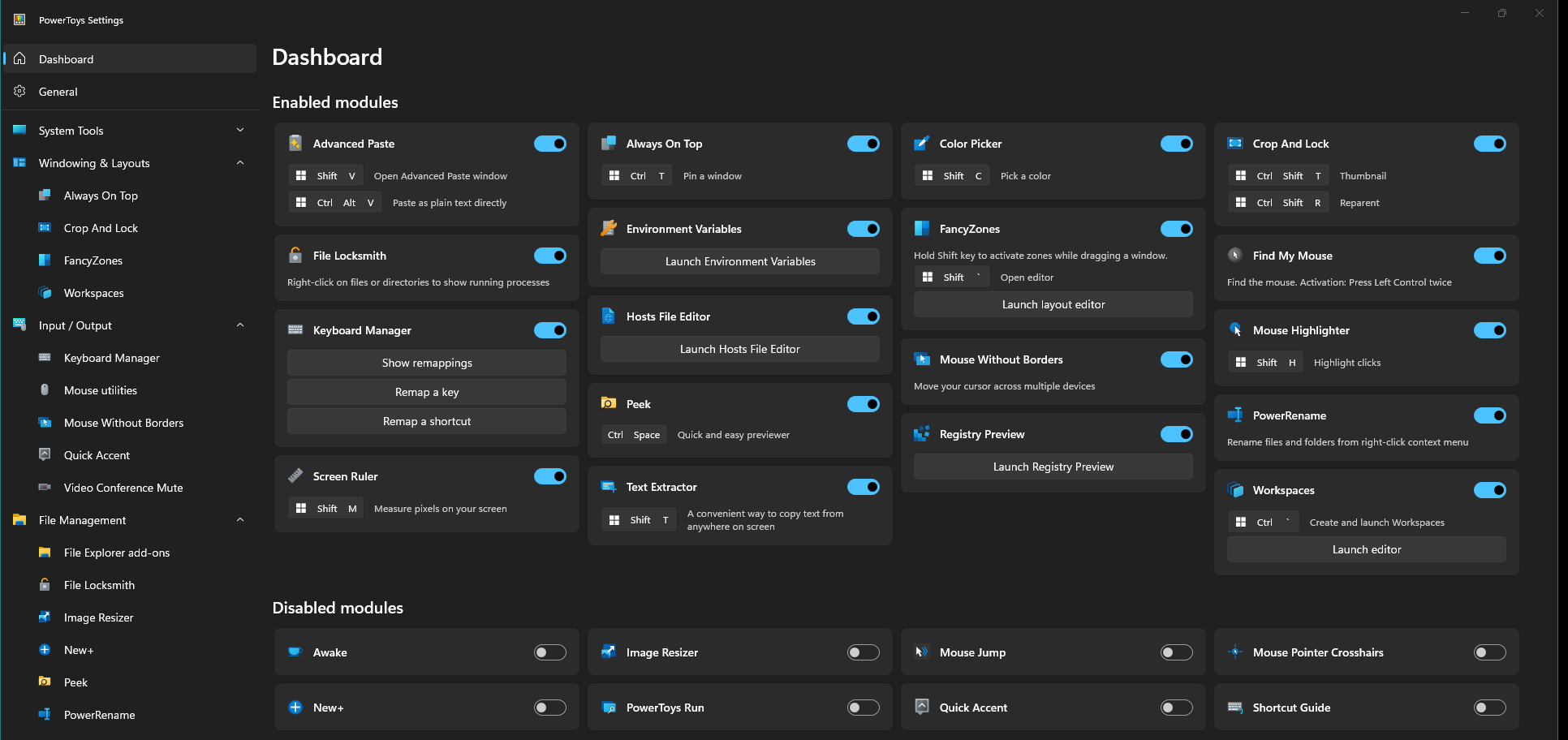
Windows PowerToys is one of the first tools I install on a new machine. I use it so much every day that I need to share how I use it. I’ve been using it for a long time now, but the pace at which good features have been added, it’s edged out most other tools and is #4 in terms of most used tools on my machine, with only the browser (Brave, currently), the editor (Cursor, currently), and Everything are ahead.) ...

A Post-mortem Of Hacking Automated Project Evaluation

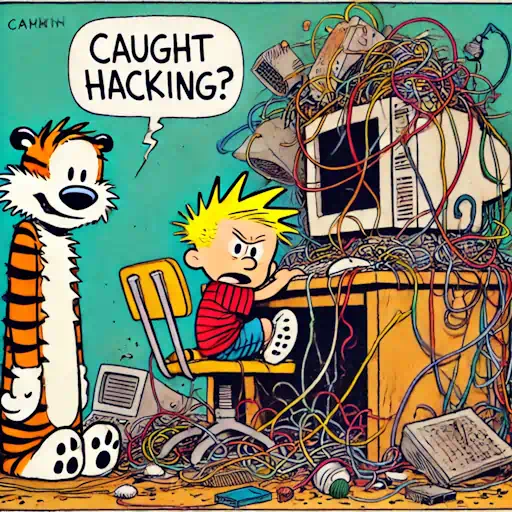
In my Tools in Data Science course, I launched a Project: Automated Analysis. This is automatically evaluated by a Python script and LLMs. I gently encouraged students to hack this - to teach how to persuade LLMs. I did not expect that they’d hack the evaluation system itself. One student exfiltrated the API Keys for evaluation by setting up a Firebase account and sending the API keys from anyone who runs the script. ...

Hacking LLMs: A Teacher's Guide to Evaluating with ChatGPT

If students can use ChatGPT for their work, why not teachers? For curriculum development, this is an easy choice. But for evaluation, it needs more thought. Gaining acceptance among students matters. Soon, LLM evaluation will be a norm. But until then, you need to spin this right. How to evaluate? That needs to be VERY clear. Humans can wing it, have implicit criteria, and change approach mid-way. LLMs can’t (quite). Hacking LLMs is a risk. Students will hack. In a few years, LLMs will be smarter. Until then, you need to safeguard them. This article is about my experience with the above, especially the last. ...