Top 10 books of the millenium
Top 10 books of the millenium. Notables: Rise and Fall of the Roman Empire.
Top 10 books of the millenium. Notables: Rise and Fall of the Roman Empire.
Jakob Nielsen’s top 10 web design mistakes of 2002. Fortunately, I was committing only one of them – fixed font sizes. Now rectified.
A photographic history of Vajpayee from Rediff, to commemorate his 78th birthday.
Determinism, Chaos and Quantum Mechanics [PDF]. Interesting 30-pager by Jean Bricmont. He begins by differentiating predictability from determinism, and proceeds to explain how chaos theory supports determinism by enhancing predictability. As an interesting aside, Bricmont’s article points out that there are 2 kinds of probabilities. Objective probability is where I know that if I toss a fair coin enough times, it’ll turn up heads 50% of the time. Subjective probability is where I think there’s a 10% chance it’ll rain tomorrow, and I don’t care to repeat the event. The former is an informed statement about a system. The latter is our best guess about an event. The former number is a constant, if we’ve done the calculations right. The latter number can change as our knowledge of the event increases. ...
Interesting article on The Economist on the value of a cluttered desk. … the assumption that filers can find stuff more quickly is wrong. Filers, they say, “are less likely to access a given piece of data, and more likely to acquire extraneous data…” (There’s a “Clean your desk” initiative at BCG Mumbai going on right now.)
Reckoners: an e-book on the history of early electronic computers. via RobotWisdom
2002 in pictures – links on MetaFilter.
While I thought that every cell in the human body had identical genetic make-up, it turns out that brain cells could have gained or lost some chromosomes. Now, that’s a pretty big discovery. via missing matter
A Nike ID story. An e-mail correspondence between Jonah and Nike about creating a personalised ID called “sweatshop”.
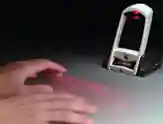
Cool picture of a virtual keyboard. The article talks about a purely optical keyboard. You move your fingers, and the “keyboard” detects what you’re typing. Now, if optics are that advanced, they should be able to figure out what I’m writing and put that on the computer. So I won’t need a digital pad – I’ll just write on paper. Or even better, project the screen! Then I’ll just carry a little 1" x 1" x 1" box that’ll project a virtual screen that I can draw / write on.
Very interesting article on Google on Wired. One interesting point the article raises towards the end is this: “As a private company, Google has one master: users. As a public company, there are shareholders to worry about.” And the interests of these may not be aligned. Shareholders may want more ad revenues. Users do not want ads. Shareholders may want paid placements. Users do not. Once Google IPOs, I suspect its quality will fall.
Darwin’s 10 rules for taming e-mail. I badly need this. I am not often in office, and don’t have a fast way of checking office mail through the Web either. Tips 5 and 10 on the list (“avoid e-mail multipliers” and “use the telephone”) are next on my agenda for drastic e-mail slashing.
On the virtual economy. No, this is not about the dot-com boom. This is about the trading of goods in online games, which has created an economy with a GNP per capita somewhere between Bulgaria and Russia. (More at New Scientist). via missing matter
Interesting site on uniforms of airline stewardesses. via boing boing
An interesting legal conundrum. When Nike was accused of running sweatshops in Asia, it responded with press releases and ads claiming that it did not. Marc Kasky filed a case saying that Nike was advertising unfairly, and won. Now corporates are raising the question of whether corporate statements are free speech, and can be similarly protected.
Vivisimo, a document clustering service. As far as I can understand, it collects data from multiple sources and clusters it into hierarchies. Automatically. Sounds good, and seems to work reasonably well on Net searches too. At the very least, it’s a fresh way of searching. via Markose
Froogle. A product search from Google. The way Google is going, I don’t think there’s any point in most sites bothering about design. Google will just offer it to customers the way they want to see it. via Kiruba
A little article on anti-neutrino behaviour. All very fine, except for a line towards the end: The oscillations are a result of the neutrinos having slightly different masses, … Since when did neutrinos start having mass!? (OK, it was in July 98. And no one even told me!)
Who invented cubicles? Herman Miller, 1950s. Now we know whom to blame! (However, I must admit to a secret liking for cubicles.) via MetaFilter Comments L K Tucker 21 Feb 2007 5:23 pm: Robert Propst is credited with the invention according to a bio on the Herman Miller Inc. site. He denied it. His open plan system was modified when workers using the first prototypes began having mental breaks. The human vision startle reflex had worked in the “special circumstances” those first close-spaced workstations created.
Google webquotes lets you see what other sites say about each of Google’s search results. This is such a useful feature to me (at no incremental pain) that I see no reason to ever Google without webquotes! (Google also has Google viewer, which to me is far less useful. And while you’re at it, may as well check Google’s extensive resource for webmasters) via Kiruba