As a teenager, I asked my mother “What is the aim of life?” She said, “To be happy and to make others happy.” This was my gospel for a decade. It made sense. It even aligned with my name (Anand = happiness).
In my twenties, I was confused that happiness has tradeoffs, like:
- Long term (study hard) vs short term (party hard)
- Self (e.g. save diligently) vs others (gift generously)
- Getting what we like (e.g. favorite food, ambitiousness) vs liking what we get (e.g. any food, gratitude, lower standards)
- Outcome (e.g. wealth) vs process (e.g. enjoying work)
By my thirties, I felt happiness is the intersection of pleasure and meaning. So I tried to be aware of and balance both.
In my forties, The Landmark Forum introduced me to the idea that life has no intrinsic meaning, so you can pick. So I tried to pick meanings, changing them with time.
In my fifties, I’m learning that the meaning of life can be viewed through many lenses, like:
- Physiology: What the body wants
- Survive: The body wants to maintain homeostasis and stay alive.
- Enjoy: The body seeks pleasure and avoids pain (hedonic drive).
- Reproduce: Genes want to propogate the species.
- Psychology: What the mind craves
- Connect: Build social bonds and connections to loved ones.
- Grow: Become the most that one can be. (Self-actualization, mastery, autonomy, purpose)
- Contribute: Create things that outlast us.
- Philosophy: What the spirit seeks
- Serve divine will: Fulfil your divine purpose or duty (Theistic/Karmic).
- Live virtuously: Flourish through virtue, fulfilling your potential. (Virtue Ethics)
- Make your own meaning: Life has no intrinsic meaning. We tend to make up meanings. Accept it, pick a meaning, enjoy. (Nihilism/Absurdism/Existentialism)
- Be rational: Live according to reason and nature; accept what you can’t control (Stoicism).
- Maximize good: Maximize well-being for the greatest number (Utilitarianism).
- Serve people: Relieve suffering and help others.
- Transcend suffering: End suffering through detachment and the dissolution of ego (Buddhism).
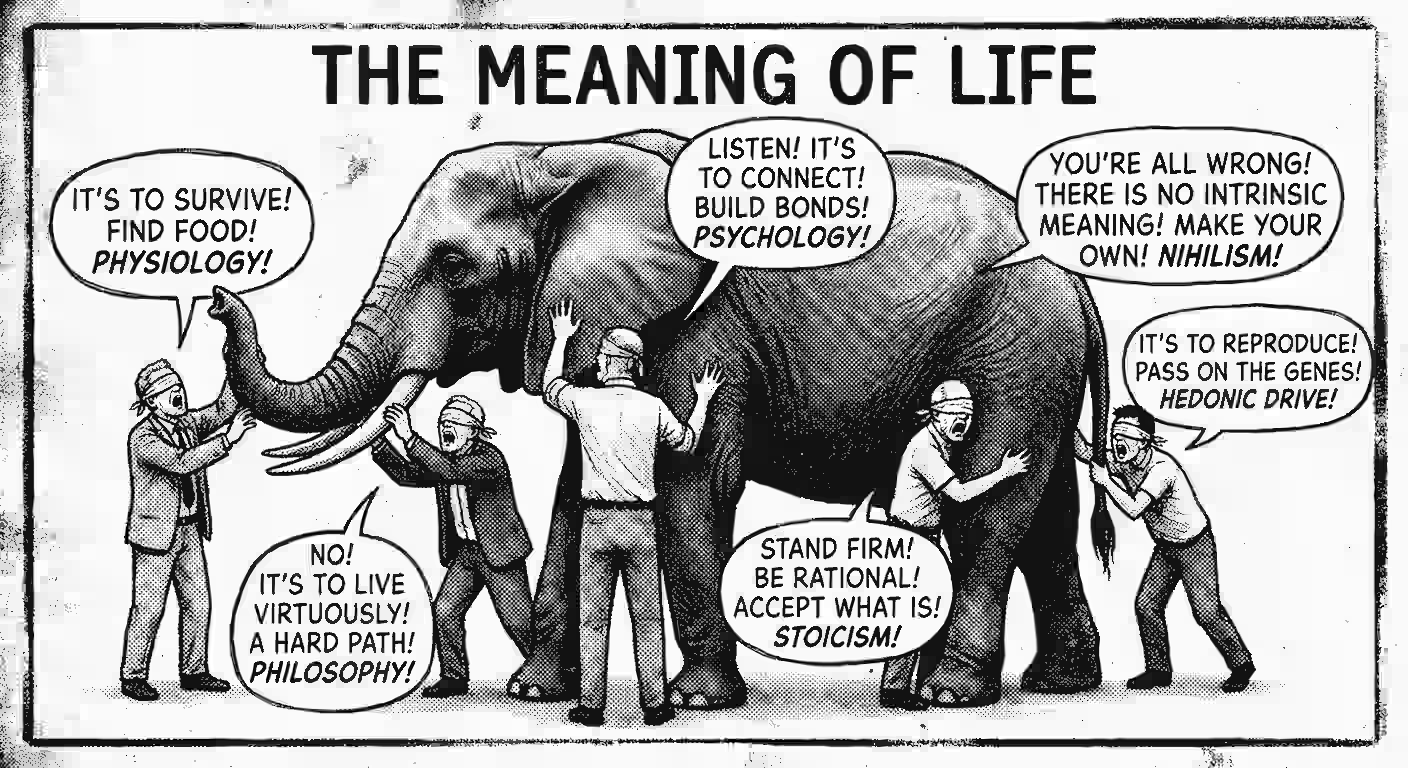
I still believe there’s no intrinsic meaning. Just lenses.
- We change lenses over time. E.g. I moved from strongly believing “Serve divine will” to not believing it.
- We believe multiple lenses at a time. E.g. I “Enjoy” food but “Transcend suffering” by fasting. (In fact, fasting makes food more enjoyable.)
- Lenses can conflict. Genes want to “Reproduce” but not all mothers “Survive” childbirth. Zealots who “Serve divine will” may “Serve people” against that will.
If that’s the case, I no longer know how to evaluate right or wrong, good or bad, in an objective sense. Maybe these have meaning only within a lens.
PS: In the mid-1990s, I made a list of things I wanted to write about and stored it on a floppy disk with the filename TOWRITE.TXT. This post was first on that list. After 30 years, I finally wrote it!