OpenAI TTS cost

The OpenAI text-to-speech cost documentation is confusing. As of 2 Nov 2025: GPT-4o mini TTS costs $0.60 / MTok input and $12.00 / MTok audio output according to the model page and the pricing page. They also estimate this to be ~1.5c per minute - both for input and output. It supports up to 2,000 tokens input. TTS-1 costs $15 / MTok speech generated according to the model page but the pricing page says it's $15 / MChars. No estimate per minute is provided. Is supports up to 4,096 characters input. TTS-1 HD is twice as expensive as TTS-1 I wanted to find the approximate total cost for a typical text input measured per character and token. ...

It's so easy to fool yourself

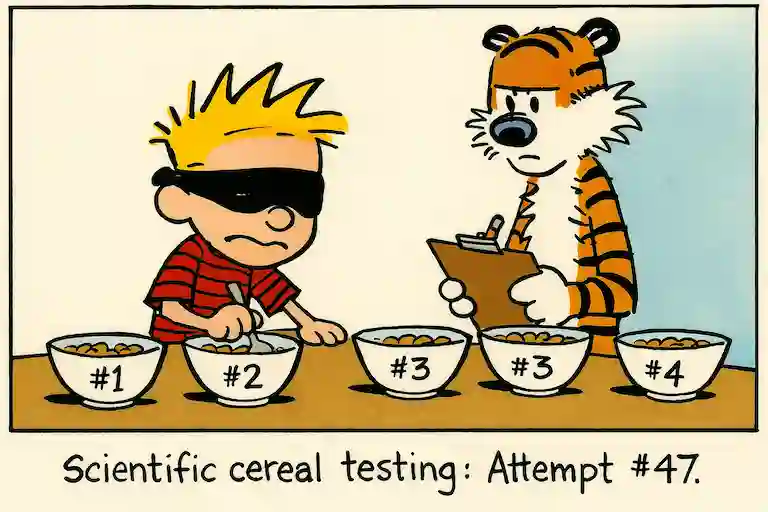
I asked 4 LLMs to “Suggest catchy rhyming slogans to promote journaling.” Here are the suggestions: GPT 4.5 Write it right, day or night! Reflect, inspect, journaling perfect! Express to impress, journaling’s best! Clear your mind, write and unwind! Pen your zen, again and again! Daily pages, inner sages! Take a pause, write your cause! Emotions flow, journals grow! Write, ignite, your inner light! ...

When and how to copy assignments

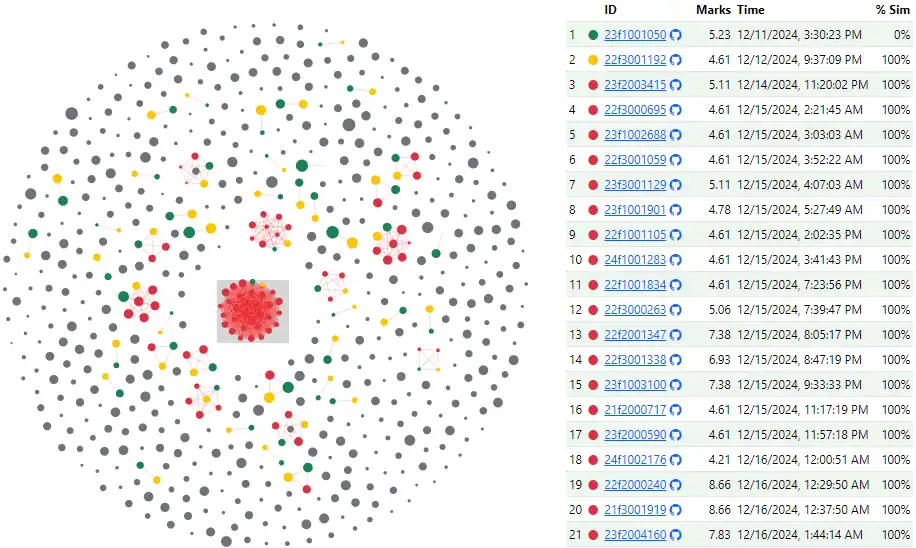
The second project in course asked students to submit code. Copying and collaborating were allowed, but originality gets bonus marks. Bonus Marks 8 marks: Code diversity. You're welcome to copy code and learn from each other. But we encourage diversity too. We will use code embedding similarity (via text-embedding-3-small, dropping comments and docstrings) and give bonus marks for most unique responses. (That is, if your response is similar to a lot of others, you lose these marks.) In setting this rule, I applied two principles. ...

The psychology of peer reviews

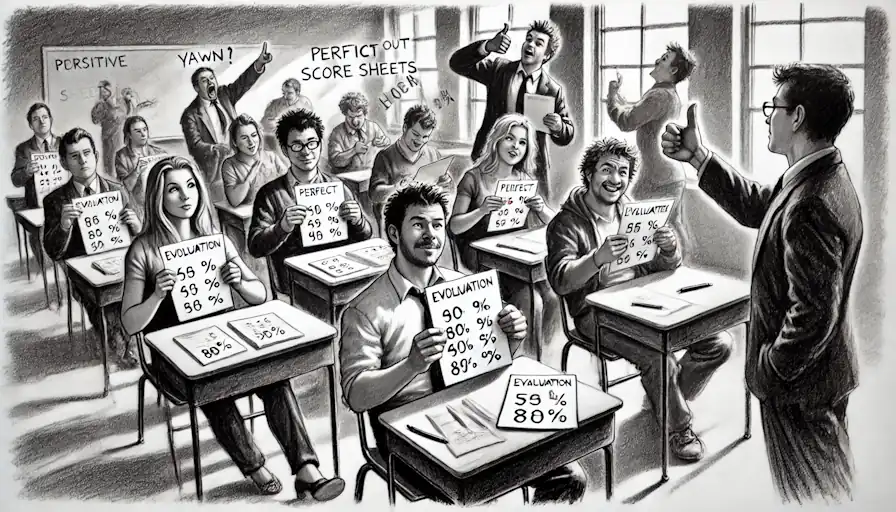
We asked the ~500 students in my Tools in Data Science course in Jan 2024 to create data visualizations. They then evaluated each others’ work. Each person’s work was evaluated by 3 peers. The evaluation was on 3 criteria: Insight, Visual Clarity, and Accuracy (with clear details on how to evaluate.) I was curious to see if what we can learn about student personas from their evaluations. ...

A quick way to assess LLM capabilities

Simon Willison initiated this very interesting Twitter thread that asks, “What prompt can instantly tell us how good an LLM model is?” The Sally-Anne Test is a popular test that asks: Sally hides a marble in her basket and leaves the room. While she is away, Anne moves the marble from Sally’s basket to her own box. When Sally returns, where will she look for her marble?" ...

AI makes me a better person

Every time I get annoyed at people, I remind myself to be more like ChatGPT. Specifically: Don't get annoyed. Be patient. Encourage them. Step back and show them the big picture. (Then I get annoyed at myself for getting annoyed.) Today, I analyzed how exactly ChatGPT is different from me. So, I took a pitch document I co-authored with ChatGPT. Section A: Authored by Anand WHAT DO WE NEED? ...

What does Gramener ask ChatGPT?

I looked at how Gramener uses ChatGPT Plus by evaluating 600+ chats asked over 3 months from Oct 2023 to Jan 2024. The team asks 6 questions a day. We don't track who or how many actively use ChatGPT Plus. This also excludes personal ChatGPT accounts. Still, 6/day is low for an entire team put together. The questions fall into 8 categories. Category%Excel, data exploration & analysis25%Text extraction and summarization13%HTML, CSS, or JavaScript code13%Python code13%LLMs, AI and use cases9%OCR and image analysis9%Generate images, logos, and designs7%General knowledge, policy & environment5%Audio and translation5% Here are some questions from each category - to give you an idea of emergent ChatGPT Plus usage. ...

Zeigarnik effect vs my procrastination

I make commitments but don’t always deliver on time. In 2022, I ran an experiment to find out why I procrastinate. In Jan-Feb 2022, I listed the top 2 things I wanted to get done each day and measured how often I completed them. 14 Jan. ❌ Summarise from three research reports<br/>12 Jan. ❌ UIFactory experiment ✅ Decide if I am a (…)<br/>11 Jan. ❌ UIFactory experiment ✅ Agree on publishing in (…)<br/>10 Jan. ❌ Client video. ❌ UIFactory experiment<br/>09 Jan. ❌ UIFactory experiment. ❌ Attrition email as a story<br/>07 Jan. ❌ ZS visual<br/>06 Jan. ❌ Release Gramex Guide. ✅ UWC application<br/>05 Jan. ❌ Publish network cluster post. ❌ Release Gramex guide<br/>04 Jan. ❌ Publish network cluster post. ✅ Release Gramex.<br/>03 Jan. ✅ Publish election TDS video. ❌ Publish Network cluster post.<br/>02 Jan. ❌ Publish election TDS video. ❌ Publish Network cluster post.<br/>01 Jan. ❌ Publish Network cluster post. ✅ Finalize SG school. I completed 23 / 57 things (40%). That’s one of my TOP priorities. ...

Increasing calendar effectiveness by 2X

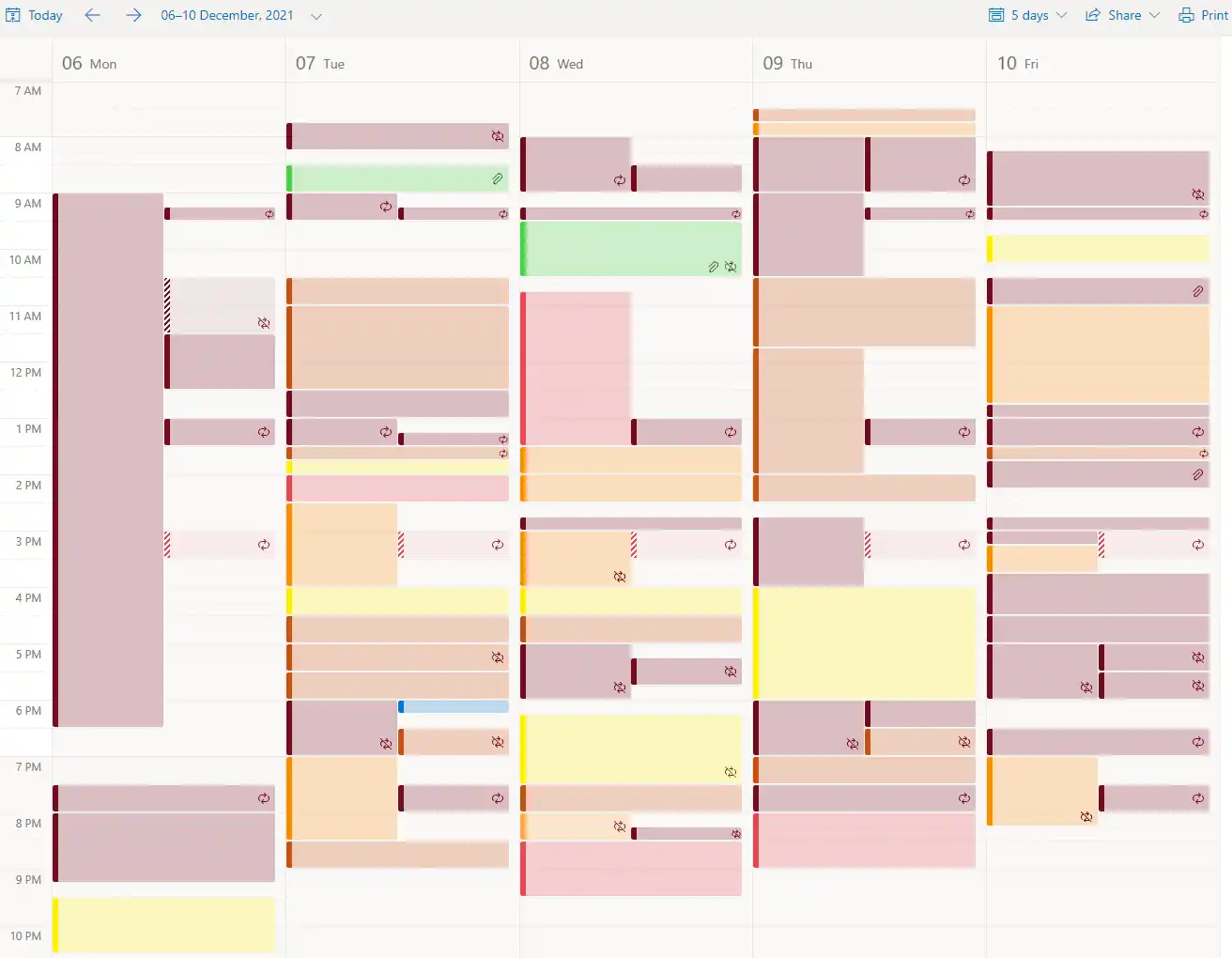
I took a 2022 goal to be 10X more effective. In Jan, I managed 2X. Here’s how. What is effectiveness? I don’t know. I’m figuring it out. But to start off, I measured the number of people my actions directly impact. For example: Discussing my Tools in Data Science Course or writing a blog post impacts ~500 people. Mailing all Gramener employees impacts ~200 people. Shopping with my wife impacts 2 people – her and me (in very different ways). Clearly, the impact is not equal. But it’s a start. ...

I tested the best ways to mail people

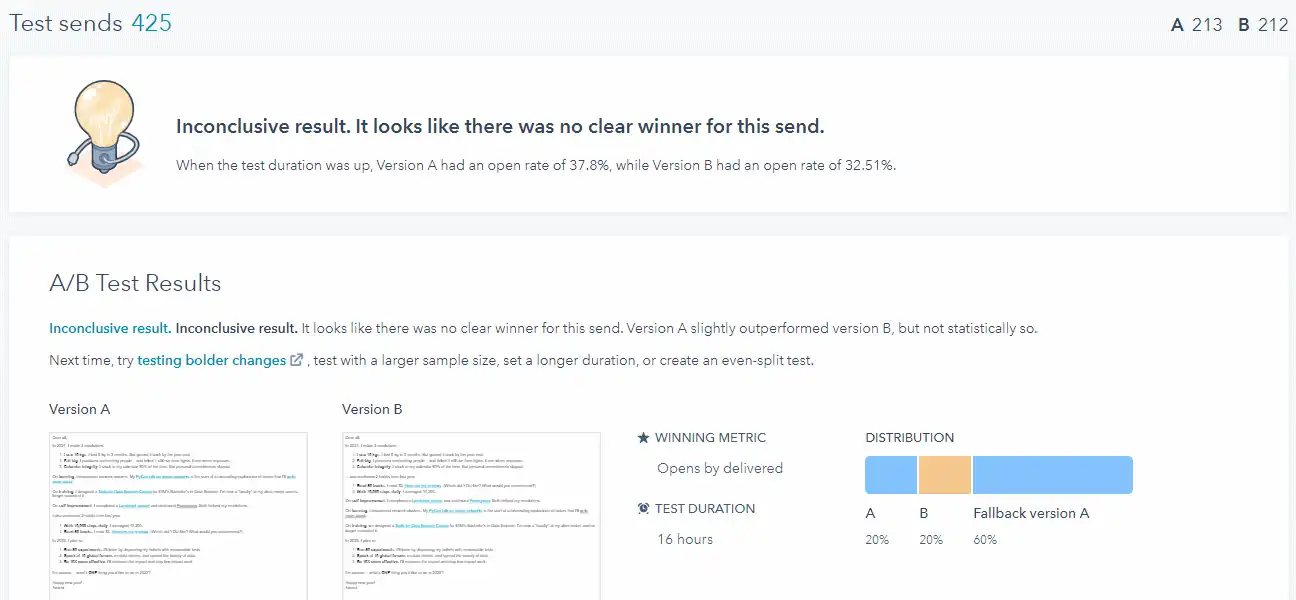
I emailed My Year in 2021 to ~2,700 people. It had 3 experiments. Do friends open my mail more than strangers? I split the list into 2 groups: My contacts: ~1,000 people I knew (I’ve mailed them) Strangers: ~1,700 people I didn’t know (I’ve never mailed them) My guess: strangers would open the mail 30% less often. Reality: They opened it 40% less. 50% of my contacts opened the mail, vs only 28% of strangers. ...