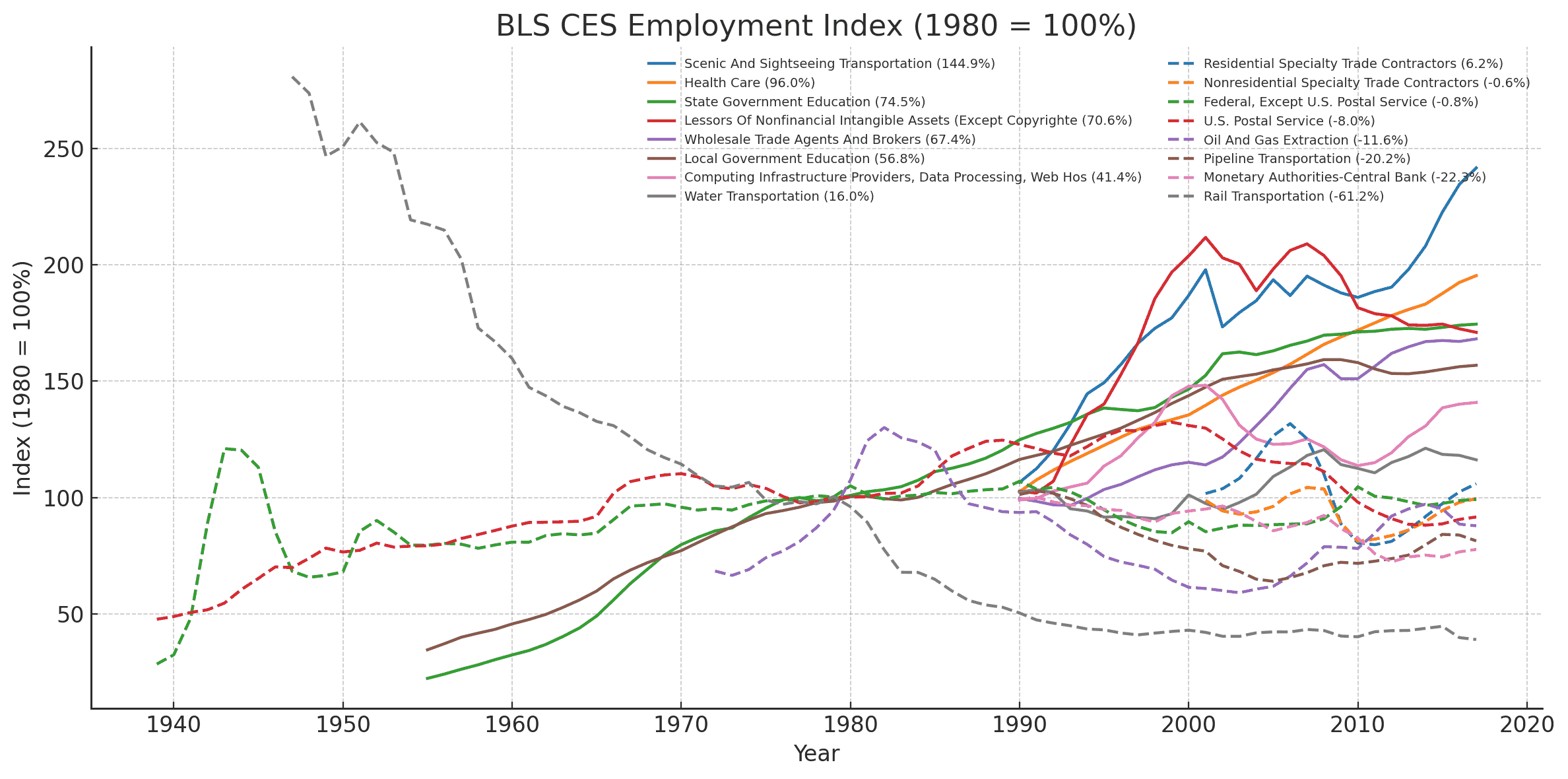
Technology efficiency affects jobs differently
Jobs fall with technological efficiency. Farmers in the US fell from 40% (1900) to ~2.7% (1980) and ~74% drop from 1948 to 2019 despite ~175% output growth; wheat harvest efficiency rose ~75* (300>3-4 man-hours). Mechanics & repairers grew from ~140 k (1910) to ~4.64 M (2000); machinery reliability lagged so technician demand surged over decades. Construction workers doubled from 1.66 M (1910) to 3.84 M (2000) even as labor share fell (4.3>3.0%); 5-10* productivity gains met booming development. Switchboard operators plunged from ~1.34 M (1950) to ~40 k (1984) and ~4 k today as rotary-dial and digital switching automated call handling. Travel agents dropped >50% from ~100 k (2000) to ~45 k (2022) while travel demand rose; online booking doubled trips per agent. Elevator operators went from building-staff staple to near zero by the 1940s once automatic doors and button controls arrived. Lamplighters vanished from thousands to near zero post-1907 electrification; Edison’s incandescent lamps eliminated manual lighting. Jobs also grow with technology efficiency. ...