2 inches will change my life

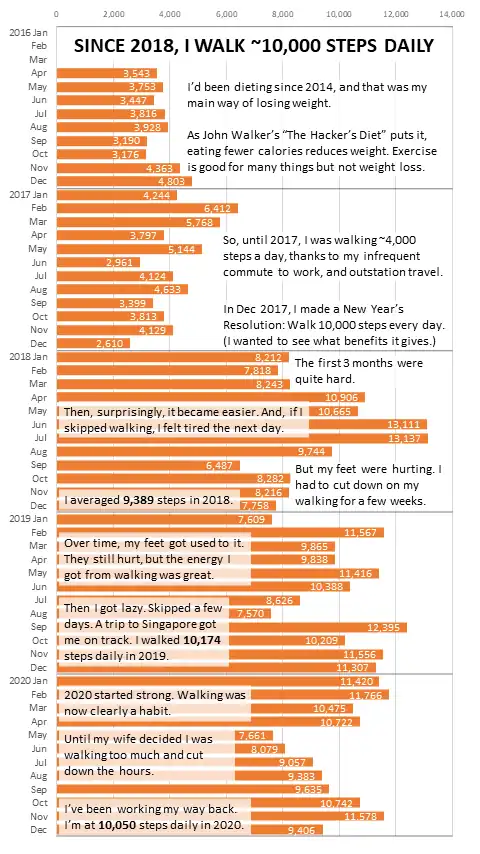
I walked ~11 million steps in the last 3 years, at ~10K steps daily. Since 1 Jan 2018, I've steadily increased my walking average until Aug 2018. Then my legs started aching. So I cut it down until Jan 2019. In Feb, I resumed and was fairly steady until May 2020. To complement workouts like this, products that are aimed for men over 50 can be used. In May, my wife refused to let me walk for more than an hour a day. It took me a few months to convince her and level up. I ended 2020 averaging a little over 10K steps for the year. ...

My year in 2020

In 2020 I made 3 resolutions. Read 50 books. I almost made it. Here are my reviews. Walk 10,000 steps daily. I managed it, like the last two years. Lose 2 kgs. I failed – and instead, put on 6 kgs. On self-improvement, I completed a Landmark course and an Art of Living course. Both had a huge productivity impact. (Mail me for details.) On software, I starting playing Minecraft and moved from Gmail to Windows 10 Mail. More on this. ...

Software & Gadgets, 2020

My most-used apps in 2020 were: Everything. Locates files. Like Finder. Fast and brilliant. Chrome. But Edge is pretty good, and I’m using it for secondary accounts. Visual Studio Code. It’s my note-taker, TODO list, outliner, and IDE. Minecraft. I’m addicted. PowerPoint. I use it to make & edit videos, not just slides. Zoom. Thanks to the lockdown. Breakout rooms are great. Mail. It uses under 50MB. Gmail takes 250MB. VLC. It still plays all formats, but I’m looking for a replacement. Seafile. Our private Dropbox. AutoHotKey. The best macro tool, but hard to use. The new utilities I started using recently are: ...

Mystery of the extra returns

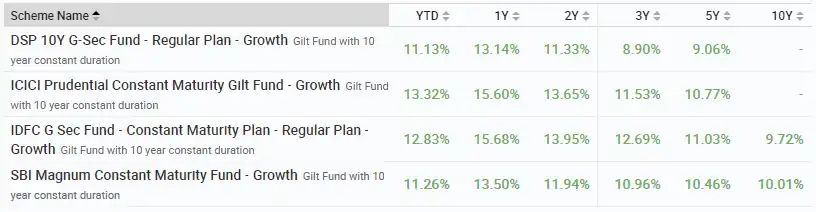
This month, I sold half my Indian equity mutual funds and was researching funds to invest in. I was looking for something safe & long term. As I was exploring 10-year Gilt Funds (mutual funds that invest in the Indian Government’s 10-year bond), I noticed that they had a pretty high yield – mostly over 10%. I took a closer look at ICICI Prudential’s Constant Maturity Gilt Fund. (They had the lowest expense ratio.) The annualized returns over the last 5 years were 10.77%, and it’s never fallen below 10% in the last 5 years. ...

Create SVG with PowerPoint

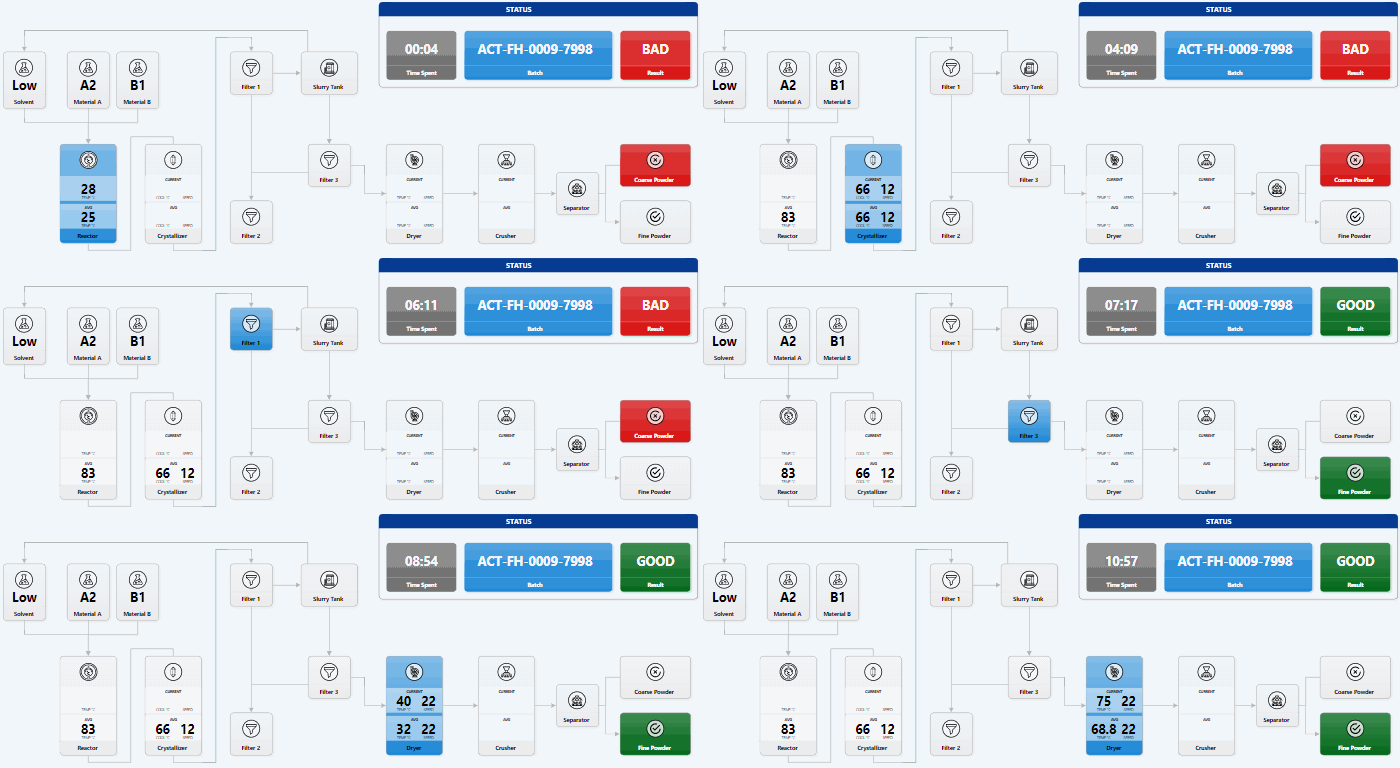
With Office 365, PowerPoint supports SVG editing. This is really powerful. It means you can draw in PowerPoint and render it on the web -- including as interactive or animated visuals. For example, the SVG in this simulator was created just with PowerPoint. The process is simple. Draw anything. Select any shapes and right-click. Select Save As Picture... and choose SVG. For example, you can use PowerPoint to create Smart Art, export it as SVG, and embed it into a page. See this example on CodePen. ...

lxml is fast enough

Given the blazing speed of Node.js these days, I expected HTML parsing to be faster on Node than on Python. So I compared lxml with htmlparser2 – the fastest libraries on Python and JS in parsing the reddit home page (~700KB). lxml took ~8.6 milliseconds htmlparser2 took ~14.5 milliseconds Looks like lxml is much faster. I’m likely to stick around with Python for pure HTML parsing (without JavaScript) for a while longer. In [1]: from lxml.html import parse In [2]: %timeit tree = parse('reddit.html') 8.69 ms ± 190 µs per loop (mean ± std. dev. of 7 runs, 100 loops each) const { Parser } = require("htmlparser2"); const { DomHandler } = require("domhandler"); const fs = require('fs'); const html = fs.readFileSync('reddit.html'); const handler = new DomHandler(function (error, dom) { }); const start = +new Date(); for (var i = 0; i < 100; i++) { const parser = new Parser(); parser.write(html); parser.end(); } const end = +new Date(); console.log((end - start) / 100); Note: If I run the htmlparser2 code 100 times instead of 10, it only takes 7ms per loop. The more the number of loops, the faster it parses. I guess Node.js optimizes repeated loops. But I’m only interested in the first iteration, since I’ll be parsing files only once.

Mining for Ancient Debris

I’ve been active on Minecraft for the last 6 months, thanks to my daughter. She keeps watching game videos for hours. I thought I’d see what the big deal was, and made one myself. In this 5-minute clip, I’m mining for Ancient Debris in the Nether by placing beds – which explode when used in the Nether. That’s a quick way to clear large areas and is cheaper than TNT. Ancient Debris is used to make Netherite Scrap which makes Netherite ingots that can upgrade to Netherite weapons and armor – the strongest things in Minecraft. ...

Walking 10,000 steps a day

Since 2018, I’ve been walking ~10,000 steps a day. Here’s my journey.

Books in 2020

My Goodreads 2020 Reading Challenge target is 50 books. I’m at 45/50, with little hope of getting to 50. (I managed 25/24 in 2019.) The 10 non-fiction books I read (most useful first) are below. The Lean Startup by Eric Reis. The principle of Build - Measure - Learn is useful everywhere in life too, not just in startups. Never Split The Difference by Chriss Voss. Shares principle-driven strategies to convince people. The 4 Disciplines of Execution by McChesney, Covey & Huling. Teaches how to build execution rigor in an organization. A bit long at the end, but the first section is excellent. Sprint by Jake Knapp. A detailed step-by-step guide to running product development sprints that you can follow blindly. How to Fail at Almost Everything and Still Win Big by Scott Adams. Dilbert’s author shares his strategies for life. Very readable, intelligent, and slightly provocative, but always interesting. The Five Dysfunctions of a Team by Patrick Lencioni. Written as a story (like The Goal). Talks about the 5 problems in teams and how to overcome them. The Culture Code by Daniel Coyle. Explains the elements of strong cultures - belongingness, shared vulnerability, and shared purpose. Data-Driven Storytelling by Nathalie Henry Riche et al. Shares the latest points of view on telling data stories. My team and I read these chapters as a group. Leaders Eat Last by Simon Sinek. Inspiring when I read it, but I don’t remember what it said. Deep Work by Cal Newport. Shares tactics to focus. Practical and useful. I also started, by haven’t finished these four: ...

Micro-notes

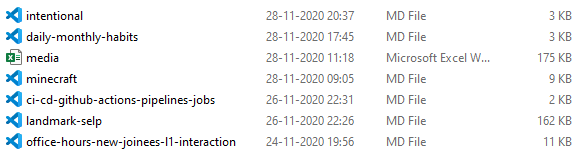
I maintain my (extensive) notes in text files. I’ve explored Evernote, Onenote, Google Keep, Apple Notes, and many other platforms. But text files work. I store them as Markdown and sync them on DropBox. They used to be relatively large files (50-100KB) each, on broad topics. For example: todo.txt was a consolidated list of things I had to do people.txt was a list of everything I knew about people (addresses, birthdays, etc) towrite.txt was a list of everything I wanted to write about notes.txt was where I tracked notes about any topics … and more This led to a couple of problems. ...