This weekend, two people asked me, roughly “How do I use AI better?”
This is a frequently asked questions. I document my FAQs, e.g. time management, career advice, etc. and it was time to add AI advice to this list.
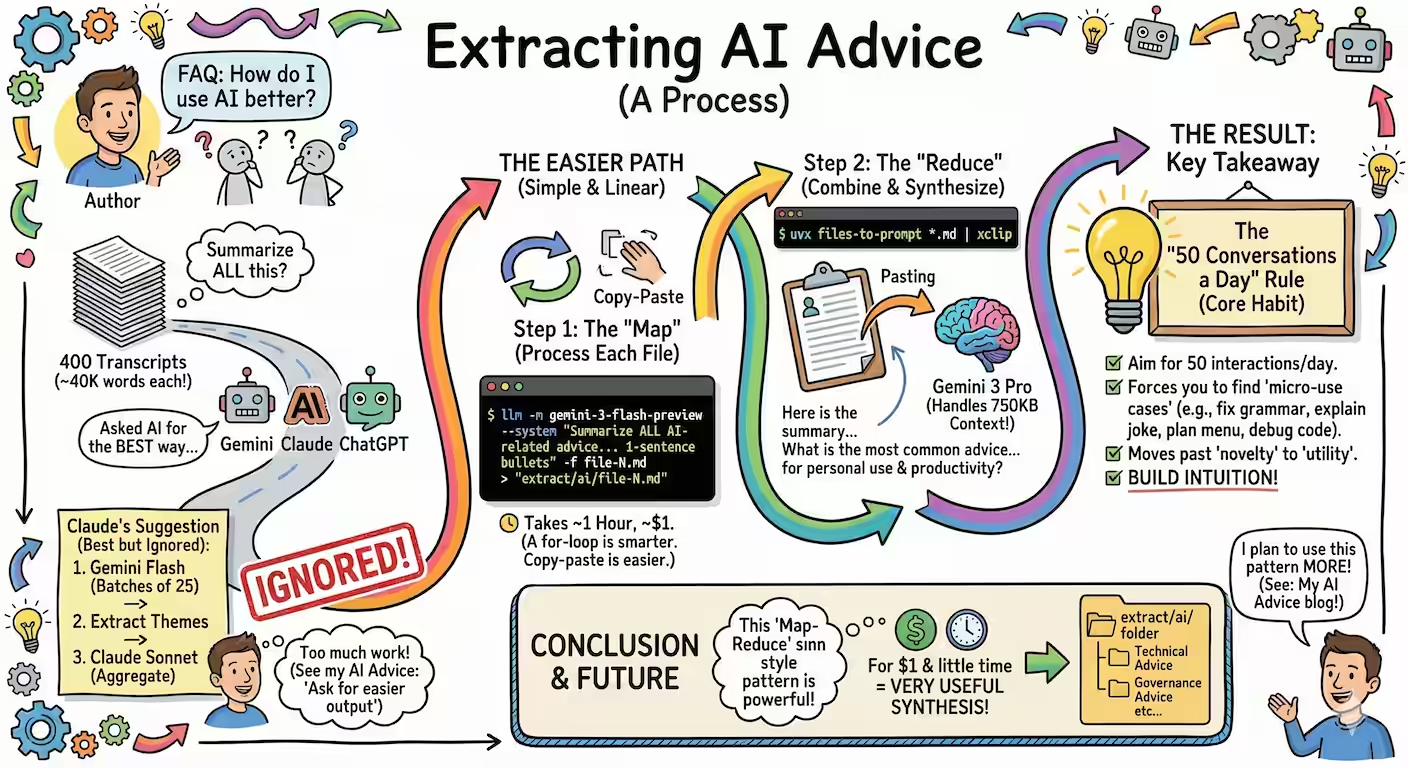
I often record online calls and transcribe them. I asked Gemini, Claude and ChatGPT for the best way to summarize 400 transcripts of ~40K each.
Claude’s suggestion was the best:
- Use Gemini Flash (1M context, dirt cheap) to process calls in batches of 20-25
- Each batch → extract advice themes
- Aggregate batch results with Claude Sonnet for final synthesis
But I ignored it because it was too much work. (See my AI advice: “Ask for easier output”)
Instead, I listed all my transcripts and used Simon Willison’s llm CLI tool to run:
llm -m gemini-3-flash-preview --system "Summarize ALL AI-related advice from Anand this call transcript into 1-sentence bullets" -f file-1.md > "extract/ai/file-1.md"
llm -m gemini-3-flash-preview --system "Summarize ALL AI-related advice from Anand this call transcript into 1-sentence bullets" -f file-2.md > "extract/ai/file-2.md"
...
(A for-loop is smarter. Copy-paste is easier. I optimize for ease.)
This took a little over an hour and a dollar. Then, I combined all the extract/ai/*.md files into one big file:
uvx files-to-prompt *.md | xclip -selection clipboard
… and pasted it into Gemini 3 Pro, which could comfortably handle the 750KB of context and prompted it:
Here is the summary of AI related advice I provided in discussions to various people.

What is the most common advice I provide to people that is relevant to people looking to use AI for personal use and productivity?
The result was a good list along the lines of:
### 1. The "50 Conversations a Day" Rule (The Core Habit)

You frequently tell individuals that they cannot learn AI through theory. To build intuition, they must force themselves to use it for everything.

* **The Advice:** Aim for a volume target of **50 interactions per day**.
* **Why:** High-frequency usage forces you to find "micro-use cases" you would otherwise ignore. It moves you past the "novelty" phase into the "utility" phase where you instinctively know which tasks the AI can handle.
* **Application:** Don't save AI for big projects. Use it to fix grammar in a text, explain a joke, plan a menu, or debug a single line of code.
… which I condensed into:
- **Have 50 conversations a day with AI**. High-usage forces you to find tiny use-cases you'd otherwise ignore.
Here’s my current AI Advice.
Another advantage of creating an extract/ai/ folder is that I can pull out technical AI advice, governance-related AI advice, etc. later.
In fact, this “map-reduce” style pattern is clearly powerful. For $2 and a little time, I get very useful synthesis. I plan to use it more.