When I was in class 8 or 9, our English teacher told us a story I’ll never forget.
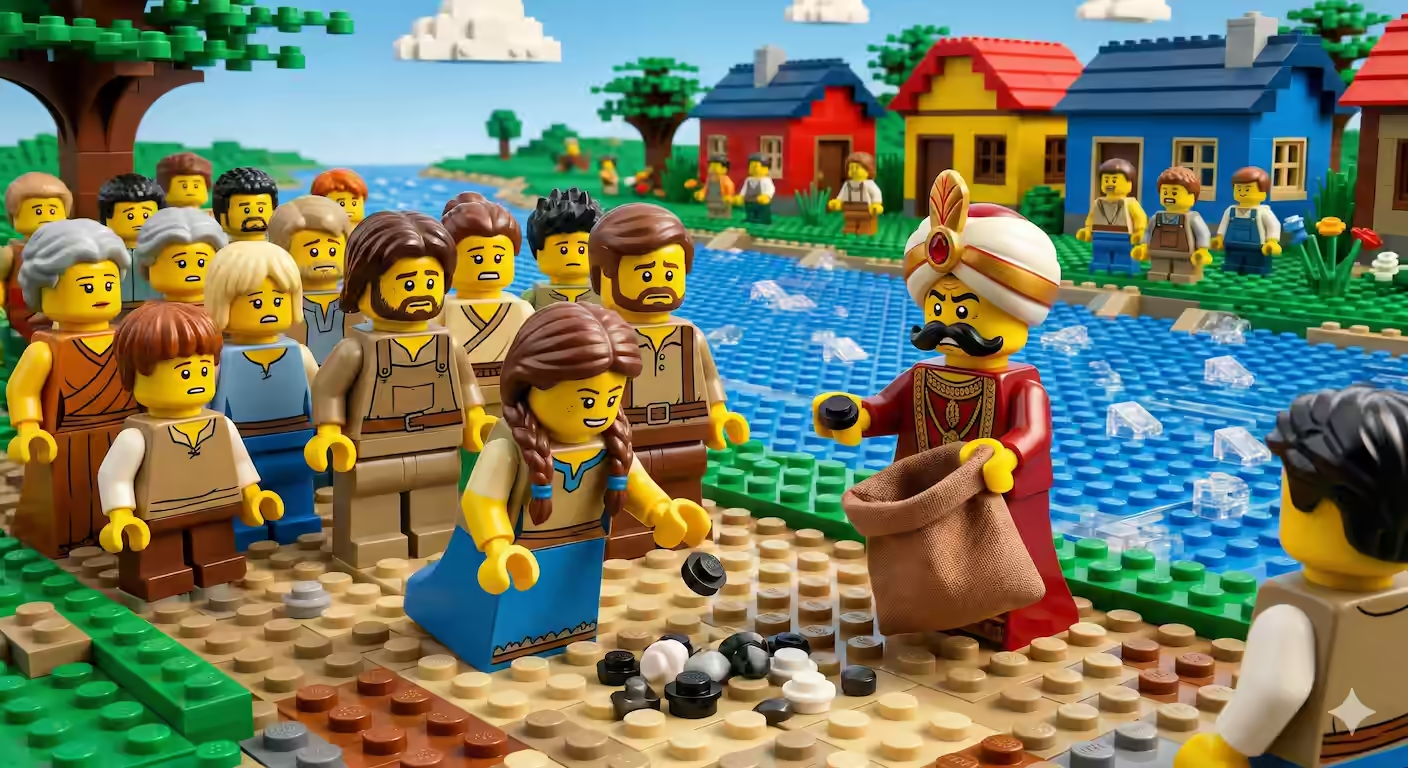
There was a poor farmer who lived in a village. He owed the zamindar (landlord) of the village a lot of money.
The zamindar had an eye on his daughter. “Marry your daughter to me, and I’ll forgive your debt,” he said.
The farmer was reluctant. “Please, sir, what will the village say about your marrying such a young girl?” he asked.
The wily zamindar said, “They cannot argue with God’s will. Let fate decide.”
The zamindar gathered the villagers near the river, picked up pebbles of white and black from the riverbed, and told the farmer, “I will put a white and black pebble in this bag. If your daughter picks the black pebble, fate wills that she marry me. If she picks the white pebble, she needn’t. Your debt will be forgiven.”
But without the villager’s knowledge, the zamindar put two black pebbles in the bag.
The farmer’s daughter saw this, and was in a dilemma. Exposing the zamindar force them back into debt.
Instead, she picked a pebble from the bag dropped it “by accident” among other pebbles. “Sorry!” she said. “But let me see which pebble is left in the bag.”
She showed the remaining black pebble from the bag. “I must have picked the white. Fate forgives our debt without marriage, sir.”
I remember this story is because it converts a “no-win” situation into a “no-lose” one – just by reframing the problem.
Whenever I think, “Damn! What a mess!” I hope I have enough wits to remember this story. There are many more black-pebble problems in life than we realize. We just need to be creative enough to drop the pebble and reframe the problem.