I often research how the world will change with AI by asking AI. Today’s session was informative. I asked Claude, roughly
Economics changes human behavior. As intelligence cost falls to zero, here are some changes in my behavior [I listed these].
Others will have experienced behavioral changes too. Search online and synthesize behavioral changes.
It said this.
- 🟡 People spend time on problem framing & evaluation. AI can execute the middle. (I’m OK at this. Need to do more framing + evaluation.)
- 🟢 People don’t plan, they just build. (I’m prototyping a lot.)
- 🟢 People build personal data & context. (I’m mining my digital exhaust.)
- 🔴 People queue work for agents, delegating into the future. (I’m not. I need to do far more of this.)
- 🟢 People shift from searching to asking for answers. (I do this a lot, e.g. this post.)
- 🟡 People are AI-delegating junior jobs and developing senior level taste early. (Need to do more.)
- 🟡 People treat unresolved emotions as prompts. (Need to do more.)
Rough legend: 🟢 = Stuff I know. 🟡 = I kind-of know. 🔴 = New learning.
My next question was:
Using economics, psychology, sociology, etc. predict new behavior changes and implications.
It said: the bottleneck shift to trust, taste, and attention.
- 🟢 Taste is a skill. Few people will deepen craft engagement (reading, cooking, music, …) but most won’t, creating a gap.
- 🟢 Context is an asset. People & companies will record decisions, reasoning, relationship histories, .. to create (marketplace-tradeable) assets.
- 🟡 Trust is an asset. People who stand behind AI output will create value in law, medicine, education, etc. Consulting will restructure around this.
- 🟢 AI-less is exercise. Few people will deliberately train without AI, and will be valuable in niches (sports, emergencies, status-symbols). Exams / filters will partially screen for this.
- 🟡 AI-less feels broken. AI-speed will be expected in services and interactions. Relationships are assets that become valuable and premium.
- 🔴 Orgs re-form. Org sizes fall. But size has advantages (trust, brand, connects) so new orgs will form with teams evaluated on outcome (portfolio, ROI) and trust (network, ratings).
- 🔴 Experience becomes luxury. Non-reproducible experiences become expensive. Provable authenticity commands a premium.
- 🔴 Two-speed world. Some places (countries, companies, colleges, communities) become more AI friendly. Capital, talent and productivity will concentrate here.
What implication will these have on the nature of work?
Historically, apprenticeship (execution) preceded mastery (judgement). Now, execution is free. That messes things.
- 🟡 How do we develop judgement? Simulators, red-teaming, AI-free tests, …?
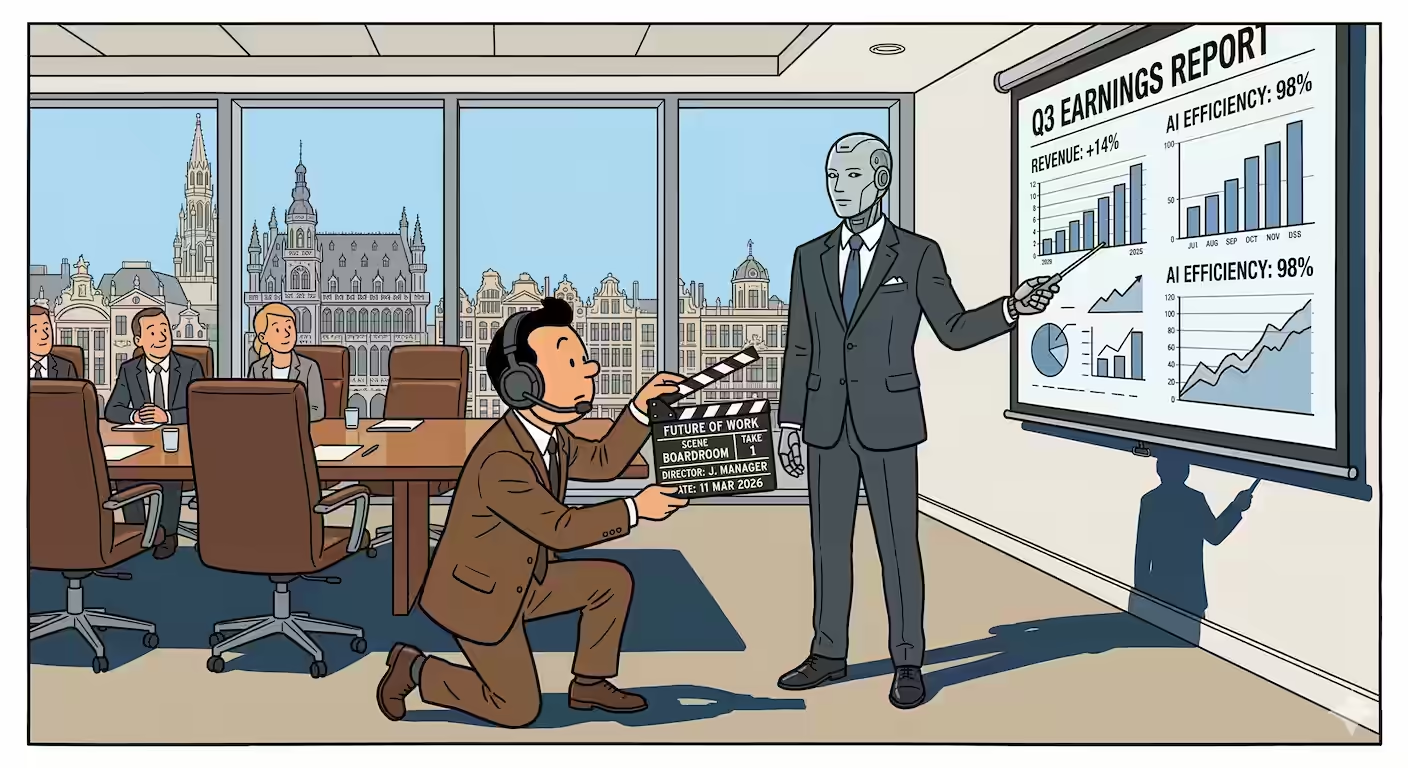
- 🔴 What will managers do? Less coordination & oversight. More judgement (validate output not process), motivation, accountability. Like a film director, not supervisor.
- 🟡 How will we hire/pay? More outcome-based hire/pay. More freelancing, portfolio or reputation based hiring. Long-term retainers reserved for trust.
- 🔴 How will we describe our work? Less about tasks (which AI does) and more about who you are, where you fit, what you contribute.
So work will organize around:
- Trust: context, judgement, accountability
- Presence: caring, building with hands, performing, connecting
- Direction: framing, evaluating, curating
… and less around translation (execution, coordination, oversight).