Our brains remember some things better. Explaining that way makes it stick.
Here are the eight things, most important first, that help you:
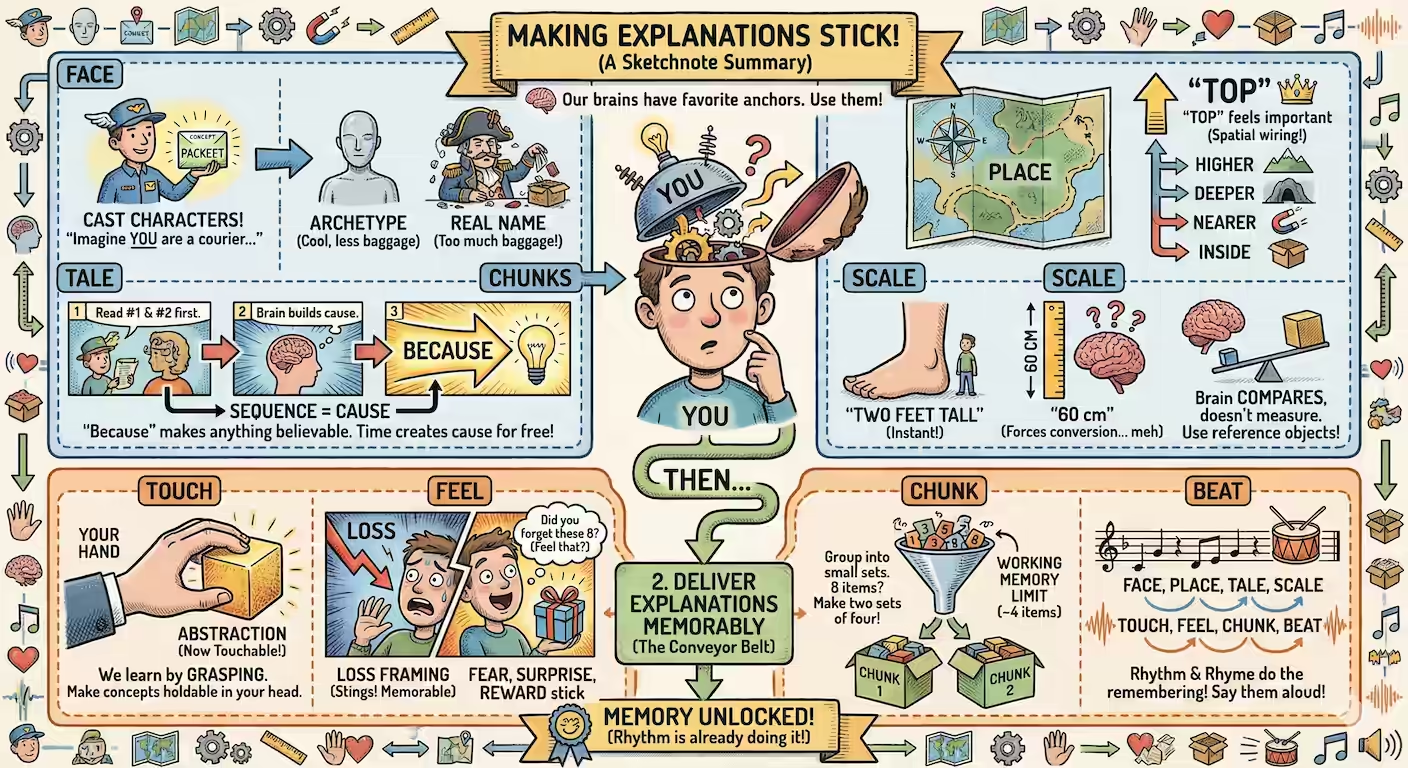
Structure explanations memorably:
- Face. You remember faces before facts. So cast characters: “Imagine you’re a courier carrying a packet.” Prefer archetypes to real names — less baggage, more imagination.
- Place. You’re reading down a list now — and the top feels more important. That’s spatial wiring. Turn any concept into a map. Use higher, deeper, nearer, inside, …
- Tale. You read #1 and #2 first because they came first. Your brain built a cause from that sequence. Time creates cause for free. “Because” makes anything believable.
- Scale. “Two feet tall” lands instantly. “60 cm” forces you to convert. Your brain doesn’t measure — it compares. Give it reference objects, not just numbers.
Deliver explanations memorably:
- Touch. Face. Place. Tale. Scale. Each is a thing you can “grasp” or “hold” in your head. We learn literally by grasping. Make abstractions touchable.
- Feel. Everyone ignores you because you forget these eight. Did that sting? That’s loss framing. Fear, surprise, and reward are memorable.
- Chunk. There are 8 items here - already past our ~4 chunk working memory limit. We’ve chunked them into two logical sets of four.
- Beat. Face, Place, Tale, Scale. Touch, Feel, Chunk, Beat. Two groups of four. Say them aloud — the rhythm is already doing the remembering for you.
PS: The Claude conversation that lead to this post is my favorite prompting example.
- The first prompt asked the question “Our brains are wired to understand some things well…”
- … and for multiple options “Create a comprehensive list…”
- … fact-checked “… based on research evidence”
- … with expert framing: “But I’m a novice - what would an expert check that beginners would miss? Think about that, ask, and answer those too.”
- The second prompt uses LLM review. “I asked Gemini to review your work. What does proven science agree with and disagree with on Gemini’s response?”
- … with expert framing: “focusing on patterns that an expert in this field recognize that beginners would miss”
- The remaining prompts asksfor a rewrite: “Here’s my shorter version. Rewrite it with the same succinctness”, but with meta-cognition:
- “but applying the same 8 principles of cognitive anchoring to this text itself!”
- “rename them to rhyme better”
- “Re-apply the principles and suggest an improved version.
I also converted this into a SKILL.md