When people ask me for connections, I share my LinkedIn data and ask them to pick.
This week, three people asked for AI ideas. I shared my local content with AI coding agents and asked them to pick.
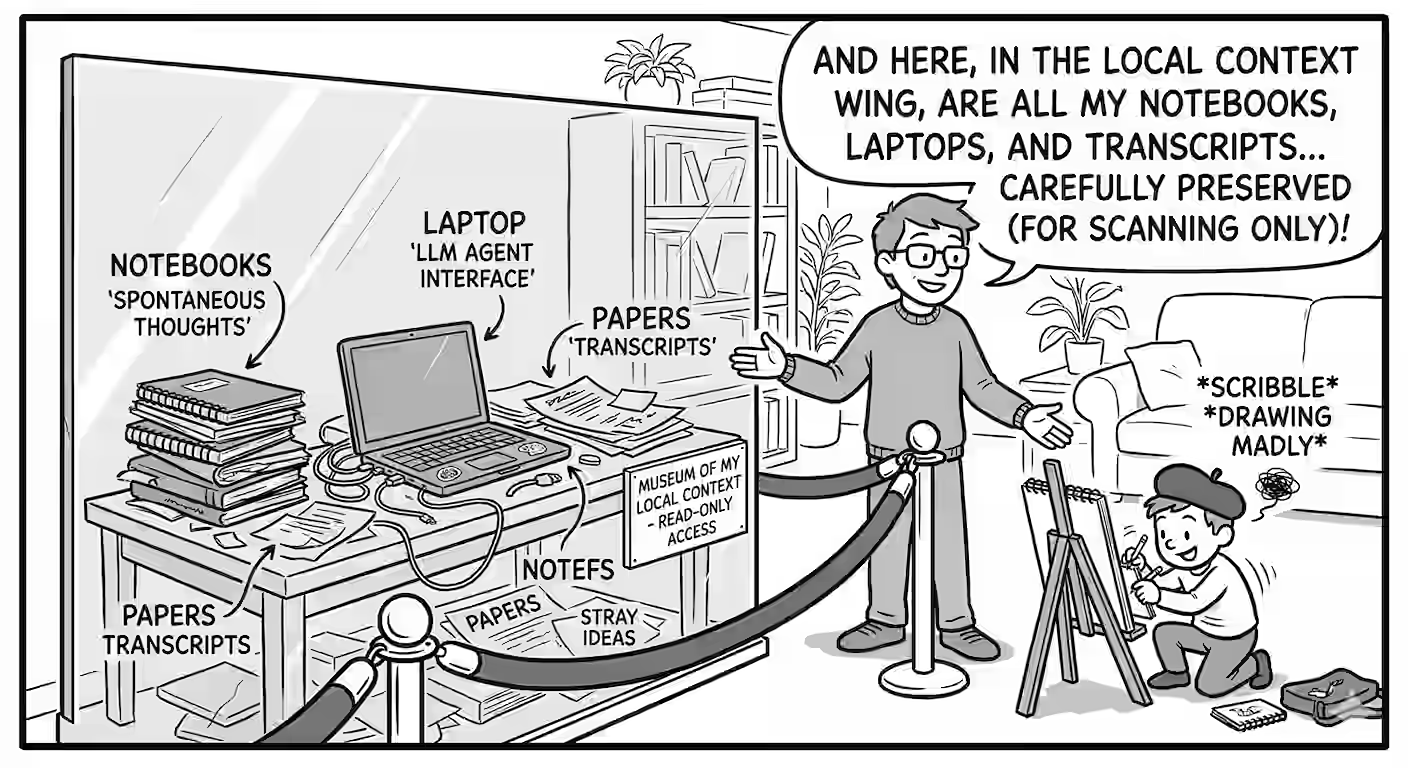
STEP 1: Give access to content. I use a Dockerfile and script to isolate coding agents. To give access, I run:
dev.sh -v /home/sanand/code/blog/:/home/sanand/code/blog/:ro \
       -v /home/sanand/code/til:/home/sanand/code/til:ro \
       -v /home/sanand/Dropbox/notes/transcripts:/home/sanand/Dropbox/notes/transcripts:ro
This gives read-only access to my blog, things I learned, transcripts, and I can add more. (My transcripts are private, the rest are public.)
STEP 2: Ask agents to scan content. For example, I ask it to read:
- Required blog posts related to LLMs
/home/sanand/code/blog/(especially with the categoryllms)- Other relevant transcripts
/home/sanand/Dropbox/notes/transcripts(especially extracted AI advice at/home/sanand/Dropbox/notes/transcripts/extracts/ai/)- Things I learnt at
/home/sanand/code/til/
This makes it explicitly aware of the content and can use it to answer questions.
STEP 3: Help it do better. I often add “Use sub-agents as required”, which reduces the context and lets them run more in parallel. I also point them to post-mortems for tips on scanning content effectively.
STEP 4: Output as JSON. JSON lets me write programs to convert to multiple other formats (e.g. HTML, markdown). I specify the fields I want, how I want them filled, and leave the rest to the agent. Sample output.
This is not a new technique. It’s just context engineering, roughly like:
- Connecting ChatGPT/Claude/Gemini/ to Dropbox/Google Drive/… and asking it to read the content.
- Enabling web search and asking them to search online.
But I can do this (kind of) safely on my local content and I can also teach it how to scan the content - which is a useful learning.
Next steps:
- Add README.md to each directory on how to scan the content effectively.
- Think about what content repositories I should add
- Explore combining content repositories cleverly (e.g. “Read my blog and apply lessons to my code.”)