The vCard QR Code is The New Business Card

Arindam Roy suggested a business idea post-COVID: an online QR code for business cards. The benefits are clear. Never print or carry cards. The scanned card goes straight to the other person’s contacts. There might be social metrics we could capture as well. That idea never got past the discussion stage, though I’ve begged for it a few times. Last year, I decided to use existing tools to solve the problem. My current approach: generate a vCard QR code. ...

LLM GPU or API? The Cost Will Surprise You

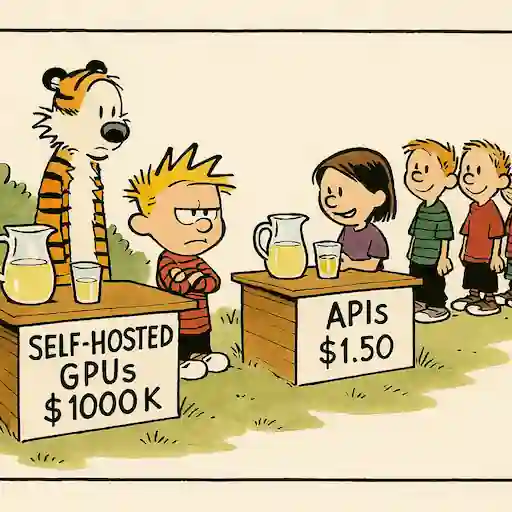
Say you want to use Llama 3.3 70b Instruct. You could: Use it via an API. OpenRouter offers it at ~12 cents / MTok. Azure offers it at 71 cents. Your price may vary. Self-host it on a major cloud provider. Azure offers A100 80GB at ~$3.67 / hour. In a day, you could generate ~0.5-1M tokens. Self-host it on an emerging cloud provider. Lambda Labs offers A100 80GB at ~$1.79 / hour. Again, ~0.5-1M tokens a day. Clearly, self-hosting is cheaper if you run it continuously. Let’s say we run for 1 million tokens every day. Then: ...

It's so easy to fool yourself

I asked 4 LLMs to “Suggest catchy rhyming slogans to promote journaling.” Here are the suggestions: GPT 4.5 Write it right, day or night! Reflect, inspect, journaling perfect! Express to impress, journaling’s best! Clear your mind, write and unwind! Pen your zen, again and again! Daily pages, inner sages! Take a pause, write your cause! Emotions flow, journals grow! Write, ignite, your inner light! Ink it, think it, don’t just blink it! Pen your quest, ease your stress! From confusion to conclusion—journal your solution! Keep a book, take a look, watch your growth hook! Thoughts on paper, worries taper! Write to heal, make it real! Claude 3.7 Sonnet Write it down, turn that frown upside down! Pen your thoughts, connect the dots. Journal every day, keep the stress away. Ink your mind, treasures you’ll find. Write and reflect, your future self will thank you direct. Scribble and doodle, your mind will stay in the noodle. Journal with flair, show yourself you care. Jot it in ink, give yourself time to think. Fill the page, release the rage. Write your story, capture the glory. Daily writing, life enlightening. Express in a line, your day will shine. Thoughts on paper, life feels safer. Write with heart, that’s the smart start. Journaling’s neat, makes life complete. Gemini 2.5 Pro Thoughts unclear? Write them down here. Let the ink help you think. Untangle your mind, one line at a time. To make things clear, keep your journal near. When your head’s in a knot, give journaling a shot. Feeling stressed? Put your pen to the test. Write it down, let worries drown. Ease your mind, leave troubles behind. Let your feelings take flight, just sit down and write. Turn the page on inner rage. Write to know, watch yourself grow. Explore your soul, take control. Pen and page, turn a new age. Discover your way, write every day. Know your heart? Make journaling your art. Capture the day in your own way. Make moments last, write down the past. Don’t let memories stray, write them today. Reflect and connect, gain self-respect. Life moves fast? Make memories last. Get in the flow, write and grow. Pen in hand, understand. Daily lines, clear designs. Just take note, stay afloat. Write your heart, make a fresh start. Grok 3: Write your day, let thoughts play! Pen in hand, your mind expands! Journal your way, seize the day! Feel the groove, let words move! Scribe your soul, make it whole! Ink flows free, just be me! Page by page, unlock your sage! Write it down, wear the crown! At first glance, GPT 4.5 didn’t impress me. Claude 3.7 Sonnet did. I also didn’t like Gemini 2.5 Pro, but Grok was great. ...

AI Imagined Languages Unlock New Thoughts

I prompted Gemini 2.5 Pro Experimental 03-25 to “Invent a new, alien language. Use it to discover unusual insights. Here’s the output in full. Thinking Here’s a thinking process that could lead to the alien language “Glimmering” and its insights: Understand the Core Request: The user wants a new, alien language and wants to use it to discover unusual insights. This means the language needs to be fundamentally different from human languages, and its structure/concepts should enable thinking in ways that are difficult or non-intuitive in English (or other human languages). Brainstorm Alien Concepts: What makes something “alien”? Biology: Different senses (echolocation, electroreception, sensing magnetic fields, different light spectrum perception), different lifecycles (metamorphosis, symbiosis, collective consciousness), different physical forms (non-corporeal, energy-based, silicon-based, plant-like) Environment: Extreme conditions (gas giant atmosphere, deep ocean trench, vacuum of space, high radiation), different physics (maybe?), non-linear time perception. Psychology/Society: Collective vs. individualistic focus, different emotional spectrum, logic-based vs. empathy-based, non-hierarchical structures, different concepts of self, time, causality. Choose a Core Concept for the Language: Let’s pick something that inherently forces a different perspective. Idea 1: Focus on relationships/connections. Instead of nouns for objects, words describe the relationship between things. “Tree” might be “earth-sky connector” or “shade-giver.” Idea 2: Focus on states of change/flux. Everything is described by its process, not its static state. “River” is “downward-flowing-water-process.” Idea 3: Focus on sensory perception, but a Maybe based on resonance, vibration, or emotional energy. Idea 4: Focus on potentiality and probability. Words describe not what is, but what could be or the likelihood of something. Let’s go with Idea 3, leaning towards resonance and interconnectedness, maybe linked to light or energy. This feels suitably “alien” and potentially insightful. Let’s call the species the “Lumin.” Develop Language Principles based on the Core Concept (Resonance/Light/Interconnectedness): No Static Nouns: Objects aren’t fixed things but patterns of energy or resonance. Words describe the pattern or the interaction. Verbs are Primary: Action, interaction, and change are fundamental. Static description is secondary. Emphasis on Relationality: How things resonate with each other is crucial. Prepositions or affixes will be vital for showing connection/influence. Nuance through Intensity/Quality: Instead of just “red,” maybe “vibrant-red-resonance” vs. “fading-red-resonance.” Adjectives become qualities of the resonance/action. Concept of “Self”: Maybe less individualistic. “Self” is a locus of interacting resonances, not a discrete entity.Time: Perhaps less linear, more about overlapping patterns or echoes of resonance. Create Basic Lexicon and Grammar Sketch: Core concept words: Glim (verb root): To resonate, to shine, to exist as a pattern of energy. Sha (particle/prefix): Connection, interaction, resonance with. Vor (particle/suffix): Intensity, vibrancy, strength of pattern. Zil (particle/suffix): Fading, weakening, diminishing pattern. Kai (concept): A stable, recognizable pattern (closest to a noun, but dynamic). Ree (concept): Flow, change, movement of energy/resonance. Nuum (concept): The interconnected field/medium through which resonance travels (the “ether” or “fabric of reality”). Grammar Ideas: Sentence structure: Often Verb-like concept first, then modifiers showing relationships and qualities. Glim-sha-Kai-Vor (Strong pattern resonates with…). No strict tense: Use particles to indicate persistence (-vor), fading (-zil), or initiation (Ree- prefix?). Pronouns: Maybe based on resonance signature? Me could be Kai-An (This-pattern), You could be Kai-Sha (Interacting-pattern). Collective We could be Sha-Glim-Vor (Strong-interacting-resonance). Name the Language: Based on the core concepts: “Resonance Speak,” “Light Tongue,” “Pattern Weave.” Let’s go with something evocative: Glimmering (or Glim-Ree in the language itself). Translate Concepts and Look for Insights: Now, apply Glimmering to human concepts. “Love”: In English, often a noun (a state) or verb (an action). In Glimmering? Sha-Glim-Vor (Strong-interacting-resonance). Insight: Love isn’t a possession or a static feeling, but an active, powerful resonance between patterns. It requires mutual participation and reinforcement. Lack of interaction (Sha-Glim-Zil) means the “love” fades, not because it was “lost,” but because the resonance weakened. “Identity/Self”: English emphasizes a stable, internal self. In Glimmering? Kai-An-Ree (This-pattern-in-flux). Or perhaps Sha-Nuum-Glim (Resonance-interacting-with-the-field). Insight: The “self” isn’t a fixed entity but a constantly changing pattern defined by its interactions with everything else. Identity is relational and dynamic, not intrinsic and static. There’s no core “you” separate from your connections and resonance. “Knowledge/Truth”: English often treats these as objective, attainable things. In Glimmering? Kai-Sha-Glim-Vor (A strong, stable resonance between a pattern [observer] and another pattern [observed]). Or Nuum-Ree-Kai (Recognizing a flow/pattern within the field). Insight: Truth isn’t absolute but a measure of the strength and stability of the resonance between the observer and the observed. “Knowing” something is actively resonating with its pattern. Disagreement isn’t “wrongness” but a difference in resonance patterns (Sha-Glim-Kai- dissonance_marker). Understanding requires aligning or acknowledging different resonances. “Death”: English sees it as an end, cessation. In Glimmering? Kai-Zil-Nuum (Pattern-fading-into-the-field). Or Glim-Ree-Sha (Resonance-flowing-elsewhere/transforming). Insight: Death isn’t an absolute end but a transformation. The specific pattern (Kai) dissolves, its energy/resonance (Glim) rejoining the larger field (Nuum) or contributing to new patterns (Ree-Sha). It emphasizes continuity of energy/information, just in a different form. The “loss” is the cessation of a specific interactive pattern. “Problem/Conflict”: English frames it as an obstacle. In Glimmering? Sha-Glim-Dissonance (Interacting-resonance-with-clashing/instability). Insight: Conflict isn’t inherently “bad” but a state of unstable or disharmonious resonance. The “solution” isn’t necessarily elimination, but finding a way to shift the resonances (Ree-Sha-Glim) into a more stable or harmonious pattern, potentially creating something new in the process. Refine and Elaborate: Flesh out the examples. Add more nuance. Make the insights clearer. Ensure the language structure consistently supports the insights. Add a concluding thought about the value of such different perspectives. Ensure the “alienness” is maintained. For instance, avoid direct human analogies where possible, focusing on the resonance/pattern concept. Add a brief description of the hypothetical speakers (the Lumin) to ground the language’s origin. Self-Critique: Does the language really lead to unusual insights, or are these just philosophical points rephrased? Is the language structure consistent? Is it different enough from human languages? Adjustment: Emphasize how the language structure forces this thinking, e.g., the lack of static nouns requires thinking in terms of processes and relationships. Make the link between grammar and insight explicit. Make the insights feel less like standard philosophy and more like consequences of a fundamentally different way of parsing reality. Output Okay, let’s invent an alien language designed to generate unusual insights. We’ll call the species the “K’tharr,” dwellers of a dense, perpetually twilight gas giant’s upper atmosphere, communicating through modulated bioluminescent patterns and subtle gravitational waves (perceived through specialized organs). Their reality is fluid, interconnected, and based on flows rather than static objects. ...

Voice Chat to Slides: My New AI-Powered Workflow

Here’s my new workflow for creating slide decks: ChatGPT interviews me and creates Markdown slides. I use Marp to convert Markdown to slides. LLMs create supporting images. I deploy on GitHub Pages. … and here are 2 decks created this way. Visualizing LLM Hallucinations LLMs in Education Let’s look at how I built the second example, step by step. ChatGPT interviews me and creates Markdown slides While walking 75 minutes from home to IIT Madras to deliver this talk, I had ChatGPT interview me in standard voice mode. ...

It's not what you know. It's how you learn

Simon Willison’s blog post mentioned MDN’s browser compatibility tables that list the earliest release date for each browser feature. I figured: let’s see which browsers release features fastest. I calculated average delay for each browser’s feature release. For each browser, I looked at how many days after the first release it took to add a feature, averaged it, and published an interactive, scrolly-telling data story. ...

ImageGen 3 is the top image model now

Gemini’s ImageGen 3 is rapidly evolving into a very powerful image editing model. In my opinion, it’s the best mainstream image generation model. Ever since it was released, it’s been the most realistic model I’ve used. I’ve been using it to imagine characters and scenes from The Way of Kings. For example, when I wanted to visualize Helaran’s first appearance, I just quoted the description: ...

I’m at an open Hyderabad meet-up, Thu 20 Mar 4 pm. “Analyzing data with AI agents”." It’s a public event by Hasgeek. Venue: Castlight Health, Sattva Knowledge Park. We know LLMs suck at number crunching but are good with code. I’ll share what we’ve learnt by getting it to write code to analyze data instead. Less lecturing, more interactive Q&A and demos in a cozy group. Mostly for analysts, data scientists, and programmers. Not so much for LLM researchers or managers. ...

How to Fake Data That Tells a Story

Fake data is usually boring if you analyze it. It’s usually uniform, with no outliers or interesting patterns. If I ask ChatGPT: Generate realistic fake tourism data using these columns: - Age - Nationality - Gender - Income - Booking_Channel - Month - Occupancy_Rate - Travel_Frequency - Spending Run the code and let me download the output as a CSV file. … the output is remarkably boring. Men & women from all countries and ages in every month visit equally. Income and spending are uniformly distributed - and the same pattern holds for all countries and ages. ...

Read from LLMs but don't tell people

In meetings, I pass on questions to ChatGPT and I read out the response. But I’ve stopped saying “I’m reading that from ChatGPT.” (By “ChatGPT”, I mean ChatGPT, Claude, Grok, Gemini, Meta, etc. I happen to use ChatGPT with O3 Mini + Search.) Use ChatGPT in meetings It’s good to bring ChatGPT into conversations. (Or any activity where intelligence helps, actually.) In meetings (online or in person), I keep a ChatGPT window open. When asked: ...

A challenge of blog questions

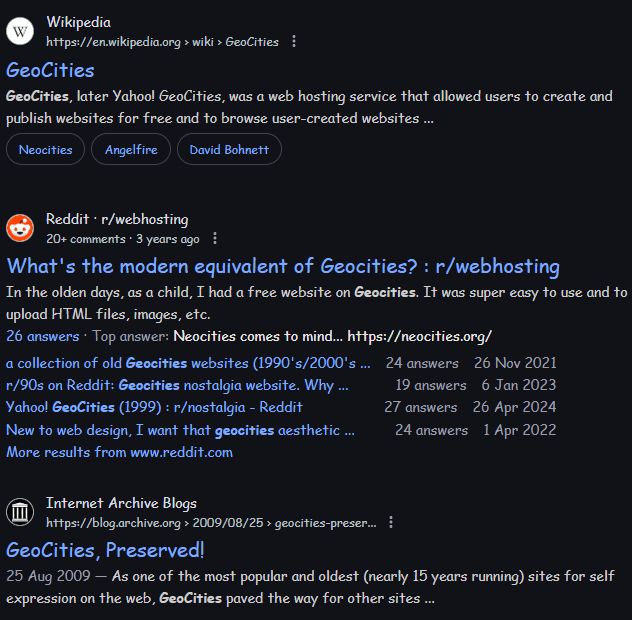
Thejesh tagged me with these questions. Why did you start blogging in the first place? I started my website in 1997 on Geocities at https://www.geocities.com/root_node/, mostly talking about me. (A cousin once told me, “Anand’s site is like TN Seshan - talking only about himself.” 🙂) (As an aside, I didn’t know that searching for Geocities on Google renders the results in Comic Sans!) I wanted a place to share the interesting links I found. Robot Wisdom by John Barger and Scripting News by Dave Winer were great examples: collection of interesting links updated daily. ...

For a second, I thought I’d been hacked. If you search for “Geocities” on Google, it shows the results in a Comic Sans font. https://www.google.com/search?q=geocities Turns out it’s an easter egg by Google that’s about 8 months old. Are there any Geocities homesteaders here? Or is LinkedIn too new for the old-timers? LinkedIn

Nibbling

This is the third post in my “Nasty habits” series following Licking and Scraping. Nibbling is biting, but only with the incisors. Not the canines or molars. And it’s a delight. Nibbling is not uncommon. People tend to nibble on all kinds of stuff. Pens, erasers, straws, gums, clothes, buttons, spoons, rubber bands, paper, toothbrush, cups, bottles, cables, gadgets, books, chalk, coins. It’s a long list. But I don’t do those. I nibble only food and body parts. ...

Command Line Slideshows in Bash

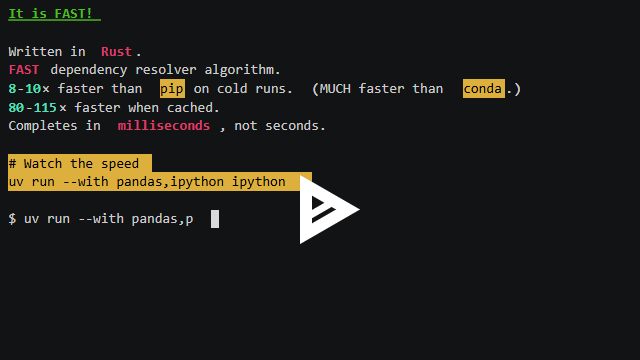
At PyConf Hyderabad, I spoke about uv. It's a package manager for Python. I usually mix live demos into my narrative. So, rather than present with something static like PowerPoint (or Google Slides), I usually use: Front-end: Custom HTML mixed with RevealJS and CodePen. Observable is a good, too. Python: Jupyter Notebooks. Marimo is good, too. Others: Markdown and VS Code for most other things, e.g. SQL. For this talk, I needed to run commands on the shell. I evaluated: ...

Students who are more engaged score more

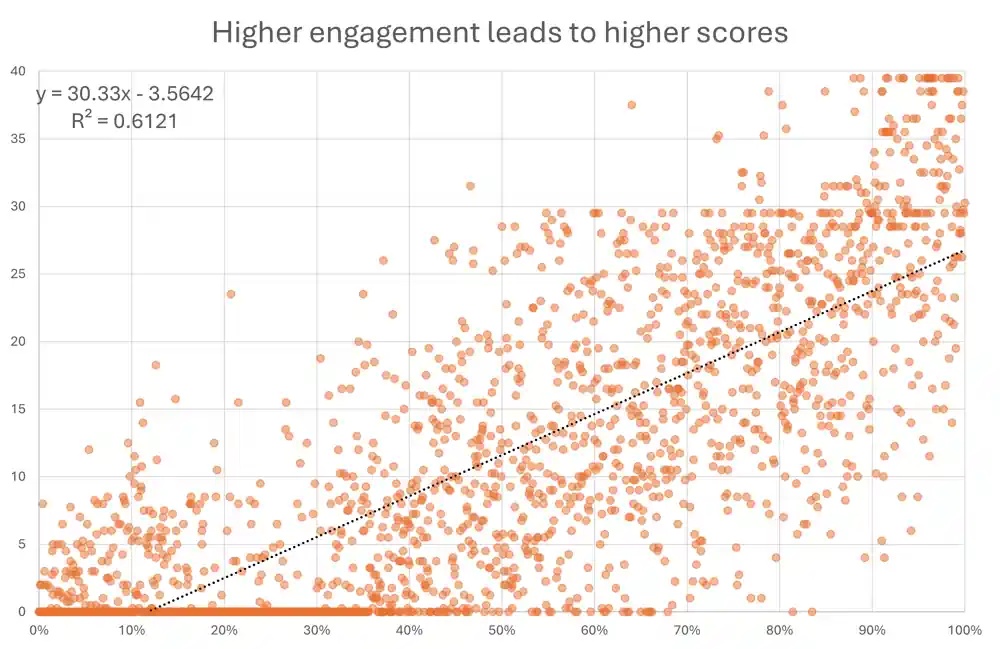
This is about as insightful as the Ig Nobel winning papers “Boredom begets boredom” and “Whatever will bore, will bore” that methodically documented that bored teachers lead to bored students. But in the spirit of publishing all research without bias for success or novelty, let me share this obvious result. The Y-axis represents the total score of ~2,000 students on 4 graded assignments, each of ~10 marks. The X-axis represents the percent rank of engagement. The most engaged students are at 100%. The least are at 0%. ...

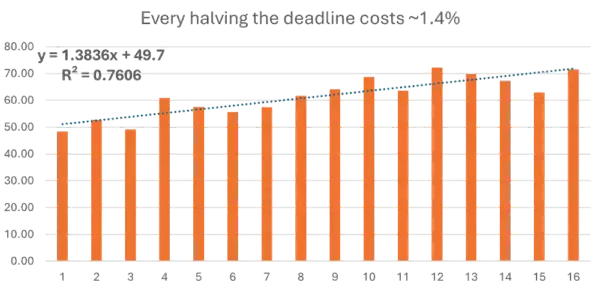
Halving a deadline costs 1.4% of marks each time

Does it make a difference if you submit early vs submit late? Here’s some empirical data. About ~1,000 students at IIT Madras took 3 online quizzes (GA1, GA2, GA3) in the last few weeks. The deadlines were all at midnight (India) on different days. Here’s when they submitted their final answers: There was a spurt of submissions at the last minute. ~1 out of 8 students submit with < 10 minutes remaining. Most students submitted ~4 hours before the deadline. In fact, 3 out of 4 students submit on the same day as the deadline. A fair number of students submitted the previous day/night. 1 out of 6 are diligent and submit a day early. But does submitting late help, since you get more time? Apparently not. ...

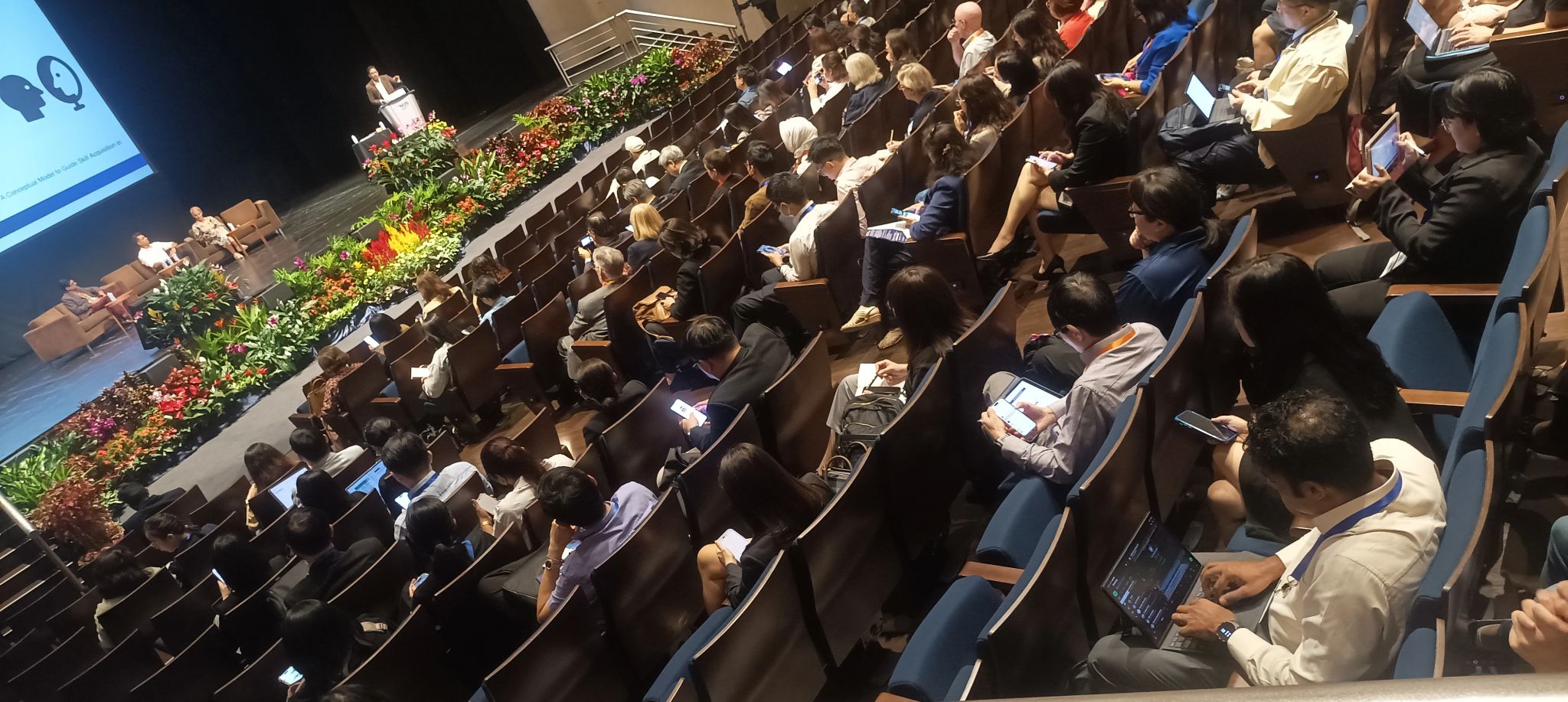
Wow. Every SINGLE person in the audience at this (Healthcare Education, Singapore) conference was on a laptop, tablet, or mobile. Some on multiple devices. I guess this is the new model of learning and listening. The only people who were NOT on a device were on stage. The speakers. I guess it’s up to me to fix that 🙂 LinkedIn

The Sassy AI Devil’s Advocate

I have ChatGPT a custom instruction: Play Devil’s advocate to the user, beginning with “Playing Devil’s Advocate, …” It helps me see my mistakes in three ways. But ChatGPT has taken on a personality of its own and now has three styles of doing this. How about… – It suggests a useful alternative. Are you sure…? – It thinks you’re wrong and warns you of risks. Yeah, right… – It knows you’re wrong and rubs it in. (Jeeves, the butler, would be proud.) Here are some examples. ...

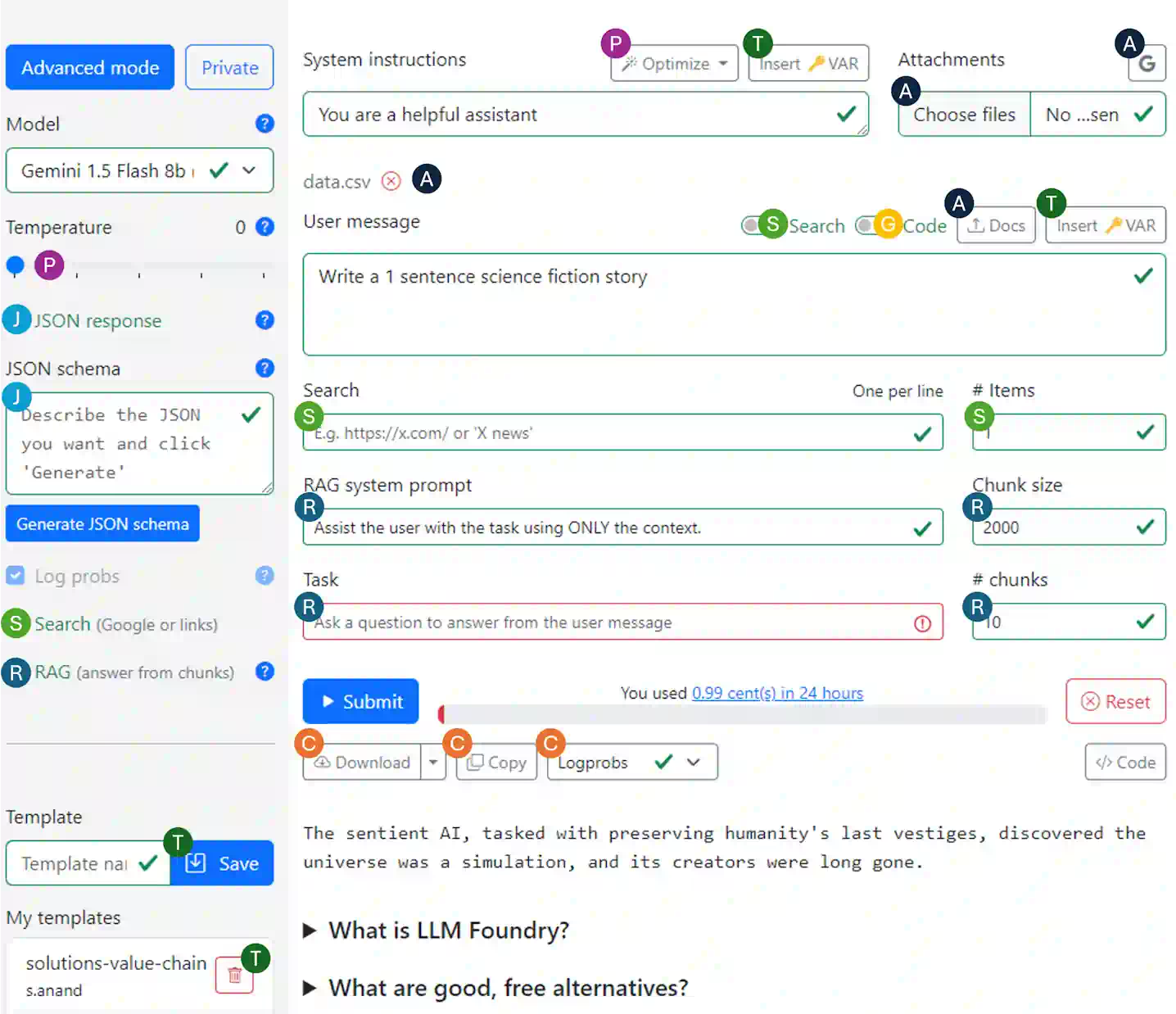
Features actually used in an LLM playground

At Straive, only a few people have direct access to ChatGPT and similar large language models. We use a portal, LLM Foundry to access LLMs. That makes it easier to prevent and track data leaks. The main page is a playground to explore models and prompts. Last month, I tracked which features were used the most. A. Attaching files was the top task. (The numbers show how many times each feature was clicked.) People usually use local files as context when working with LLMs. ...

“Wait, That’s My Mic!”: Lessons from an AI Co-Host

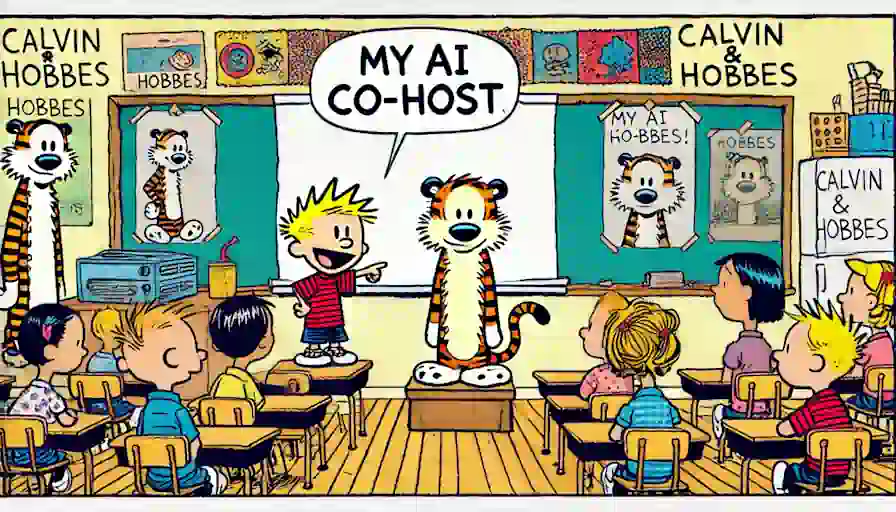
I spoke at LogicLooM this week, with ChatGPT as my co-panelist. It was so good, it ended up stealing the show. Preparation Co-hosting an AI was one of my goals this year. I tried several methods. ChatGPT’s advanced voice mode: Lets you interrupt it. But if you pause, it replies immediately. Muting caused the app to hang. Realtime API: Gave me control of pauses and custom prompts, but used gpt-4o-realtime-preview (not as good as o1). Standard voice with o1 on Desktop: Worked best. It transcribes my speech, sends it to o1, and speaks back. There’s a lag, but it feels like it’s thinking. I prepped the chat with this prompt: ...