Calvin UMAP
Similar to the embedding map of my blog posts, I created an embedding map of Calvin & Hobbes. It uses the same process as before. Video
Similar to the embedding map of my blog posts, I created an embedding map of Calvin & Hobbes. It uses the same process as before. Video
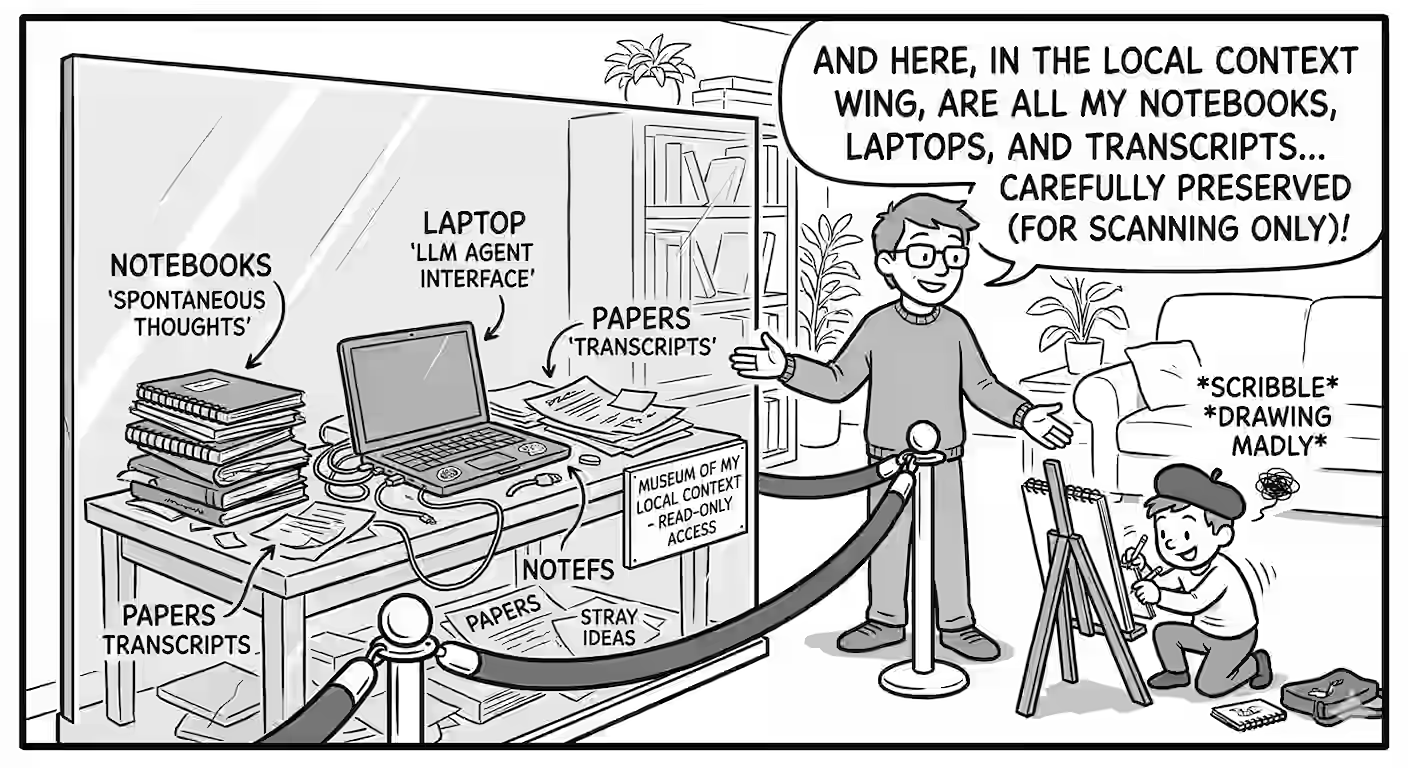
When people ask me for connections, I share my LinkedIn data and ask them to pick. This week, three people asked for AI ideas. I shared my local content with AI coding agents and asked them to pick. STEP 1: Give access to content. I use a Dockerfile and script to isolate coding agents. To give access, I run: dev.sh -v /home/sanand/code/blog/:/home/sanand/code/blog/:ro \ -v /home/sanand/code/til:/home/sanand/code/til:ro \ -v /home/sanand/Dropbox/notes/transcripts:/home/sanand/Dropbox/notes/transcripts:ro This gives read-only access to my blog, things I learned, transcripts, and I can add more. (My transcripts are private, the rest are public.) ...
I’ve been using AI in my Tools in Data Science course for over two years - to teach AI, and using AI to teach. I told GitHub Copilot (prompt) to go through my transcripts, blog posts, code, and things I learned since 2024 to list my every experiment in AI education, rating it on importance and novelty. Here is the full list of my experiments. 1. Teach using exams and prompts, not content ⭐ Use exams to teach. The typical student is busy. They want grades, not learning. They’ll write the exams, but not read the content. So, I moved the course material into the questions. If they can answer the question, great. Skip the content. Use AI to generate the content. I used to write content. Then I linked to the best content online – it’s better than mine. Now, AI drafts comics, interactive explainers, and simulators. My job is to pick good topics and generate in good formats. Give them prompts directly. Skip the content! I generated them with prompts anyway. Give students the prompts directly. They can use better AI models, revise the prompts, and learn how to learn with AI. ⭐ Add an “Ask AI” button. Make it easy for students to use ChatGPT. Stop pretending that real-world problem solving is closed-book and solo. ⭐ Make test cases teach, not just grade. Automate the testing (with code or AI). Good test cases show students the kind of mistake they may - teaching them, not just grading them. That’s great for teachers to analyze, too. Test first, then teach from the mistakes. Let them solve problems first. Then teach them, focusing on what failed. AI does the work; humans handle what AI can’t. This lets us teach really useful skills based on real mistakes. 2. Make cheating pointless through design, not detection ...