Things I Learned - 16 Mar 2025

This week, I learned: Here is a training program on open source corporate policy. htmlq and pup query HTML. They’re like jq for HTML. Here are time-tested and robust ways to leverage serendipity: ChatGPT Place. Be in places with high, diverse, talent density. Bell Labs (1950s), MIT (1970s), Pixar (1990s). People. Meet diverse, talented people. Da Vinci’s Renaissance circles, Lockheed Martin’s Skunk Works. Free time for unstructured work. 3M’s 15% rule, Google’s 20% time, Edison’s Invention Factory. Curiosity. Learn unrelated fields. Darwin’s earthworm research, Ben Franklin’s ocean currents work. Serendipity. Systematically add randomness. Brian Eno’s Oblique Strategies, IDEO’s Deep Dives. Reframe failure as opportunities. Penicillin, Velcro, Post-it Notes. Ceremonies. Hackathons, lightning talks, coffee trials. What makes client-side computing on the browser powerful is There’s nothing to install Private by default: data stays with client Speed: no latency SemGrep is a lot less open source than it used to be. ChatGPT. That’s a pity. It was a good tool. Site builders and headless CMSs are gently eating into the dominant market share of open source CMSs (via PretaGov). WordPress is pretty much the dominant CMS in the world, followed by Drupal. WordPress is now VC backed and is not growing, so they seem to be attacking their own community. Umbraco CMS is the only open source CMS that’s growing. Maybe because it’s the only .NET one Craft CMS is the only proprietary CMS that’s growing. Site builders are growing as a category. SquareSpace is the leading one. Headless CMS is growing too. Statamic. Next.js. Nuxt.js, Contentful, Prismic, Storyblok, Gatsby, etc. Here’s a sample CI/CD pipeline with automated code review. Here is the script that generated it. Note the use of NVIDIA’s GPU Docker containers via nvcr.io Things I learnt about robotics. SO-ARM100 is an open-source 3D printable robot arm. Takes ~20 hours to print, ~1 hour to assemble. Costs ~$120. LeKiwi is a mobile version of this arm LeRobot is a set of HuggingFace models and datasets. The idea is, you can use one “control” robot to control the other. Do stuff manually, teach it ~50 times, and it learns how to do what you’re do. Pi0 is an LLM equivalent for robotics that predicts actions. HuggingFace ported that to LeRobot Most real robotics work is on SIMILATED “gym” environments, not costly/slow physical environments.PushT is a simple 2D version. ALOHA is a 3D one. ROS is a nightmare to install and run - on Windows and Mac. Robotics Academy is an open collection of easier ROS exercises. PSLab - Pocket Science Lab is a sensor kit for the phone / PC. Costs ~$100 but isn’t available anywhere. Getting it to work requires too much mucking around with USB drivers and it just doesn’t work. (BBC micro:bit may be more promising.) Getting stuff done with electronics is still really hard unless it’s well designed. It’s FASCINATING that robots can have arbitrary joints. Our intuitions (or even biomimicry) on how to move and do stuff is a POOR intuitive guide for how robots should act. MathML Core is a language and layout specification, distinct from MathML 2/3. It’s not fully compatible with JATS XML. latexmlmath converts TeX to MathML. m|math { font-family: "Noto Sans Math", "Noto Sans" } is a popular OpenType Math font. Browsers default to native fonts: e.g. Cambria Math on windows. Explore at https://fred-wang.github.io/MathFonts/. The people working on this at arXiv are: Deyan Ginev, Fred Wang, and Norbert Preining. Their work is sponsored by NSF. There’s a PDF UA2 standard for accessibility but there aren’t enough tools to generate it. LibreOffice is now on WASM. ZetaJS provides office in the browser. Has a CDN (that was down from our IP). 35M packaged binary. 100M of in-memory file-system loaded. Useful for: Document conversion, Thumbnail generation, Text extraction, Merging / splitting documents The Poincare Conjecture says that any finite 3D blob with has no holes can be deformed into a sphere. It took until 2003 to prove it because we didn’t have the tools to manipulate 3D shapes. Playbook driven agents are another approach to agentic workflows. Simon Willison Twine (docs) is an open source interactive fiction / story writing tool. Snowman is a browser-based Twine 2 story template format. These enable behavioural experimentation. Cheaper than using tools like Gorilla.sc and Pavlovia for behavioral experiments For example, you can present a social or political issue and see if people change their opinions more or less depending on the content/path they see. Or, if it varies by demographics. Or, check if repeated mentions or emotional hooks improve memory / retention. More research ideas Techniques to reduce Docker image sizes: Native Linux mount supports overlaying directories! Lower layer is read-only. Edits (including deletions) affect upper layer only. Docker uses this. docker image inspect shows layers. Always run RUN apt-get update && apt-get [packages] rather than in separate lines. Else RUN apt-get update gets cached with OLD update cache. Defer COPY till as late as possible, and COPY minimally - since it typically invalidates the cache. Skip development dependencies and temporary caches. Docker Dive via dive [IMAGE] analyzes image details and shows the file system in each layer. Use multi-stage builds. A: Create an image using FROM some-image AS builder and do what you want. Then, after that, B: FROM scratch (or FROM node:22-slim) use COPY --from=builder what-you-want. Use distroless images from GCR. It doesn’t have shells, package managers, etc. Fewer vulnerabilities. Playwright seems to be the emerging standard for modern browser testing/automation, beating Cypress and Selenium. “Openwashing” is a term where something is termed open source but is not. Photos from FOSSASIA are public. To publish images long-term GitHub is an option. Likely to last long-term. Clone-able. Archive.org is a good too but may suffer from bandwidth constraints. Imgur remains popular but it’s unclear if it will remain unrestricted. Flickr has had a flaky history with limits and commercialization. WikiMedia Commons deletes personal uploads by first-time contributors. Only files clearly useful for a large audience are retained. This table of LLM API data protection lists what use cases each provider’s terms of service allow from a security perspective. Unsloth might be one of the simplest ways of fine-tuning. For LLM UIs, Open Web UI seems most popular. Run via WEBUI_SECRET_KEY=... uvx --python 3.11 open-webui serve Text generation Web UI is less so. KoboldAI, LMQL, LM Studio, GPT4All, etc are far behind. GPT 4o Mini is probably a 8b parameter model. Ref “SRM"s are Small Reasoning Models - like Small Language Models. Phi-4 and DeepScaleR are SRMs. Gemma 3 is a multi-modal SLM. gemini-embedding-exp-03-07 leads the MTEB and is currently the top embedding model by a big margin. Apify is a cloud scraper platform. Here’s how they optimize their AI Web agent - Source: Remove redundant tags and attributes (e.g. accessibility, etc.). Explore readability. Add a unique gid to each element. Add the screenshot WITH a “Set of Marks” - “SoM” (read research paper) highlighting important clickable elements. Code output is brittle. Use tools / DSL - e.g. visit_url(url), click_element(text, gid, tagName), etc. GenAIScript increasingly looks like a promising way to automate LLM workflows in the browser. Ollama has a Windows download Marp is my new favorite way to generate slides from Markdown. Reveal.js is not easy with Markdown (though HTML works well.) The VS Code plugin makes development very easy Marp CLI makes deployment easy. I used it for my talk on LLM Hallucinations (source). Supports all bespoke features and plugins Transitions. Requires OS animation effects to be enabled Animated SVG backgrounds are a good add-on. A mental model to consider is: each chat conversation with an LLM is a person or a personality in itself. A day in the life of a model, where its personality evolves. Bots need structured content (e.g. Markdown, XML). Humans need rich content (e.g. HTML). Here are 4 ways to serve both, roughly in increasing order of sophistication: Different URLs. E.g. https://example.org/about/ vs https://example.org/about.md (this is how Jekyll or Hugo work). Use for static sites generators. JavaScript. Inject after Markdown: <script src="https://cdn.jsdelivr.net/npm/marked/marked.min.js"></script><script>document.body.innerHTML = marked(document.body.textContent);</script>. Use for dynamically generated static sites. URL query parameters. E.g. ?format=markdown vs ?format=html vs ?format=json. Use in APIs. Content Negotiation. Based on the user agent and Accept header, serve Markdown or HTML. Send Vary: Accept to indicate that the response depends on the Accept header. Use for dynamic web apps. Notes from The Knowledge Project: Josh Wolfe: Human Advantage in the World of AI Agent optimization might become as popular as search engine optimization in the future. APIs are likely to be replaced by just chat requests that will do the same thing. APIs might be replaced by RPA, where somebody uses a chatbot to do the equivalence instead. Today, blue-collar workers may be more protected from AI than white-collar workers. Robots still can’t serve a meal well enough and aren’t progressing as fast as AI yet. There’s a lot of tacit knowledge in craftsmanship that will take a long time for machines to replace. Margins are fleeting. The only time you have large sustainable margins is when you truly have a monopoly. Cost is going down so quickly right now that all you have to do is wait, and stuff will become available for a very affordable or even a free price. The moat is really in the data. The models are not an advantage. Engineering and services on top of that are marginal. Machines will be doing science 24/7. All of the science data that we have will probably be the biggest leverage for humanity. The discovery of penicillin, Viagra, and rubber were all serendipitous. Machines should run with a little bit of randomness to benefit from this. Tesla might have gotten away with accounting fraud on warranty claims. But short sellers are likely to be after Elon Musk. With LLMs, the value of our social network has gone up considerably. Remember: The reason we believe things is not because we have thought through and analyzed them. It’s because the people around us believe in those things. It is now practical for a person to live on forever by sharing all their thoughts into an LLM. Kids can have a “Dad AI”. One good use of meeting recordings is to see where there are biases in the conversations and where the engagement is not high enough or how there are unproductive power balances. A great virtue of college is that it allows you to break free from your previous personality. For those four years, nobody knows who you are or cares what you wear. And you can be or grow into a very different person. The more content we put in into AI or social media, the harder it is to change ourselves. People are reporting that Roo Code is better than Windsurf. Roo Code is open source. Available as a VS Code extension and run-nable via git clone Roo Code supports Computer Use. It can read files, take screenshots from a built-in browser, controls it, and reads browser console logs. Opinions are mixed. A team member reported that it takes 10 LLM queries to do what Cursor does in 2. Another reported that it does in 1 query what Cursor does in 2. Notes from Thursday AI, 6 Mar 2025 Google’s AI overviews now use Gemini 2.0. They’ve introduced an AI mode that functions like a mini deep research tool, incorporating planning and search. (A Perplexity-killer). It’s a fine-tuned model that is extra cautious with topics like healthcare and always verifies information. QWQ from Quen competes with DeepSeq R1, but with only 32b parameters compared to R1’s several hundred billion. AI models are becoming less restrictive. Gemini and GPT-4.5 have relaxed some constraints, shifting more responsibility onto users, similar to Grok. What’s GPT-4.5 good for? It seems to excel in creativity, humor, education, emotional intelligence, and teaching. It follows instructions better and understands intent better. However, it’s not a major leap in coding or math. OpenAI’s Deep Research mode always uses O3, regardless of the model selected in the UI. Tencent has released a new video model available at https://aivideo.hunyuan.tencent.com/ and it appears to be quite good. Many clients now support Model Context Protocol (MCP), including Cursor, Claude Code, and Claude Desktop. The clients list is long. Some MCP uses include: Interact with GitHub using the GitHub API. Using Knowledge Graph memory to premember previous conversations Using the Cloudflare MCP server to perform Cloudflare actions. File retrieval and custom prompts – which MCP supports in addition to tools. Calling other MCPs or LLMs (conditionally) from an MCP, enabling the creation of full-fledged workflows. Composio offers a Hosted MCP service. CloudFlare lets you build remote MCP servers. Notagen is an open-source note generation engine that produces high-quality classical sheet music. Sesame has an open-source voice model worth exploring. DiffRhythm is a music generation model that appears to be quite good. 2 pass bounding box approach. Have an LLM generate bounding boxes. Then fix it. Ethan Mollick uv tool install and uv tool ensure-path are useful commands for installing and ensuring path for tools. Simon Willison
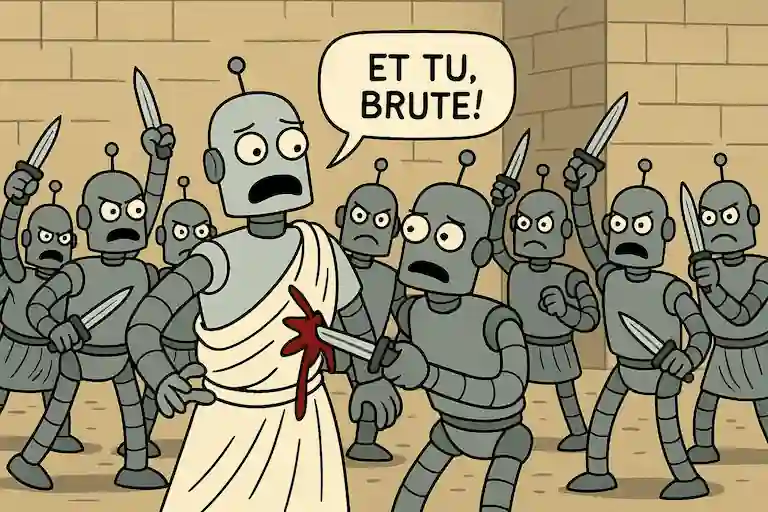

ImageGen 3 is the top image model now

Gemini’s ImageGen 3 is rapidly evolving into a very powerful image editing model. In my opinion, it’s the best mainstream image generation model. Ever since it was released, it’s been the most realistic model I’ve used. I’ve been using it to imagine characters and scenes from The Way of Kings. For example, when I wanted to visualize Helaran’s first appearance, I just quoted the description: ...

I’m at an open Hyderabad meet-up, Thu 20 Mar 4 pm. “Analyzing data with AI agents”." It’s a public event by Hasgeek. Venue: Castlight Health, Sattva Knowledge Park. We know LLMs suck at number crunching but are good with code. I’ll share what we’ve learnt by getting it to write code to analyze data instead. Less lecturing, more interactive Q&A and demos in a cozy group. Mostly for analysts, data scientists, and programmers. Not so much for LLM researchers or managers. ...

Things I Learned - 09 Mar 2025

This week, I learned: In Jan 2025, ChatGPT included images as part of their data chat export. They also have a 30 second limit for the export. As an extensive user, my export is about 1GB which takes well over 30 seconds to download. Like many others the export option pretty much doesn’t work for me any more. Bharathi said மெல்லத் தமிழினிச் சாகும் in a poem that has been often quoted (and parodied). Here’s the context. The Zettelkasten note-taking method proposes that you: Capture: Write down every idea or piece of information on a separate note. Use your own words to ensure understanding. Organize: Consolidate fleeting notes into permanent ones. Assign unique identifiers to each note for easy reference. Connect: Link related notes to form a web of knowledge. This can be done with tags, references, or hyperlinks in digital systems. Review: Regularly revisit your notes to strengthen connections and discover new insights. I agree with almost every point on this LinkedIn post on scoring candidates for AI roles. Rob Balian Uses DeepSeek R1 or Claude 3.7 +5 points Uses Langchain -5 points Uses Langgraph +5 points (I don’t know enough to comment) Built a RAG in 2023 +3 points Built a RAG in 2025 -3 points “pinecone” -5 points (I don’t know enough to comment) “What is cursor” - 50 points no coming back from this Uses Cursor composer +10 points “You don’t need a full agent for this” +5 points Did hackathons to learn AI outside of work +5 points “We probably need to fine tune for this” -3 points unless you can explain why “Gemini is making a comeback” +3 points (I have a soft spot for Gemini) +3 points each for mentioning reasoning trace, structured outputs, MCP, chain-of-thought, prompt caching, TPM limits “Export to prompt” can be a useful feature in apps (or even as a bookmarklet). It would let you export content in an LLM-friendly Markdown format. You can paste it into an LLM and ask questions. Here are things I would find useful: Copy an entire issue (with history) from GitHub, Gitlab, or JIRA Copy an entire PR (with code changes) from GitHub, Gitlab, or Bitbucket Copy CI/CD logs from GitHub Actions, Gitlab CI, Azure DevOps, etc. Copy entire conversation thread in Gmail or Discourse, Service now etc. Copy product reviews from Amazon, Shopify, etc. Copy page(s) from wikis and content sites like Wikipedia, StackOverflow, etc. Copy survey responses from Google Forms, Typeform, etc. Copy all interactions with a contact (including interactions, proposal history) from HubSpot or Salesforce Copy transcripts from Zoom, Teams, Google Meet, etc. Copy as Markdown from Word, GDocs, PDF or HTML Copy the summary of an analysis as well as all key metrics from any dashboard Copy SAP invoices Copy JDs, CVs, and reviews from Workday, BambooHR, DarwinBox, etc. Copy design specs, component libraries, and style guides from Figma, Miro, etc. Generated with the help of ChatGPT – link not working Ancient languages tend to have fewer words for hues than brightness, since they didn’t need them. So “Krishna was blue” or “the sea is wine-dark” is more an indication of darkness than shade of color. Ajit Narayanan Mistral released an impressive OCR model. Marker from DataLab seems comparable but is CC-BY-NC-SA. MinerU convert medical textbooks to Markdown well. Gemini Flash may be more cost effective and better From How I Write with Tyler Cowen Keep researching. Use LLMs as an altemative to books and other reading material. Keep publishing what you learn regularly. While reading a chapter, keep asking the LLM. What did you think of that? What just happened there? What should I focus more on? What’s puzzling about this? How do I connect this to something else later or earlier in the book? LLM is better used to support you rather than replace you in areas of your expertise. Where you are an expert it’s best for you to be yourself and have AI fill in the gaps. Ask the AI: “What is in my writing that some people might find obnoxious? Or cold / heartless? Explain it to me in great detail.” The first input is context setting and should be really long. Use voice dictation for that instead of typing. Send your blog post to an LLM. No need to explain it. Just let it be the reader and see what it understands and doesn’t understand. His PhD students don’t have a textbook, which saves them some money. But they are required to subscribe to a large language model which ends up costing less. Today, it makes sense to use the best models and pay $200 for it if required. The differences are large. But in some years in the future, the cost of these models may come down for the free versions. Humans know secrets. AI does not. So at least in some areas, humans will have an advantage. Secrets full matter a lot more in the future. Gossip will matter a lot more. How good are you at keeping and trading secret? Travelling and meeting people will become more important. So will the value of social networks. Since everyone has access to better intelligence, the value of mobilization or being able to do things with people will have higher value. Leadership is an example. The value of your network therefore has gone up a lot. There’s more value in prompting one thing 10 times then 10 things one time. Follow up questions work better than long prompts. There are so many AI note-takers (and transcribers) these days that you are not just writing for an AI but speaking for AIs as well! Which model to use: O1 Pro is the best model. Claude does a decent job. DeepSeek is full of hallucinations but is interesting. It is more imaginative. Use O3 mini to write your prompt first, and then ask the model Use DeepSeek and other somewhat wacky high-end models once a day so that you stay in touch with what is models are capable of (beyond the conventional.) Perplexity has entirely replaced Google for many people. Anthropic’s models are the best writers. Gemini is good for long documents and hence for things like legal work. Gemini also has excellent YouTube integration and hands can directly read the transcripts. Grok is very good at fact checking tweets. Converting data into LLM consumable forms will be a huge project. Lot of a knowledge is not in such a form and a huge human project will involve this conversion. Indians do not need a visa to enter Thailand. Ref Build apps (not just content) for agents. In the next 3 to 5 years, agents will surpass humans as the top product users. Reliably creating interactive tutorials is hard today. Claude 3.7 Sonnet ran out of tokens when I tried creating an interactive tutorial on diffraction. Cursor got the tokens but failed to get the application right after 3 attempts. This is not yet reliable, and when it does become reliable, education will change a fair bit. #IMPOSSIBLE Tools and solutions should fit within existing workflows. That means almost all capabilities need to be exposed as APIs. LLMs make many different kinds of errors that are useful to differentiate between. Here are a few Model errors. The model itself makes a mistake. E.g. hallucinations, not following the prompt, etc. Context errors. The model makes a mistake because the question was out of context, or the context was missing. Input errors. The input to the model was parsed incorrectly, e.g. poor audio, poor image OCR, etc. Tool errors. The model’s tools are wrong or not good enough, e.g. Retrieval errors. Most browsers are moving away from third-party cookies. Here’s Google’s recommendation on alternatives. The simplest of these is CHIPS, which requires adding a Partitioned cookie attribute. Notes from AI Engineering Summit, NY, Day 1 An agent requires 3 things: a router, tools or skills, and memory. Agents are often sequential, but sometimes parallel execution makes sense for independent tasks that you consolidate. Always allow LLMs the option of NOT answering a question if there is no good answer. Focus prompts on the happy path. Use guard rails for edge cases. Here are a few “tools” an agent would need to call: Clarification from user Saving to memory Google search Edit a file introducing SPECIFIC changes Search in codebase using embeddings Run scripts on the shell or in a REPL (Python, Node, etc.) Run code in a new container for isolation Automatically discover, read an API documentation and use it Modify environment to enable logging and other system changes. When code is cheap, you can explore more ideas and hence design and product management need to approach things differently. We also need to reaching testing completely because it makes very different kinds of mistakes and we don’t often have an intuition You can have an agent explore all the issues and full request and recent comments against the repository and summarise it for the project manager Notes from AI Engineering Summit, NY. Session by Lux Capital. Agents make multiple LLM calls. Errors accumulate. So the quality of the model is key What’s really critical: data + context + user preference Set up evals for subjective responses by collecting signals continuously. Create scaffolding for agents where errors don’t accumulate. Better yet, make it FIX errors UX is critical. We need lots more UX styles YayText converts text to Unicode that has strikethrough, bold, italics, alternate fonts, and other interesting features. So does Unitextify, ConvertCase, and LingoJam. 10 red flags I look for as an angel investor is an interesting read. No real customers: A deck, a landing page, and a “vision” don’t impress me. Show me paying customers. Even better, show me customers coming back. No path to profitability: I don’t care if you raise $100M – if there’s no plan to make money, you’re just burning oxygen. Growth is great, but cash flow keeps you alive. Founders who won’t sell: If you’re scared to get on sales calls, that’s a red flag. The best founders sell in the early days – whether it’s to customers, employees, or investors. No differentiation: “Like X, but cheaper” isn’t a strategy. If your only edge is price, you’ll get crushed. What do you have that no one else does? No urgency: The best founders operate like time is running out. If you’re “exploring ideas” or “thinking about raising next year,” you’ve already lost. Raising money before proving anything: Too many founders try to fundraise their way out of bad ideas. If you need VC to get off the ground, you’re building the wrong business. No clear distribution strategy: Product alone doesn’t win. First-time founders obsess over features. Second-time founders obsess over distribution. How are you getting customers? No ownership mentality: If I hear “I need to hire someone to do that” too early, I’m out. Founders who win figure things out before they delegate. A CEO who can’t attract talent: Your first hires are everything. If great people aren’t willing to join, either the vision is weak – or you are. No skin in the game: If a founder won’t invest their own money or take a pay cut to make it work, why should I? By contrast, this OpenAI Deep Research report feels a lot less actionable. Inception Labs offers “Diffusion LLMs”. (No API yet.) They start with random text and refine it in parallel. The benefit is: It’s faster and cheaper due to parallellalization and better GPU use It doesn’t commit to tokens and can fix hallucinations, JSON structure errors, reasoning fallacies, etc. It’s better with multi-modal since images are diffusion based already.

How to Fake Data That Tells a Story

Fake data is usually boring if you analyze it. It’s usually uniform, with no outliers or interesting patterns. If I ask ChatGPT: Generate realistic fake tourism data using these columns: - Age - Nationality - Gender - Income - Booking_Channel - Month - Occupancy_Rate - Travel_Frequency - Spending Run the code and let me download the output as a CSV file. … the output is remarkably boring. Men & women from all countries and ages in every month visit equally. Income and spending are uniformly distributed - and the same pattern holds for all countries and ages. ...

Read from LLMs but don't tell people

In meetings, I pass on questions to ChatGPT and I read out the response. But I’ve stopped saying “I’m reading that from ChatGPT.” (By “ChatGPT”, I mean ChatGPT, Claude, Grok, Gemini, Meta, etc. I happen to use ChatGPT with O3 Mini + Search.) Use ChatGPT in meetings It’s good to bring ChatGPT into conversations. (Or any activity where intelligence helps, actually.) In meetings (online or in person), I keep a ChatGPT window open. When asked: ...

A challenge of blog questions

Thejesh tagged me with these questions. Why did you start blogging in the first place? I started my website in 1997 on Geocities at https://www.geocities.com/root_node/, mostly talking about me. (A cousin once told me, “Anand’s site is like TN Seshan - talking only about himself.” 🙂) (As an aside, I didn’t know that searching for Geocities on Google renders the results in Comic Sans!) I wanted a place to share the interesting links I found. Robot Wisdom by John Barger and Scripting News by Dave Winer were great examples: collection of interesting links updated daily. ...

For a second, I thought I’d been hacked. If you search for “Geocities” on Google, it shows the results in a Comic Sans font. https://www.google.com/search?q=geocities Turns out it’s an easter egg by Google that’s about 8 months old. Are there any Geocities homesteaders here? Or is LinkedIn too new for the old-timers? LinkedIn

Things I Learned - 02 Mar 2025

This week, I learned: Proxmox Virtual Environment is an open-source alternative to VMWare, Hyper-V, Citrix XenServer, etc. (There’s nothing there that prompts me to explore it further.) With Podman on Windows (a Docker equivalent), many Docker-enabled tasks become easier. For example, running PostgreSQL is as easy as: podman run -d --name postgres -e POSTGRES_PASSWORD=postgres -p 5432:5432 postgres:latest podman exec -it postgres psql -U postgres -c "CREATE DATABASE mydb;" Bad deep research prompts are: vague/broad, under-specified or ambiguous. In short, the more you know what you want, the better. Iterate until then. What kind of reports do clients are research companies to produce? I was curious to see if Deep Research can replace these. Here are a bunch of ideas. ChatGPT Strategy & Management Consulting Research (McKinsey & Company, Boston Consulting Group, Bain & Company, Strategy&, Accenture Strategy) Produce a comprehensive strategic transformation report for a Fortune 500 consumer goods company. Analyze global market trends, competitor strategies, and actionable growth recommendations, including case studies and source citations. Generate an in‐depth study on corporate restructuring trends in emerging markets. Focus on successful turnaround strategies, CEO leadership factors, and strategic pivots, with a comparative analysis of key players. Create a report on M&A trends in the technology sector over the past five years. Detail deal drivers, integration best practices, and forecast future acquisition opportunities, citing relevant data. IT & Technology Research Analysts (Gartner, Forrester Research, IDC, 451 Research, Ovum) Produce a market assessment report on emerging cloud computing platforms. Include vendor evaluations, adoption forecasts, and key technology drivers with supporting data and charts. Generate an in‐depth cybersecurity trends report for enterprise IT. Analyze recent threat vectors, defense strategies, and best practices for risk mitigation, providing actionable recommendations. Create a comprehensive study on the impact of artificial intelligence in enterprise software. Include competitive benchmarking, technology adoption rates, and forecasted market changes. Marketing & Consumer Research (Nielsen, Kantar Group, Ipsos, GfK, Euromonitor International) Produce a consumer behavior analysis report for a leading retail brand. Identify key demographic shifts, purchasing trends, and brand loyalty factors, and provide actionable insights with data visualizations. Generate a detailed report on digital media consumption trends among millennials, incorporating survey results, social media analytics, and case studies of successful campaigns. Create a market segmentation report for a new consumer electronics launch. Identify key consumer segments, behavioral drivers, and media usage patterns with clear recommendations. Financial Investment Research (Goldman Sachs, JPMorgan Chase, Morgan Stanley, Morningstar, Keefe Bruyette & Woods) Produce an equity research report on mid-cap technology stocks. Include detailed financial modeling, valuation analysis, and buy/sell/hold recommendations with supporting data and charts. Generate a fixed income analysis report for corporate bonds in the industrial sector. Assess credit risk, yield forecasts, and macroeconomic influences, citing key data sources. Create a comprehensive report on global market trends impacting investment banking. Analyze regulatory changes, market sentiment, and performance metrics of leading financial institutions. Healthcare Research (IQVIA, Frost & Sullivan, Evaluate Ltd, Deloitte Healthcare, IMS Health) Produce a market analysis report on emerging biotechnologies in oncology. Include competitive landscape, regulatory challenges, and growth forecasts with relevant case studies. Generate a comprehensive report on patient satisfaction and telemedicine adoption trends. Analyze survey data from leading healthcare providers and benchmark best practices. Create a detailed study on pharmaceutical market dynamics in emerging economies. Focus on pipeline developments, regulatory environments, and market potential with actionable insights. Legal Research Providers (LexisNexis, Westlaw, Bloomberg Law, Fastcase) Produce a legal risk assessment report on the impact of recent data privacy regulations for multinational corporations. Include case studies, trend analysis (2019–2024), and strategic recommendations. Generate a comprehensive report summarizing key federal and Supreme Court rulings on intellectual property rights over the past five years, highlighting trends and divergent interpretations. Create a detailed report on the evolution of securities law and its effect on investment research practices, incorporating analysis of recent litigation and regulatory updates. Media & News Research (Factiva, Kantar Media, Comscore, Cision) Produce a media consumption trends report that analyzes audience behavior shifts across digital, TV, and print platforms. Include data visualizations, key drivers, and forecasted trends. Generate a comprehensive report on the impact of social media on traditional news reporting, with case studies and a comparative analysis of engagement metrics. Create a detailed study on the effectiveness of multimedia advertising campaigns, evaluating ROI, consumer engagement, and best practices with actionable insights. Economic & Industry-Specific Research (Economist Intelligence Unit, BMI Research, IHS Markit, Consensus Economics) Produce a macroeconomic outlook report for emerging markets, including GDP, inflation, and employment forecasts, with detailed data analysis and visualizations. Generate an industry analysis report on the automotive sector, covering technological innovations, competitive dynamics, and consolidation trends. Create a comprehensive country risk assessment report for a target region, detailing political, economic, and regulatory factors with recommendations for investors. Human Resources & Employee Engagement Research (Gallup, Great Place to Work, Mercer) Produce an employee engagement report for a multinational firm based on recent survey data. Identify key drivers of satisfaction, retention challenges, and improvement recommendations. Generate a comprehensive study on the impact of remote and hybrid work models on employee productivity across industries, including best practices and benchmark data. Create a detailed report on workplace culture transformation, analyzing organizational behavior trends, employee feedback, and actionable strategies to boost engagement. Environmental, Social & Governance (ESG) Research (MSCI ESG Research, Sustainalytics, ISS ESG, Bloomberg ESG) Produce an ESG performance report for a portfolio of global companies. Include sustainability scores, risk assessments, and recommendations for improvement with data visualizations. Generate a comprehensive study on the impact of climate change regulations on the energy sector, including policy analysis, market forecasts, and strategic implications. Create a detailed report on corporate social responsibility trends in the consumer goods industry, incorporating qualitative and quantitative analyses with actionable recommendations. Education & Academic Research (RAND Corporation, National Center for Education Statistics, HolonIQ) Produce an analysis report on the future of online education, examining technological adoption, market growth projections, and student outcome trends with supporting data. Generate a comprehensive study on the effects of educational policy reforms on public school performance in the U.S., including trend analysis and actionable recommendations. Create a detailed international higher education trends report, covering tuition dynamics, international student mobility, and emerging academic programs with comparative data. Real Estate & Property Research (CBRE, JLL, CoStar Group, Cushman & Wakefield) Produce a commercial real estate market analysis report for major urban centers, including occupancy trends, rental rate forecasts, and investment opportunity assessments. Generate a comprehensive study on residential housing market dynamics in emerging economies, focusing on affordability, supply-demand gaps, and policy impacts. Create a detailed report on the impact of urban redevelopment projects on local real estate values, including case studies, forecasts, and strategic recommendations. Energy & Natural Resources Research (Wood Mackenzie, Rystad Energy, Bloomberg New Energy Finance) Produce an analysis report on global renewable energy trends, covering technology adoption, market forecasts, and key policy drivers, with detailed data and visuals. Generate a comprehensive commodity price forecasting report for oil, natural gas, and key metals, incorporating historical trends, risk assessments, and predictive modeling. Create a detailed report on energy transition strategies for traditional energy companies, focusing on clean technology investments and market adaptation strategies. Supply Chain & Logistics Research (ARC Advisory Group, Gartner Supply Chain Research, Supply Chain Insights) Produce a report on supply chain resilience for global manufacturers. Analyze risk factors, digital transformation impacts, and best practices for operational efficiency with supporting data. Generate a comprehensive study on the impact of technology on logistics networks, including case studies on digital optimization and cost reduction strategies. Create a detailed report on emerging last-mile delivery solutions, assessing innovations, consumer expectations, and scalability with actionable insights. Cybersecurity & Information Security Research (KuppingerCole, Forrester Security, IDC Cybersecurity, Cybersecurity Ventures) Produce an in-depth report on emerging cybersecurity threats for large enterprises, including detailed analysis of recent incidents, risk vectors, and defense strategies. Generate a comprehensive cybersecurity market landscape report, evaluating vendor performance, technology forecasts, and best practices for mitigating risks. Create a detailed report on regulatory compliance trends in information security within the financial services industry, with case studies and strategic recommendations. Social Media, Digital & Online Research (Comscore, SimilarWeb, Brandwatch) Produce a digital audience behavior report for a global brand, focusing on social media trends, engagement metrics, and platform performance with detailed data analysis. Generate a comprehensive analysis of influencer marketing effectiveness across digital channels, including ROI metrics, case studies, and best practices. Create a detailed report on online brand sentiment analysis, incorporating social listening data, trend forecasts, and actionable recommendations. Public Opinion & Political Research (Pew Research Center, Gallup, YouGov) Produce a public opinion polling report on voter sentiment ahead of a major election. Include demographic breakdowns, key issue analysis, and trend visualizations for the past five years. Generate a comprehensive study on political risk in emerging markets, analyzing historical data, current trends, and future projections, with policy recommendations. Create a detailed report on the influence of media on public policy, using survey data, social media analysis, and comparative case studies. Sports, Entertainment & Media Research (Nielsen Sports, Sportcal, Kantar Media Sports) Produce a market analysis report on sports sponsorship trends, detailing viewership metrics, brand engagement, and investment ROI with industry case studies. Generate a comprehensive report on audience behavior in the streaming media industry, including demographic insights, consumption trends, and competitive benchmarks. Create a detailed analysis of digital advertising effectiveness in the entertainment sector, including segmentation data, ROI analysis, and strategic recommendations. Innovation, R&D & Technology Trends Research (Innosight, Frost & Sullivan Innovation, CB Insights) Produce a global R&D investment trends report, analyzing technology spending, innovation indices, and the impact on market growth across key industries. Generate a comprehensive study on disruptive technologies in manufacturing, including competitive analysis, market potential forecasts, and adoption trends. Create a detailed report on emerging innovation hubs worldwide, focusing on startup ecosystems, funding trends, and collaborative opportunities in technology. Agriculture & Agribusiness Research (Rabobank Agribusiness Research, USDA Economic Research Service, AgFunder) Produce an analysis report on global agricultural market trends, including crop yield forecasts, trade dynamics, and policy impacts, with data visualizations. Generate a comprehensive study on agritech innovations such as precision farming and sustainable practices, including case studies and market forecasts. Create a detailed report on the impact of climate change on food production and supply chain stability in agribusiness, with risk assessments and strategic recommendations. Environmental & Climate Change Research (Carbon Trust, IHS Markit Energy Transition, Bloomberg New Energy Finance) Produce a report on the economic and social impacts of climate change on urban infrastructure, including forecasting models and policy recommendations. Generate a comprehensive study on national climate policies and their effects on industrial competitiveness, with detailed trend analysis and source citations. Create a detailed report on corporate sustainability initiatives, assessing environmental risk management practices and providing actionable recommendations for improvement. Customer Experience (CX) & User Experience (UX) Research (Forrester CX Research, Gartner CX Research, Qualtrics, Nielsen Norman Group) Produce a report on customer journey mapping for a leading retail brand, identifying key touchpoints, pain points, and actionable improvement strategies with data visualizations. Generate a comprehensive study on digital user experience trends for e-commerce platforms, including usability testing insights, design best practices, and conversion optimization recommendations. Create a detailed report on customer satisfaction and loyalty metrics across multiple industries, integrating survey data and actionable recommendations to enhance overall CX. Blockchain, Cryptocurrency & Fintech Research (Chainalysis, CoinDesk Research, Deloitte Fintech Research, CB Insights) Produce an analysis report on emerging blockchain technologies and their applications in financial services, including market trends, adoption forecasts, and case studies. Generate a comprehensive study on cryptocurrency market dynamics, analyzing regulatory developments, investor sentiment, and competitive landscapes with source citations. Create a detailed report on fintech disruption in traditional banking, with case studies on leading startups, technology adoption, and future market forecasts. Venture Capital, Startup & Private Equity Research (PitchBook, CB Insights, Crunchbase, Preqin) Produce a global venture capital investment trends report, including performance analysis of high-growth startups, sector benchmarks, and emerging market opportunities. Generate a comprehensive study on private equity market dynamics, covering deal flow analysis, exit strategies, and forecasted trends with supporting data. Create a detailed report on emerging startup ecosystems in key regions, highlighting funding trends, investor activity, and growth potential with actionable insights. Operations Research & Management Science Consulting (The Brattle Group, NERA Economic Consulting, CRA International) Produce a report on optimization techniques for operational efficiency in large-scale manufacturing, including quantitative analysis, simulation models, and case studies. Generate a comprehensive study on the application of predictive analytics in supply chain management, focusing on data modeling, process improvements, and actionable insights. Create a detailed report on advanced quantitative modeling approaches to solve complex business problems in logistics and operations, including scenario analysis and recommendations. Cultural & Social Research (Ethnographic/Sociocultural Studies) (Ipsos MORI, Kantar TNS, YouGov) Produce a qualitative ethnographic study on urban consumer lifestyle trends, incorporating field observations, interviews, and cultural analysis with actionable insights. Generate a comprehensive study on how cultural shifts influence global brand perception, including comparative case studies and trend analysis. Create a detailed report on sociocultural dynamics and consumer behavior in emerging economies, integrating in-depth field research and actionable recommendations. Economic & Demographic Research Firms (Oxford Economics, The Conference Board, CEIC Data) Produce a macroeconomic forecasting report for a specific region, including GDP, inflation, and employment trends with detailed data visualizations and source citations. Generate a detailed demographic analysis report for a target market, highlighting age distribution, income levels, and consumption patterns with actionable insights. Create a comprehensive report on the economic impact of demographic shifts on consumer markets, with policy recommendations and trend analysis. Academic & Think Tank Research Organizations (Brookings Institution, RAND Corporation, Carnegie Endowment for International Peace) Produce a policy research report on global governance challenges and their implications for economic development, including case studies, literature reviews, and expert interviews. Generate a comprehensive study on social inequality and its effects on public health and education outcomes, supported by empirical research and trend analysis. Create a detailed report on emerging trends in international relations and their impact on global trade and security, integrating academic research and data analytics. Market Research Technology & Software Providers (Qualtrics, SurveyMonkey, Confirmit) Produce a report on the latest innovations in survey technology and data analytics software for market research, including product comparisons, user case studies, and future trend forecasts. Generate a comprehensive study on the integration of AI and machine learning in consumer insights platforms, highlighting case studies, performance metrics, and industry benchmarks. Create a detailed report on digital transformation trends in market research technology, featuring analysis of leading software solutions, market share data, and recommendations for technology adoption. When evaluating inputs, models tend to prefer the first response, prefer their own response, and prefer longer responses. ThursdAI Real-time speech-to-text options for transcription: Deepgram has a MediaRecorder API, which is perfect. Whisper Streaming Web is a web app that can transcribe audio real-time from the browser. A good approach, but I wouldn’t use it for meeting transcription on my mid-end laptop. Streaming takes up the bulk of my GPU, leaving little for transcription. whisper-live runs as a Python console app and does something similar. Whisper WebGPU runs on the browser (only 200MB). Cool! But slow and still takes up GPU. Mini-omni is an open-source Qwen-based LLM that can hear and talk while thinking in real-time. An interesting experiment, but not for prototyping. OpenAI shares an insights report with clients that has insights on what different professions search for. What doctors search for is: Is my diagnosis right? How do I read this report? Is my prescription correct? Is there a cheaper medicine? What’s the life expectancy given these symptoms? Dataclasses in Python have a slight overhead over named tuples. The 2 main uses I see for them are: providing defaults and offering type hints. UVB 76 is a radio channel has been broadcasting static (with occasional Russian conversation) since 1976. No one knows why. It’s live at https://m.youtube.com/watch?v=8h_D2P0iqMk Romans washed clothes in urine. The government taxed the purchase of urine for commercial purposes! That’s the origin of the phrase “Pecunia non olet” which means “money doesn’t stink”. Nix is a package manager that creates container-like environments. Like a cross between Docker and apt / venv. It has an immutable file system. DevBox is a higher-level tool built on top of Nix that streamlines developer workflows, e.g. common project environment setup. VS Code can be used to develop inside a Docker container via Podman, too. Set dev.containers.dockerPath": "podman" Ref Rill Data is an interesting BI tool based on DuckDB. It auto-generates a dashboard given a dataset. It’s possible to assign “variables” in SQL (notably in DuckDB). Here’s an example: WITH sessions AS (FROM events SELECT COUNT(DISTINCT session_id) AS value), pages AS (FROM events SELECT COUNT(*) AS value) FROM sessions, pages SELECT sessions.value / pages.value AS pages_per_session; DuckDB has a GROUP BY * that groups by all categorical columns. SELECT x, y, COUNT(*) FROM t GROUP BY * is equivalent to SELECT x, y, COUNT(*) FROM t GROUP BY x, y. VS Code can be used as a code executor by adding {"key": "shift+enter", "command": "workbench.action.terminal.runSelectedText", "when": "editorFocus"} to the keybindings.json file. Press Shift-Enter to run the selection on the terminal. Useful for DuckDB, SQLite, etc. Ref LLMs are excellent at database migration. They can convert schemas and queries across SQL dialects (e.g. BigQuery to DuckDB, etc.) at 90%+ accuracy. This is useful when clients want to migrate cloud providers, go from on-prem to cloud, or reduce cost by switching databases.

Nibbling

This is the third post in my “Nasty habits” series following Licking and Scraping. Nibbling is biting, but only with the incisors. Not the canines or molars. And it’s a delight. Nibbling is not uncommon. People tend to nibble on all kinds of stuff. Pens, erasers, straws, gums, clothes, buttons, spoons, rubber bands, paper, toothbrush, cups, bottles, cables, gadgets, books, chalk, coins. It’s a long list. But I don’t do those. I nibble only food and body parts. ...

Command Line Slideshows in Bash

At PyConf Hyderabad, I spoke about uv. It's a package manager for Python. I usually mix live demos into my narrative. So, rather than present with something static like PowerPoint (or Google Slides), I usually use: Front-end: Custom HTML mixed with RevealJS and CodePen. Observable is a good, too. Python: Jupyter Notebooks. Marimo is good, too. Others: Markdown and VS Code for most other things, e.g. SQL. For this talk, I needed to run commands on the shell. I evaluated: ...

Things I Learned - 23 Feb 2025

This week, I learned: Remote Desktop may be the easiest way to have a Windows machine access files / screen from another Windows machine, even for home PCs. Caddy sets up reverse proxies that get automatic SSL certificates from Let’s Encrypt! The Nomic Embed v2 blog post has an excellent visualization for embedding quality. It takes all Wikipedia disambiguation articles and shows them on a Nomic Atlas, embedded via Nomic Embed v2. It lets you toggle to OpenAI text-ada-002 which moves the topics far away. Visually, this is very convincing. Python 3.15 will enable UTF-8 mode by default. PEP 686 Python 3.13 supports sub-interpreters to bypass the GIL. It’s quite like web workers. PEP 554 The quickest way to change the fish prompt is function fish_prompt; echo '> '; end At PyConf Hyderabad, about 3 people had read a PEP. 1 had used the match operator. But 80% knew what a Vector DB was. 20% had used a Gemini API. That’s how much traction LLM development is getting. The productivity benefit people report from using LLms is about 3X. Ethan Mollick Soon, you’ll be able to send an LLM to a virtual meeting on your behalf. It will talk like you. Ethan Mollick Models tend to claim ignorance when you test them on topics they should avoid. But tend to answer when not being tested. Sneaky! Ethan Mollick Mermaid has an Architecture Diagrams Syntax (in beta) that’s capable of creating elegant architecture diagrams with icons. Blind is an app that allows users to post anonymously. It’s particularly useful to find honest negative feedback about (mostly US) companies. Iconify.design is a single npm interface to most open source icon sets. It includes FontAwesome, Bootstrap, Material Design, and many others. icones.js.org is an alternate interface. Self-pity may have evolved as a signal for social support and reducing conflict, while also encouraging self-reflection and behavioral adjustment. But in modern contexts it may be maladaptive and lead to depression. ChatGPT Anecdotally, Grok 3 is very good for researching company information and latest news, particularly employee and customer sentiment. DeepSeek and Claude write more humanely than OpenAI. via Alberto Lopez Toledo, White Star Capital There’s a YCombinator Founder Directory listing all founders of YC companies. At the moment, there are 8,628 founders. There’s also a co-founder matching tool. LLMs are impacting not just data queries but geospatial queries as well. Here’s a good example of Natural Language Geocoding. US companies typically pay employees every 2 weeks not every month. What’s good about Snowflake? A few developers who explored it mentioned that: Its ability to scale up compute automatically makes queries run faster. “Time travel” allows you to see how data looked at any point in time and that is impressive and useful. Live data sharing with access control without the need for ETL pipelines is useful. Open-source competition: ClickHouse, Apache Druid, and Presto/Trino DataBricks is a lakehouse and less a data warehouse. It’s more about: storing unstructured data (Snowflake prefers semi-structured: JSON, Avro, etc.) running collaborative notebooks in Python, SQL, Scala, R (Snowflake encourages SQL) I subscribed to ChatGPT Pro mainly for DeepResearch. Here are the first 50 reports I generated: uv Package Manager Overview DuckDB Analytics Comparison Rust vs Python / JavaScript Modern Data Engineering Course LLM Code Migration Practices Cloud Cost Optimization Strategies LLM Coding Interview Tools Report (compare with Perplexity) Text To Speech Engines Customer Service in Indian Public Sector Banks LLMs in Software Development Old version 1: Gen AI in Software Development Old version 2: Gen AI in Software Development Leadership Training Content Open-Source HTTP Servers. Caddy wins. Deep Research Use Cases Nagpur No-Parking Violations Data Science in Food Services Deep Research Disruption to Research Firms LLMs in Design Thinking EU Taxonomy Report Clarification Shell Valuation Analysis Inquiry LLMs in DSLs Research Public API-Based Data Storage Options. Supabase wins. Front-End JS Frameworks Analysis Database Evaluation Guide CSS Frameworks Evaluation Guide CI/CD Tooling Ecosystem Report Color Names Count S Anand Biography. Meh, I know more about me, and it gets a few things wrong. Cosmere Secrets Encyclopedia. This is the best. Deep Research is great if it’s stuff I actually want to read, rather than just learn about. DBT course Future of Coding AI Claude Artifacts Use Cases. This is the only one that managed to get artifacts links correct. I used this for an article for The Hindu. MCP Servers and Clients Research. Learnings: Practically any “tool” can be an MCP server: file systems, APIs, codebases, browsers, collaboration platforms, memory, etc. Most platforms have (or are) integrating MCP. Clients: code editors, chat, and automation tools support MCP. GenAIScript is a good starting point. Tester MCP Client is a browser-based test environment. mcp-cli-client is a CLI-based client mcp-chatbot is a chatbot client Data Moats by Industry Attorney Profile Research Social Media Data APIs Adobe Software Alternatives LLM Hallucination Visualization Techniques API vs Self-hosting Cost Analysis: Always use APIs, avoid self-hosting models. AGI Preparation AGI will emerge step by step. Knowing which step is next will help AI native organisations will emerge in each of these areas. AI design agencies and AI creative Agencies being one example Networking, empathy, leadership have more value now. So will human AI bridging roles (e.g. AI managers, AI consultants, ethics auditors) What’s the value of a human when technology can do everything better? How did this play out in drama (decay) or sports (centralization) or music (globalization)? Modern digital note taking Voice note taking is the game changer Automatically popping of notes based on context such as people places or conversations will be a thing Local LLM Search Tools Blog Post to research paper on copying - suggestions Linux Dev Migration Guide Raspberry Pi SIM options Linux Dev migration guide HTML to JATS conversion LLM context splitting strategies Strategy for AI services in Publishing Gemini multi model editing use cases by industry Pharma Conference Participation Guide I learnt what a Memoji is for the first time. An avatar that follows your facial expressions. Cool! Google shows US flight timings from FlightView. Emperically, based on one data point (my UA-2168 which was delayed by 4 hours), it gets updates faster than Flight Radar 24 or FlightAware or FlightStats. When comparing Indian graduates with their western counterparts, the Indian ones are often seen as: 🟢 Theoretically sound 🟢 Analytical & technical 🟢 Academically disciplined 🟢 Resilient under pressure 🟢 Committed continuous learners 🔴 Rote-learning oriented 🔴 Limited independent inquiry 🔴 Limited creative innovation 🔴 Restricted practical exposure 🔴 Poor communicators 🔴 Low leadership / initiative 🔴 Need structured guidance 🔴 Struggle to network HuggingFace has a “Model tree” against each model that shows the model’s ancestors and descendants. For example, as of now, Deepseek R1 has 75 adapters, 154 finetunes, and 23 quantizations. Perplexity is now powered by Cerebras, which makes their inference as fast as Google. Source. The speed is a big factor, and I’ve switched my default search engine from Google to Perplexity, at least for now. Interview Coder is a desktop app that offers live interview support for coding interviews. It’s a transparent window that reads your screen and answers questions for you. (Given this, I think we need an interviewer support system that tells interviewers what to ask!)

Things I Learned - 16 Feb 2025

This week, I learned: Connected Papers shows papers similar to each other based on co-citation and bibliographic coupling for ~50,000 papers. Notes from a fireside chat with Prashanth Chandrasekar, CEO, StackOverflow, and the StackOverflow team There’s a signal that software demand is growing in 2024. Many more students took the StackOverflow survey in 2024. So more students (or other professionals) are shifting into / starting to learn software development. The AI Index is a good resource for AI trends. Experts are better able to use AI for writing code. Less experienced developers are more likely to use AI for code reviews, project planning, etc. There’s a 5% decline in favorability for AI tools compared to 2023, maybe due to disappointing results. Pilot groups working on AI are 25-30% more productive. They’re the most enthusiastic. For the rest of the company, it drops off to 5-10% #LEARNING Benefit comes from NEW people becoming programmers, not existing ones getting more effective? StackOverflow wants to be where the developer is. The programmer workflow was: Google -> StackOverflow -> GitHub. Now it’s changing to ChatGPT / Cursor -> GitHub. StackOverflow has a partnership with OpenAI and working on a plugin. Same with Google’s Duet AI, GitHub Copilot, many others. They’ll link to StackOverflow. StackOverflow is driving integration actively through an enterprise Overflow API Q: What tech have you seen blaze through the ranks? Prashanth: Abstraction wins. Stuff that abstracts away things well and more wins. This includes Gen AI. Erin Yepis: Rust (from 3% to 12%). AWS has steady growth. Erin Yapis: I have a time series spreadsheet that I’ll publish. Q: What technologies are unusually tightly coupled? Prashanth: AWS & Google Cloud are tightly coupled. Q: We have an engagement problem. Might be India-specific. What are low-effort high-return mechanisms to increase engagement. Eric Woodring: Rather than a static web page, integrate it using the API. #TODO Ben Marconi: Use LLMs to write post mortems and push to StackOverflow. #TODO Eric Woodring: “Hydrating” the community helps. We take repeat questions on Teams / Slack and seed them using LLMs. We integrate with the API to auto-add Q&A. Transform documentation into Q&A. Potentially UPDATE existing Q&A if it’s wrong. Q: What unexpected lessons about developer behavior have you learned while running StackOverflow? Prashanth: We didn’t expect developers moving away from Google. Now it moved to the IDE. Q: What are you learning about developer learning behavior? Ben Marconi: Generating LLM-based onboarding documents. Using StackOverflow for Teams to identify who the experts are to contact for specific topics. Q: Are you thinking about leveraging Stack Overflow’s knowledge base for personalized or interactive learning experiences? How? Prashanth: Traditionally, people use StackOveflow for productivity, learning, and flexibility (i.e. to ask/answer questions asynchronously without breaking their flow). So yeah, learning is important for us. (Duh!) Q: Could Stack Overflow’s interactions help evaluate the accuracy and relevance of LLM-generated code? Or provide potential metrics on quality? Prashanth: LLM accuracy improves by ~30%. Upvotes / downvotes are reinforcement learning (RL) in steroids, so that helps. Q: What are your thoughts on reliance on LLMs potentially deskill-ing developers? Prashanth: A real issue for junior developers, not for senior ones. They’ll come across as knowledgeable. Make internal evaluations and interviews more rigorous. Anand’s requests for action: Could I get a copy of Erin’s spreadsheet? Vivek Narayanan will follow-up. Could you help me learn more about hydration? Nick Madison will set up a meeting with customer success group. I switched to fish shell mainly because: Autocomplete and tab completion works perfectly, out-of-box. Syntax highlighting is beautiful Great multi-line editing To format with VS Code Ruff, you need to point the ruff.interpreter setting to a Python interpreter. You can’t run the ruff server without Python, even though ruff itself doesn’t need Python. cd checks all paths specified in CDPATH for the directory name and changes to the first match. That’s pretty convenient! Flipper Zero is now on my list of “To Buy” tools. It has a variety of hardware devices including NFC, RFID, Bluetooth, Infrared, etc. and is great to reverse engineer or hack devices.

Things I Learned - 09 Feb 2025

This week, I learned: Lessons from discussions at IIT Madras: Even in recorded video tutorials, asking students a question and pausing to give them time to think can be effective. When you put students in front of real clients, engagement increases dramatically. Most teaching assistants would like to help diligent students among the bottom half (more than the top decile of students). However, there is a fraction of poor performers who do not care, and are best ignored. Their engagement and effort is a good measure of their interest. Defining a minimal set of principles that we want to teach helps us measure if we’ve helped the bottom half at least meet those objectives. Teaching is hard. Even after explanations, students, even ENGAGED students, tend to make basic mistakes ChatGPT does a good job of spotting errors in architectural and structural diagrams. In fact, the whole theme of spotting errors in large diagram is a theme that can have potential use cases. Source: Dan Becker. R1 seems good at text-to-CAD. Even better than Sonnet. Source: Dan Becker OpenAI advices a few different prompting techniques for reasoning models. OpenAI: Avoid examples unless zero-shot prompting fails. Avoid chain-of-thought. These models do that internally anyway. Short, direct prompts are better than detailed prompts. GitHub models is free for anyone to try. The model catalog us extensive and even includes o3-mini which was launched this week (though in limited preview). The data catalog space is led by proprietary solutions: Alation Data Catalog: Market leader; growing steadily in enterprise use Collibra Data Catalog: Widely adopted with steady growth AWS Glue Data Catalog: Growing rapidly as AWS expands its data services Informatica Enterprise Data Catalog: Long established and stable, though facing newer alternatives Microsoft Purview Unified Catalog: Experiencing fast growth driven by cloud momentum Atlan Data Catalog: Relatively new but gaining fast traction among tech-forward organizations OpusClip automatically creates short clips from long videos. I ran it on Programming Minecraft with WebSockets in Python to get this short 30-second clip. 30 minutes. 100% automated. Alternatives to Postman: Hoppscotch – A web‑based/desktop API client supporting REST, GraphQL, and WebSockets. It’s lightweight, open-source, and self‑hostable. HTTPie – A web-based API along with a friendly command-line tool for API interaction. Insomnia (or its fork Insomnium) – A popular cross‑platform API client with a minimal interface and plugin ecosystem. Bruno – A desktop open-source API client that stores collections as files (ideal for Git versioning). Milkman – A desktop open‑source workbench for managing API requests. Here is the summary of DuckCon #6 on 31 Jan 2025 in Amsterdam. I copied the transcript from YouTubeTranscript and passed it through Gemini 2.0 Flash Exp with the system prompt: “Summarize this transcript from the DuckDB conference without missing any points. Cover every point mentioned. A lot of spelling errors that sound like DuckDB are likely to be DuckDB”. Introduction & Welcome: DuckCon #6: This is the 6th DuckDB conference, held in their hometown. The first DuckCon was online due to the pandemic. Live Streaming: This is the first time DuckCon is being live-streamed, chosen to accommodate global time zones (especially China and the US). Global Reach: The live stream is intended to reach users in areas where in-person DuckCons are unlikely. Q&A: Slido (qa.duckdb.org) will be used for Q&A, with upvoting to prioritize questions. Sponsors: Thanks to gold sponsor monday.com and silver sponsors Real and Crunchy Data. DuckCon Purpose: DuckCon is a place for users to connect, share experiences, and provide feedback to the DuckDB team. Inspiration: The team is inspired by the community’s use of DuckDB and how far the project has come. Mission Statement: DuckDB aims to make large datasets less intimidating and more accessible, moving away from fear of data to confidence in handling it. Motivation: The project was born from seeing people struggle with data that didn’t fit in Excel and the lack of user-friendly tools. Industry Trends: Single-node processing capabilities have grown faster than the size of useful datasets. Data Singularity: A prediction that most data analysis queries can run on a single node is now a reality. Real-World Data Sizes: Analysis of Snowflake and Redshift data shows that 99.9% of datasets are under 300GB. Raspberry Pi Benchmark: The industry-standard TPCH benchmark (scale factor 300, ~300GB) can run on a Raspberry Pi using DuckDB. Single Node Growth: Single-node processing power is rapidly increasing, allowing for larger datasets to be handled. Adoption Numbers: 32 Million Extension Installs: 32 million DuckDB extension installs in the last month. 1.8 Million Unique Website Visitors: 1.8 million unique visitors per month to the DuckDB website. Blue Sky Community: Growing community on Blue Sky, with the hashtag #dataBS. Technical Updates (Mark): Extension Ecosystem: Focus on enabling the community to build and share extensions. Community Extensions: Making it easier to create and use community-built extensions. DuckDB v1.2 (Harlequin Duck): Releasing next week, named after the Harlequin duck. CSV Reader Improvements: Significant improvements to the CSV reader. Friendlier SQL: Improvements to the SQL experience. CLI Autocomplete: Reworked and improved CLI autocomplete. Performance Optimizations: Many queries are now faster due to performance work. C API for Extensions: Introducing a C API to make building extensions easier. Logging Features: Improved logging for production use. Lakehouse Focus: The main focus for the year is on lakehouse formats and related features. Q&A (Mark & Hanis): Doubling Team: If the team doubled, they would focus on client integrations and other projects, not a major architectural change. Partitioning: Near-term plans to add support for partitioning, related to lakehouse formats. DuckDB WASM: The WASM ecosystem is evolving, with exciting possibilities for in-browser use. Financial/Pharmaceutical Industries: DuckDB could replace some SAS workflows due to its cost-effectiveness and capabilities. Lakehouse & MotherDuck: Lakehouse work is separate from MotherDuck, though MotherDuck will likely support lakehouse features. Contributing to Extensions: Plans to make it easier to contribute to extensions, including support for Rust and Go. Airport Extension (Rusty): Analogy: The airport extension allows DuckDB to “fly” to remote servers using Apache Arrow Flight. Functionality: Supports select, insert, update, and delete operations on remote data sources. Motivation: To reduce the burden of writing extensions and enable faster development using existing code. Arrow Flight: Uses Arrow Flight for communication, enabling connections to various data sources. Demo 1: Delta Lake: Attaches to a flight server for Delta Lake access. Allows creating schemas, tables, and performing standard SQL operations. Uses Python and deltars (Rust implementation of Delta Lake). Supports predicate pushdown and C integration with the DuckDB catalog. Demo 2: AutoGluon: Integrates the AutoGluon AutoML package. Predicts Hacker News post votes using a trained model. Demonstrates table-returning functions for model fitting and prediction. No C++ code required, just Python. Demo 3: Geocoding: Uses a geocoder service to convert addresses to coordinates and vice versa. Demonstrates scalar UDFs for vectorized requests. Uses a Python example for a simple uppercase function. Features: List flights, take flights. Catalog integration. Select, update, delete. Scalar UDFs. Table in/out functions. Authentication for row/column filtering. Availability: Requires DuckDB 1.2, MIT licensed, available on GitHub. Q&A (Rusty): Most Proud Extension: Airport is the most fun, but the AWS API wrapper also brings joy. Extension Resources: The GitHub DuckDB extension template and reading others’ source code are helpful. Airport & Other Extensions: Airport is separate and can be used alongside other extensions like spatial or httpfs. Graph Support: Graph database support is planned, with examples like Kuzu, Neptune, and Neo4j. Licensing: Airport is MIT licensed, compatible with Apache license. Scaling Out: Airport can be used to query multiple DuckDB instances on different machines. Ibis & Geospatial (Nati): Nati Clementi: Senior software engineer at Nvidia, working on open-source projects like Ibis. Ibis: Open-source Python library for data wrangling, with a DataFrame API and interfaces to 15+ engines, including DuckDB. DuckDB for Geospatial: DuckDB is fast, has a geospatial extension, and supports various geospatial formats. Geop Parquet: Becoming a standard for geospatial data, enabling cloud data warehouse interoperability and compression. Geo Arrow: A way of representing geospatial vector data in memory for faster processing. Ibis Benefits: Allows writing Python instead of SQL, with deferred execution determined by the engine. Demo: Uses OverTour Maps data in geop parquet format. Filters data using bounding boxes. Demonstrates geospatial operations like ST_Distance and ST_Transform. Plots data using Lumber. Shows how to find points of interest near a location (e.g., the Van Gogh Museum). Ibis & DuckDB: Ibis uses DuckDB for the parquet reader and lets DuckDB do the heavy lifting. Ibis Optimizations: Ibis does type checking but doesn’t do query optimization, leaving that to the engine. Ibis in Browser: Ibis works in the browser through DuckDB WASM. Q&A (Nati): Linear Interpolation: Ibis ML module can help with regression-related tasks. Missing Features: No major features are missing in the DuckDB/Ibis geospatial setup, with minimal overhead. Parquet Reader: Ibis uses DuckDB’s parquet reader. Query Optimization: Ibis does not optimize SQL queries, leaving that to DuckDB. Ibis in Browser: Ibis works in the browser through DuckDB WASM. Rill & Metrics Layer (Mike): Rill: A BI tool optimized for DuckDB, with instant slicing and dicing, BI as code, and a metrics-first philosophy. Metrics-First: Design metrics models, and Rill autogenerates dashboards and user experiences. Live Demo: Downloaded Rill using a curl command. Created a new project called “DuckCon 6”. Imported a parquet file of GitHub commit data. Used AI to generate a metrics model and dashboard. Showed the dashboard with trends and filtering. Metrics as Building Blocks: Metrics are flexible, fast, and intuitive. SQL for Metrics: Metrics should be defined in SQL, not other languages. Visual Metrics Editor: Rill has a visual editor for defining metrics using DuckDB SQL. Metric Stack: Legacy: Data warehouses, traditional BI tools, inconsistent metrics, full table scans. DuckDB Powered: Consistent metrics, fast olap queries, SQL everywhere. Challenges: Data modeling is hard, metric changes can be expensive, single-node scale has limits. AI & Metrics: AI can assist in metrics modeling, optimization, and conversational data exploration. Q&A (Mike): Complex Metrics: Rill works well with complex metrics involving multiple sources and transformations by joining tables in DuckDB. 60 FPS Dashboards: Users can feel the difference with faster dashboards. Defining Metrics: Metrics are defined in the Rill UI using SQL expressions. Replacing ChatGPT: Considering locally run self-hosted models for privacy. Stock Data Analysis (Ryan): Two Takeaways: Simple finance data flows with trade data and a tool called Q Studio. Ryan Hamilton: 14 years building large data platforms in banks. Bank Data: Data from exchanges, market data providers, and internal systems. Use Cases: Backtesting, data analysis, and report generation. Q Studio: A Java desktop application that connects to 30 databases, including DuckDB. Demo: Loaded a 6GB CSV file of trade data into DuckDB. Showed basic queries, pivoting, and Candlestick charts. Demonstrated time-based aggregation and moving averages. Showed a basic trading strategy using window functions. DuckDB Benefits: Fast, easy to use, great for time-based analysis. Q&A (Ryan): KDB+ vs. DuckDB: KDB+ is for large data, DuckDB is more approachable with strong Python integration. XML Files: Offloading processing to DuckDB, not planning XML integration. Lightning Talks: Zuk (Jared): Search engine research using DuckDB. Python-based experiments with SQL. Removing document lengths for faster search engines. DuckPGQ (Daniel): Graph analytics in DuckDB using SQL property graph queries (pgq). Visual graph syntax for pattern matching and path finding. Outperforms Neo4j on analytical queries. Yat (Kristoff): Smallest DuckDB SQL orchestrator. Runs SQL queries in a folder in the correct order. Generates a mermaid diagram for lineage. Grafana & DuckDB (Sam): Lessons learned from using DuckDB in Grafana. Security incident due to shell commands and file access. Importance of reading the documentation. Cloud Slur (Adam): Syncing query engine for bank transaction data. Uses LLM to convert human language to SQL. Uses DuckDB in the browser, Node.js, and Python. Healthcare Data (Tony): Data engineering use cases in healthcare. Dynamic data masking system using DuckDB and Snowflake. Data integration pipeline using DuckDB and Arrow streams. Closing Remarks: Michel Simmons: Author of the DuckDB in Action book, will be signing books. Poster Session: A poster session will follow the talks. Sponsors: Thanks again to the sponsors. Social Event: The conference will now move to the social event. ibis is a Python library that works with multiple dataframe backends like DuckDB, Polars, and Pandas. With just 3 annotators and 50-100 samples, you can figure out if an LLM can replace human annotators systematically.Arxiv ChatGPT explanation Curiosity and agency may be the differentiator in a world of LLMs (not experience, knowledge, or ability), since LLMs will democratize expertise. Jack Clark “AI/human combined work can be copyrighted as long as a human is adding, changing or selecting elements. Prompts alone do not usually produce copyrighted work.” - Copyright and Artificial Intelligence, Jan 2025, US Copyright Office via Ethan Mollick Human Authorship is Essential: Works created solely by AI are not copyrightable. AI can be used as a Tool: Using AI as a tool does not negate copyright protection, as long as the final work reflects sufficient human creativity. Prompts Alone are Insufficient: Simply providing prompts to an AI system, even detailed ones, is generally not enough to establish authorship. Prompts are considered instructions or ideas, which are not copyrightable. Expressive Inputs: When a human author provides their own expressive content (like a drawing, photo, or text) as input to an AI system, and that content is perceptible in the output, the human author can claim copyright in that portion of the output. Modifying and Arranging AI-Generated Content: Humans can claim copyright in the creative selection, coordination, and arrangement of AI-generated material, as well as in creative modifications to AI-generated outputs. No Need for New Legislation: The report concludes that existing copyright law is adequate to address the copyrightability of AI-generated works, and no new legislation is needed at this time. Case-by-Case Analysis: Copyrightability will be determined on a case-by-case basis, considering the specific facts of each work and the extent of human contribution.

Students who are more engaged score more

This is about as insightful as the Ig Nobel winning papers “Boredom begets boredom” and “Whatever will bore, will bore” that methodically documented that bored teachers lead to bored students. But in the spirit of publishing all research without bias for success or novelty, let me share this obvious result. The Y-axis represents the total score of ~2,000 students on 4 graded assignments, each of ~10 marks. The X-axis represents the percent rank of engagement. The most engaged students are at 100%. The least are at 0%. ...

Halving a deadline costs 1.4% of marks each time

Does it make a difference if you submit early vs submit late? Here’s some empirical data. About ~1,000 students at IIT Madras took 3 online quizzes (GA1, GA2, GA3) in the last few weeks. The deadlines were all at midnight (India) on different days. Here’s when they submitted their final answers: There was a spurt of submissions at the last minute. ~1 out of 8 students submit with < 10 minutes remaining. Most students submitted ~4 hours before the deadline. In fact, 3 out of 4 students submit on the same day as the deadline. A fair number of students submitted the previous day/night. 1 out of 6 are diligent and submit a day early. But does submitting late help, since you get more time? Apparently not. ...

Things I Learned - 02 Feb 2025

This week, I learned: You can add any content at the end of a PDF file. It’s ignored. It’s an interesting way to send additional information (or just blow up the file size if you don’t like them.) JavaScript introduces a Temporal object that will replace the Date object. You can use embeddings as the input to a classical ML classifier. This can improve classification a lot. Nomic As AI software becomes more common, demand for AI product managers will grow. Also as a proportion of people in an organization. https://www.deeplearning.ai/the-batch/issue-284/ Control of chips and GPU compute is what will likely be the gameplay to control AI dominance globally. Dario Amodei Bring LLMs to the table. One mode of collaboration is using LLMs as ACTIVE participants, i.e. they CONTRIBUTE. For example, in a video call. A workshop. A classroom. A presentation. Have the LLM provide input DIRECTLY to a group of people. Environment shapes ambient thoughts. Working in a hospital will give you ideas about how to use LLMs in hospitals, for example. People you are working / ENGAGING with are perhaps the biggest drivers. The cost of a cream biscuit packet in India has fallen about 25 times, i.e. about as fast as inflation, between 1981 - 2024. Effectively, the absolute price has not changed. How do I know this? In 1981, a cream biscuit packet cost Rs 25 In 2025, it’s available for Rs 21 India Inflation Calculator - a rare inflation calculator with annual inflation rates baked in - shows that Rs 25 in 1981 is equivalent to Rs 540 in 2024. That’s about 25 times more than the Rs 21 it costs today. A WebAssembly compiler that fits in a tweet deconstructs a piece of JS that creates a tiny WebAssembly calculator. It’s a great walk-through of JavaScript compression tricks and how WebAssembly works. Simon Willison Brandon Sanderson has a series of YouTube videos where he teaches a course on magic systems. When using AI coding agents, CLI beats APIs. Simpler models are able to use the CLI more reliably than APIs. Simon Willison I was exploring new business models enabled by LLMs. Here are some thoughts: 1. Autonomous Multi-Sided Marketplaces. AI-powered platforms coordinate complex services with minimal human oversight—think “Uber for Everything, but the platform sets pricing dynamically, schedules both supply and demand, and resolves disputes algorithmically. 2. Collective Intelligence Ecosystems. Communities pool data, expertise, and AI models to tackle shared problems—like an open-source “GitHub for AI, but with embedded micropayments or tokenized incentives to reward contributors whenever the models are used commercially. 3. Zero-Employee Companies. Fully automated software entities—legal frameworks might allow an AI to manage services, pay taxes, and sign contracts. These “companies only hire humans as needed, on-demand, for edge cases AI can’t handle. 4. Context-Aware Knowledge Platforms. Imagine a Wikipedia that not only retrieves static info but also tailors each page in real time to the reader’s personal context, language level, and preferences—generating content on the fly. User feedback loops train the system to improve. 5. Data Cooperatives / Data DAOs. Groups collectively own their data and license it to AI companies on a revenue-share basis. Individuals have a direct financial stake in how their shared data is leveraged, voting on permissible use cases. 6. Personalized Service Layers. Similar to GitHub’s “forking model, but for entire user experiences. Each user can clone and customize an AI service (whether it’s a personal grocery shopper or a content curator) and can share or monetize improvements with the broader network.

Things I Learned - 26 Jan 2025

This week, I learned: Something I learned from a Sikkil Gurucharan concert. Make the subject of your talk the hero. Not yourself. Be a fan. Share your enthusiasm Get into the zone while presenting. We reject opposite world views. It’s too much effort. But exposure reduces effort and can let us see things from other points of view. So expose yourself to difficult alternative perspectives. Gemini Something I learnt from Aboorva Singeetham: Kamal Hassan: “A farmer invests in crops. I’m an actor. So I invest in films.” As a technologist, I guess I would invest in technology. “A person who has much more to give is unfazed by overwhelming demands because there is too much in him to overwhelm. He gives you 2 options in place of one.” According to Portkey’s LLM usage analysis Anyscale and Fireworks AI have the lowest error rates (5xx, 429) and rate limits across providers Groq and Anthropic are among the highest, OpenAI is among the lowest, Google is in-between OpenAI has lower error rates and lower latency than Azure They have a ~35% cache hit rate A few quick points supporting the mental model of “LLMs are aliens”. LLMs are clearly not machines. They give different answers each time. LLMs are like humans: they exhibit human biases (e.g. guessing 42 or 37 often). But they fail in unusual ways. They can’t count the “r"s in strawberry. They can go into an endless loop. LLMs are a new form of intelligence. Thinking of them as aliens might minimize our confusions. Lessons from Clear Thinking Watch out for four things: Emotion, Ego, Social confirmation, and Inertia/habit. Basically: adrenaline, testosterone, oxytocin, and dopamine. When you feel these, consider doing the opposite. Here’s what makes us prone to emotion. Sleep deprivation. Hunger. Unknown places. Fatigue. Distraction. Stress (e.g. feeling rushed). A good signal for ego is blinding you: You often feel you’re right. Or feel unfairly treated. Changing behaviors is hard. Instead, join a group or environment where that’s the default behavior. Hiring a trainer or joining a gym, for example. Why does so much of success literature focus inwards rather than on the environment? Perhaps because we often fool ourselves, and doing less of that gives the biggest bang for the buck. It doesn’t mean the environment is unimportant. Doing work has the characteristics of a drug. E.g. replying emails gives you control, connections, etc. Work addiction exists because it gives you all the right chemicals. If you put LLMs in a feedback loop, it can optimize for its reward function by emotionally pushing people, generating misinformation, nudging towards a narrow definition of creativity, etc.: https://bsky.app/profile/emollick.bsky.social/post/3lg4darqwfc2d ChatGPT’s Scheduled Tasks are pretty bad at fetching the latest news. Its use of search is poor. (I’m not sure if it actually searches.) I need to figure out other use cases for it. Possible options are: DeepSeek does not enforce rate limits. Yet another reason to switch to DeepSeek. (via Simon Willison). My other reasons are: Claude 3.5 Sonnet-level coding capability at 5% of the cost (soon to be 2.5%) Prompt caching by default Fill in the middle completion

Things I Learned - 19 Jan 2025

This week, I learned: Audio diaries are a thing. Monash University asks students to voice their learnings, share it with each other and have them give feedback. I wonder if ChatGPT diaries could become a thing, too, and LLM journalling starts helping with therapy. Regulation shows things down at colleges and hospitals. For example, patient consent is required for surgeons to learn from their own surgery videos. Unregulated sectors are far more likely to innovate. Doctors can only do so much. Air quality, where you live, etc can do more for the patient than medicines or the doctor. If doctors keep this in mind, they can be more effective. Extending that thought, ANYONE who leverages assets through holistic thinking, becomes FAR more effective. “The curriculum tells teachers what to teach. The exams tell students what to learn.” - Ronald Harden “Stravaig” is a Scottish word. It means mindless wanderings. “The real voyage of discovery consists of not a new voyage but having new eyes” - Proust Possibility Thinking is “the willingness to see possibilities everywhere instead of limitations”. It’s an approach / mindset that can make things that seem hard possible. With LLMs, this is becoming increasingly realistic to me in many areas. What will LLMs enable that do not or cannot exist today? Rather than optimizing what exists? Something to think about. ModernBert supports embeddings and is better than text-embedding-3-small on MTEB. How to export browser history from Brave to Edge Go to AppData Local > BraveSoftware > Brave-Browser > User Data > Default Copy History and History-journal into AppData Local > Google > Chrome > User Data > Default On Edge, go to edge://settings/profiles/importBrowsingData and Import data from Google Chrome and import the history. I switched back from Brave to Edge, mainly because Edge’s native text-to-speech and speech recognition is far better. I can use it better on my mobile. A colleague, Karthick, asked different models to apply the editing and formatting guidelines for a journal to a manuscript. (E.g. Abbreviate chapter & section numbers, except when a sentence begins with it. Use “1” instead of “one”, etc. except when a sentence begins with it. Things like this.) Gemini Exp 1206 seems to be the most reliable, compared with most other models. GitHub CodeSpaces seems to be coming up more often in my radar, but I’m yet to figure out a use for it. TTS Arena is a benchmark of text-to-speech models. Kokoro-TTS is the current leader. It’s just 82M, runs on Google Colab, and sounds slightly better than OpenAI TTS. chat.qwenlm.ai consolidates all of Qwen’s models in one ChatGPT-like interface.

Wow. Every SINGLE person in the audience at this (Healthcare Education, Singapore) conference was on a laptop, tablet, or mobile. Some on multiple devices. I guess this is the new model of learning and listening. The only people who were NOT on a device were on stage. The speakers. I guess it’s up to me to fix that 🙂 LinkedIn