The real reason for .NET

The real reason for .NET: taking Windows to UNIX.

What makes the SSB-WorldCom deals illegal

Salomon Smith Barney sold the CEO of WorldCom lots of IPO shares at a low price. The CEO made lots of money. Technically, that’s a bribe to your customer. But then, so is every free offer, or cross-sale. What makes the SSB-WorldCom deals illegal, this article argues, is that they’re so BIG, and they’re made of OTHER people’s money.

Google search algorithm change

Reactions to Google’s revised search algorithm. People’s rankings on certain keywords appear to have changed. Mine hasn’t. So far.

RIAA sues radio stations

RIAA sues radio stations for playing their music. (No, not really. It’s a spoof. But I wouldn’t be surprised.) via Scripting News

Expectations higher than expected

Infosys, Wipro and TCS are “expected to see a higher than expected rise” in their revenues. Hmm… I didn’t know that was logically possible.

The Social Life of Documents

The Social Life of Documents. Interesting article by Xerox’s PARC on the role of documents in the New Economy.

There is no point buying faster PCs

There’s no point buying faster PCs, since there aren’t many applications that need more computing power, says this NY Times article. via Scripting News In the past, the bulk of PC sales came from replacements. I’ve seen PCs being replaced because they didn’t have enough RAM for Windows 3.1, or Windows NT ran too slow on them. Today, I’d rather spend the money on a digital video camera and an additional hard disk. My 1.6GHz processor is faster than I need anyway. ...
You want to eat when you are not hungry

I have an over-developed dorsal striatum. That’s the brain part that makes you want to eat when you’re not hungry, just because the food’s there. via Plastic

Netizens do not value privacy all that much

Forbes: netizens don’t value privacy all that much. The average surfer that I meet does not know about privacy, and does not worry too much when explained either.

We can make better decisions sub-consciously

A neurological experiment indicates that we can make better decisions sub-consciously, even if we can’t explain why.

Why history unfolded differently across continents

Broad and insightful talk by Diamond on why history unfolded differently across continents. Note that he’s talking about why and not how. Based on his book: Guns, Germs and Steel.

Distributed computing projects

Bottomquark’s review of distributed computing projects. What’s striking is that there are commercial distributed projects – where companies pay for the use of your idle time. That’s a powerful concept. Instead of buying computers from a vendor, or even computing time from a vendor, these projects are buying computing time retail. The reason I guess this works is the dis-aggregation of computing time. When I buy a computer, I need its use for about 12 hours a day. But I’m paying for its availability 24 hours a day. Since I have that spare power, I can sell it as long as there’s a liquid market for such power. ...

Google is down

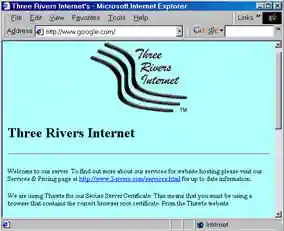
Today, I couldn’t access Google. When I tried, I got this site instead.

Indias poor treatment of Buddhism

We keep hearing about India’s and Hindu’s peaceful history. But if India’s poor treatment of Buddhism is anything to go by, we’re no better than any others. Guess we were lucky to have Gandhi and a non-overthrowable British Government. Otherwise, we’d have gone to war as well.

Copyright generating trouble for Google

Get an idea of how much trouble copyright is generating for Google. via LinuxJournal

Distributed.net cracked RC5-64

distributed.net cracked RC5-64. RC5-64 is an encryption algorithm developed by RSA. It took 4 years. It looks long. But the big deal is, the algorithm therefore can’t be used for long-term security. More importantly, it’s becoming practical to use distributed computing on a massive scale.

The Oracle picked the right answer despite a mis-spelling

Remember the Oracle of Google? Looks like it’s a lot more versatile than I thought. I asked it who coined the word “robot”. And the Oracle picked the right answer despite a mis-spelling!. (The answer is Karl Capek)

Business model of The Rolling Stones

Fortune, on the business model of The Rolling Stones.

Neuroscience for kids

I found this site on neuroscience (for kids). Nice. Has lots of brain games (no – not smart ones – more like testing your reaction time, etc.) Actually I was reading up on neuroscience because of this article on how neuroscience helped figure out the meaning behind a Zen garden. via missing matter

Open source should not be forced by governments

Open source should not be forced by governments, argues the Initiative for Software Choice. Their argument (which open source proponents agree with) is that software should be chosen on merit. But the argument is also self-serving, as the initiative is funded by software companies.